How to Choose and Specify Kitchen Cabinets During a Renovation

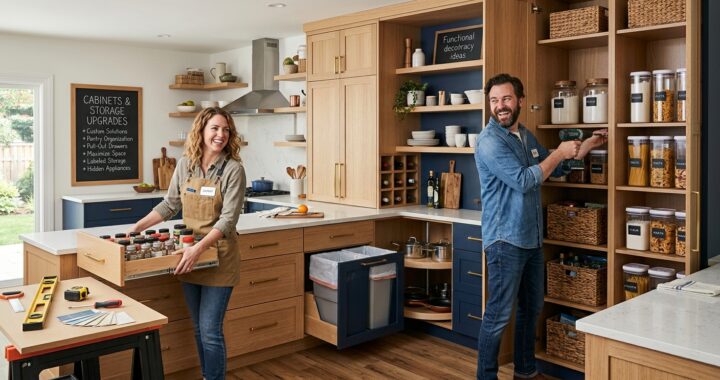
If you are Renovating a Kitchen, start with the cabinets. Cabinet layout, box construction, and interior hardware determine how much you can store, how easily you can reach everyday tools, and how smoothly the room functions from one day to the next.
A fresh door color or trendy brass pull can make a kitchen look completely different, yet a well-planned cabinet system makes the same kitchen work completely different. Sorting out cabinet construction, accessibility, and written specifications before getting caught up in finishes ensures your renovation budget goes into features you will appreciate every single day.
Table of Contents
1. Start With a Realistic Audit of Your Existing Cabinets
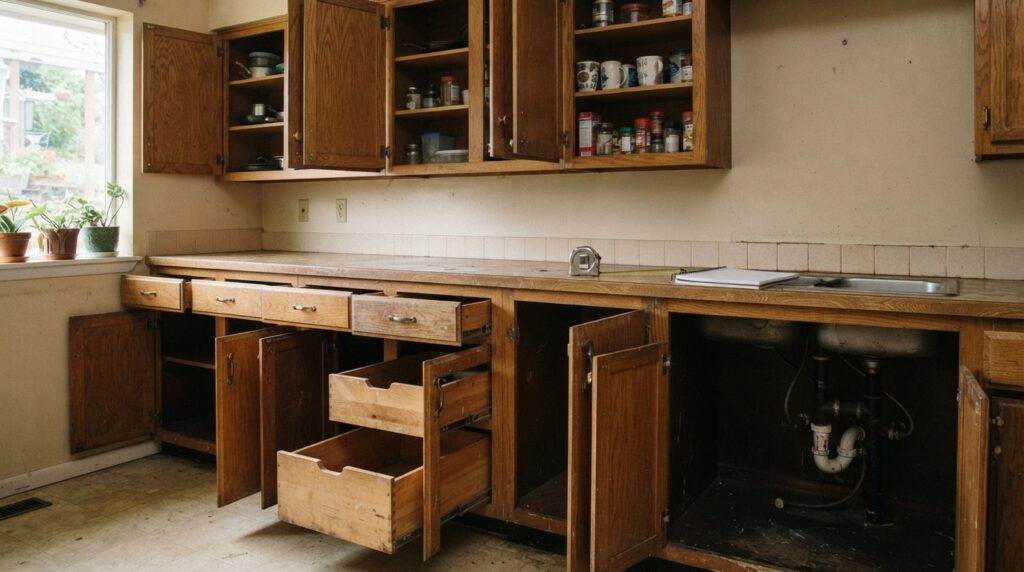
Before tearing out old cabinetry or pricing new boxes, spend twenty minutes inspecting what is currently in your kitchen. Open every door, pull out every drawer, and write down what actually slows you down whether that means overly deep lower shelves, sticky side-mount drawer glides, or a massive corner cabinet where half the interior stays unreachable.
| Audit Area | What to Inspect | Why It Matters for Your Remodel |
| Cabinet Boxes | Width, depth, height, and structural condition | Clarifies whether boxes need full replacement or simple interior upgrades |
| Interior Shelves | Shelf depth, spacing, and adjustability | Highlights wasted vertical height and hard-to-reach back rows |
| Drawer Boxes | Box depth, side height, and slide extension | Guides where deep pot drawers should replace lower cupboards |
| Door Swings | Hinge side, opening angle, and adjacent clearance | Prevents new doors from hitting walls, islands, or appliance handles |
| Corner Units | Opening width and interior blind spots | Identifies where turntables or pull-out corner mechanisms are needed |
Take clear photographs and rough measurements before demolition begins. Having a visual record of existing wall runs, plumbing locations, and awkward corners keeps contractor meetings and showroom visits grounded in real dimensions.
2. Prioritize Ergonomic Access Over Raw Cubic Footage
A cabinet can hold plenty of dishes and still be frustrating if you have to kneel on the floor and unload half a shelf just to reach a heavy Dutch oven in the back.
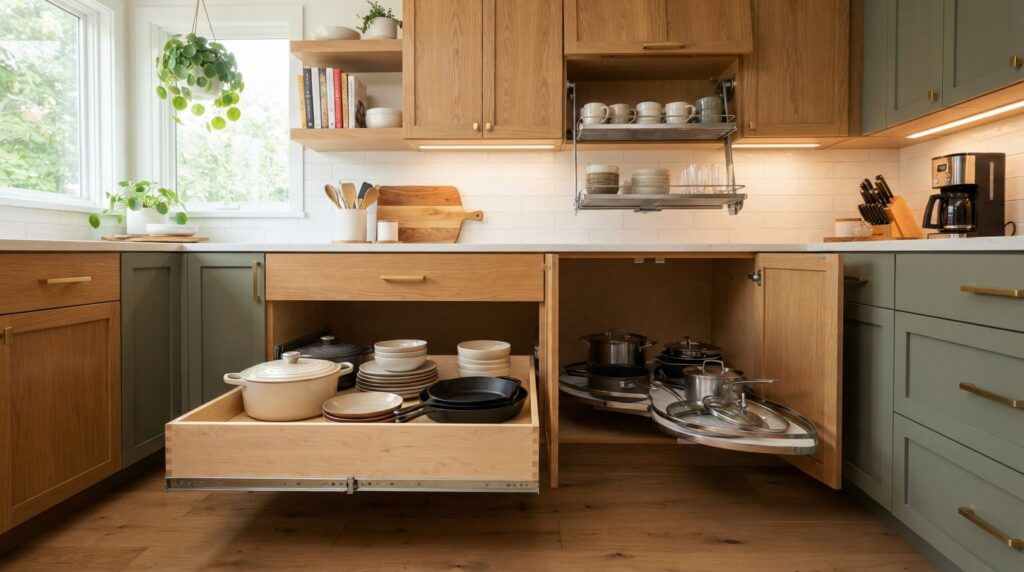
Modern residential remodeling guidelines including accessibility recommendations published by the U.S. Department of Housing and Urban Development (HUD) emphasize bringing stored items forward to the user rather than forcing awkward bending and reaching.
| Storage Challenge | Practical Hardware Upgrade | What to Verify Before Ordering |
| Deep Base Cabinets | Full-extension pull-out shelves or deep box drawers | Clear interior depth behind door hinges and frames |
| High Upper Shelves | Pull-down upper shelving mechanisms | Overhead headroom and total weight capacity |
| Blind Corner Cabinets | Heavy-duty lazy Susans or swing-out corner trays | Exact cabinet opening width and swing clearance |
| Shallow Utensil Drawers | Full-extension undermount soft-close runners | Drawer box construction and load rating |
Do not add specialized pull-out hardware simply because it looks clever in a showroom display. Match every mechanism to a specific storage problem in your layout, and confirm exact cabinet clearances before ordering.
3. Keep Cabinet Interiors Simple and Adaptable
Once door swings and pull-out hardware are settled, look at interior dividers and shelf spacing. Adjustable shelves allow you to adapt tall cabinets as your cookware or pantry staples change, while modular drawer dividers keep utensils, lids, and baking sheets from sliding into a jumble.
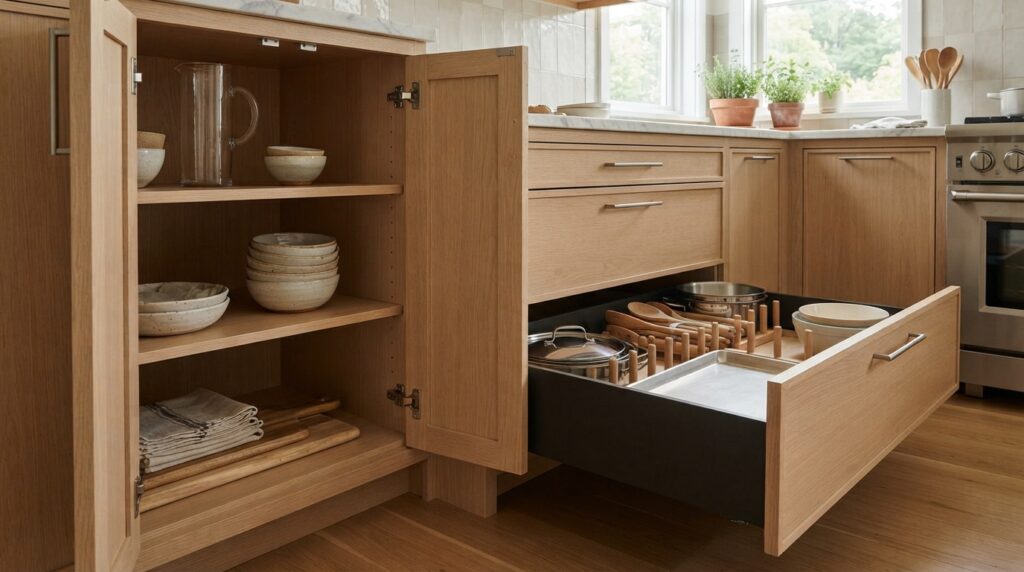
| Interior Feature | Primary Purpose | Key Specification to Check |
| Adjustable Shelving | Adapts vertical spacing to tall pitchers, mixers, or bowls | Full-height shelf pin holes and sturdy metal shelf clips |
| Modular Drawer Dividers | Separates utensils, spices, and lids cleanly | Exact interior drawer box length and height |
| Roll-Out Tray Shelves | Brings heavy pots and dry goods out into clear view | Full-extension slides rated for 75 to 100+ lbs |
| Door-Mounted Racks | Holds wraps, cutting boards, or spices on narrow doors | Door thickness and interior shelf setback so doors close flush |
Avoid filling every square inch with rigid, single-purpose inserts. Every divider and wooden tray takes up physical space inside the drawer leaving a little open flexibility keeps the cabinet from feeling cramped.
4. Check Cabinet Box Materials and Indoor-Air Certifications
Because cabinet boxes sit behind visible doors and drawer fronts, it is easy to overlook what they are actually made of Yet box construction determines how well cabinets hold heavy countertops, resist moisture around the sink, and protect indoor air quality.
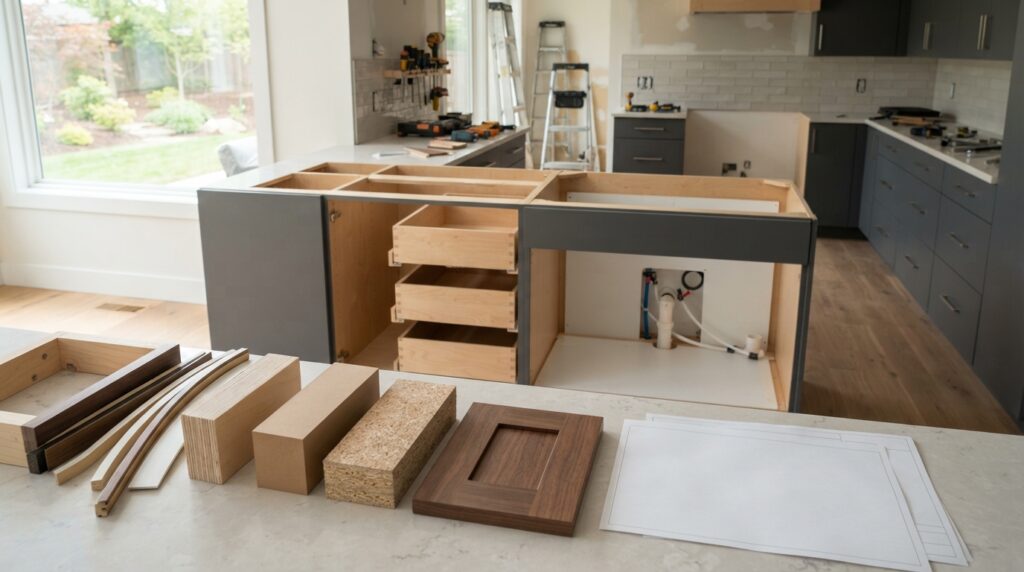
In the United States, composite wood panels commonly used in cabinetry including hardwood plywood, medium-density fiberboard (MDF), and particleboard are regulated under EPA TSCA Title VI standards to limit formaldehyde emissions. Rather than relying on vague marketing labels like “green” or “eco-friendly,” ask your cabinet supplier for written product specifications:
| Material Question | Documentation to Request |
| What is the cabinet box made of? | Written spec sheet listing plywood, MDF, or particleboard thickness |
| Does the composite wood meet federal standards? | Confirmation of TSCA Title VI compliance (or applicable local standards outside the U.S.) |
| Is the product independently verified? | Reference to an EPA-recognized third-party certifier on the product label or spec sheet |
| How are edges and sink bases protected? | Edge-banding details and moisture-resistant core options near plumbing |
Keeping material claims tied to documented standards gives you accurate, verifiable facts about what is going into your home without falling for unsubstantiated health promises.
5. Write a Clear Cabinet Scope to Compare Contractor Quotes Fairly
Cabinet estimates often look impossible to compare because one proposal lists a lump sum for “custom cabinetry with storage accessories,” while another itemizes every soft-close hinge, pull-out tray, and crown molding separately. A lower price is only a better deal when both quotes cover the exact same construction and scope.
| Quote Category | What Must Be Written in the Proposal |
| Box & Door Construction | Framed vs. frameless construction, panel thickness, and door joinery |
| Included Interior Storage | Exact count of roll-out trays, cutlery dividers, trash pull-outs, and corner units |
| Hardware Brands & Specs | Specific hinge and drawer-slide models (or documented equivalents) and weight ratings |
| Finish & Coatings | Factory-catalyzed lacquer, paint color code, stain, and interior box finish |
| Installation & Exclusions | Delivery, wall-scribing, filler strips, hardware pull installation, and haul-away |
Asking every cabinetmaker or showroom to price the same written scope makes missing items immediately obvious before you sign a contract or pay a deposit.
6. Follow a Five-Step Sequence Before Placing Your Order
Showrooms make it tempting to pick door profiles and paint swatches on day one, yet cabinet dimensions become expensive to change once production starts. Working through five steps in order keeps costly mistakes off your invoice:
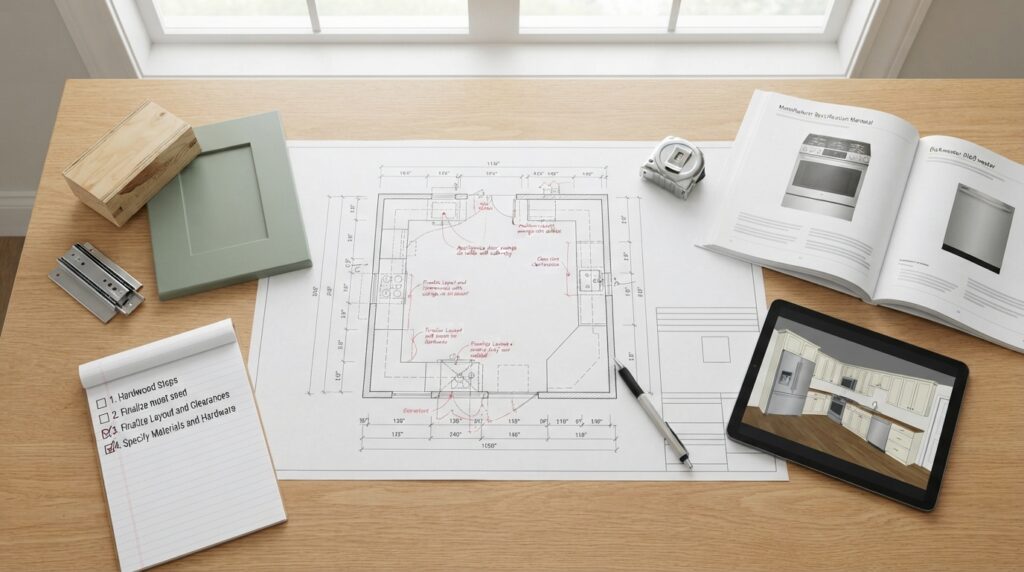
- Measure the Room Accurately: Record wall lengths, ceiling heights, window trim, and plumbing/electrical locations.
- Audit Your Storage Needs: Identify deep corners, heavy cookware drawers, and tall pantry items that need dedicated homes.
- Finalize the Layout and Clearances: Confirm that open appliance doors, pull-out trays, and walkways never collide.
- Specify Materials, Hardware, and Finishes: Document box materials, EPA compliance, slide ratings, and exact accessories in writing.
- Review Final Drawings Against Appliance Specs: Double-check every cutout and clearance against manufacturer installation manuals before approving production.
A truly successful cabinet upgrade does more than make a kitchen look brand-new it makes everyday cooking, unloading the dishwasher, and finding tools feel effortless years after the remodel is finished.