How to Budget for Kitchen Countertops and Backsplashes Without Hidden Costs

If you want to keep a Kitchen Renovation on budget, pay close attention to how you price the countertop and backsplash. Together, these two surfaces define much of the room’s look, and they are also where overlooked fabrication fees, edge profiles, and wall prep can quietly add thousands of dollars to a remodel invoice.
A cohesive, high-end kitchen does not require spending top dollar on every square foot. What it does require is separating material costs from installation costs early, comparing complete apples-to-apples quotes, and putting your budget where it shows most.
Table of Contents
1. Price the Full Installed Job Before Choosing a Slab Color
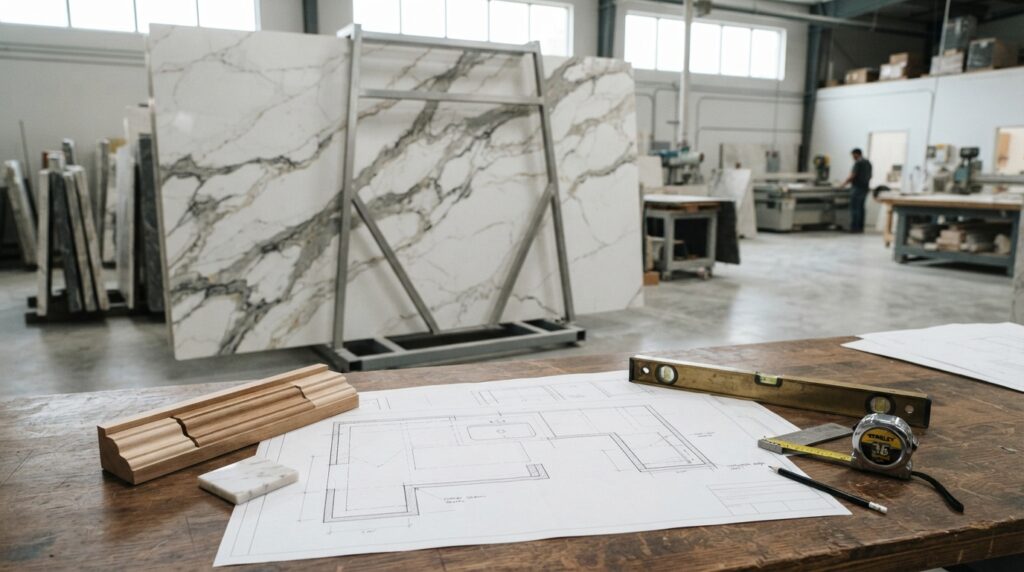
The most common budgeting mistake during a kitchen remodel is falling in love with a stone sample based on its per-square-foot material price alone. A countertop quote rarely covers just the raw slab, fabrication, sink cutouts, edge finishing, delivery, installation, and tear-out of existing counters can easily equal or exceed the cost of the material itself.
| Cost Category | What to Ask Your Fabricator | Why It Impacts the Final Invoice |
| Slab & Material | Are you billed per square foot installed or by the full slab? | Buying a full slab leaves leftover remnants you still pay for |
| Cutouts & Edge Profiles | Are undermount sink cutouts, faucet holes, and eased edges included? | Custom ogee or mitered waterfall edges add significant labor fees |
| Seams & Layout | How many seams are planned and where will they sit? | Book-matched veining or complex corner layouts require extra material |
| Site Prep & Tear-Out | Does the quote include removing old counters and leveling cabinets? | Subtop repairs or cabinet leveling often appear as extra charges |
Always ask for an itemized installed quote before locking in a slab, and inspect full slabs in person rather than relying on a four-inch showroom chip, natural stone and veined quartz often show far more pattern movement across an entire sheet.
2. Save Money Where the Kitchen Won’t Miss It
Keeping costs down does not mean settling for a generic kitchen. Instead of trimming quality across the board, concentrate your spending on one focal surface and simplify the supporting details around it:
- Keep Countertop Edges Simple: A standard eased or pencil edge costs less to fabricate, resists chipping better than sharp mitered corners, and suits almost every kitchen style.
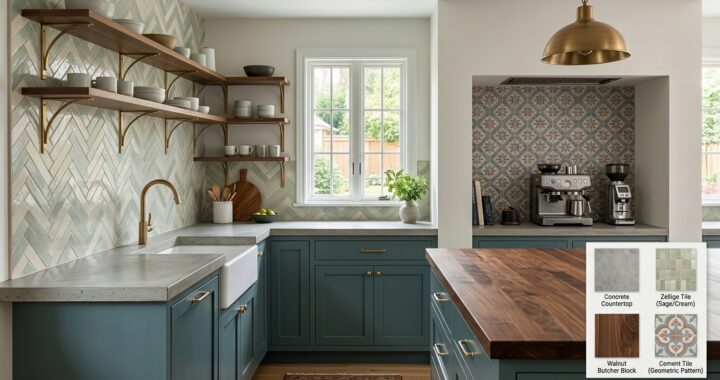
- Let One Surface Lead: Pair a dramatic veined quartz or granite countertop with an affordable classic ceramic subway tile, or pair a quiet, budget-friendly countertop with a smaller statement tile panel behind the range.
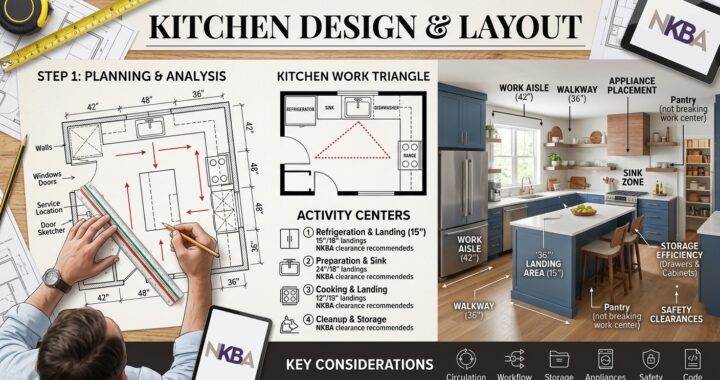
- Preserve Your Existing Layout: Keeping the sink, dishwasher, and range in their current locations avoids expensive plumbing and electrical rerouting while simplifying slab cutouts.
- Compare Identical Specs Across Three Fabricators: Pricing for the exact same quartz brand or granite grade can vary widely between stone yards and big-box installers.
3. Match Countertop Materials to Daily Care and Heat Limits
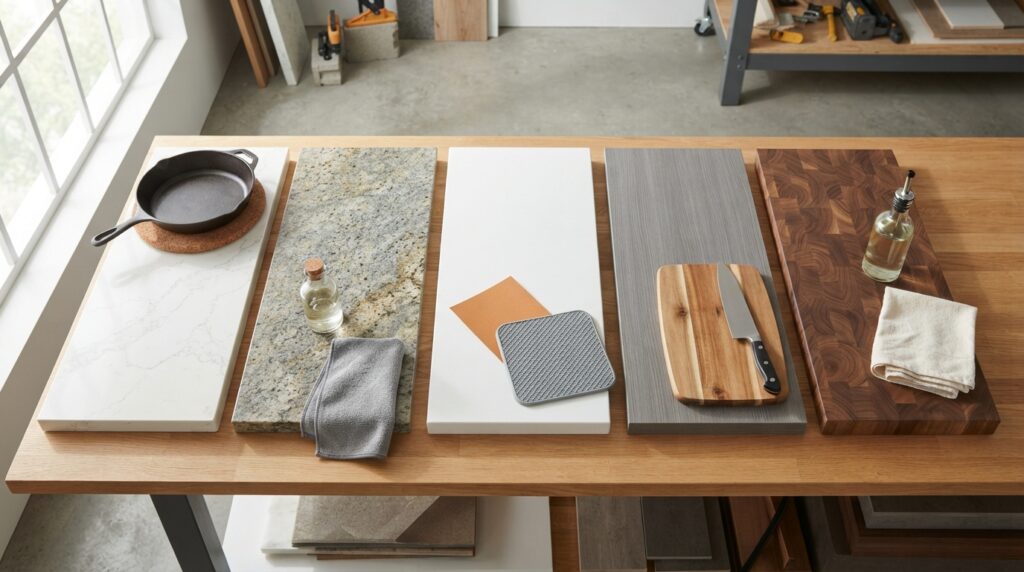
Comparing prices only works when you also compare how each material holds up in real daily cooking. Quartz, natural stone, solid surface, laminate, and butcher block each come with distinct heat limits and upkeep rules published in their manufacturer care guides:
| Countertop Material | Everyday Upkeep & Care | Key Precaution Before Buying |
| Engineered Quartz | Non-porous; cleans with mild soap and water without sealing | Resin binders can scorch, always use trivets under hot pots |
| Granite & Quartzite | Durable natural stone; periodic penetrating sealer recommended | Verify the exact slab’s porosity and recommended sealer schedule |
| Solid Surface (e.g., Corian) | Seamless joints; minor scratches can be sanded out cleanly | Lower heat resistance than stone; requires hot pads for cookware |
| Modern High-Pressure Laminate | Very budget-friendly, stain-resistant, and easy to wipe clean | Vulnerable to sharp knife cuts and high heat; avoid drop-in sink water traps |
| Butcher Block Wood | Warm, repairable surface; needs food-safe mineral oil conditioning | Requires regular oiling around sinks to prevent water staining or warping |
Reading the manufacturer’s care sheet before ordering prevents unpleasant surprises and protects your warranty once the counters are installed.
4. Plan Backsplash Coverage and Wall Prep Before Buying Tile
Backsplash tile often looks inexpensive by the box, yet labor, trim profiles, outlets, and wall prep frequently make up the bulk of the installation bill. Before ordering tile, decide how far up the wall the backsplash will run and check the condition of the drywall underneath.
| Backsplash Coverage | Budget Impact | Key Design & Installation Detail |
| Standard Counter-to-Cabinet (18 inches) | Lowest material and labor cost | Clean stopping line beneath upper wall cabinets |
| Full-Height Behind the Range Hood | Moderate cost increase | Creates a natural focal point; requires precise plumb cuts |
| Full-Wall / Ceiling-Height Tile | Higher tile and labor budget | Demands flat walls, clean ceiling transitions, and careful outlet alignment |
| Matching Stone Slab Backsplash | Highest fabrication cost | Eliminates grout lines; requires careful outlet cutouts |
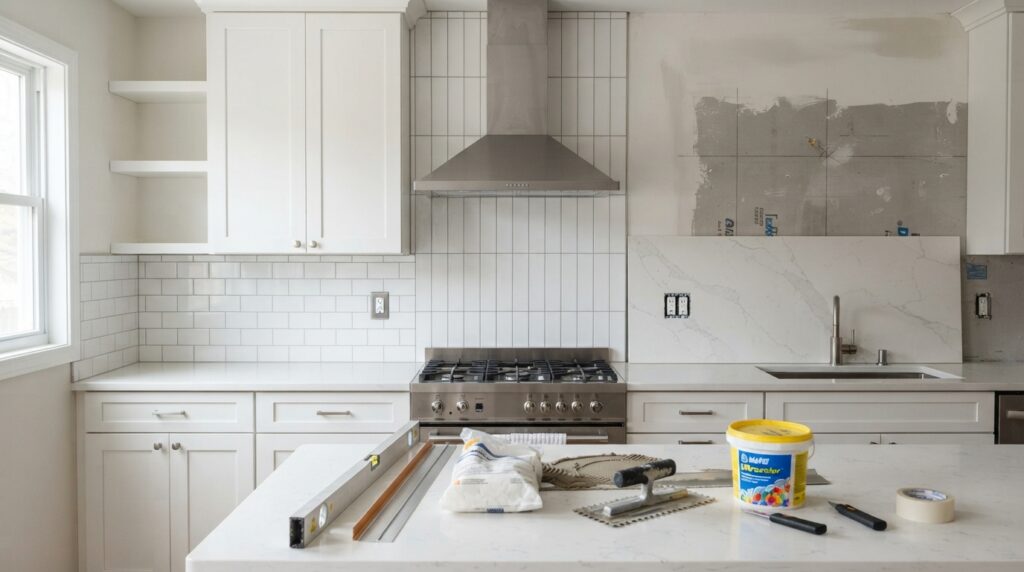
Tile installations are only as reliable as the surface behind them. Industry installation standards such as Schluter’s wall-substrate guidelines, emphasize verifying that drywall or backer board is flat, sound, and properly sealed in moisture-prone areas behind the sink before setting tile. Factoring wall repairs, metal edge trims (like Schluter profiles), and grout into your initial estimate avoids mid-project surprises.
5. Compare Contractor Quotes Apples-to-Apples
When two bids come back with very different totals, the difference almost always lies in what was left out of the scope. Before signing a contract, verify in writing whether each quote covers:
- Exact material brand, color, thickness (2 cm vs. 3 cm), and square footage
- Edge profile fabrication and polished cutouts for sinks and cooktops
- Delivery, template measuring, and full installation
- Demolition and disposal of existing countertops and backsplash tile
- Drywall patching, backer board prep, grout, caulk, and metal edge trim
- Disconnecting and reconnecting the sink faucet, drain, and garbage disposal
A Five-Step Framework for a Controlled Remodel Budget
Working through five clear priorities keeps your countertop and backsplash budget predictable from initial quote to final wipe-down:
| Priority Step | Focus Area | Practical Action |
| 1 | Full Installed Scope | Price fabrication, cutouts, prep, and installation not just raw material |
| 2 | Material & Care Fit | Choose a surface whose heat and sealing rules match your cooking habits |
| 3 | Smart Visual Balance | Let either the countertop or the backsplash lead so you don’t overpay for both |
| 4 | Edges & Transitions | Finalize backsplash stopping lines, trims, and outlet locations before tile arrives |
| 5 | Warranty & Maintenance | Keep manufacturer care sheets on file so harsh cleaners never damage the finish |
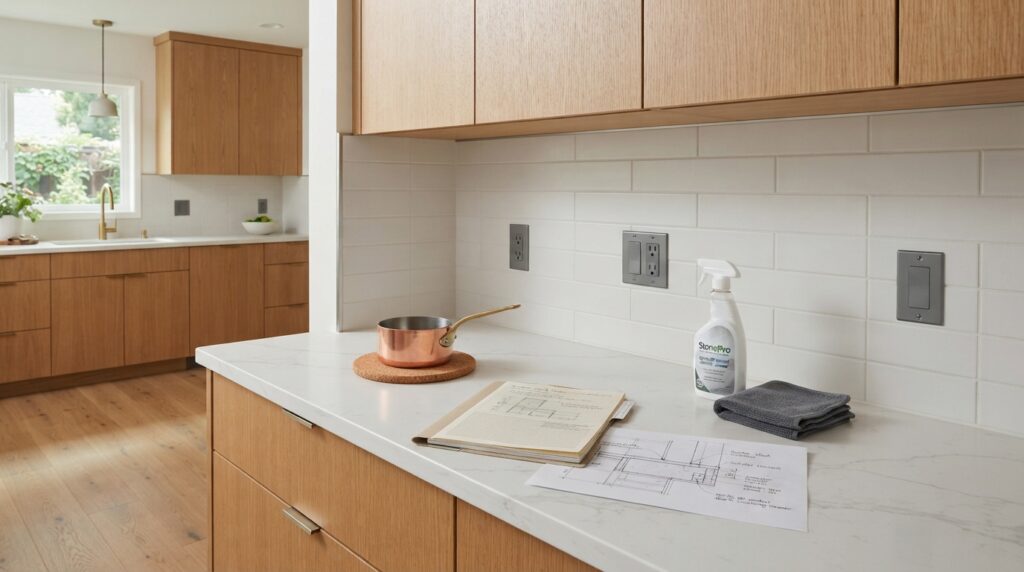
Keeping a kitchen renovation on budget rarely comes down to hunting for the cheapest clearance Tiles or bargain slab. When you define the full installation scope upfront, pick one focal surface, and verify material care rules before ordering, you get a clean, durable kitchen without unexpected add-ons on the final bill.