Smart Ways to Make Your Kitchen Work Harder
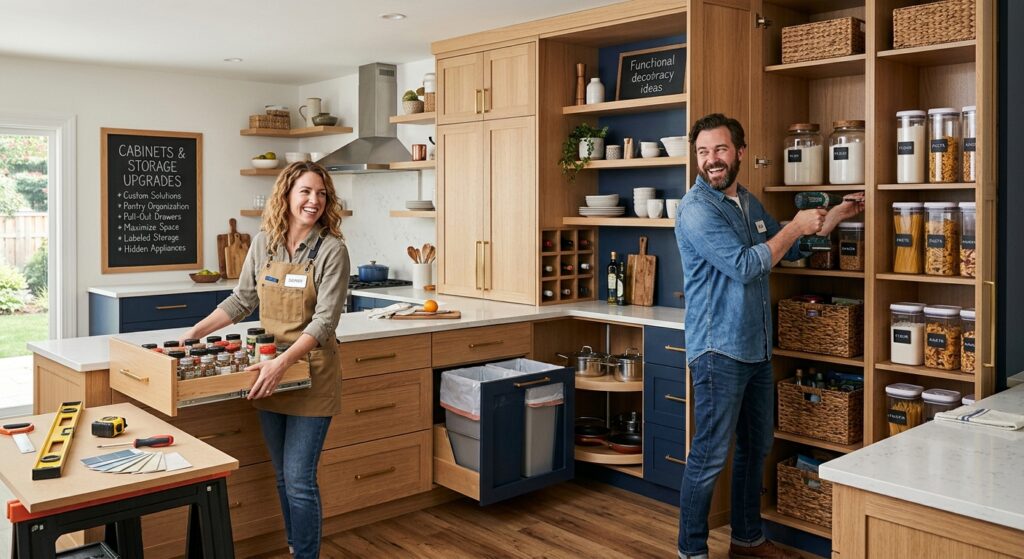
The smartest cabinet upgrade is not always a new cabinet. Often, it is a better way to use the space you already have.
Start by fixing the storage problems you notice every day. Then, upgrade the parts that genuinely make the kitchen easier to use.
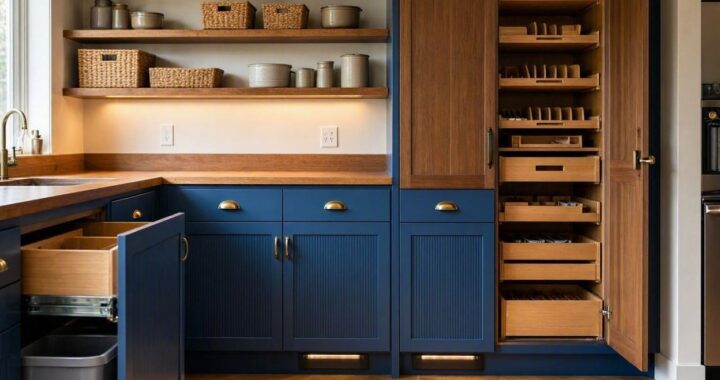
That might mean deeper drawers, pull-outs, better pantry storage, new doors, or simply a more sensible interior layout.
Houzz found that 84% of renovating homeowners upgraded their cabinetry in its 2026 U.S. Kitchen Trends Study.
So, cabinets remain a major part of kitchen renovation. However, that does not mean every cabinet needs replacing.
When I look at a kitchen renovation, I start inside the cabinets. The problems are usually easier to spot there.
1. Start With a Brutally Honest Cabinet Audit
First, open every cabinet and drawer.
Then, look for wasted corners, awkward shelves, difficult access, and items that constantly end up on the counter.
Also, check the cabinet boxes, hinges, drawer slides, doors, and shelves.
You are trying to separate appearance problems from actual storage problems.
| Problem | Possible upgrade | Check first |
|---|---|---|
| Deep cabinet is hard to reach | Pull-out shelf | Opening width |
| Messy drawers | Dividers or inserts | Drawer dimensions |
| Awkward corner | Corner organizer | Door clearance |
| Crowded lower cabinet | Drawer conversion | Cabinet construction |
| Cluttered counter | Dedicated cabinet zone | Available interior space |
When I tested this last month, one awkward lower cabinet turned out to be causing most of the storage frustration.
The fix was much smaller than replacing the cabinet run.
2. Rescue Sound Cabinets Before Replacing Everything
A dated kitchen does not automatically need new cabinet boxes.
If the existing boxes are sound, you can consider refinishing, repainting, replacing selected doors, or improving the interiors.
Houzz reports that 68% of renovating homeowners replaced all their cabinets, while 27% chose partial replacement in its 2026 study.
That leaves plenty of room for a more selective approach.
| Cabinet condition | Smarter direction | What to inspect |
|---|---|---|
| Sound but dated | Refinish or repaint | Existing finish |
| Good boxes, poor doors | Replace selected fronts | Measurements |
| Localized damage | Repair affected section | Moisture source |
| Weak storage | Reorganize interior | Available depth |
| Serious deterioration | Replace affected units | Structural condition |
The same Houzz research found that 94% of homeowners upgrading cabinetry added specialty storage features.
The first time I tried to solve a dated cabinet problem with new doors, I realized the boxes mattered more than expected.
Since then, I inspect the construction before talking about finishes.
3. Unlock Deep Cabinets With Pull-Out Storage
Deep cabinets look useful on paper.
However, a shelf is not useful when reaching the back requires moving half the contents first.
Pull-out shelves can improve access, provided the cabinet can accommodate them.
Before ordering, measure the opening, interior depth, door clearance, and available mounting space.
Also, check the organizer’s weight rating.
Before ordering a pull-out
- Measure the opening, not just the cabinet box.
- Check the door and hinge clearance.
- Confirm the installation requirements.
- Check the expected load.
I wasted two hours on this before realizing my measurement included a hinge obstruction.
It was a simple mistake, but it changed the product I needed.
Measure first. Shop second.
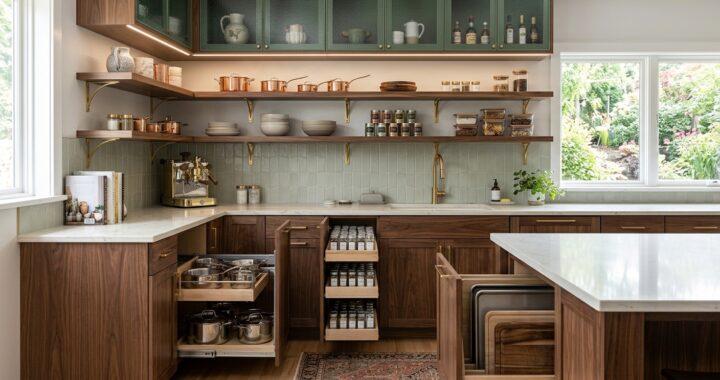
4. Turn Lower Cabinets Into High-Performance Drawers
Lower cabinets can become frustrating when everything sits on the floor of a dark box.
Drawers bring the contents toward you instead.
Therefore, consider drawers for pots, pans, utensils, trays, and other frequently used items.
NKBA research has identified deeper lower cabinets and increased drawer storage as strategies expected to maximize kitchen storage (NKBA).
Still, more drawers are not automatically better.
Drawer height, weight capacity, clearance, and internal organization all matter.
| Drawer type | Useful for | Watch for |
|---|---|---|
| Deep drawer | Pots and cookware | Weight |
| Medium drawer | Food containers | Organization |
| Shallow drawer | Utensils | Divider placement |
| Tray drawer | Baking sheets | Vertical clearance |
When I plan drawers, I prefer adjustable dividers whenever the budget allows.
That way, the storage can change when the contents change.
5. Conquer Awkward Corners Instead of Ignoring Them
Corner cabinets are notorious for becoming storage black holes.
Fortunately, several systems can make them easier to access.
Depending on the cabinet, options include revolving trays, pull-out mechanisms, and deep-drawer organizers.
Houzz reported that revolving corner trays, pull-out shelves, and deep drawer organizers each appeared among specialty storage choices for 34% of homeowners upgrading cabinetry (Houzz).
Before buying anything, check the corner dimensions and neighboring door swings.
A clever mechanism is useless if it cannot open properly.
6. Build a Pantry That Actually Earns Its Space
A pantry should make food storage easier, not create another place to lose things.
Therefore, plan the interior before deciding how large the pantry should be.
Houzz found that pantry cabinets were included by 47% of renovating homeowners in its 2026 Kitchen Trends Study.
Walk-in pantries appeared in 16% of renovations.
| Pantry approach | Main advantage | Main consideration |
|---|---|---|
| Tall cabinet | Uses vertical space | Depth |
| Pull-out pantry | Easy access | Precise clearance |
| Pantry drawers | Good visibility | Width |
| Walk-in pantry | Dedicated storage | Floor area |
| Adjustable shelving | Flexible layout | Organization still matters |
My clients keep asking whether they need a bigger pantry.
Usually, I ask whether they need more space or simply better organization.
Those are different problems.
7. Hide Countertop Clutter With Purposeful Storage
A kitchen can have plenty of cabinets and still look cluttered.
The issue is often where small appliances and everyday equipment live.
Consider dedicated cabinet zones for appliances, cleaning supplies, recycling, or frequently used equipment.
NKBA reported that 87% of surveyed industry professionals expected concealed pantries behind cabinet doors or panels to remain popular in its 2025 Kitchen Trends Report coverage.
When I review storage, I ask what should stay visible and what should disappear.
That question usually produces better results than simply adding cabinets.
8. Attack Vertical Space Before Expanding the Kitchen
Before adding floor area, look at the walls.
Tall cabinetry can turn unused vertical space into useful storage.
NKBA research found that floor-to-ceiling cabinetry and deeper lower cabinets were expected to help maximize storage (NKBA).
However, taller cabinets can also create an access problem.
So, consider what you will realistically reach and how often you will use it.
There is little value in creating beautiful storage that requires a ladder for everyday items.
Keep frequently used items within comfortable reach.
Then, reserve higher shelves for less frequently needed supplies.
9. Choose Hardware That Feels Right, Not Just Looks Right
Cabinet hardware is a small detail with a big daily role.
You pull it dozens of times, so grip and placement matter.
Houzz reported that 95% of renovating homeowners chose cabinet handles, with bar pulls selected by 74% in its 2026 Kitchen Trends Study.
Brushed nickel was the most common reported finish at 28%, followed by black at 18% and brushed gold at 12%.
Those are survey preferences, not rules.
Instead, choose hardware that suits the cabinet scale, feels comfortable, and works with the rest of the room.
When I choose hardware, I test the grip before worrying about the finish.
A beautiful pull that feels awkward is still a bad choice.
10. Make Cabinet Interiors Do More Work
The cabinet exterior gets attention.
The interior does the actual storage work.
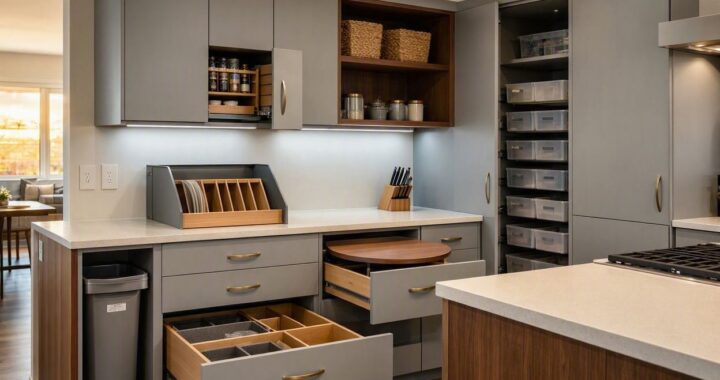
So, consider pull-out waste bins, tray storage, spice organization, cutlery inserts, and drawer dividers.
Houzz found that 94% of homeowners who upgraded cabinetry incorporated specialty storage features (Houzz).
Among those features, pull-out waste or recycling bins appeared in 64% of upgraded kitchens.
Cookie-sheet or tray storage appeared in 55%, while spice storage reached 41%.
That is where personalization becomes useful rather than decorative.
11. Create Dedicated Storage Zones and Cut the Clutter
A kitchen becomes easier to manage when similar items have a clear home.
Therefore, group storage by function rather than randomly filling empty cabinets.
Keep preparation tools together.
Give baking equipment its own section.
Create a sensible place for cleaning products and recycling.
Also, keep everyday items close to the area where they are used.
NKBA’s research describes personalized storage solutions, including drawer dividers and configurable partitions, as part of the direction toward more functional kitchens (NKBA).
12. Spend on Storage Features That Solve Real Problems
Storage accessories can quietly consume a renovation budget.
One insert seems harmless.
Then another appears, followed by a pull-out, a special rack, and a custom tray.
Soon, the “small upgrade” is no longer small.
| Prioritize first | Consider later |
|---|---|
| Difficult cabinet access | Decorative inserts |
| Drawer organization | Trend-driven accessories |
| Pantry storage | Low-use specialty racks |
| Tray storage | Extra cosmetic details |
| Waste organization | Features without a clear purpose |
When I build a storage budget, I rank features by how often they will be used.
Daily problems deserve attention first.
Occasional conveniences can wait.
13. Avoid Four Cabinet Mistakes That Waste Money
First, do not order organizers before measuring.
Second, do not create deep storage without considering access.
Third, do not fill every available inch simply because it exists.
Fourth, do not add expensive mechanisms without a clear purpose.
The first time I tried to maximize every cabinet, the kitchen technically gained storage but lost flexibility.
That was the wrong trade.
Good storage should make the kitchen easier to live with.
It should not turn every cabinet into a highly engineered puzzle.
14. Make Your Cabinet Plan Work Like a Business Decision
For entrepreneurs, renovation decisions can benefit from the same discipline used in other spending decisions.
Start with the problem.
Then, measure the space.
Next, compare solutions and installed costs.
Afterward, think about maintenance and flexibility.
Finally, decide whether the upgrade deserves the money and cabinet space.
Use this sequence
Problem → Measurement → Solution → Cost → Installation → Decision
We shipped projects faster once decisions followed a consistent sequence.
The improvement came from fewer reversals, not from rushing the work.
15. Create a Cabinet Plan That Will Still Work Later
The best storage systems leave some room for change.
Your kitchen will not always contain the same appliances, cookware, food, or equipment.
Therefore, avoid designing every drawer around one exact collection of objects.
Adjustable shelves and flexible dividers can help.
So can drawers with enough clearance for different items.
NKBA’s 2026 trends research identifies storage maximization as a major kitchen design theme, including floor-to-ceiling cabinetry, more drawers, and storage-rich islands (NKBA).
The Best Cabinet Upgrade Makes Existing Space Work Harder
A successful cabinet renovation is not about filling the kitchen with more boxes.
Instead, it is about making every cabinet easier to access and every drawer easier to organize.
Start with an honest audit.
Then, keep sound cabinets whenever the structure makes that sensible.
Afterward, improve drawers, pull-outs, pantry storage, corners, vertical space, and cabinet interiors.
Meanwhile, choose hardware and finishes that support the whole room.
Current Houzz research shows that 76% of renovating homeowners incorporated specialty built-in features in their kitchens (Houzz).
That is useful context, but your own kitchen still needs its own solution.
When I pressure-test a cabinet upgrade, I ask one final question:
Will this make the kitchen easier to use every week?
If yes, it deserves serious consideration.
If not, keep the money and keep looking.
The strongest storage upgrade is rarely the one with the most accessories.
It is the one where every cabinet has a clear job.