How to Build a High-Performance Kitchen Storage System (From Hardware to Layout)
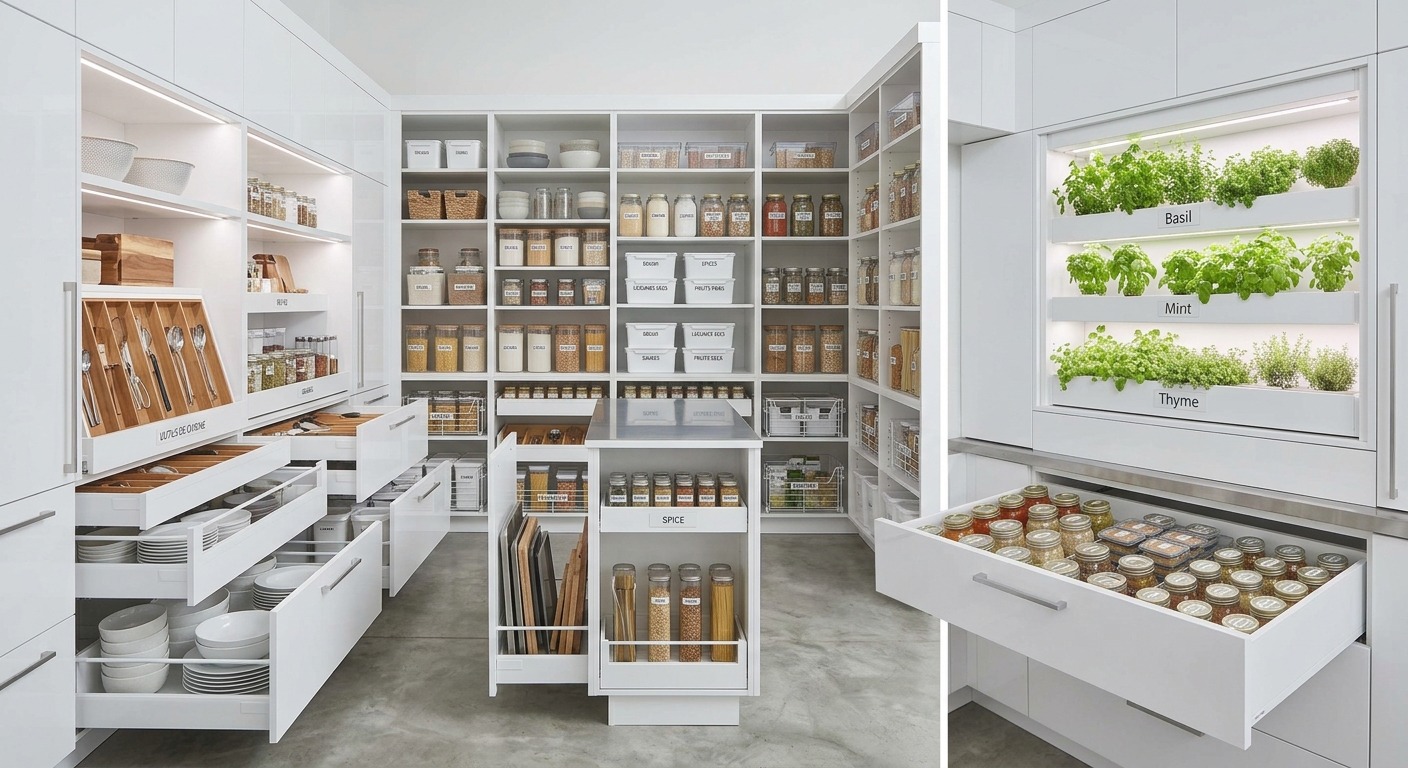
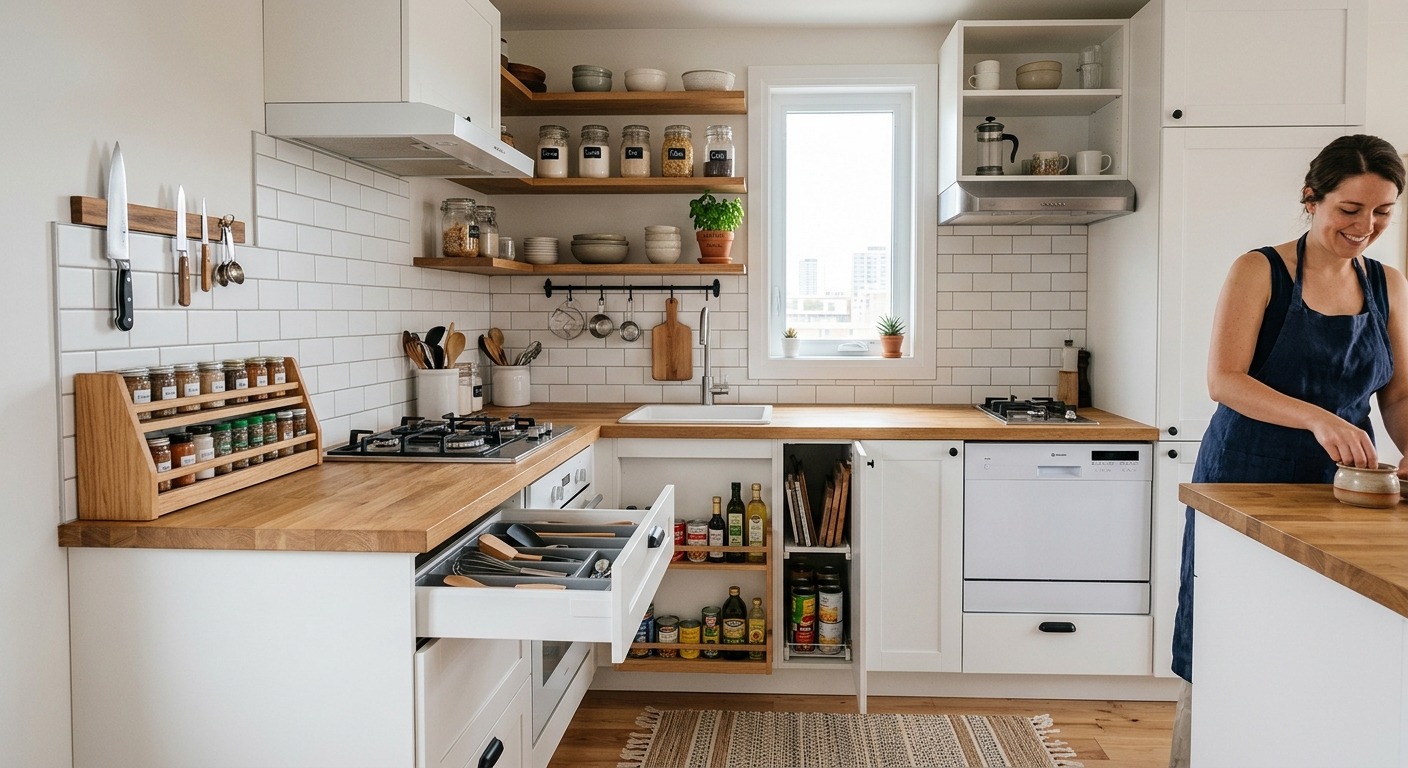
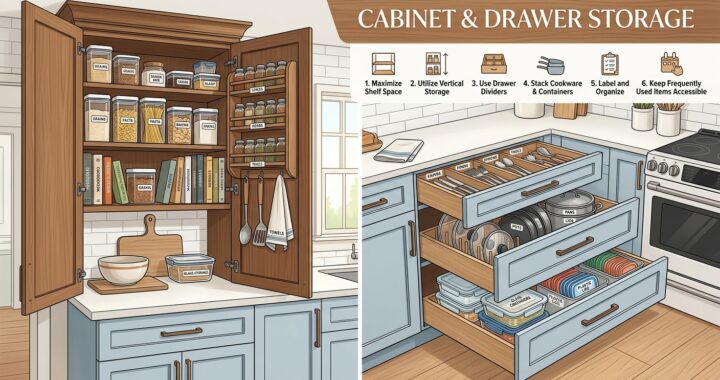
The best cabinet and drawer storage does more than hide clutter. It makes the kitchen easier to organize, access, and maintain.
That sounds simple, but good storage rarely happens by accident.
Instead, it comes from choosing the right cabinet dimensions, drawer layouts, dividers, and hardware before the final design is locked in.
For entrepreneurs, designers, and kitchen businesses, that distinction matters.
You are not simply selling cabinets.
You are selling a better-organized space.
Start Strong: Design Storage Around Access
Cabinet storage can look impressive on a floor plan while feeling awkward once installed.
The difference usually comes down to access.
Deep cabinets can provide plenty of volume, for example, but reaching items at the back may be inconvenient.
Drawers, meanwhile, bring stored items forward and make the contents easier to see.
That is one reason drawer-heavy cabinetry continues to attract attention within professional kitchen design.
The NKBA 2026 Kitchen Trends Report identifies floor-to-ceiling cabinetry with more drawers, islands with storage, and other storage-focused features among notable kitchen directions.
Still, more drawers are not automatically better.
The drawer needs the right dimensions for the storage space it serves.
A Better Way to Think About Cabinet Space
| Storage decision | Better approach | What to avoid |
|---|---|---|
| Cabinet depth | Match depth to accessibility | Adding depth without purpose |
| Drawer size | Choose dimensions deliberately | Making every drawer identical |
| Dividers | Keep organization adaptable | Overfilling every section |
| Shelving | Consider visibility and reach | Creating inaccessible corners |
| Hardware | Check documented specifications | Buying based only on appearance |
When I assess a storage plan, I start with access rather than appearance.
That simple change can reveal problems before they become expensive changes.
Build Powerful Drawer Storage From the Inside Out
A drawer front may look perfect from across the room.
However, the interior is where the organization either works or falls apart.
A large drawer without internal structure can quickly become a catch-all.
On the other hand, a drawer with sensible compartments can make the same amount of space feel far more controlled.
That is why internal planning deserves attention before the cabinet order is finalized.
Give Every Drawer a Clear Job
Not every drawer needs the same configuration.
Instead, consider the drawer’s height, width, depth, and intended contents.
Then, decide whether dividers or partitions actually improve the layout.
Adjustable components can be particularly useful because fixed arrangements leave less room for change.
The NKBA’s 2026 research places storage maximization among 11 major themes shaping kitchen design.
That does not mean filling every available inch.
Rather, it means making the available space work harder.
Unlock Better Organization With Drawer Dividers
Drawer dividers are one of those small details that can make a surprisingly large difference.
They create boundaries without requiring another cabinet.
They also make it easier to keep similar items together.
However, more dividers are not necessarily better.
Too many compartments can make a drawer feel cramped and overly specific.
I prefer a layout that creates enough structure to maintain order while leaving some flexibility.
That balance becomes especially useful when storage requirements change.
Keep Drawer Organization Flexible
| Divider approach | Strength | Limitation |
|---|---|---|
| Fixed dividers | Consistent layout | Difficult to change |
| Adjustable dividers | Flexible organization | May cost more |
| Removable inserts | Easy to reconfigure | Can shift if poorly designed |
| Open drawer | Maximum flexibility | Easier to become cluttered |
The key is choosing the system according to the drawer rather than adding accessories simply because they are available.
That distinction keeps the design practical.
Make Cabinet Interiors Work Harder
Cabinet doors get most of the visual attention.
Yet the interior determines how useful that cabinet becomes.
For that reason, I would treat cabinet interiors as part of the main design rather than an afterthought.
Consider shelf spacing first.
Then, look at cabinet depth.
Afterward, review how easily the stored contents can be reached.
Finally, check whether the arrangement leaves unnecessary dead space.
This process sounds basic, but it catches plenty of design problems.
Cabinet Interior Planning
| Feature | Planning question |
|---|---|
| Shelves | Can their positions be adjusted? |
| Depth | Can stored contents be reached comfortably? |
| Open space | Is the height actually being used? |
| Hardware | Does the mechanism support regular operation? |
| Accessories | Do they improve organization or simply add cost? |
A good cabinet should not require a complicated explanation.
If the internal layout makes sense, organization becomes much easier to maintain.
Choose Cabinet Quality With Evidence
Storage design is only one part of the equation.
The cabinetry itself also needs to stand up to normal use.
This is where documented testing becomes useful.
The Kitchen Cabinet Manufacturers Association’s A161.1 certification covers structural performance, drawer operation, door operation, and finish durability.
For example, KCMA says certified drawers are loaded at 15 pounds per square foot and operated through 25,000 cycles during its drawer weight test.
That is a testing figure, not a prediction that a particular drawer will last exactly that long in a real kitchen.
That distinction matters.
Marketing claims can sound impressive, but documented testing gives you something concrete to evaluate.
What to Check Before Buying
- Look for recognized certification where appropriate.
- Ask for actual cabinet specifications.
- Check drawer and hinge information.
- Review warranty terms.
- Confirm what the quoted price actually includes.
- Compare construction details instead of relying on labels such as “premium.”
The KCMA certification program describes its certification as a series of third-party tests covering cabinet performance.
That gives buyers a more useful reference point than vague quality language.
Create a Storage Layout With Real Logic
One of the easiest ways to improve kitchen organization is to stop treating every cabinet as an isolated box.
Instead, look at the storage system as one connected layout.
Cabinet dimensions should work together.
Drawer heights should make sense together.
Internal accessories should support the overall arrangement.
Otherwise, you can end up with beautifully finished cabinetry that still feels disorganized.
Use a Simple Storage Hierarchy
| Level | Planning focus | Goal |
|---|---|---|
| Cabinet | Overall capacity | Establish available space |
| Drawer | Access | Bring contents forward |
| Divider | Organization | Create useful boundaries |
| Shelf | Visibility | Reduce unnecessary stacking |
| Hardware | Performance | Support regular movement |
This hierarchy also makes conversations with suppliers and clients easier.
You can explain why a particular cabinet exists instead of simply saying that it “looks better.”
That is a stronger sales conversation.
Avoid These Cabinet Storage Mistakes
Some storage mistakes are surprisingly easy to make.
They often happen because the visual design receives attention before the internal details.
Here are the problems I would check first:
- Making every drawer the same height.
- Creating deep storage without considering access.
- Installing fixed organizers everywhere.
- Leaving excessive unused vertical space.
- Choosing accessories after cabinet dimensions are finalized.
- Treating hardware as a purely cosmetic decision.
- Adding storage features without a clear organizational purpose.
The fix is usually not complicated.
It starts with planning the interior before the exterior becomes the final priority.
Make Vertical Storage Count
Kitchen storage is not limited to the footprint of the base cabinets.
Vertical space can also contribute significantly to the overall layout.
The NKBA’s 2026 research specifically points toward floor-to-ceiling cabinetry with more drawers as part of the industry’s storage direction.
Still, height alone does not create good storage.
A tall cabinet with poorly arranged interiors can simply create more difficult-to-reach space.
Therefore, vertical cabinetry needs an internal plan.
Adjustable shelves, suitable drawer heights, and sensible access should work together.
Otherwise, the extra height becomes more impressive on paper than useful in practice.
Turn Islands Into Smarter Storage
Kitchen islands can provide another opportunity for organized cabinet and drawer storage.
However, the storage needs to fit the island’s overall design.
Adding cabinets simply because space exists can make the interior harder to understand.
Instead, consider how the island’s storage relates to the rest of the kitchen.
The NKBA 2026 report identifies islands packed with storage among features gaining attention from surveyed kitchen professionals.
The report surveyed 634 respondents from the NKBA community, including designers, dealers, manufacturers, remodelers, contractors, and architects.
That makes the finding useful as an industry signal.
However, it should not be presented as proof that every homeowner wants the same island configuration.
Good design still starts with the actual project.
Create Storage That Can Adapt
Kitchen organization should not depend entirely on one permanent arrangement.
Needs change.
Cabinet interiors should have enough flexibility to accommodate those changes when possible.
That is where adjustable shelves, movable dividers, and adaptable drawer inserts can earn their place.
The goal is not endless customization.
Instead, the goal is avoiding unnecessary rigidity.
When I review a storage concept, one question is especially useful:
Can this arrangement still make sense if the contents change?
If the answer is yes, the design has some built-in flexibility.
If the answer is no, the layout may be too specialized.
Make Hardware Part of the Decision
Drawer slides and hinges are easy to overlook because they are largely hidden.
Yet they directly affect how cabinetry feels during everyday operation.
KCMA’s certification testing specifically evaluates drawer and door operation under repeated cycles.
That gives hardware a place in the conversation beyond simple appearance.
Therefore, ask what hardware is included.
Then, check whether the manufacturer provides load ratings, adjustment information, warranty coverage, or other relevant specifications.
Do not assume that two drawers with identical fronts perform identically.
The visible design can be the same while the underlying hardware differs.
Use Tables to Compare Storage Decisions
A simple comparison can make the planning process clearer.
| Option | Main advantage | Main concern |
|---|---|---|
| Standard cabinet | Straightforward design | Access may be limited |
| Drawer base | Easy access | Requires suitable hardware |
| Deep drawer | Holds larger items | Needs internal organization |
| Adjustable shelving | Flexible | Contents can still become cluttered |
| Tall cabinet | Uses vertical space | Upper areas may be harder to reach |
There is no single winner.
Instead, the strongest kitchen usually combines several storage formats.
That combination allows the cabinet layout to respond to different dimensions without forcing everything into one system.
Plan Storage Before You Finalize the Look
This is where many projects can improve.
Cabinet style, color, and finish are exciting decisions.
Yet storage dimensions need to be settled before those visual choices take over the conversation.
Start with measurements.
Then, determine the cabinet configuration.
Next, review drawer dimensions.
Afterward, plan internal organization.
Finally, confirm the exterior style.
That sequence creates a much stronger connection between appearance and function.
A Practical Planning Sequence
| Step | Action | Result |
|---|---|---|
| 1 | Measure available space | Establish real dimensions |
| 2 | Map cabinet locations | Define the storage framework |
| 3 | Select drawer sizes | Improve access |
| 4 | Plan internal accessories | Control organization |
| 5 | Verify specifications | Reduce uncertainty |
| 6 | Finalize finishes | Complete the visual design |
I would rather spend extra time on this planning stage than discover after installation that a beautiful cabinet layout does not work internally.
That is not glamorous work.
It is simply good design discipline.
Build a Cabinet System, Not a Collection of Boxes
The strongest cabinet and drawer storage feels connected.
Each component has a reason for being there.
Drawers provide access.
Shelves provide flexibility.
Dividers create structure.
Cabinet dimensions control capacity.
Hardware supports movement.
Together, those elements create an organization system rather than a collection of storage boxes.
The broader kitchen market is moving in that direction, too.
The NKBA 2026 Kitchen Trends research lists storage maximization as one of its central themes for the coming years.
That does not mean every kitchen needs the latest storage accessory.
It means storage deserves the same design attention as cabinets, countertops, lighting, and finishes.
The Smartest Storage Is Easy to Live With
Good kitchen organization should not feel complicated.
You should not need a manual to understand where everything belongs.
Instead, the cabinet layout should create a natural sense of order.
That starts with sensible dimensions.
Then, it improves through accessible drawers, adaptable dividers, appropriate shelving, and properly specified hardware.
I also believe restraint matters.
Not every cabinet needs an insert.
Not every drawer needs multiple compartments.
Not every empty space needs to be filled.
Sometimes, the smartest storage decision is leaving enough room for the system to breathe.
Make Cabinet & Drawer Storage a Design Advantage
Cabinet and drawer storage is ultimately about more than capacity.
It is about access, organization, flexibility, and dependable construction.
Those four factors create a kitchen that works better without turning storage into a complicated engineering project.
The current NKBA research supports the growing attention toward smarter storage and personalized kitchen design.
At the same time, KCMA certification provides a useful example of how documented performance testing can support cabinet-quality decisions.
So, before choosing another cabinet, look inside the design.
Ask how the drawer opens.
Ask what happens at the back.
Ask whether the divider can move.
Ask what testing supports the hardware and cabinet construction.
Most importantly, ask whether the storage still makes sense when the kitchen is being used every day.
That is where good cabinet design becomes good kitchen organization.