Vanilla Bean Crème Brûlée Tart with Caramelized Fig & Honey
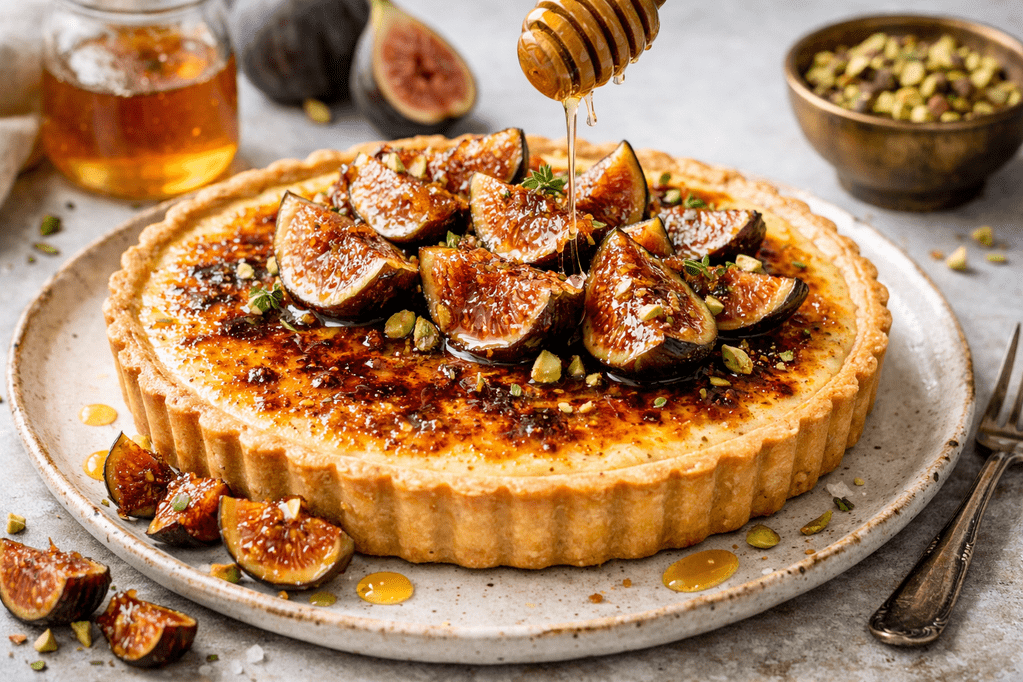
A crisp almond-free pâte sucrée shell filled with slow-baked vanilla bean custard, topped with a glassy caramelized sugar crust, fresh figs, and warm wildflower honey.
Few desserts deliver better contrast in a single slice than a classic crème brûlée baked inside a crisp French tart shell. Tapping through a thin, glassy layer of caramelized sugar into cool, velvety vanilla custard, backed by a buttery, tender pastry crust, gives every bite both crunch and richness without feeling heavy.
Topping the caramelized crust with ripe fresh figs, toasted flaked almonds, and a light drizzle of wildflower honey adds bright fruit acidity and gentle floral sweetness that balance the cream. Taking a little care with butter temperature, blind baking, and gentle oven heat makes this pastry shop Dessert completely achievable in a home kitchen.
Table of Contents
What Makes This Tart Work
- Crisp Pâte Sucrée Shell: Unlike flaky pie dough, French sweet shortcrust pastry bakes into a sturdy, cookie-like base that holds wet custard cleanly without turning soggy.
- Slow-Baked Vanilla Custard: Steeped with a real split vanilla bean and baked gently until just set at the edges with a slight wobble in the center, the filling stays silky rather than grainy or scrambled.
- Fresh Fig & Honey Finish: Adding fresh figs and a warm honey drizzle right after torching the sugar keeps the brûlée topping crisp while bringing fresh seasonal flavor to the plate.
Ingredients
Prep Time: 50 minutes (plus 1 hour chilling) | Bake Time: 45 minutes | Yield: 8 servings (one 9-inch / 23 cm fluted tart pan)
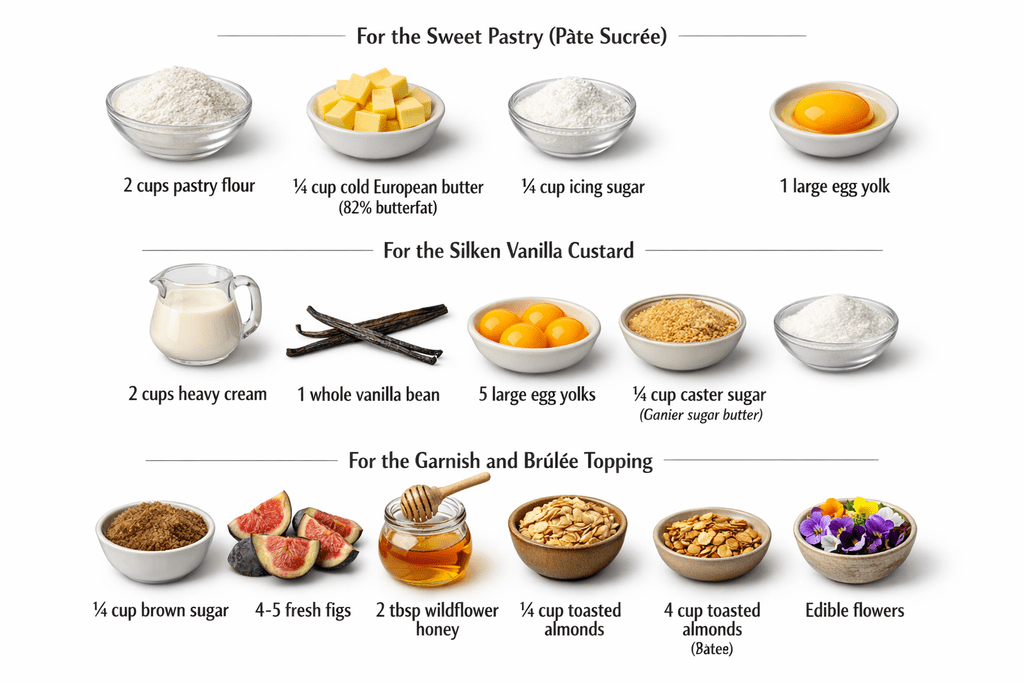
| Component | Ingredient | Amount (US & Metric) | Baking Note |
| Sweet Pastry (Pâte Sucrée) | Pastry flour (or sifted all-purpose flour) | 2 cups (240 g) | Lower protein keeps the crust tender rather than tough |
| Unsalted European-style butter (cold, cubed) | ½ cup (115 g) | Higher butterfat (82%+) gives better flavor and crispness | |
| Powdered (icing) sugar, sifted | ¼ cup (30 g) | Dissolves smoothly for a fine, sandy cookie crumb | |
| Fine sea salt | ¼ tsp | Balances the sweetness of the crust and topping | |
| Large egg yolk (cold) | 1 yolk | Binds the dough cleanly; add 1 tsp ice water only if needed | |
| Vanilla Bean Custard | Heavy whipping cream (35%–36% fat) | 2 cups (480 ml) | Full-fat cream ensures a rich, stable set |
| Whole vanilla bean, split lengthwise | 1 plump pod | Scrape the seeds and steep both pod and seeds in the cream | |
| Large egg yolks (room temperature) | 5 yolks | Thickens the custard into a velvety sliceable texture | |
| Superfine (caster) sugar | ⅓ cup (65 g) | Dissolves quickly into yolks without over-whipping air | |
| Pinch of fine sea salt | ⅛ tsp | Sharpens the natural vanilla aroma | |
| Brûlée & Fig Topping | Demerara or raw cane sugar | ¼ cup (50 g) | Coarse crystals melt into an even, glass-like amber crust |
| Fresh ripe figs (Black Mission or Brown Turkey) | 4 to 5 figs | Quartered or sliced just before serving | |
| Pure wildflower or blossom honey | 2 tbsp (30 ml) | Gently warmed so it drizzles thinly over the figs | |
| Sliced (flaked) almonds, lightly toasted | ¼ cup (25 g) | Adds subtle crunch and nutty aroma | |
| Edible flowers (violas or pansies, optional) | Small handful | Rinse gently and pat dry before plating |
Step-by-Step Instructions
Step 1: Make and Blind-Bake the Sweet Pastry (Pâte Sucrée)
Keeping the butter cold and handling the dough lightly prevents gluten from tightening, ensuring the baked shell stays crisp and tender rather than shrinking in the pan.
Blind-Bake Until Crisp: Preheat your oven to 190°C (375°F). Line the frozen pastry shell with crumpled parchment paper and fill it completely with ceramic pie weights or dried beans. Bake for 15 minutes, lift out the parchment and weights, and bake for another 7 to 10 minutes until the bottom is evenly pale golden and dry to the touch. Let the shell cool completely in the pan on a wire rack.
Rub the Butter Into the Flour: Whisk the pastry flour, sifted powdered sugar, and fine sea salt together in a large bowl or food processor. Add the cold, cubed European butter and rub with your fingertips (or pulse briefly) until the mixture looks like coarse, sandy breadcrumbs with pea-sized butter flecks.
Bind and Chill: Add the cold egg yolk and mix gently with a fork or spatula until the dough just clumps together—add 1 teaspoon of ice water only if dry crumbs remain at the bottom. Press the dough into a flat disc, wrap tightly in plastic wrap, and refrigerate for 30 to 60 minutes until firm.
Line and Freeze the Tart Pan: Roll the chilled dough on a lightly floured counter into an 11-inch (28 cm) circle about ⅛ to ¼ inch (3–5 mm) thick. Drape it gently over a 9-inch (23 cm) fluted tart pan with a removable bottom, pressing the pastry neatly into the fluted edges without stretching it. Trim the excess dough flush with the rim, prick the base lightly with a fork, and freeze the lined pan for 15 minutes.
Step 2: Steep and Temper the Vanilla Bean Custard
Infusing whole vanilla seeds directly into warm cream builds deeper aroma than vanilla extract alone, while slow tempering keeps the custard smooth.
- Steep the Cream: Pour the heavy cream into a medium heavy-bottomed saucepan. Split the vanilla bean lengthwise with a paring knife, scrape the seeds into the cream, and drop in the empty pod. Warm over medium-low heat until small bubbles just appear around the edges, do not let it boil. Remove from the burner, cover with a lid, and let steep for 20 minutes.
- Whisk the Yolks and Sugar: In a medium heatproof bowl, whisk the 5 egg yolks, superfine sugar, and pinch of salt until smooth, pale, and slightly thickened.
- Temper Slowly: Fish out the vanilla pod from the warm cream (rinse and dry it to tuck into a jar of sugar later). Pour the warm vanilla cream into the egg yolks in a slow, steady stream while whisking constantly so the yolks warm gently without curdling.
Step 3: Bake and Chill the Custard Tart
- Lower the Oven Temperature: Reduce the oven heat to 140°C (285°F) and set the cooled tart shell (still in its pan) on a rimmed baking sheet for easy handling.
- Strain and Fill: Pour the tempered custard through a fine-mesh sieve directly into the pastry shell, stopping just below the fluted rim.
- Bake Until Just Set: Slide the baking sheet carefully onto the middle oven rack and bake for 30 to 35 minutes. The outer ring of custard should feel set, while the center 2 inches still jiggle like soft gelatin when you gently tap the pan.
- Chill Thoroughly: Cool the tart to room temperature on a wire rack for about 1 hour, then refrigerate uncovered for at least 4 hours, or overnight so the custard firms up cleanly for slicing.
Step 4: Torch the Sugar Crust and Garnish With Figs and Honey
Caramelize the sugar topping right before serving so the crust stays crisp and glass-like.
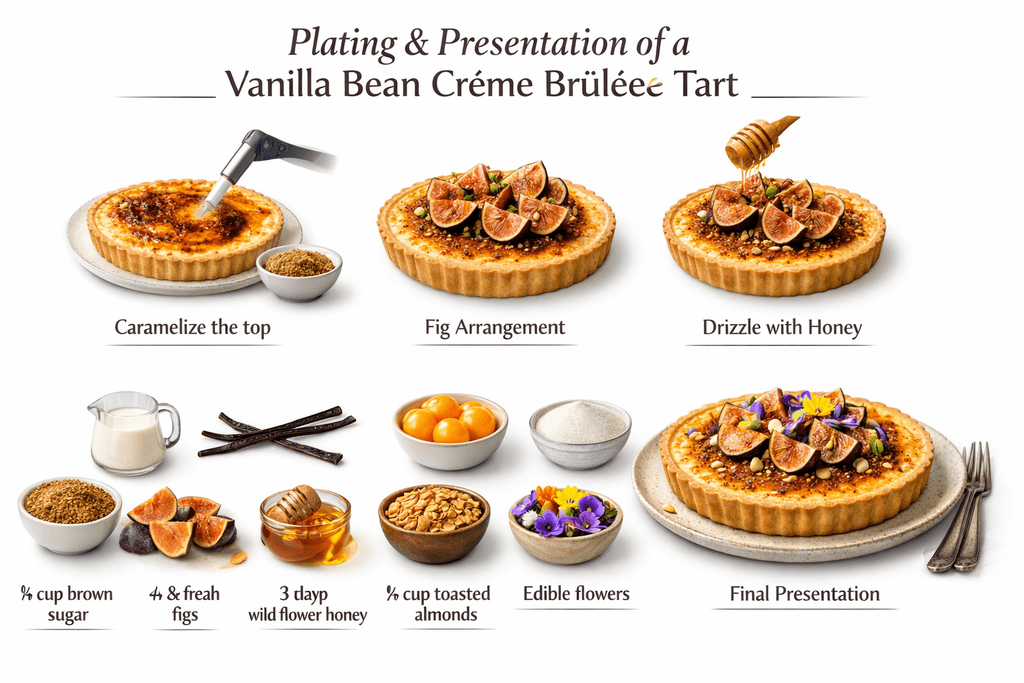
- Blot and Sugar the Top: Remove the chilled tart from the refrigerator and gently blot away any surface moisture with a clean paper towel. Sprinkle an even, thin layer of Demerara or raw cane sugar across the custard, tilting the pan lightly so the crystals reach the pastry edge.
- Caramelize With a Culinary Torch: Hold a kitchen blowtorch 2 to 3 inches (5–7 cm) above the surface and sweep the flame in slow, steady circles until the sugar melts, bubbles, and turns deep golden amber. Let the caramelized layer cool and harden for 3 to 5 minutes before adding fruit.
- Garnish With Figs, Almonds, and Honey: Quarter or slice the fresh ripe figs and arrange them in a neat crescent along one side of the tart, leaving half of the glossy caramelized crust visible. Scatter the toasted flaked almonds around the figs, tuck in a few edible flowers if using, and finish with a light drizzle of warm wildflower honey just before bringing the tart to the table.
Practical Pastry Tips for Reliable Slices
- Trust the Center Wobble: If the custard domes up or cracks in the oven, the temperature is slightly too high or it baked a few minutes too long. Pulling it while the center still trembles ensures a creamy texture once chilled.
- Never Refrigerate After Torching: Refrigerator humidity softens melted sugar into sticky syrup within an hour, always keep the un-torched tart chilled, then caramelize and garnish right before dessert.
- Clean Your Knife Between Cuts: Dip a long, thin chef’s knife into hot water and wipe the blade dry before each slice so you crack cleanly through the caramelized sugar without pressing down on the custard.
Served slightly chilled with Crisp Pastry, silky vanilla custard, and honeyed fresh figs, this tart brings classic French pastry technique into a straightforward, repeatable home recipe.