How to Choose a Chef’s Knife: German vs. Japanese Blades for Everyday Cooking
A practical guide to finding a balanced, razor-sharp kitchen knife that makes daily meal prep faster, safer, and more comfortable.
Table of Contents
A dull or poorly balanced knife turns routine meal prep into slow, frustrating work, forcing you to press harder and increasing the risk of slips on the cutting board. Investing in one well-made chef’s knife changes how your kitchen runs, giving you clean, controlled cuts through tough root vegetables, herbs, and proteins with far less hand fatigue.
Why a Professional Chef’s Knife Is a Kitchen Investment
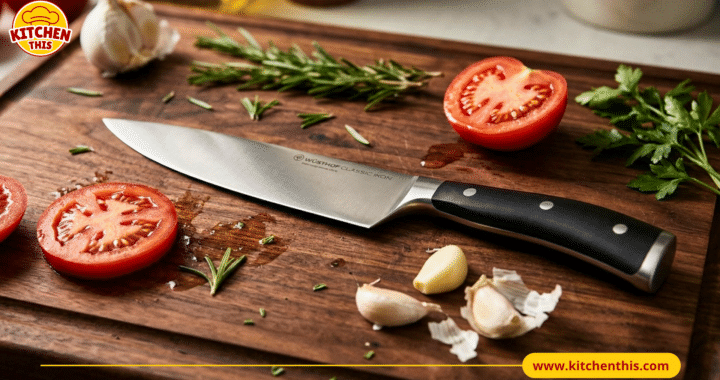
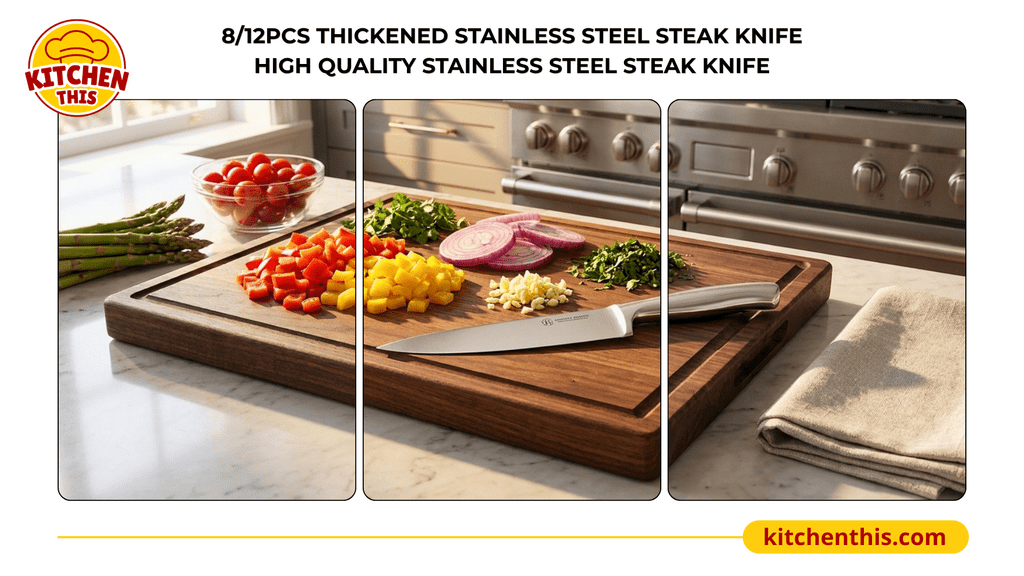
The main reason to buy a quality chef’s knife is straightforward: it makes everyday food preparation faster, safer, and far more precise. A sharp, properly balanced blade glides through ingredients with minimal downward pressure, keeping your cuts clean and predictable rather than forcing you to saw through tough skins or dense root vegetables.
For busy home cooks, one reliable chef’s knife replaces an entire block of rarely used blades. Instead of struggling with dull, lightweight utensils that wear out quickly, a well-built knife holds its edge through months of daily dinners and can be maintained for decades with occasional honing and sharpening.
If you are looking to replace worn-out kitchen tools with durable essentials that hold up to daily cooking, you can browse our tested recommendations in our Kitchen Tools & Cookware Guide.
Comparing the Best: Finding Your Perfect Blade
Understanding the differences between blade styles makes it much easier to choose a knife that actually fits how you cook. Both German-style and Japanese-style chef’s knives offer reliable performance and clean balance, with an 8-inch blade giving most home cooks the best mix of reach, control, and comfort for everyday prep.
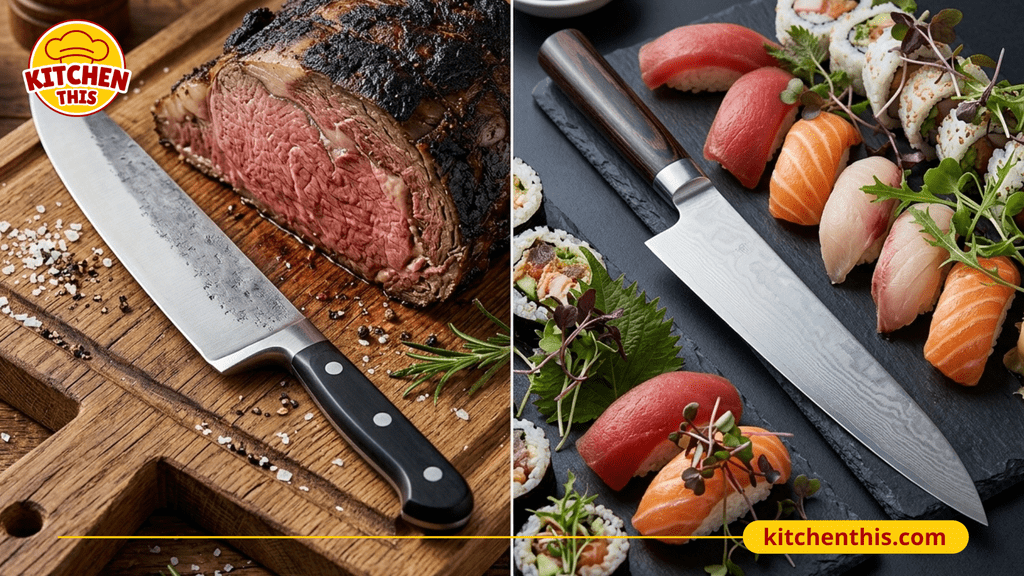
The comparison table below breaks down how the three most common kitchen blades differ in build, edge geometry, and day-to-day use.
| Knife Style | Primary Function & Edge | Material & Build | Best Food Types | Ideal Kitchen Fit |
| German Chef’s Knife (8-inch) | Heavy-duty chopping, rocking-motion slicing, and dense prep | Thick high-carbon stainless steel with a full tang and sturdy bolster | Tough root vegetables, winter squashes, herbs, and large cuts of meat | Busy everyday kitchens needing one durable, forgiving all-purpose blade |
| Japanese Chef’s Knife (Gyuto) | Precision slicing, fine dicing, and clean push-cuts | Thinner, harder steel (often clad or hammered) with a lighter, nimble feel | Boneless fish, delicate herbs, fine vegetable juliennes, and boneless poultry | Cooks who prefer a lighter, sharper blade for detailed prep work |
| Serrated Steak Knife Set | Clean table slicing without shredding cooked meat fibers | Thickened, mirror-polished stainless steel with durable micro-serrations | Grilled steaks, Sunday roasts, crusty bread rolls, and roast poultry | Households that frequently host dinners, barbecues, or family roasts |
Smart Buyer’s Guide: Investing in Quality and Safety
When shopping for a reliable kitchen knife, look past decorative packaging and focus on how the blade is built and balanced. Four practical details separate a knife that lasts decades from one that loses its edge in a few months:
- Appropriate Size and Weight: An 8-inch (20 cm) chef’s knife remains the most versatile size for home kitchens, long enough to slice cleanly through a whole melon or cabbage, yet compact enough to give you close control when mincing garlic or shallots.
- High-Carbon Stainless Steel Construction: Look for blades forged or stamped from high-carbon stainless steel. The added carbon helps the cutting edge stay sharp through daily prep, while the chromium content protects the metal against rust and staining from acidic ingredients like tomatoes and citrus.
- Hygienic, Non-Porous Handle Materials: Choose handles made from dense composite resins (such as POM or Pakkawood), stabilized hardwood, or seamless one-piece steel so moisture and food residue cannot collect in gaps around the rivets.
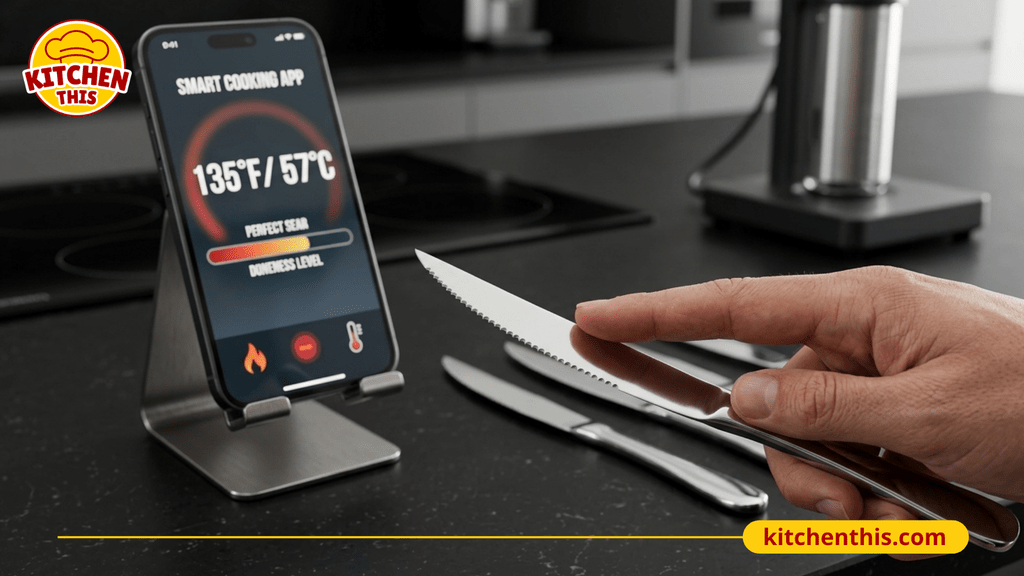
- Pairing Good Prep With Accurate Cooking: Clean, uniform knife cuts do more than improve presentation, they help ingredients cook at the exact same rate. Pairing a sharp prep knife with an instant-read or wireless probe thermometer takes the guesswork out of roasting thick cuts of meat so nothing dries out in the oven.
Anatomy of a Well-Built Chef’s Knife
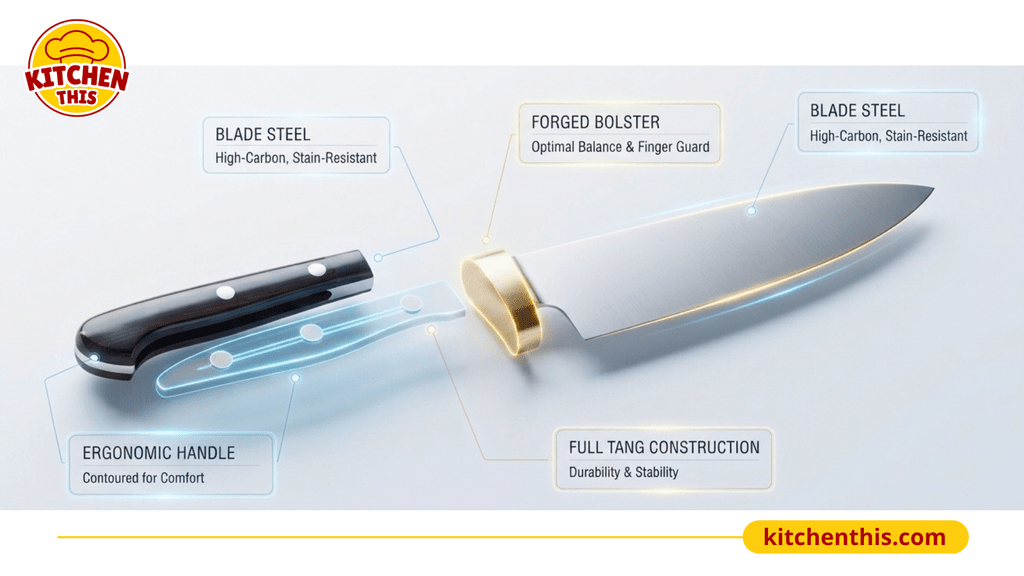
The Blade Edge: Quality chef’s knives are ground to a precise bevel, typically around 15 degrees per side on Japanese-style blades and 18 to 20 degrees on Western blades. A clean, acute edge slices through herb leaves and meat fibers cleanly without crushing them.
Full-Tang Construction: In a full-tang knife, the steel of the blade runs continuously through the entire length of the handle. This adds structural strength and shifts weight toward your grip so the blade never feels front-heavy.
The Bolster: On Western-style knives, the bolster is the thick collar of steel where the blade meets the handle. It balances the knife at your pinch grip and acts as a natural guard to keep your fingers from slipping onto the heel of the blade.
Ergonomic Handle Contour: A gently curved handle with rounded edges sits comfortably in your palm during longer prep sessions, reducing wrist and finger fatigue when chopping dense vegetables.
Completing the Table: Quality Stainless Steel Steak Knives
A sharp chef’s knife handles the prep work on the cutting board, while a dedicated set of stainless steel steak knives makes serving roasts, grilled steaks, and thick poultry effortless at the dining table.
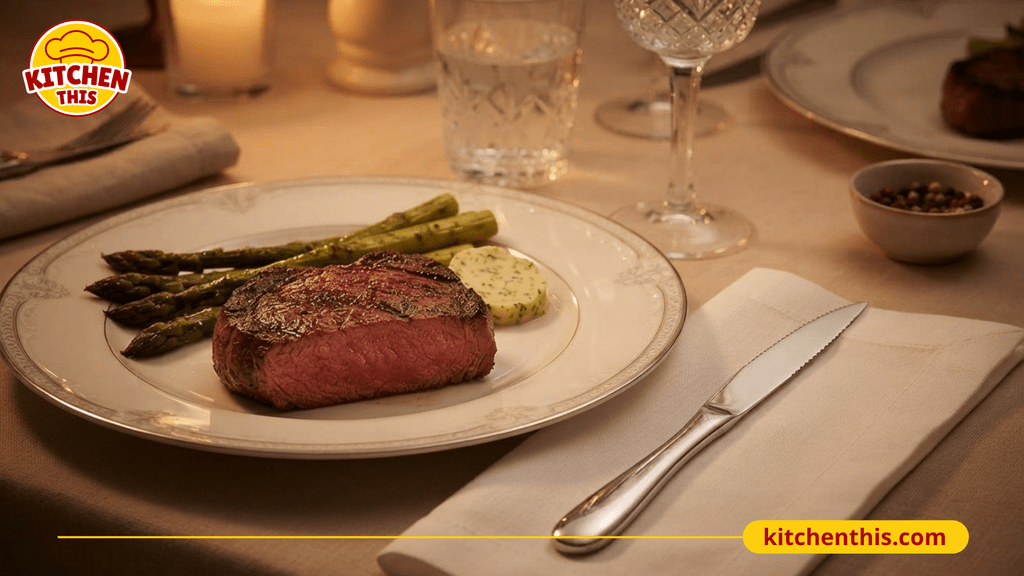
Fine Micro-Serrations vs. Smooth Edges: Micro-serrated stainless steel steak knives stay sharp through regular contact with ceramic dinner plates and slice cleanly through crusty seared meats without tearing the fibers.
Balanced Weight and Corrosion Resistance: Thickened, mirror-polished stainless steel blades feel substantial in the hand, resist staining from rich sauces, and clean up easily after family dinners or weekend gatherings.
Safe Handling, Cleaning, and Maintenance
Buying a well-made chef’s knife is only half of the equation, how you hold, wash, and store the blade determines how safe it feels in your hand and how many years it stays sharp.
Master the Pinch Grip and Claw Technique
- Use a Pinch Grip for Control: Rather than wrapping your entire fist around the handle like a hammer, pinch the base of the blade (just in front of the bolster) between your thumb and the side of your bent index finger, wrapping your remaining three fingers comfortably around the handle. This centers the balance point in your hand and keeps the blade from wobbling during fast cuts.
- Guide With the Claw Grip: Tuck the fingertips of your non-dominant hand inward so your knuckles face the flat side of the blade. Resting the side of the knife lightly against your middle knuckles keeps your fingertips safely away from the cutting edge while giving you steady control over slice thickness.
Cleaning, Honing, and Storage Habits
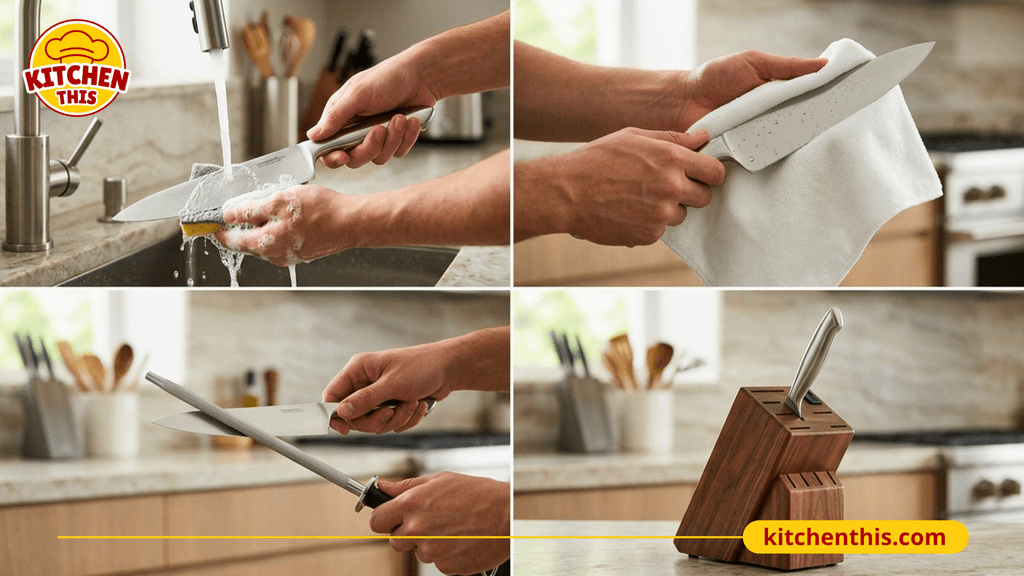
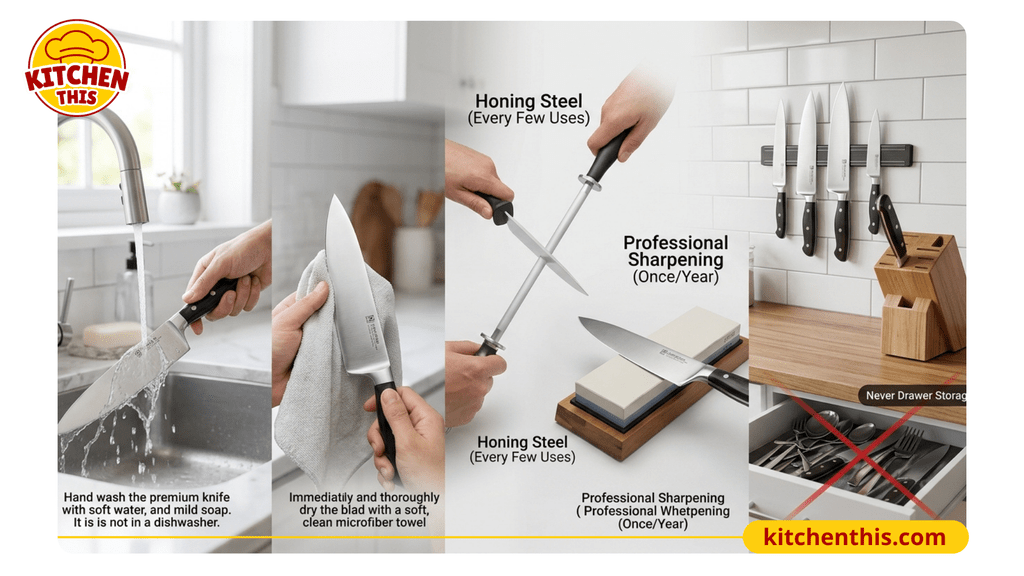
- Hand-Wash Only: Even if sturdy stainless steel steak knives can handle occasional dishwasher cycles, never put a fine chef’s knife in the dishwasher. High water temperatures, abrasive detergents, and contact with other metal utensils dull the cutting edge and can warp or crack handles over time.
- Dry Immediately With a Towel: Wash the blade in warm, soapy water right after prepping acidic foods like lemons, tomatoes, or onions, then wipe it dry from spine to edge with a soft kitchen towel before setting it down.
- Know the Difference Between Honing and Sharpening: A honing steel (or ceramic honing rod) does not remove metal; it realigns the microscopic edge that bends slightly during daily chopping. Give your blade three or four light passes on a honing rod every few cooking sessions, and sharpen it on a whetstone (or have it professionally sharpened) once or twice a year when honing no longer restores its bite.
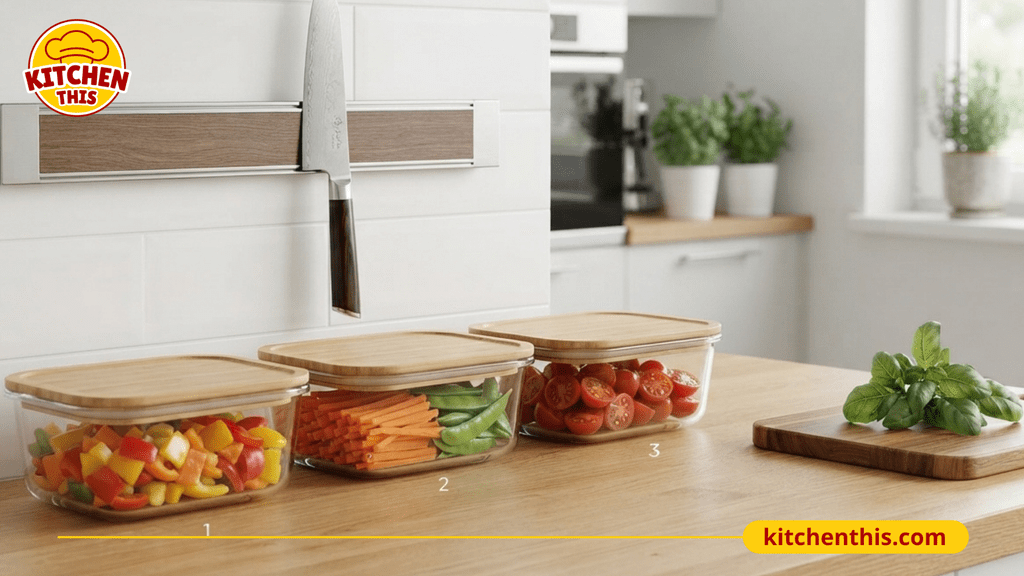
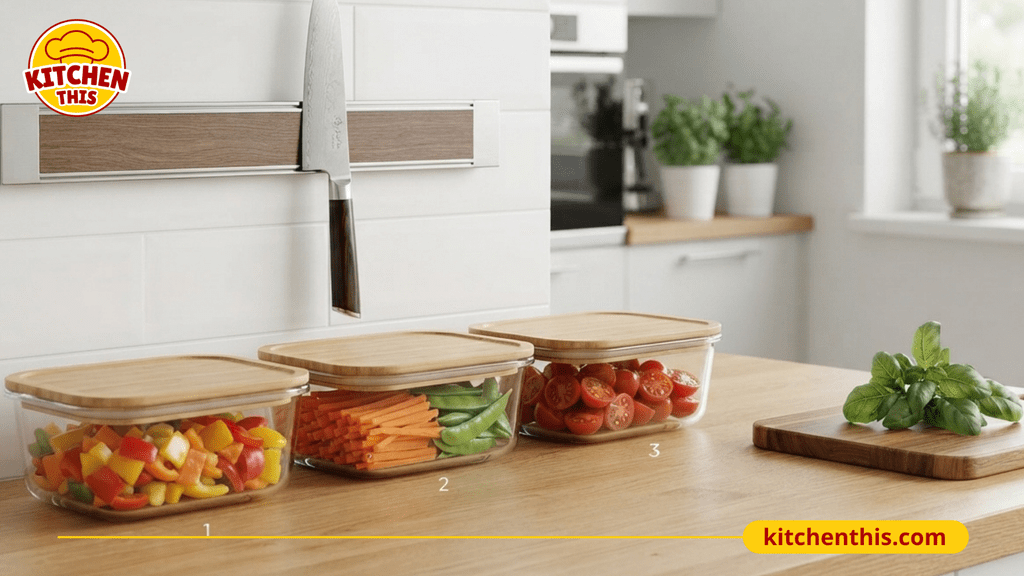
- Store Blades Safely: Keep your chef’s knife on a wall-mounted magnetic wood strip, inside an in-drawer slotted knife dock, or in a counter block. Leaving a sharp blade loose in a utensil drawer dulls the edge and creates a serious hand hazard.
If you are looking for dependable storage racks or honing rods to round out your setup, check out our recommended Knife Care & Storage Picks.
Simple Prep Habits That Keep Your Kitchen Running Smoothly
A sharp knife works best when your prep station is set up to support it:
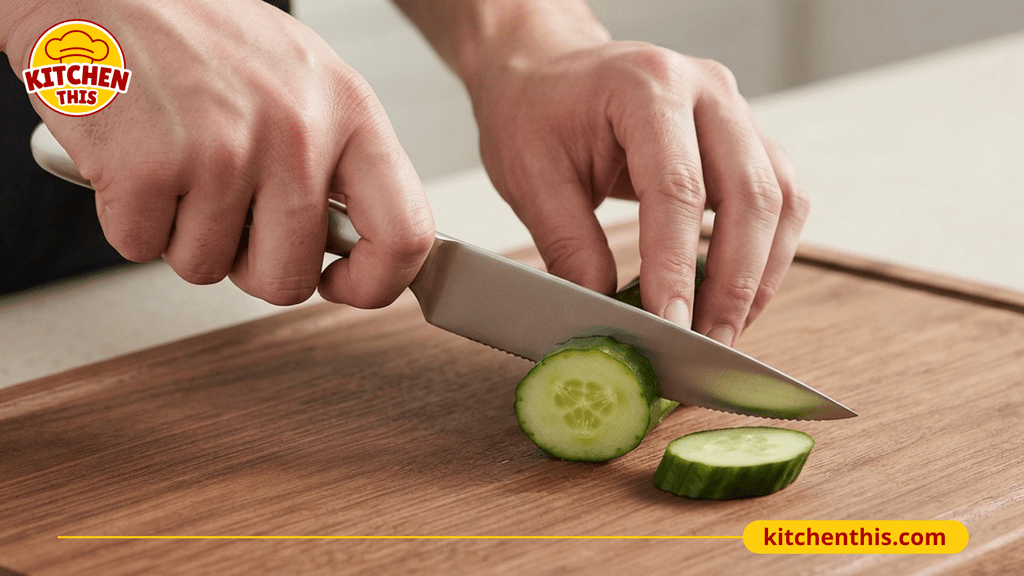
Build a Dedicated Prep Zone: Keep your chef’s knife, primary wooden or composite cutting board, kitchen towels, and a small scrap bowl within arm’s reach of the sink or stove so you are not crossing the kitchen mid-recipe.
Batch-Prep Hardy Aromatics: Spending 15 minutes at the start of the week dicing onions, carrots, celery, or bell peppers, and storing them in airtight glass containers, cuts weeknight dinner prep in half.
Clear Out Unused Blades: Replace a drawer full of dull, mismatched knives with one dependable 8-inch chef’s knife, a small paring knife, a serrated bread knife, and a durable set of table steak knives.
Taking care of a single, well-balanced chef’s knife makes everyday cooking noticeably calmer, cleaner, and faster, turning routine prep work into one of the easiest parts of making a meal at home.