Five Overlooked Kitchen Storage Zones That Double Your Usable Space
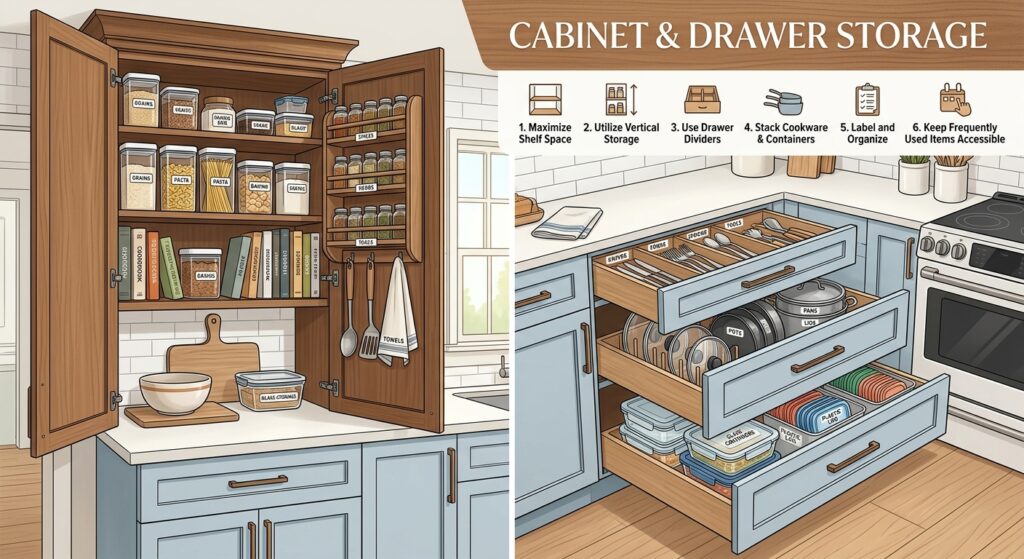
Most kitchens do not run out of Storage because the room is too small, they run out of storage because awkward zones go completely unused. Narrow gaps beside the range, the tangled plumbing bay under the sink, tall upper shelves where baking sheets pile horizontally, and deep pantry cupboards where cans disappear in the back all waste valuable square footage every single day.
Fixing those dead zones does not require tearing out cabinetry or buying a trunkload of matching plastic containers. By matching simple, targeted hardware to the exact geometry of each awkward space, you can make everyday tools faster to grab and keep counters clear without overcomplicating your cabinets.
Table of Contents
1. Turn Deep Pantry Shelves Into Shallow, Visible Rows
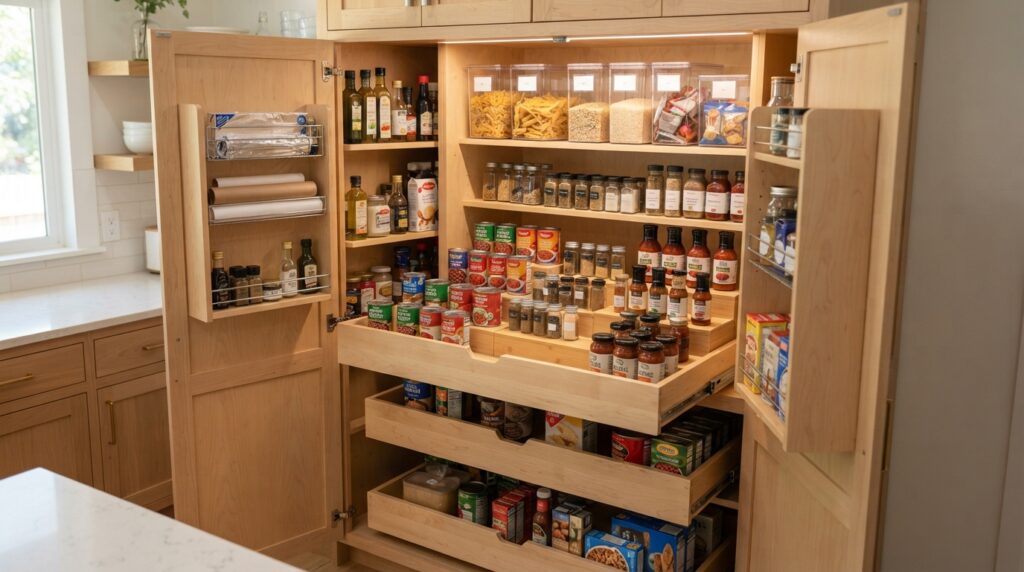
Standard 24-inch-deep pantry cabinets are notorious for hiding groceries behind rows of older cans and half-empty pasta boxes. When you cannot see what sits in the back half of a shelf, you end up buying duplicates at the grocery store while older staples expire untouched.
| Pantry Challenge | Practical Structural Fix | Why It Works Better |
| Deep Fixed Shelves | Install full-extension pull-out wood or wire drawers | Brings the back 12 inches of groceries out into clear overhead light |
| Tall Gaps Between Shelves | Add half-depth step risers or adjustable middle shelves | Keeps cans, jars, and spice bottles visible in tiered rows |
| Wasted Pantry Door Surface | Mount a shallow door-hung rack (3 to 4 inches deep) | Holds wraps, foils, snacks, and small bottles without blocking inner shelves |
| Loose Bags of Grains & Snacks | Group by category in clear open-topped pull bins | Lets you slide an entire category out like a drawer in one motion |
Before ordering pull-out pantry drawers or door racks, check that your cabinet doors open past 90 degrees so sliding trays clear the door hinges cleanly.
2. Reclaim Narrow Vertical Gaps for Baking Sheets and Cutting Boards
Wide, flat items, sheet pans, muffin tins, cooling racks, cutting boards, and serving platters, create immediate chaos when stacked horizontally in a lower cupboard. Pulling out the pan at the bottom of a heavy stack requires lifting four others first.
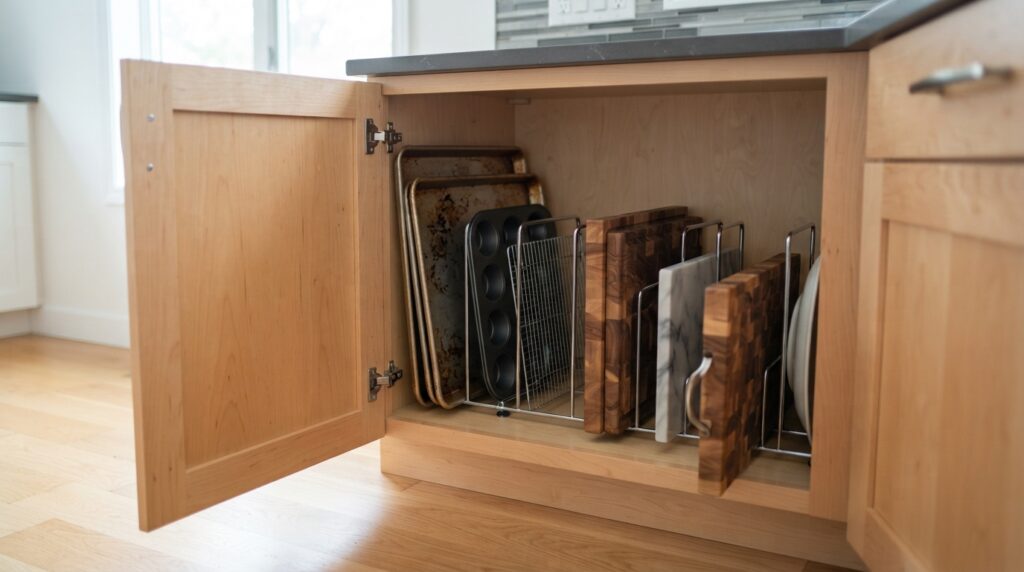
Installing vertical tray dividers inside a narrow 9-to-12-inch base cabinet or above the refrigerator stores every pan upright like files in a cabinet. Each board or baking sheet slides out independently in one second, and chrome wire or birch plywood dividers take less than twenty minutes to screw into an existing shelf.
3. Organize the Under-Sink Cabinet Around Plumbing Pipes
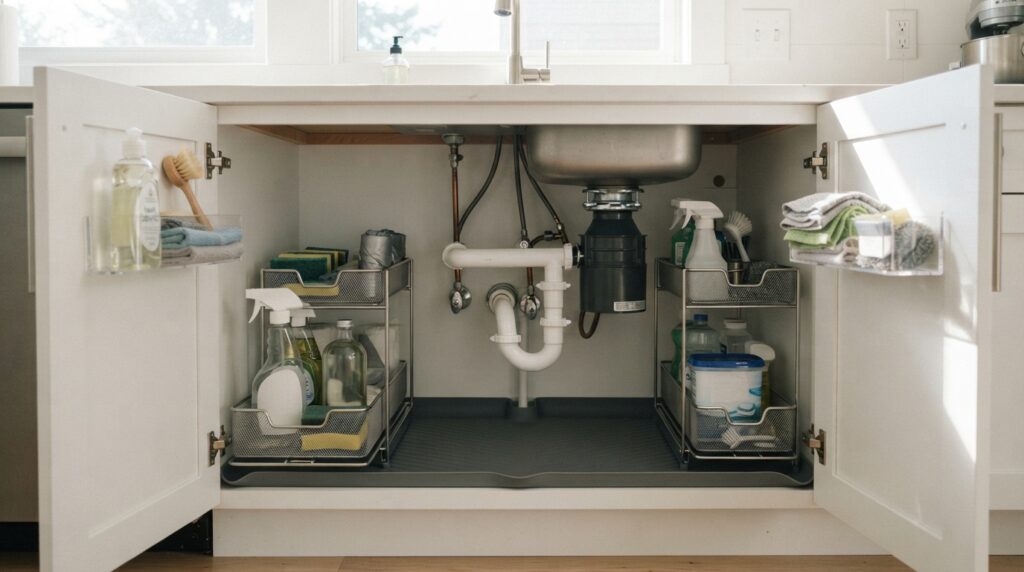
The cabinet beneath the kitchen sink is almost always the messiest spot in the house because drainpipes, water shutoff valves, and garbage disposals break up the space awkwardly. Standard rectangular bins rarely fit around the P-trap, leaving half the cabinet unusable.
| Under-Sink Zone | Smart Storage Solution | Practical Setup Tip |
| Cabinet Floor | Waterproof silicone or rigid plastic drip mat | Protects the cabinet base from slow plumbing leaks and cleaning spills |
| Space Around Pipes | U-shaped or two-tier sliding caddies that wrap around the drain | Uses the left and right sides of the sink basin without hitting pipes |
| Inside Cabinet Doors | Narrow over-the-door or adhesive caddies | Keeps dish soap, scrub brushes, and dishwasher pods off the counter |
| Trash & Recycling | Bottom-mounted dual pull-out bin frame | Keeps waste concealed while gliding smoothly on heavy-duty runners |
Keep frequently used dishwashing supplies right at the front edge of the under-sink bay, and reserve the harder-to-reach back corners for backup sponges, trash bag rolls, and bulk dishwasher tablets.
4. Convert Narrow Base Fillers Into Pull-Out Spice and Oil Stations
Many kitchens have a narrow 6-to-12-inch gap beside the range or refrigerator occupied by a fixed decorative filler strip or a skinny cupboard where small jars get lost in the dark. Replacing that narrow box with a full-height pull-out spice and cooking-oil rack puts every bottle within arm’s reach of the stove.
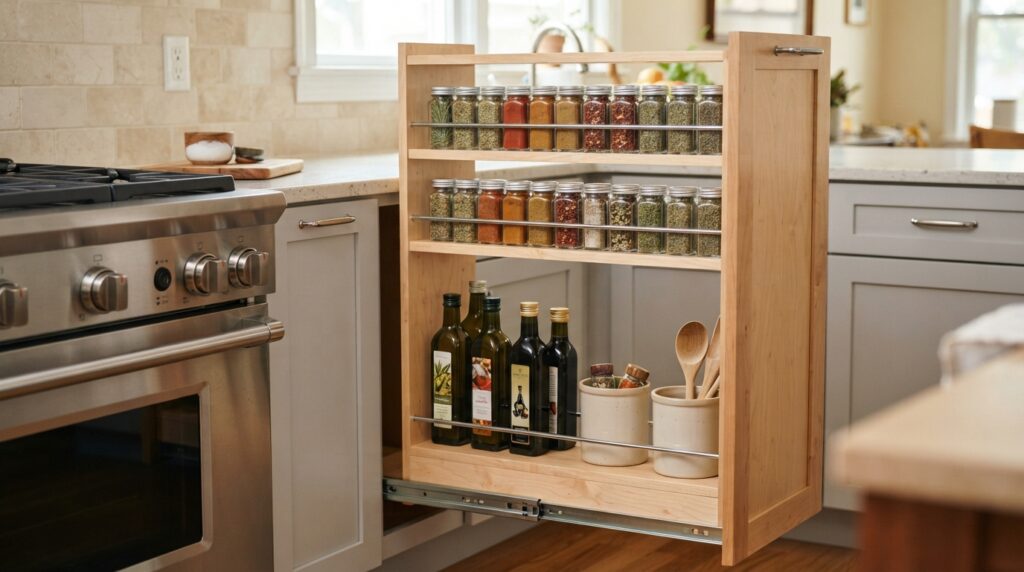
- Keep Heat-Sensitive Oils Away From Direct Burner Heat: If the narrow pull-out sits directly next to an uninsulated oven wall, store metal utensils, cutting boards, or dry spices there instead of delicate olive oils that turn rancid faster near heat.
- Verify Shelf Lip Height: Choose pull-out racks with sturdy side rails so tall vinegar and oil bottles never tip over when you slide the unit open quickly.
5. Use Toe-Kick Space and Blind Corners Intentionally
Two final dead zones often hold more potential than homeowners realize:
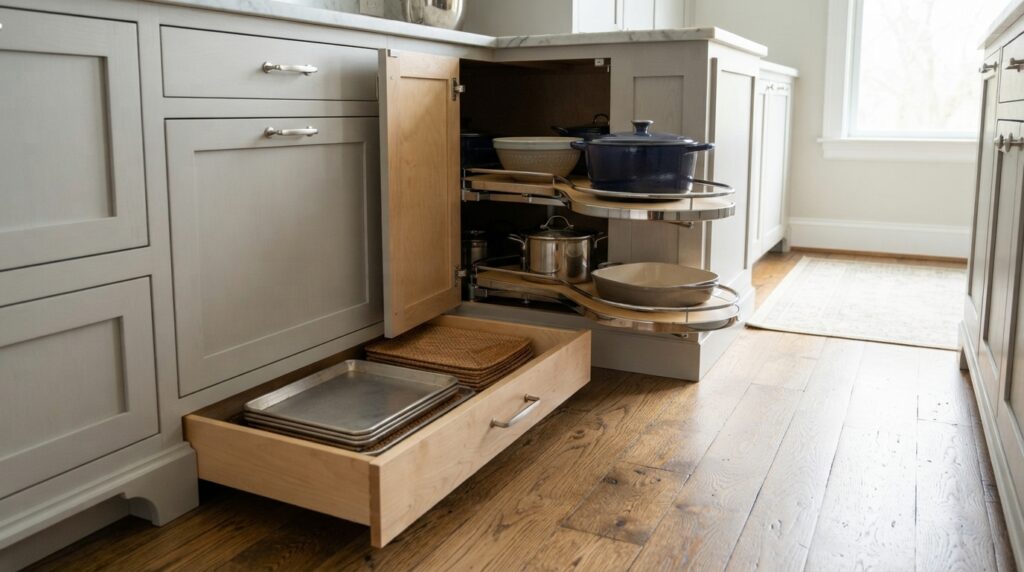
- Toe-Kick Drawers Beneath Base Cabinets: The 4-inch recessed space under lower cabinets typically sits completely empty behind a wooden baseboard. During a remodel or cabinet update, shallow toe-kick drawers can hold flat baking sheets, place mats, or pet feeding bowls without taking an inch from your main drawers.
- Corner Cabinets Measured by Reach, Not Volume: A deep corner cupboard only earns its footprint when its contents come to you. Whether you choose a sturdy two-tier lazy Susan or a swing-out kidney-shaped tray, measure the clear door opening first so large Dutch ovens and stand mixers clear the frame easily.
A Simple Rule Before Adding Any Storage Hardware
Every cabinet upgrade should pass three quick checks before you buy:
- Measure the Clear Interior: Account for door hinges, face frames, and plumbing pipes, not just the exterior cabinet width.
- Keep Compartments Adaptable: Choose adjustable shelves and movable dividers so your cabinets still fit new cookware years from now.
- Prioritize Daily Habits: Put the tools you reach for every evening in waist-level drawers, and move seasonal roasting pans or holiday platters to upper shelves.
When you turn overlooked gaps into reachable, well-lit zones, your kitchen feels calmer and noticeably larger, without adding a single new Cabinet to the floor plan.