How to Organize Your Fridge and Freezer So Food Actually Gets Eaten
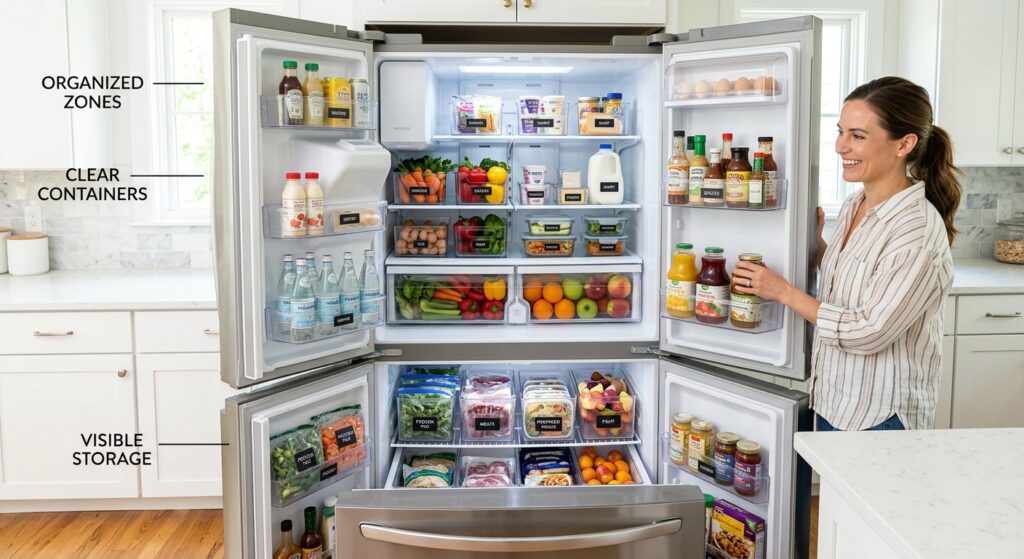
Most people do not have a Refrigerator space problem, they have a visibility problem. When half a lemon rolls behind a gallon of milk and Tuesday’s leftover pasta disappears behind a tall jar of pickles, groceries spoil simply because nobody sees them until it is too late.
Buying twenty matching clear acrylic bins will not fix that habit. What actually works is giving every category of food a predictable spot, keeping raw meats safely contained on the bottom shelf, and spending five minutes once a week rotating older items to the front before you shop.
Table of Contents
1. Empty the Shelves Before You Touch a Single Bin
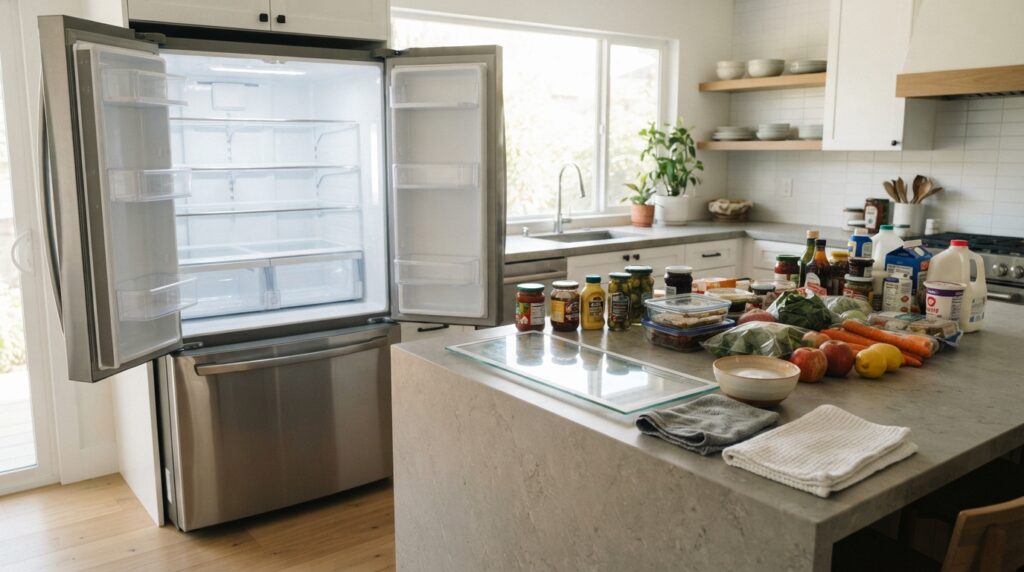
Trying to organize a full fridge by shuffling jars around never lasts more than forty-eight hours. Pull everything out onto your kitchen counter first so you can see what you actually own you will almost certainly find two open jars of salsa, three half-empty condiment bottles, and a mystery container from last week.
| What You Spot on the Counter | How to Handle It |
| Duplicate Open Jars | Combine them if safe, or put the older jar front-and-center to finish first |
| Unlabeled Leftovers | Toss anything older than four days or anything you cannot identify |
| Dented or Bulging Cans | Per USDA safety rules, discard any can that is leaking, bulging, badly rusted, or deeply dented |
| Expired Packaged Goods | Check whether the label says Best By (peak flavor) vs. Use By (perishable safety) |
While the shelves are bare, wipe down the glass, crisper drawers, and rubber door seals with warm soapy water and dry them with a clean towel. Starting with dry, spotless shelves makes it far easier to see spills the moment they happen later.
2. Check Your Actual Fridge and Freezer Temperatures
Before loading food back inside, make sure your appliance is actually holding safe temperatures. Built-in dial numbers (like “3” or “5”) rarely tell you the real temperature inside the box.
- Refrigerator Target: 40°F (4°C) or lower, verified with an inexpensive hanging appliance thermometer on a middle shelf.
- Freezer Target: 0°F (-18°C) or lower, keeping ice cream firm and frozen meats solid.
- Leave Breathing Room: According to U.S. Food and Drug Administration (FDA) food storage guidelines, cold air needs open space to circulate around containers. Jamming items tightly against the back vents blocks airflow and creates warm spots where milk and fresh produce spoil prematurely.
3. Assign Simple, Everyday Zones That Anyone Can Follow
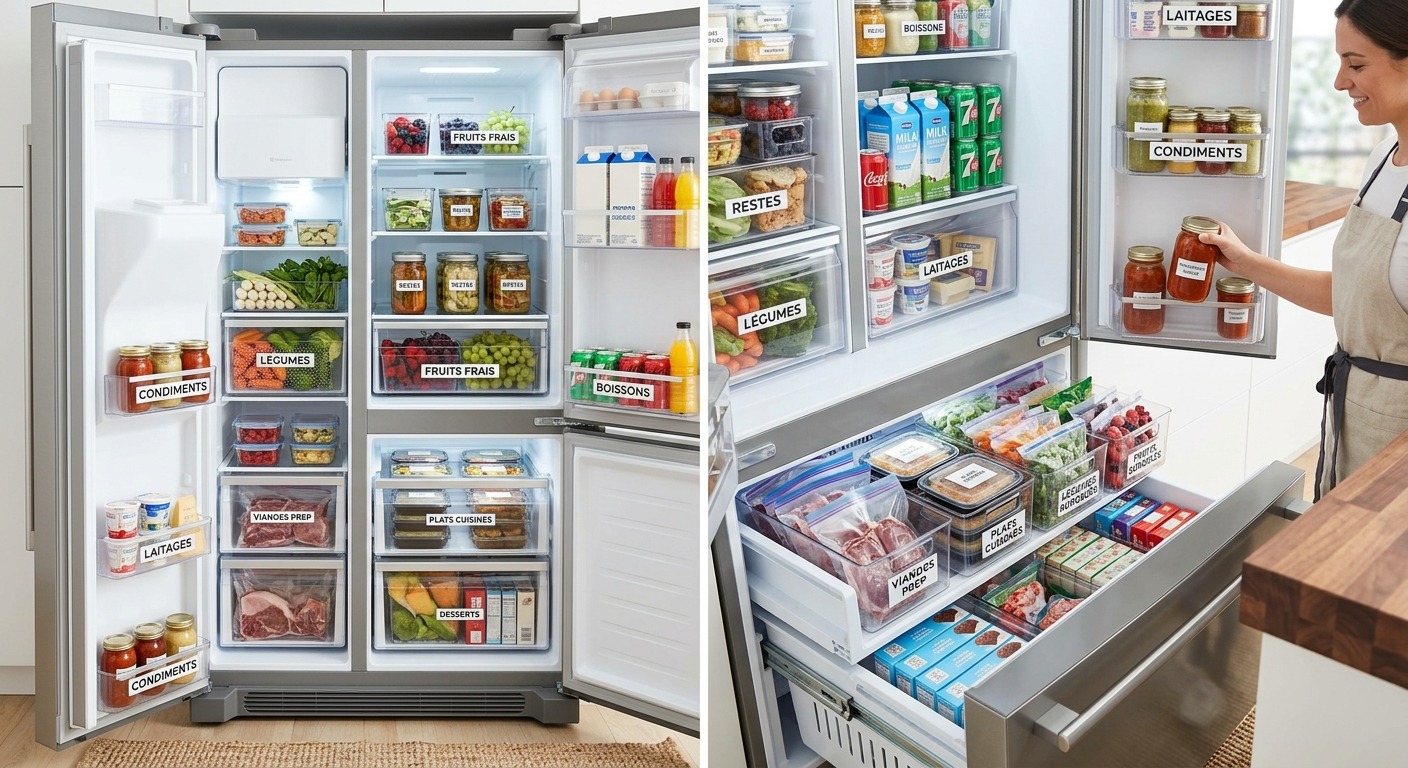
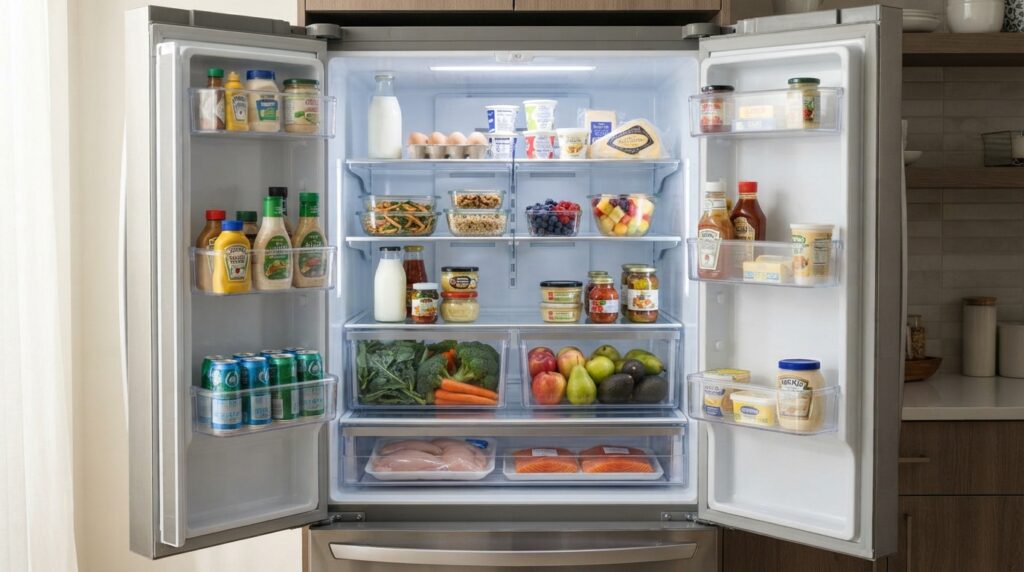
A good refrigerator layout should be obvious to everyone in the house without needing a color-coded diagram taped to the door. Group foods into five broad zones based on temperature stability and how quickly items spoil:
| Fridge Zone | Best Shelf or Drawer | What Belongs Here (and Why) |
| Eat-First Leftovers | Eye-level middle or top shelf | Cooked meals, open deli packs, and cut fruit, placed right where you look first |
| Dairy & Everyday Staples | Upper or middle interior shelf | Milk, yogurt, eggs, and cheese, far colder here than in the swinging door |
| Fruits & Vegetables | Separate crisper drawers | Keep high-humidity greens away from apples, pears, and avocados that release ripening gas |
| Raw Meat, Poultry & Fish | Bottom shelf in a rimmed tray | Prevents raw juices from ever dripping onto fresh produce or cooked food below |
| Condiments, Oils & Drinks | Door shelves and lower bins | Sauces, dressings, mustard, and beverages tolerate mild temperature swings when the door opens |
Keeping raw meat and poultry inside a washable rimmed tray on the bottom shelf is one of the smartest habits in any kitchen. If a package leaks while thawing, you wash one tray in the sink instead of sanitizing three shelves of groceries.
4. Stop Leftovers From Disappearing Behind Tall Cartons
Leftovers are the single easiest thing to lose in a busy kitchen. Whenever you pack away dinner, put the container in your dedicated eye-level Eat-First zone rather than tucking it wherever a gap opens up.
Three simple habits keep leftovers from going to waste:
- Stick to the Four-Day Window: USDA food safety guidelines recommend eating or freezing refrigerated leftovers within three to four days.
- Cool Big Pots in Shallow Dishes: Dividing a large batch of soup, chili, or pulled chicken into shallow containers lets it cool rapidly in the fridge rather than staying lukewarm in the center.
- Date Containers With Painter’s Tape: Keep a roll of blue painter’s tape and a marker in the nearest drawer, jotting “Chicken soup – Tue” takes three seconds and eliminates guesswork later in the week.
5. Organize the Freezer Like a Filing Cabinet, Not a Chest
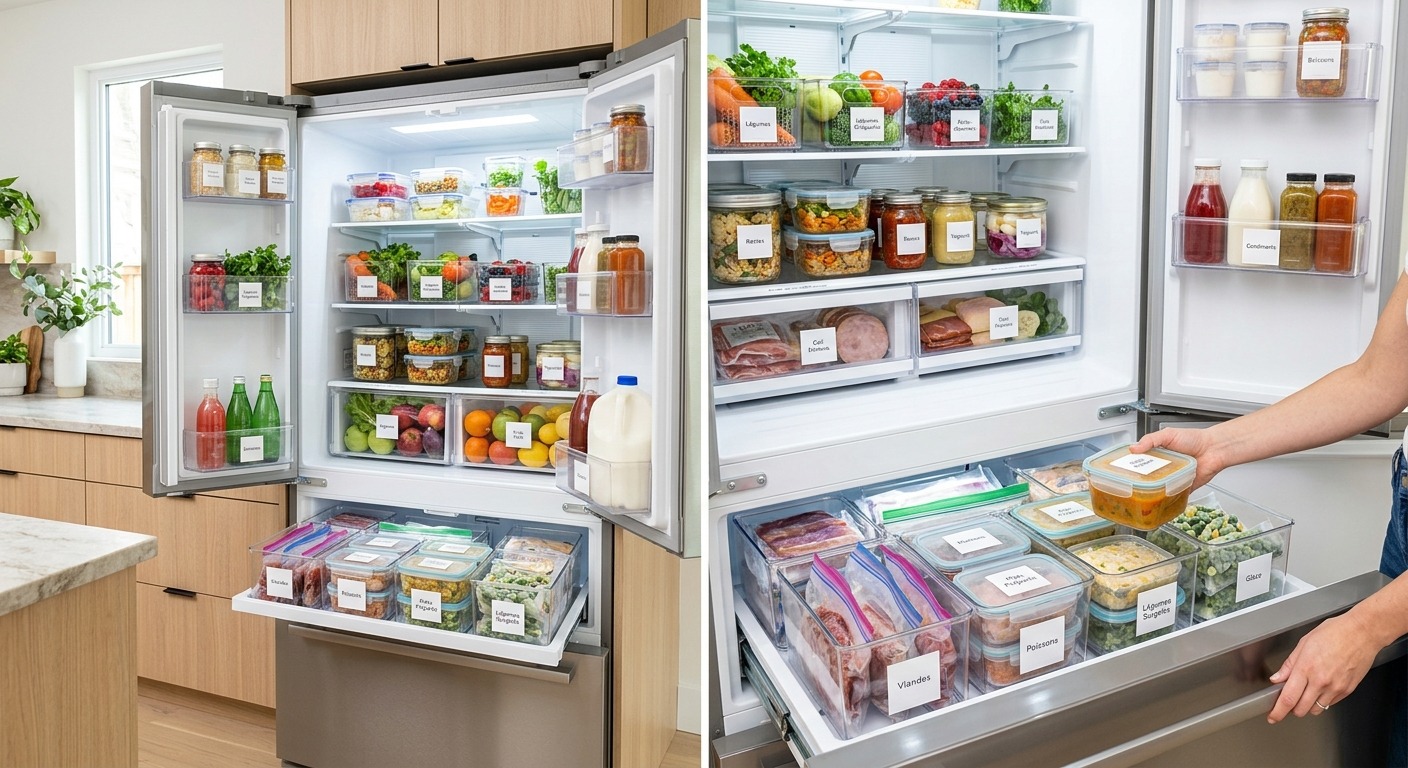
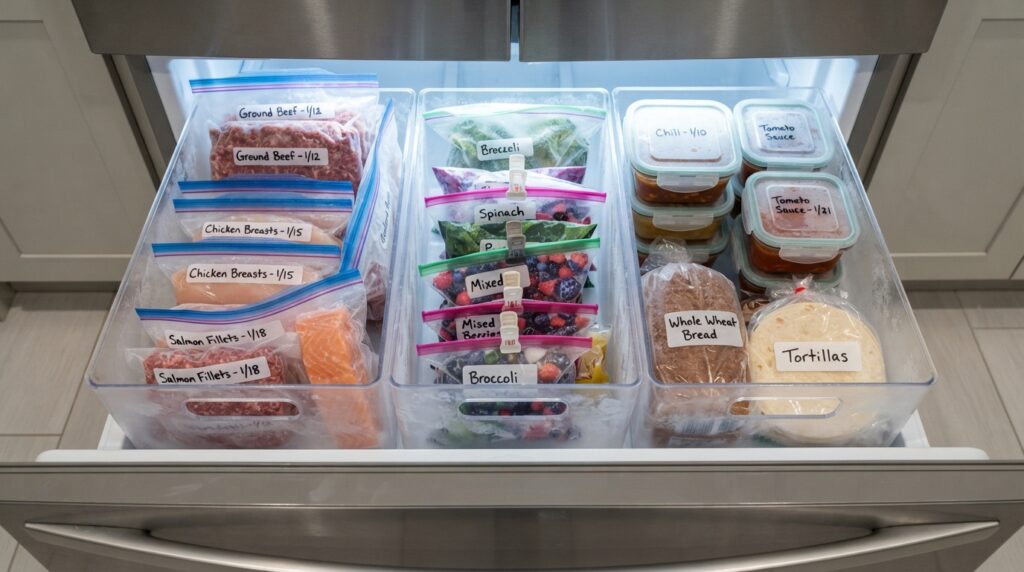
Freezers turn chaotic fast because frosted bags all look alike once buried under newer groceries. Instead of stacking loose packages into an avalanche, use two or three open-topped freezer bins as pull-out drawers:
| Freezer Bin Category | Best Packing & Storage Habit |
| Raw Meats & Seafood | Freeze ground meat, chicken breasts, and marinades flat in zip-top bags so they stand upright like files and thaw in half the time |
| Batch-Cooked Meals | Store soups, sauces, and casseroles at eye level with the dish name and freeze date clearly written on top |
| Frozen Vegetables & Fruit | Group open bags together in one bin with sturdy bag clips to prevent freezer burn |
| Bread, Tortillas & Baking | Keep loaves, nuts, and flour in an upper pocket so heavy frozen roasts never crush them |
Food stored continuously at 0°F (-18°C) stays safe indefinitely, yet flavor and texture slowly fade after several months so whenever you unpack new groceries, slide older bags toward the front of each bin.
6. Measure Your Shelves Before Buying Any Organizers
Clear turntables for tall condiment jars and narrow bins for yogurt cups can genuinely help, yet buying a pre-packaged set of fridge organizers before measuring your shelves almost always wastes space. Measure the usable width, shelf depth, and vertical clearance between shelves first and only add a bin where items actively roll around or get lost in the back.
7. Run a Five-Minute Reset Before Your Weekly Grocery Shop
You never need another big cleanout once you pair Simple Zones with a quick weekly check right before making your shopping list:
- Scan the Eat-First Shelf: Anything cooked three days ago goes on tonight’s dinner menu or straight into the freezer.
- Check the Crisper Drawers: Turn limp carrots, celery, or bell peppers into a quick stir-fry, soup, or sheet-pan roast before buying fresh produce.
- Bring Older Freezer Bags Forward: Pull one or two older frozen proteins into the fridge to thaw for the coming week.
A truly practical fridge does not look like a staged pantry photo, it lets you open the door, spot what needs to be eaten tonight in three seconds, and stop throwing away groceries you forgot you bought.