The Art of Perfect Pan-Searing: Achieving a Golden Crust with Restaurant Precision
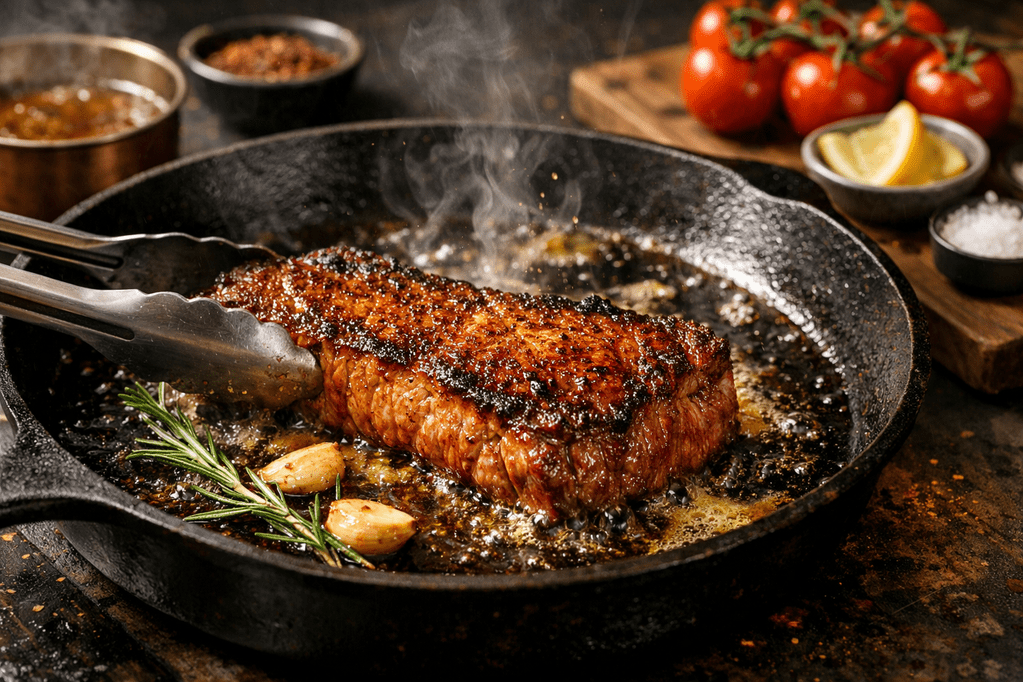
Master the Perfect Pan-Searing Technique
There is a distinct, undeniable allure to a beautifully cooked piece of meat or seafood presented at a high-end restaurant. The secret behind that caramelized exterior and succulent interior is not magic; it is the perfect pan-searing technique. Whether you are preparing a thick-cut ribeye, wild-caught seafood, or seasonal vegetables, mastering this culinary cornerstone is your ticket to elevating home-cooked meals into extraordinary dining experiences.
In this comprehensive guide, we will explore the science, the equipment, and the methodology behind restaurant-quality searing. From managing surface moisture to executing a flawless butter baste, you will discover the precise steps required to achieve an impeccably crisp, golden crust while preserving the tender, flavorful essence of your ingredients.
The Science of Searing: Understanding the Maillard Reaction
Before stepping up to the stove, it is vital to understand what happens when proteins meet high heat. Professional chefs do not simply cook meat; they orchestrate chemical transformations.
The secret to golden crust cooking lies in the Maillard reaction. This complex chemical interplay between amino acids and reducing sugars occurs rapidly at temperatures above 140°C (285°F). It is responsible for transforming the pale surface of raw ingredients into a rich, savory, and deeply complex crust.
However, the Maillard reaction has a sworn enemy: moisture. Water evaporates at 100°C (212°F). If your ingredient is wet when it hits the pan, the energy of the heat will be spent boiling away the water rather than browning the surface, resulting in steamed, gray, and uninspiring food.
Essential Equipment for High Heat Cooking
Executing professional cooking techniques at home requires the right tools. Your choice of pan will dictate heat retention, distribution, and the ultimate success of your sear.
Selecting the Perfect Vessel
- Cast Iron: The undeniable champion of searing. Cast iron cooking is revered in professional kitchens because, once heated, it retains its temperature beautifully, even when a cold, thick cut of meat is introduced.
- Multi-Ply Stainless Steel: An excellent, highly responsive alternative that offers rapid, even heating. It is particularly superb for creating pan sauces from the fond (the caramelized drippings left behind).
- Carbon Steel: Combining the heat retention of cast iron with the lighter weight of stainless steel, carbon steel is a staple in French fine dining.
- Avoid Non-Stick: Non-stick coatings (like Teflon) are strictly forbidden for searing. They cannot safely withstand the extreme temperatures required, nor do they allow proteins to properly grip the pan to build a crust.
High Smoke Point Oils
High heat cooking requires a fat that will not burn and impart bitter flavors to your dish.
| Oil Type | Smoke Point | Best Used For |
| Avocado Oil | 271°C (520°F) | Extreme heat, neutral flavor profile. |
| Grapeseed Oil | 216°C (420°F) | Excellent all-purpose high-heat searing. |
| Clarified Butter (Ghee) | 232°C (450°F) | Adding rich, nutty flavor without burning milk solids. |
| Extra Virgin Olive Oil | ~190°C (375°F) | Not recommended for initial searing; save for finishing. |
Step-by-Step to the Perfect Pan-Searing Technique
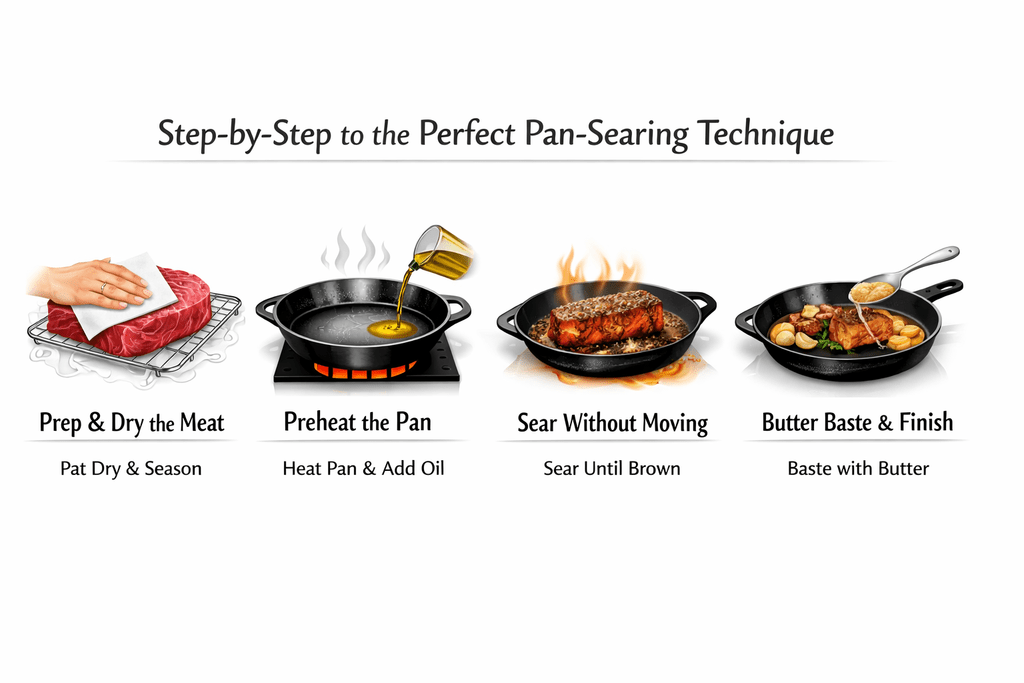
Achieving a flawless sear is an exercise in preparation, temperature control, and immense patience. Follow these exact steps to master this foundational skill.
1. Preparation and Moisture Control
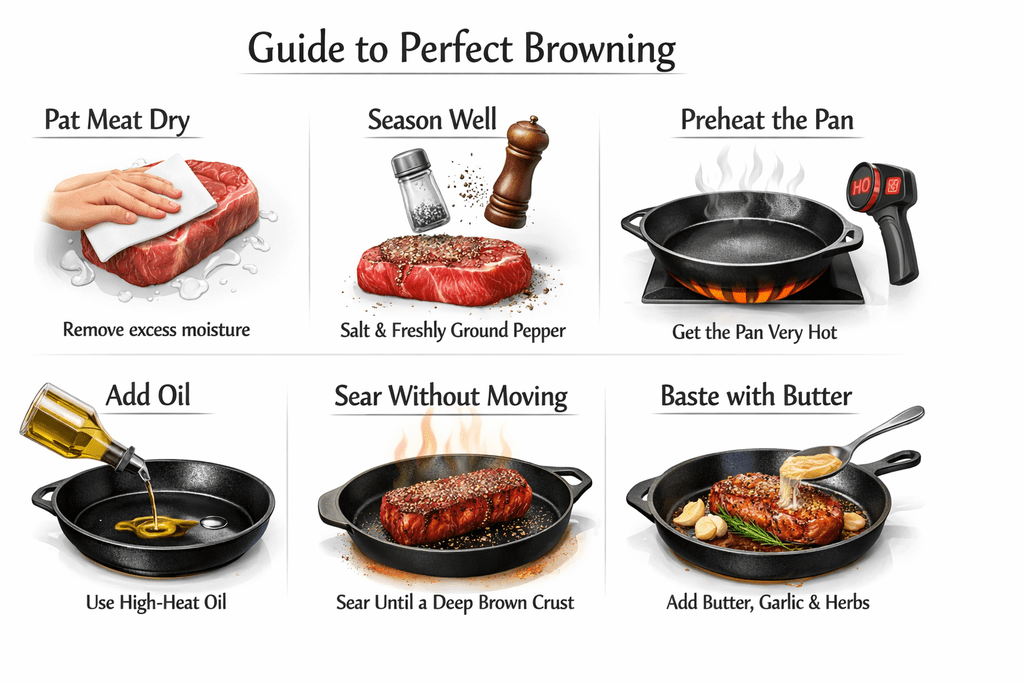
Begin by patting your protein completely dry using heavy-duty paper towels. For an even better crust, leave your meat uncovered on a wire rack in the refrigerator overnight. This dry-brining method draws out surface moisture while allowing salt to deeply penetrate the muscle fibers. Season generously with fine sea salt and freshly cracked black pepper immediately before the ingredient meets the pan.
2. Preheating the Pan
Place your dry, empty skillet over medium-high heat. Allow it to heat thoroughly for 3 to 5 minutes. You want the metal to be radiating heat before introducing your cooking fat. Add just enough high-smoke-point oil to thinly coat the bottom of the pan. When the oil begins to shimmer—just moments before it smokes—you are ready to cook.
3. The Art of Patience
Carefully place the ingredient into the pan, laying it away from you to prevent hot oil from splattering onto your hands. Do not overcrowd the pan; ensure there is at least an inch of space between items. If the pan is too full, the temperature will plummet, and the food will steam.
Once the food is in the pan, do not touch it. Resist the temptation to peek, prod, or shift the protein. As the proteins caramelize, they will naturally release from the metal. If you feel resistance when attempting to slide a fish spatula underneath, the crust has not yet formed. Wait.
Elevating the Dish: Butter Basting and Finishing
If there is a single hallmark of fine dining methods, it is the technique known in French as arroser—or butter basting.
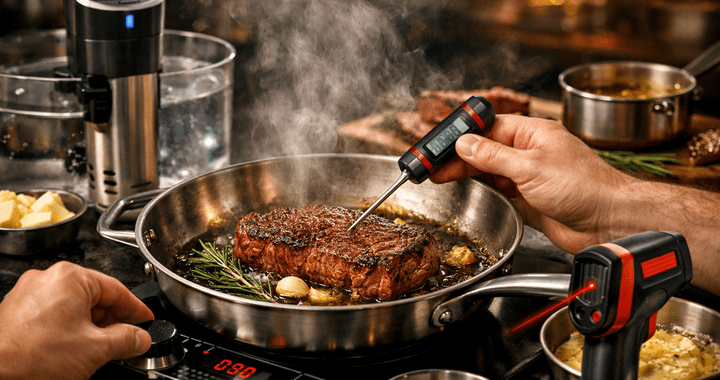
During the final minute or two of cooking, drop the heat to medium-low. Add a generous knob of cultured butter, a few lightly crushed garlic cloves, and fresh aromatics like thyme or rosemary sprigs. As the butter melts and foams, tilt the pan slightly toward you. Using a large spoon, continuously scoop the foaming, aromatic butter over the top of the protein.
This technique achieves three vital things:
- It cooks the top of the ingredient gently and evenly.
- It accelerates the development of a dark, gorgeous crust.
- It bathes the dish in a luxurious, nutty flavor that oil alone simply cannot provide.
Tailoring the Technique to Your Ingredients
While the core principles remain the same, different proteins require slight modifications to achieve perfection.
How to Pan-Sear Steak
Learning how to pan-sear steak is a rite of passage for any ambitious home chef. For thick cuts (like a two-inch ribeye or filet mignon), the pan alone will burn the exterior before the interior reaches medium-rare.
- Sear the steak aggressively on all sides—including the fat cap—until a deep mahogany crust forms.
- Transfer the oven-safe skillet into an oven preheated to 200°C (400°F) to finish cooking to your desired internal temperature.
- Crucial Step: Always let the steak rest on a cutting board for 5 to 10 minutes before slicing. This allows the muscle fibers to relax and reabsorb their juices.
Pan-Seared Salmon and Delicate Seafood
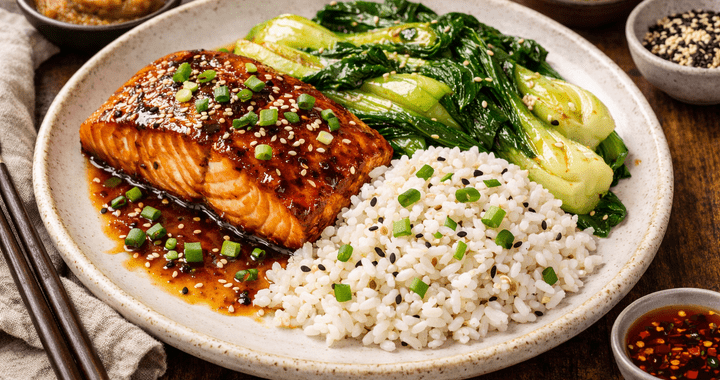
Perfect pan-seared salmon requires a delicate touch.
- Always start skin-side down in the hot oil.
- Press the fish down gently with a spatula for the first 10 seconds to prevent the skin from curling.
- Cook the salmon 80% of the way on the skin side to achieve a shatteringly crisp texture. Flip it only for the final minute of cooking, finishing with a quick butter baste.
Poultry and Seasonal Vegetables
For bone-in chicken thighs or breasts, start skin-side down in a cold pan with a touch of oil, gradually bringing the heat up to medium. This slowly renders the subcutaneous fat, resulting in a paper-thin, crispy skin that won’t burn before the meat cooks through. For vegetables like wild mushrooms or scallops, high heat and minimal crowding are imperative to prevent them from becoming soggy.
Conclusion
Mastering the perfect pan-searing technique is a transformative step in your culinary journey. By respecting the science of the Maillard reaction, choosing the proper heavy-bottomed cookware, managing surface moisture, and finishing with an elegant butter baste, you can consistently produce visually stunning and intensely flavorful dishes. Cooking with restaurant precision is not reserved for professionals; it is a skill honed through patience, attention to detail, and a passion for exceptional food.
Ready to elevate your culinary repertoire? Head to your local butcher, select a premium cut of meat, and put these techniques to the test tonight.