Precision Temperature Control: The Secret Behind Michelin-Level Cooking
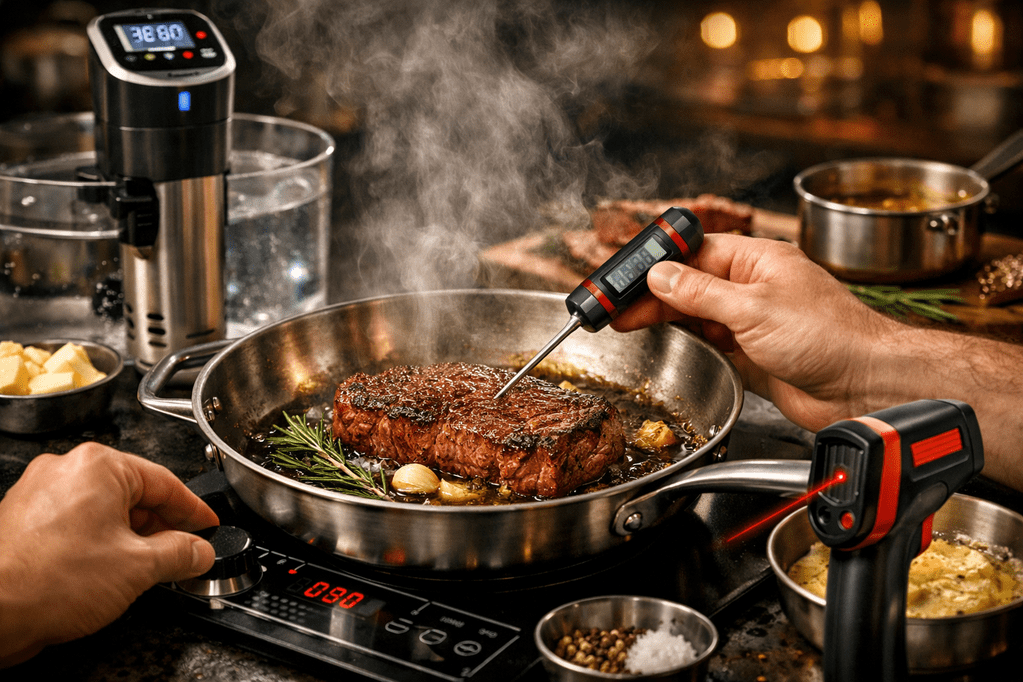
In the realm of fine dining, the most critical element of a spectacular dish never appears on an ingredient list. It is an invisible force that dictates whether a meal is transcendently extraordinary or merely mediocre. That secret is cooking temperature control. Without it, even the finest Wagyu beef or freshest wild-caught turbot can be ruined. With it, simple ingredients are transformed into culinary masterpieces.
In this comprehensive guide, we will delve into the art and science of heat manipulation. You will discover how precision heat management guarantees professional results, ensuring unparalleled cooking consistency, perfect textures, and exquisite flavor profiles. From the necessity of resting meat to the nuances of oven calibration, this article will equip you with the knowledge required to elevate your home cooking to restaurant-tier perfection.
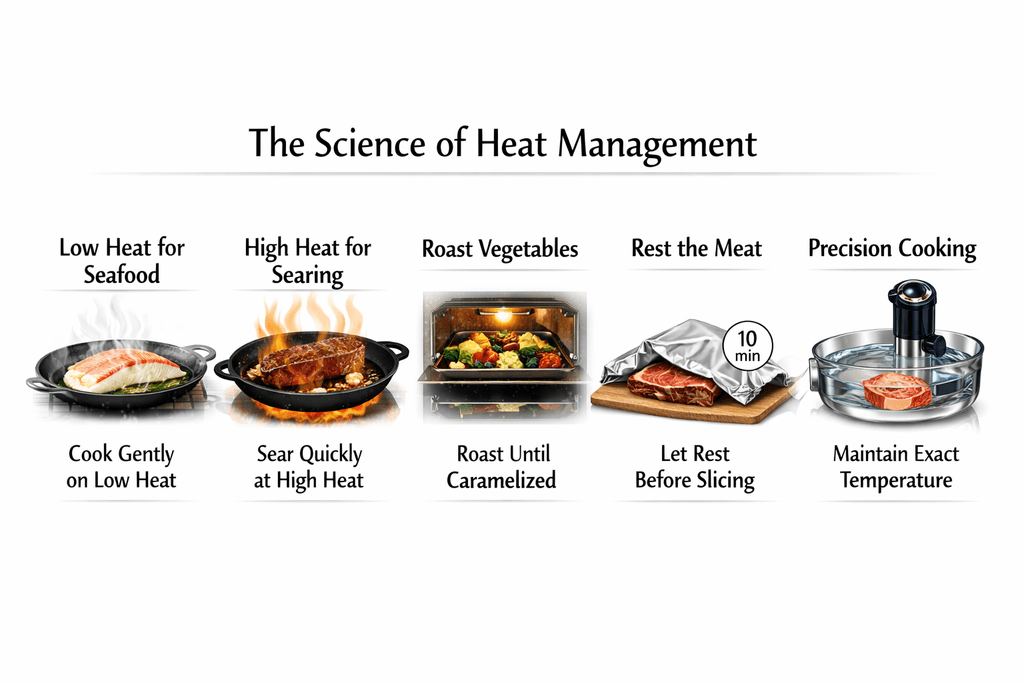
The Science of Heat Management
Professional chefs do not rely on guesswork, intuition, or poking a steak with a finger to determine doneness. They rely on science. Heat management is the foundation of culinary craftsmanship.
Different ingredients require entirely different cooking environments to express their optimal flavors and textures.
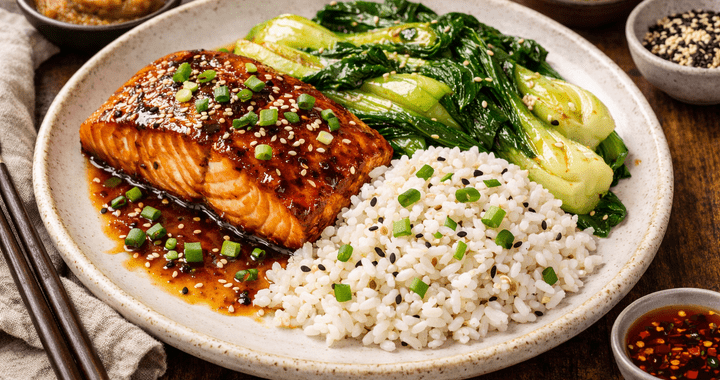
- Delicate Seafood: Fish thrives under gentle, low heat. This preserves its internal moisture and delicate protein structure, preventing it from drying out or becoming rubbery.
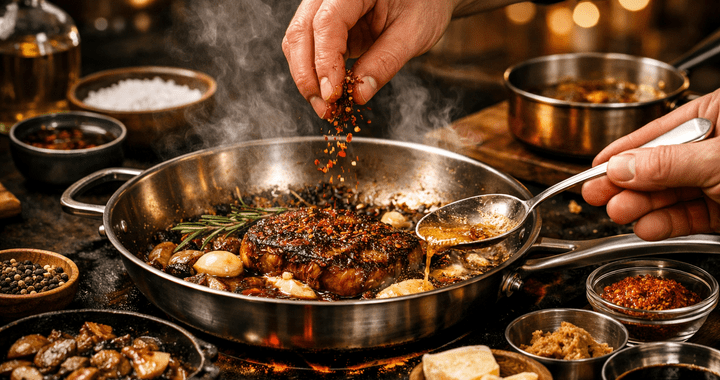
- Richly Marbled Beef: Conversely, a thick ribeye demands intense initial heat to trigger the Maillard reaction—creating a savory crust—followed by a controlled, lower temperature to bring the center to a perfect medium-rare.
- Seasonal Vegetables: Vegetables reveal their natural sweetness when roasted at carefully calibrated temperatures. The goal is to encourage natural caramelization while avoiding bitter scorching.
Essential Tools for Precision Cooking
To execute advanced culinary temperature techniques, you must equip your kitchen with the proper instruments. Precision cannot be achieved without accurate measurement.
The Digital Meat Thermometer
If there is one absolute rule in modern cooking, it is this: always monitor your internal cooking temperature rather than estimating it based on cooking time. A high-quality, instant-read digital meat thermometer is the single most important tool for achieving cooking consistency. Ovens lie, ambient room temperatures fluctuate, and the starting temperature of your proteins varies.
A thermometer removes all uncertainty, ensuring food safety and perfect doneness every single time.
Mastering Your Oven Temperature Guide
Your oven’s digital display is often a mere suggestion rather than a statement of fact. Ovens frequently suffer from hot spots and inaccurate calibrations.
- Invest in an independent oven thermometer to place on the center rack.
- Map your oven’s hot spots by baking a tray of bread slices and observing which areas brown fastest.
- Use this personalized oven temperature guide to rotate your pans strategically during baking, ensuring perfectly even cooking.
Tailoring Heat to the Ingredient
Understanding how heat transfers into your food allows you to manipulate textures and flavors with intentionality.
Proteins and the Crucial Art of Resting
When applying high heat to meat, the muscle fibers contract, driving moisture toward the center of the cut. If you slice into a steak immediately after removing it from the pan, those precious juices will flood your cutting board, leaving the meat dry.
Resting cooked meat is non-negotiable.
- Remove the protein from the heat source just before it reaches your target internal temperature. (This accounts for “carryover cooking,” where the internal temperature continues to rise off the heat).
- Tent the meat loosely with foil.
- Allow it to rest for 5 to 15 minutes, depending on the thickness of the cut. This allows the muscle fibers to relax and the juices to redistribute evenly throughout the meat, guaranteeing a succulent, tender bite.
Sauces, Soups, and Pastry Precision
Temperature control extends far beyond the grill or cast-iron skillet.
- Sauces: Hollandaise, beurre blanc, and rich reductions require a low, steady simmer. If the heat spikes, the emulsion will break, resulting in a greasy, separated sauce.
- Pastry: Baking is applied chemistry. Exact oven calibration is required for soufflés to rise, for pie crusts to remain flaky, and for bread to develop the proper crumb.
- Chocolate: Achieving the signature glossy shine and crisp snap of tempered chocolate requires bringing cocoa butter crystals to highly specific, exact degrees of heat, cooling, and reheating.
Sous Vide Principles: The Ultimate Consistency
For those seeking absolute perfection, the professional kitchen has popularized a method that eliminates the margin of error entirely.
Understanding sous vide principles will revolutionize the way you approach precision cooking. By vacuum-sealing ingredients and submerging them in a precisely temperature-controlled water bath, the food cooks perfectly edge-to-edge.
- A steak cooked sous vide at 54°C (129°F) will never exceed 54°C, no matter how long it sits in the bath.
- It ensures 100% moisture retention.
- It allows for unparalleled, repeatable results, making it the ultimate tool for stress-free dinner parties and high-volume professional service alike.
Professional Kitchen Tips for Everyday Cooks
To cook like a Michelin-starred chef, adopt these daily habits to refine your heat control:
- Anticipate Carryover Cooking: Always pull your food from the heat 3 to 5 degrees below your target internal temperature.
- Preheat Relentlessly: Never place food into a cold pan unless rendering fat (like duck breast). A properly heated pan prevents sticking and begins caramelization instantly.
- Control the Pan Density: Overcrowding a skillet drops the pan’s temperature drastically, turning a beautiful sear into a soggy, steaming mess. Cook in batches if necessary.
- Use Residual Heat: Use the residual heat of a turned-off burner or a cooling oven to gently finish delicate items or keep sauces warm without over-reducing them.
Conclusion
Mastering cooking temperature control is the definitive bridge between amateur home cooking and refined culinary craftsmanship. By understanding the science of heat management, utilizing a reliable digital meat thermometer, respecting the necessity of resting cooked meat, and exploring advanced methods like sous vide, you strip the anxiety and guesswork from your kitchen. You are left with absolute control, ensuring every dish you serve is impeccably textured, intensely flavorful, and safely cooked to perfection.
Ready to transform your culinary repertoire? Invest in a high-quality instant-read thermometer today, and start experiencing the profound difference that precise temperature control brings to your next meal.