Pantry Hardware and Layout Upgrades: How to Turn Deep Shelves Into Effortless Storage
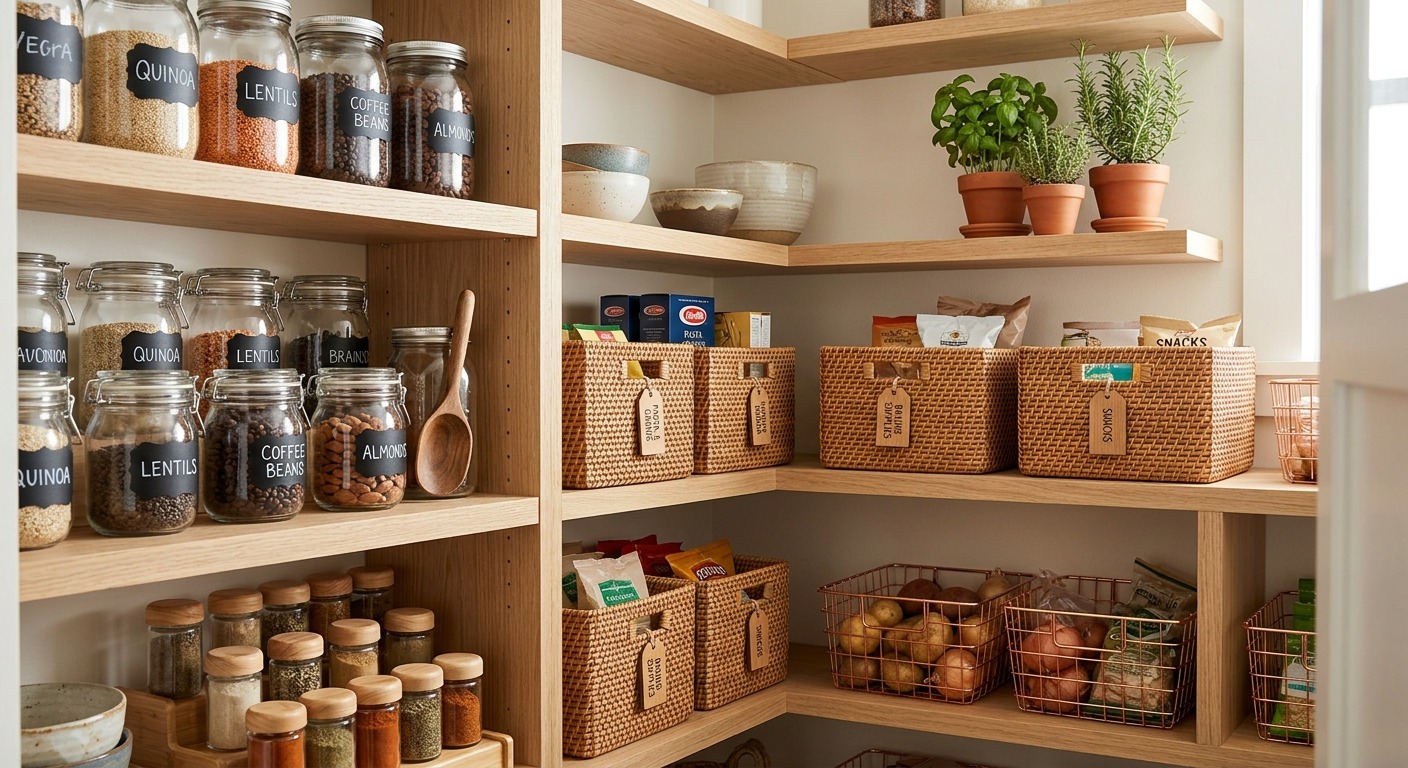
A cluttered pantry does more than slow down weeknight cooking, Pantry Hardware and Layout Upgrades, it quietly inflates your grocery bill. When cans, spice jars, and half-open bags disappear into deep, dark shelves, it becomes almost impossible to see what you already own, leading to forgotten food and duplicate purchases every time you shop.
The problem is rarely a lack of square footage. Most standard kitchen pantries and base cabinets are built with fixed, overly deep shelves that waste vertical air space and hide everything behind the front row. Upgrading how those shelves are spaced, adding full-extension pull-out trays, and grouping dry goods in clear, labeled containers transforms a frustrating cabinet into a pantry that stays organized on its own.
Table of Contents
Step 1: Empty the Shelves Completely Before Measuring
Trying to organize a pantry one shelf at a time while food is still stacked inside almost always fails. Before buying a single bin or drawer slide, empty the entire pantry onto your kitchen counters and sort everything into three clear groups:
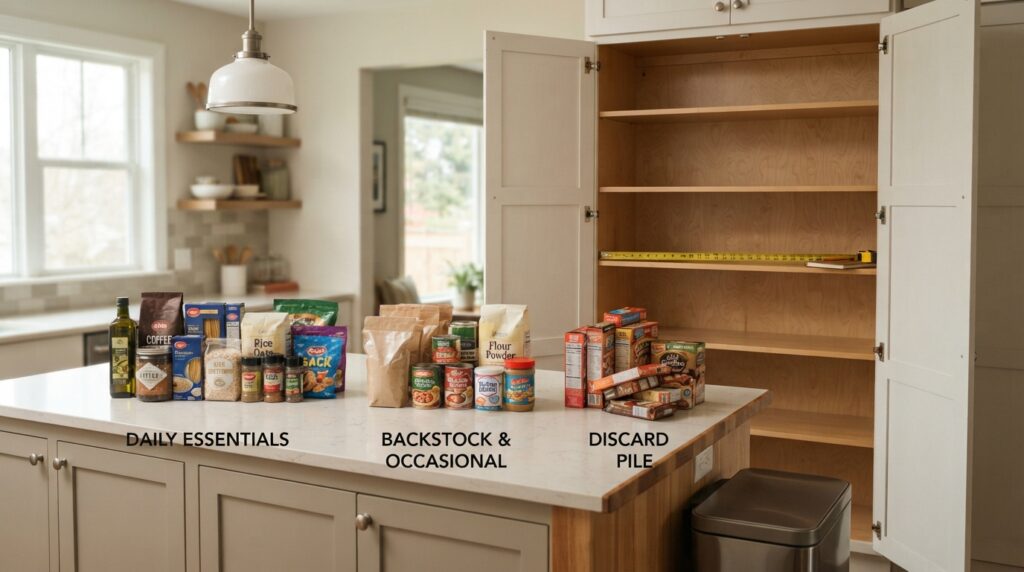
- Everyday High-Rotation Staples: Items you reach for multiple times a week (cooking oils, coffee, rice, pasta, breakfast oats, favorite spices, and kids’ snacks).
- Occasional & Backstock Items: Unopened bulk refills, canned goods, baking supplies, and seasonal entertaining pieces.
- Expired or Damaged Goods: Stale spices, past-date condiments, and crushed or opened packages that need to be discarded immediately.
Once the shelves are completely bare, wipe them down and take exact interior width, depth, and height measurements, noting door hinges, lip frames, and any pipes or trim that reduce usable clearance.
Step 2: Map Zones by Weight and Daily Reach
Borrowing a basic principle from commercial kitchens, keeping identical categories together and placing items by weight and frequency, eliminates most daily search time. Divide your vertical shelf space into four practical zones:
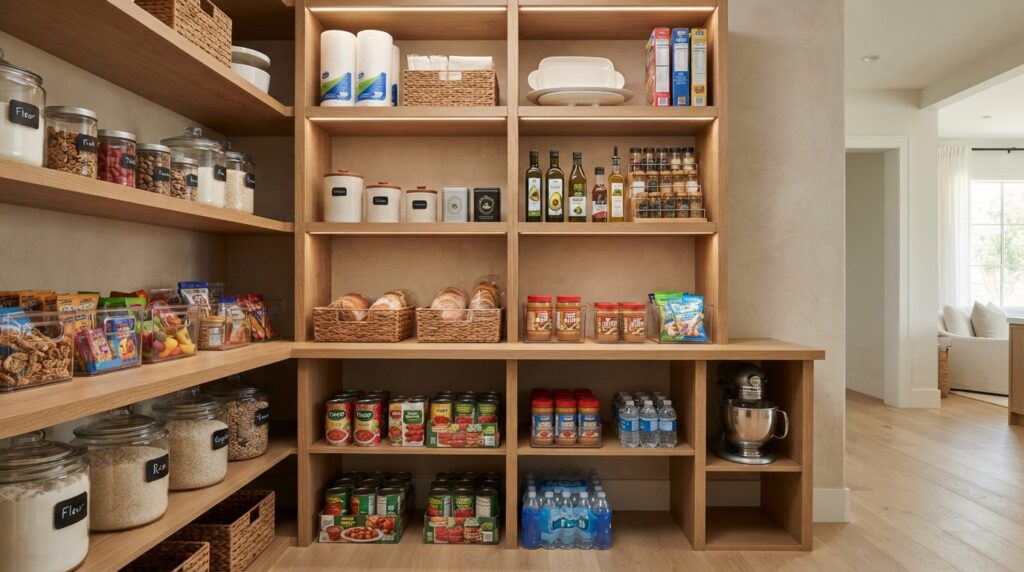
| Pantry Zone | Shelf Height | Best Items to Store Here | Why It Works |
| 1. Eye-Level Action Zone | 3.5 to 5.5 feet from floor | Coffee and tea, everyday grains, snacks, oils, core spices | Zero bending or reaching for daily staples |
| 2. Heavy Foundation Zone | Floor to 3 feet | Bulk flour and rice bins, multipacks of canned goods, bottled water, heavy appliances | Safe lifting and prevents shelf bowing |
| 3. Mid-Level Utility Zone | Waist height | Kids’ lunchbox snacks, bread, spreads, grab-and-go packets | Easy access for the whole household |
| 4. Top Horizon Zone | Above 6.5 feet | Paper towels, extra napkins, lightweight seasonal platters, backup cereal boxes | Uses overhead space safely without heavy lifting |
Step 3: Upgrade Deep Shelves With Full-Extension Pull-Outs and Risers
Standard 18- to 24-inch-deep pantry shelves are notorious for swallowing smaller jars in the back. A few targeted hardware upgrades solve that blind spot permanently:
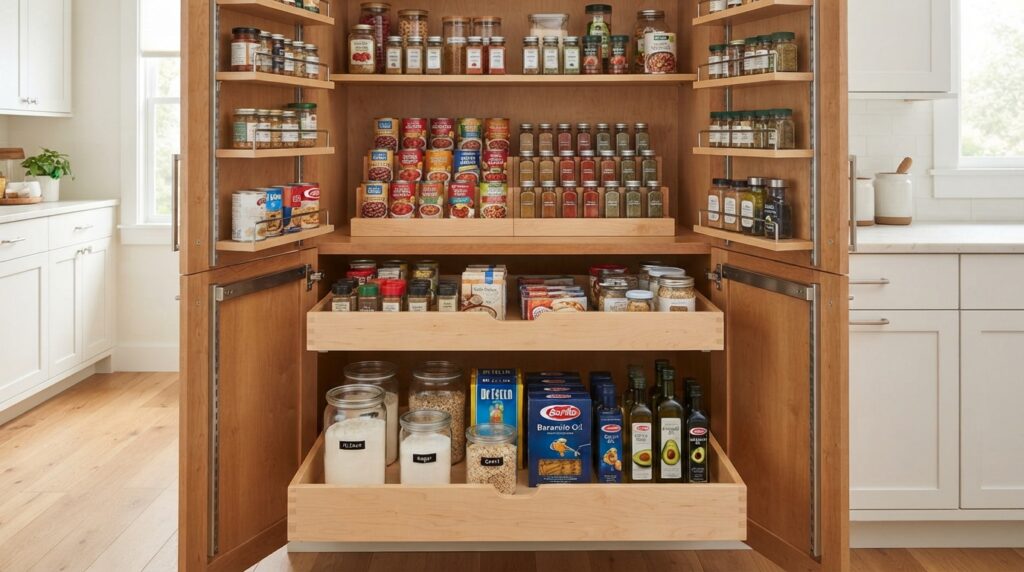
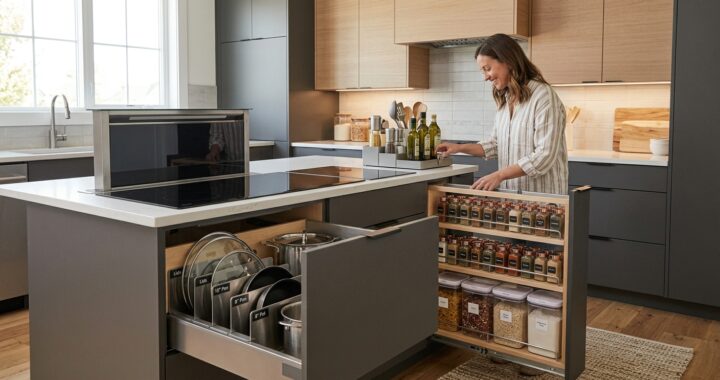
- Full-Extension Pull-Out Drawers: Installing ball-bearing sliding wood or wire trays on lower and mid-level shelves brings the entire depth of the cabinet out into the light with one smooth pull, no more kneeling on the kitchen floor to reach the back corner.
- Tiered Can and Spice Risers: On fixed middle shelves, three-tier step risers elevate back rows of canned beans, tomatoes, and spice jars so every label stays readable at a glance.
- Adjustable Shelf Standards: If your pantry relies on fixed builder-grade shelves spaced 14 inches apart, switching to adjustable tracks lets you tighten spacing around shorter jars and cans, often gaining enough room for an entire extra shelf.
How to Choose the Right Pull-Out Drawer Hardware
Not all sliding pantry drawers hold up equally once loaded with glass jars, canned tomatoes, or heavy appliances. When comparing aftermarket pull-out kits, check three mechanical details before buying:
- Load Rating (At Least 75 to 100 lbs): Standard light-duty slides bow or bind when loaded with canned goods and flour bins. Look for heavy-duty steel ball-bearing slides rated for 75 to 100 pounds per drawer so trays glide smoothly even when full.
- Full-Extension vs. Three-Quarter Extension: Always choose full-extension slides (which pull out 100% of the tray depth) rather than partial-extension tracks that still leave the back 4 inches hidden inside the cabinet frame.
- Soft-Close Dampers: Soft-close mechanisms prevent heavy drawers from slamming shut and rattling glass jars a small upgrade that protects both your containers and the cabinet face frame.
Make Use of Pantry Doors and Narrow Side Gaps
Some of the most accessible storage in a pantry sits on the back of the door and along narrow vertical wall strips:
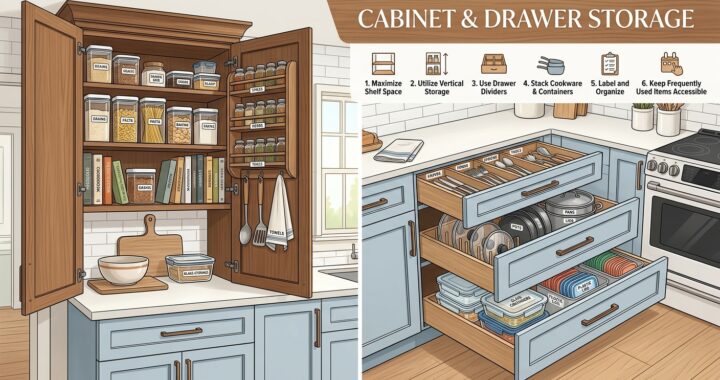
- Door-Mounted Racks: Shallow wire or wood door racks (3 to 4 inches deep) keep foil, plastic wrap, seasoning packets, spices, and small condiment bottles at eye level without taking up shelf space. Be sure to leave enough clearance inside the pantry so the door closes cleanly without hitting front-row jars.
- Slim Rolling Pull-Out Carts: If you have a 6- to 9-inch gap beside a refrigerator or inside a walk-in pantry corner, a narrow wheeled shelving cart turns dead space into a roll-out rack for canned goods, oils, and extra beverages.
- Undershelf Wire Baskets: Clip-on undershelf baskets utilize the empty 4 to 5 inches of air gap beneath tall shelves, ideal for flat items like tortillas, snack bars, or dish towels.
Step 4: Choose Durable Containers for Foods That Actually Need Them
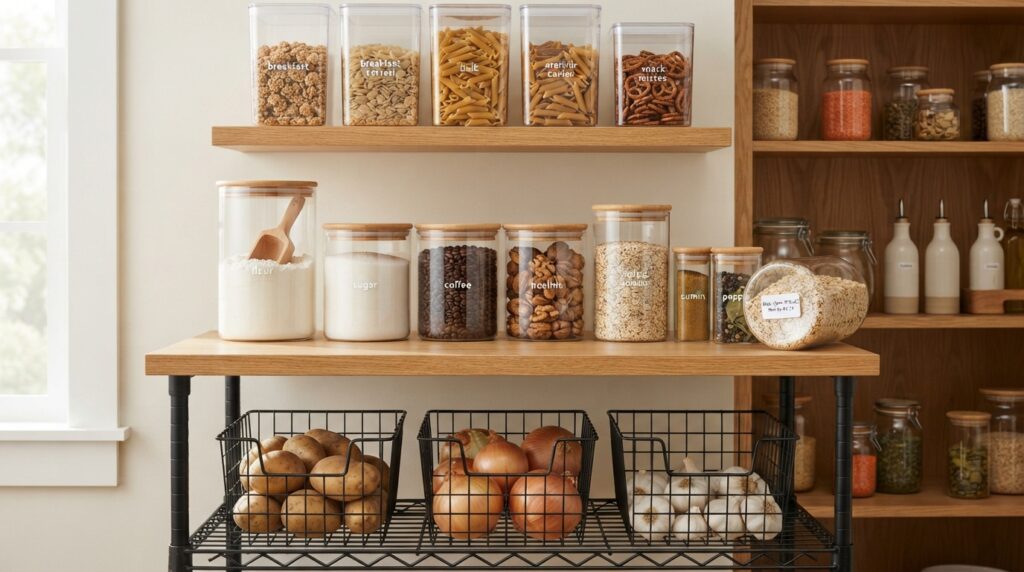
Bulky cardboard boxes waste shelf width and let humidity soften crackers, cereal, and flour. However, you do not need to decant every single item in your kitchen, focus on dry staples that lose freshness once opened, and match the container material to the job:
| Container Material | Key Advantage | Best Pantry Use |
| Borosilicate Glass With Silicone Gaskets | Airtight seal, stain- and odor-free, dishwasher-safe | Flour, sugar, coffee beans, nuts, oats, and spices |
| BPA-Free Shatterproof Acrylic / Tritan | Lightweight, crystal-clear, safe on high shelves | Cereal, bulk pasta, kids’ snacks, and upper-shelf storage |
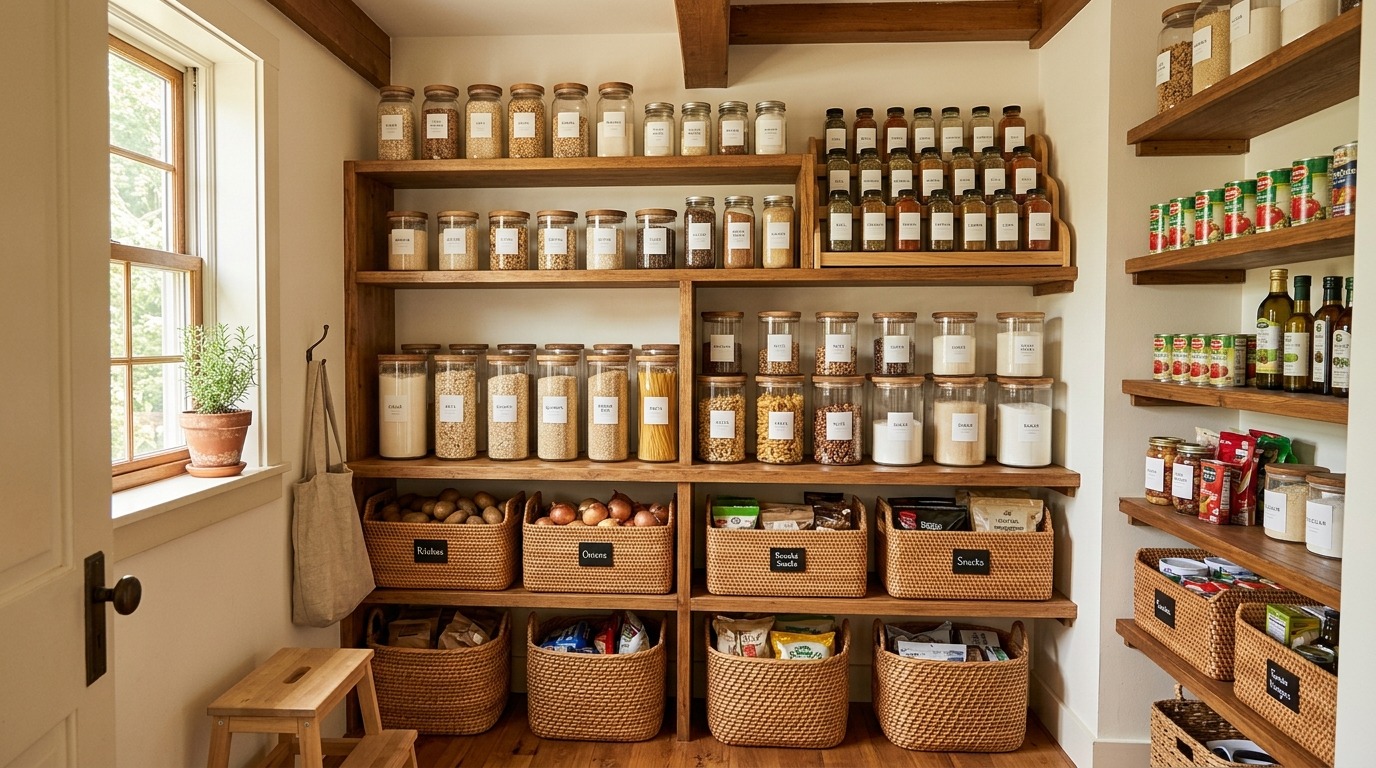
| Coated Steel Wire Baskets | Open airflow and high weight capacity | Potatoes, onions, garlic, and heavy produce (stored away from moisture) |
Always save or jot down cooking times and expiration dates on a small label underneath each container so nothing turns into a mystery ingredient later.
Four Common Pantry Hardware Mistakes to Avoid
- Ignoring Door-Hinge Clearance: On face-frame cabinets, door hinges protrude slightly into the opening. Always measure between the inside edge of the hinges, not just wall-to-wall, before ordering pull-out drawers, or the tray will scrape the door every time it slides out.
- Spanning Over 30 Inches Without a Center Support: Wide wooden or wire shelves loaded with heavy cans will sag over time unless supported every 24 to 30 inches with a center bracket or vertical divider.
- Buying Containers Before Installing Shelves: Adjust your shelf heights and slide tracks first, then measure the exact vertical clearance left over so tall cereal or pasta canisters slide in without catching.
- Blocking Visibility With Opaque Bins on High Shelves: Solid woven baskets look tidy, but anything placed inside them above shoulder height quickly disappears from memory. Save opaque bins for lower pull-out drawers where you look straight down into them.
Step 5: Label Clearly and Run a 3-Minute Weekly Reset
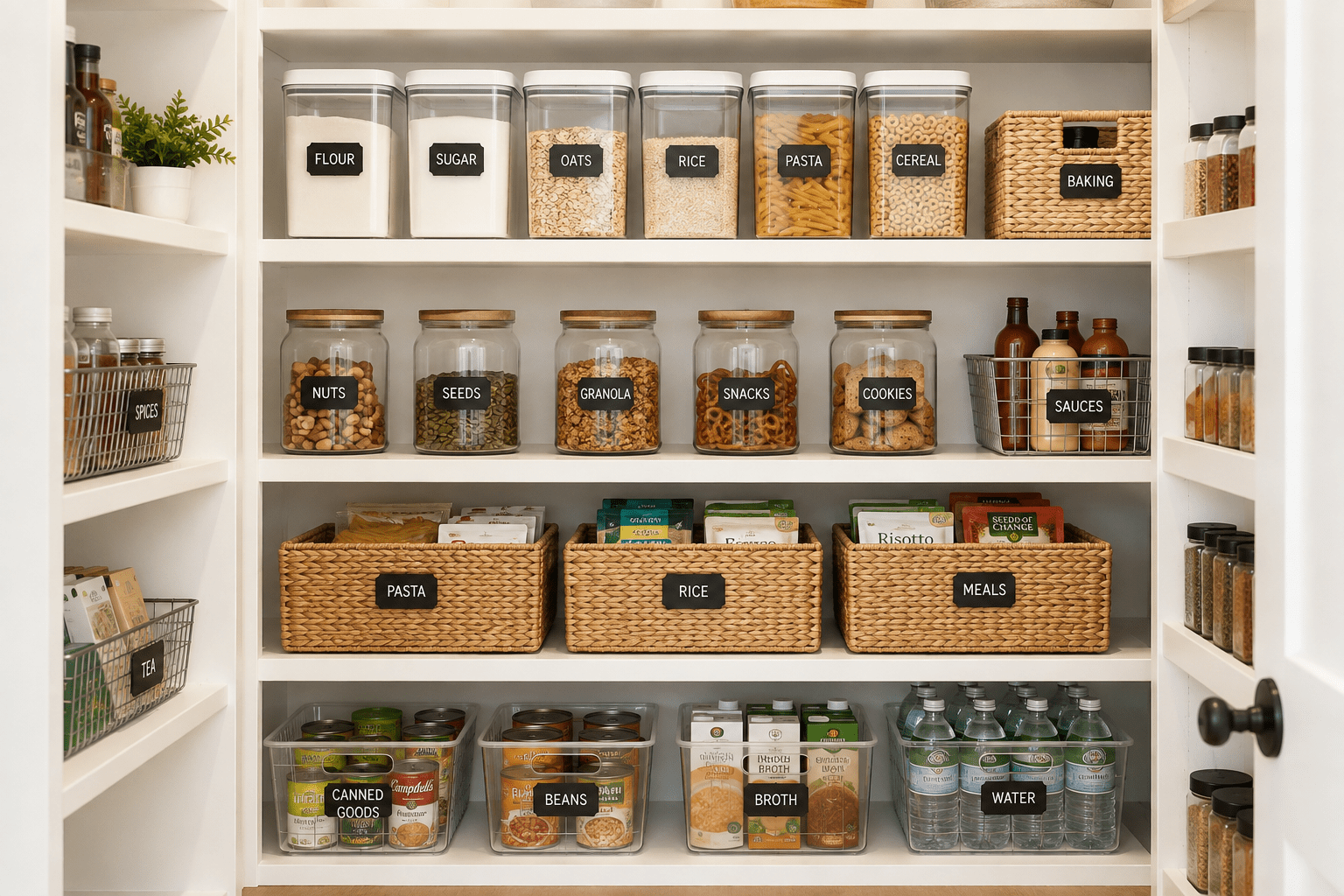
Even the smartest shelf layout will drift back into clutter if nobody knows where items return. Clean, high-contrast labels on bins and canisters allow anyone in the household to unpack groceries without asking where things go.
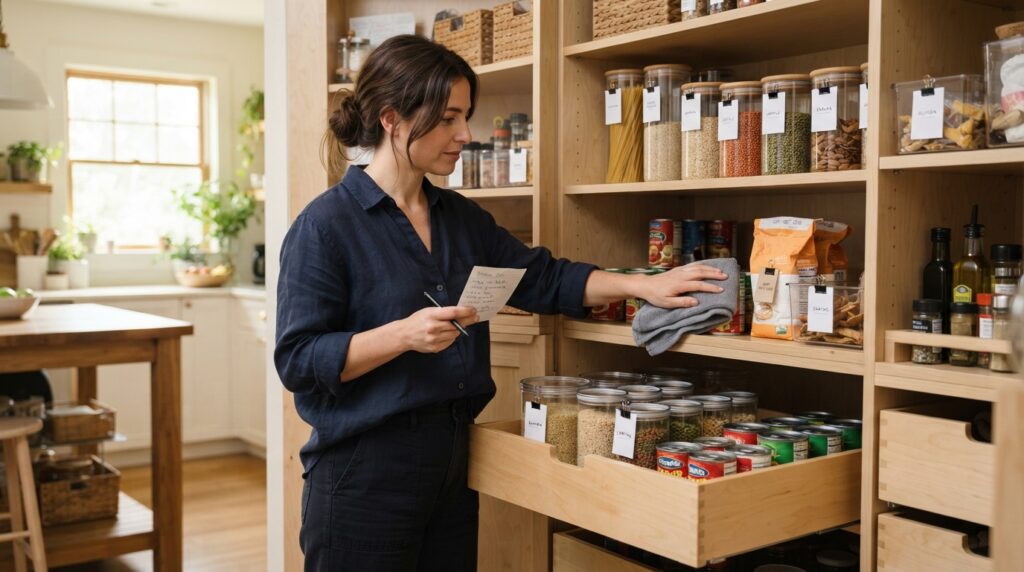
Pair that setup with a quick three-minute reset before your weekly grocery shop:
- Scan your eye-level and pull-out zones so you never Buy Duplicates of staples you already have.
- Pull older cans and open bags forward (first-in, first-out) as new groceries go behind them.
- Wipe up crumbs or oil drips immediately while the shelf space is visible.
When your shelves are spaced to fit your containers and deep corners slide out smoothly, keeping your pantry tidy stops feeling like a weekend project and becomes part of how effortlessly your kitchen runs every day.