The 4-Stage Pantry Reset: How to Organize, Rotate, and Maintain Dry Goods
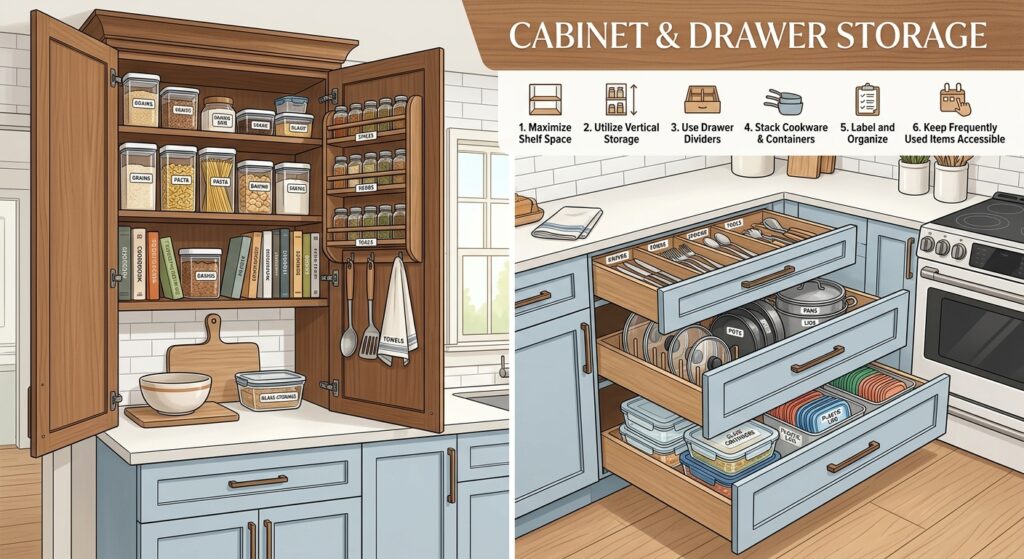
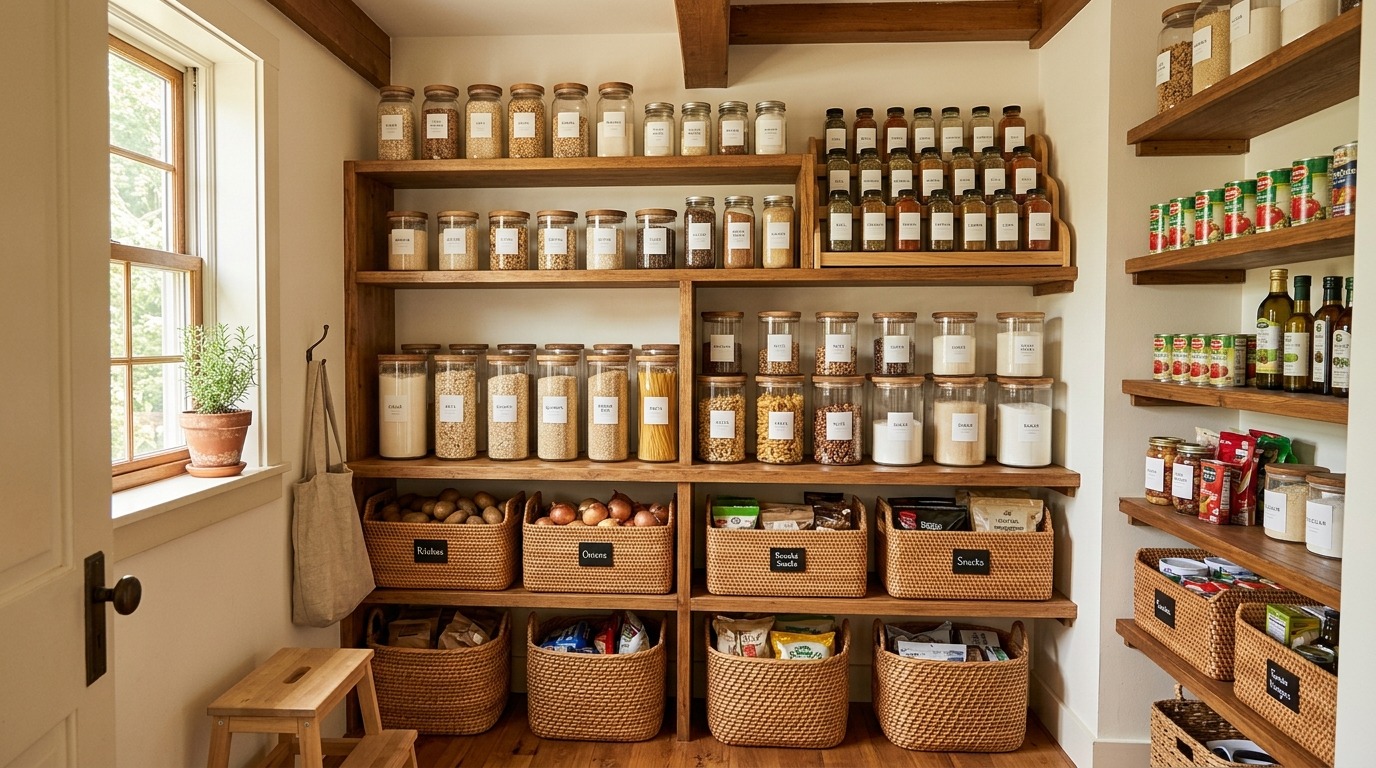
The best pantry organization system makes food immediately visible, easy to reach, and effortless to put away after a grocery run. You do not need matching designer canisters or a photo-ready walk-in closet, you need clear zones, sensible shelf placement, and a five-minute reset routine that survives busy weeknights.
When Organizing a Pantry, starting with your daily cooking workflow rather than shopping for bins reveals the real bottlenecks much faster.
Table of Contents
Start With a Ruthless Inventory and Safety Check
Before reorganizing or measuring shelves, empty one section at a time onto the counter and group similar foods together. Resist buying containers at this stage, you need to see your actual inventory first.
While sorting, inspect cans and packages carefully. According to U.S. Food and Drug Administration (FDA) food-storage guidance, any canned goods showing swelling, leakage, punctures, holes, extensive rust, or severe dents should be discarded immediately. Separate genuinely shelf-stable foods, which the U.S. Department of Agriculture (USDA) defines as items that can safely remain at room temperature, from condiments, nuts, or specialty sauces that require refrigeration after opening.
Build Broad, Predictable Pantry Zones
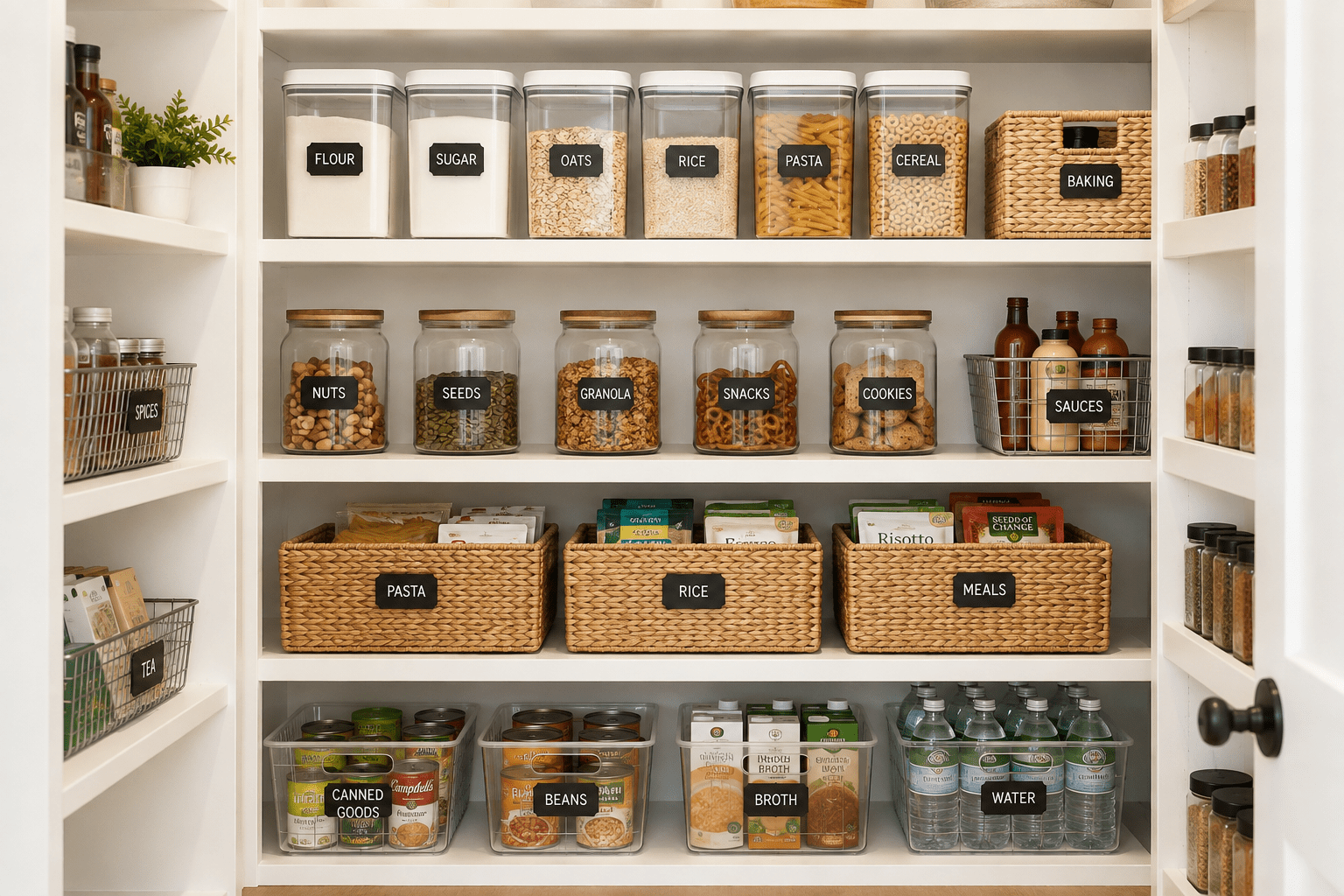
Keep your categories broad enough that anyone in the household can put groceries away without guessing where a jar belongs. A shelf should make its purpose obvious at a glance:
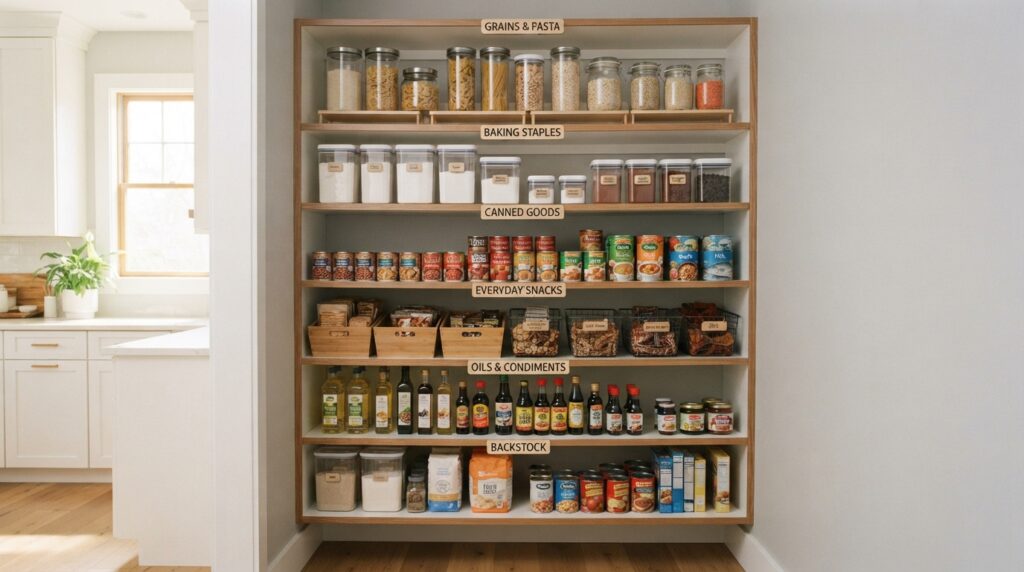
| Pantry Zone | Typical Contents | Organization Priority |
| Grains & Pasta | Rice, dried pasta, oats, quinoa, lentils | Clear front-to-back visibility |
| Baking Staples | Flour, sugar, baking powder, cocoa, chocolate chips | Airtight grouping in one dedicated spot |
| Canned Goods | Beans, diced tomatoes, broths, soups, canned fish | Stable, low-height rows |
| Everyday Snacks | Crackers, nuts, granola bars, dried fruit | Fast grab-and-go access |
| Oils & Condiments | Cooking oils, vinegars, soy sauce, unopened spreads | Upright storage away from heat |
| Backstock | Unopened duplicates and bulk refills | Separate overflow zone for inventory control |
Build these zones around what your household actually cooks rather than copying a rigid checklist from someone else’s kitchen.
Place Heavy Items Low and Tame Deep Shelves
Once your zones are defined, assign shelf height based on weight and frequency. Store heavy glass jars, bulk grains, and multipacks of canned goods on lower shelves where they are safe to lift, and keep everyday breakfast and dinner staples at eye-to-waist level. Reserve the top shelf for lightweight, occasional items, and never let it become a blind catch-all where food expires unnoticed.
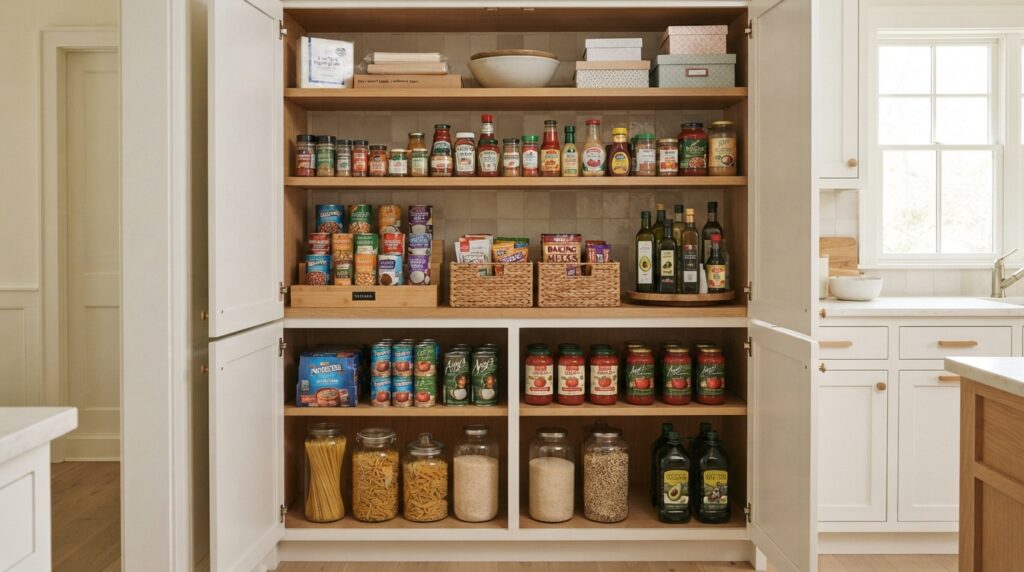
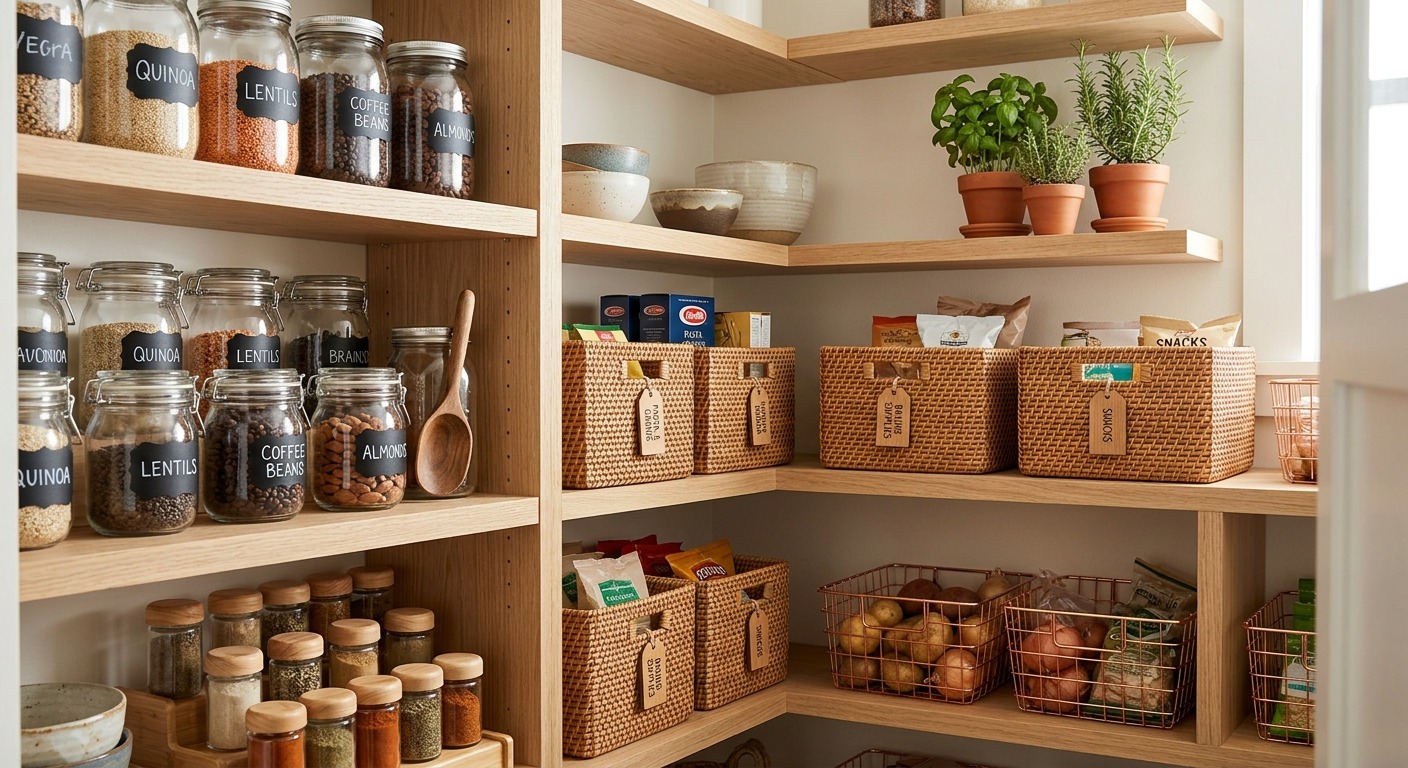
Deep shelves are the number one enemy of pantry organization because small jars disappear behind tall bottles. Arrange cans in shallow, single-category rows, use tiered risers only where shelf height allows clear reading of labels, and corral loose packets in open-front bins.
| Shelf Problem | Practical Fix | What to Avoid |
| Excessive shelf depth | Shallow category rows or tiered risers | Hiding small jars behind tall bottles |
| Heavy cans and glass jars | Lower-shelf placement | High, unstable stacking |
| Loose seasoning or snack packets | Open-front grouping bins | Loose piles that slide behind boxes |
| Tall oil and vinegar bottles | Upright turntables or narrow caddies | Stacking items on top of lids |
Choose Containers With Purpose (Not Just for Looks)
Decanting every single box into matching clear jars creates unnecessary weekend chores and hides crucial packaging details. Keep original packaging whenever it provides cooking directions, allergen warnings, or storage instructions. Reserve airtight containers for foods that genuinely go stale once opened, such as flour, brown sugar, oats, cereal, rice, and opened bags of nuts, and tape or jot down the cooking instructions and expiration date on the bottom of the bin.
Build a First-In, First-Out Stock Rotation Habit
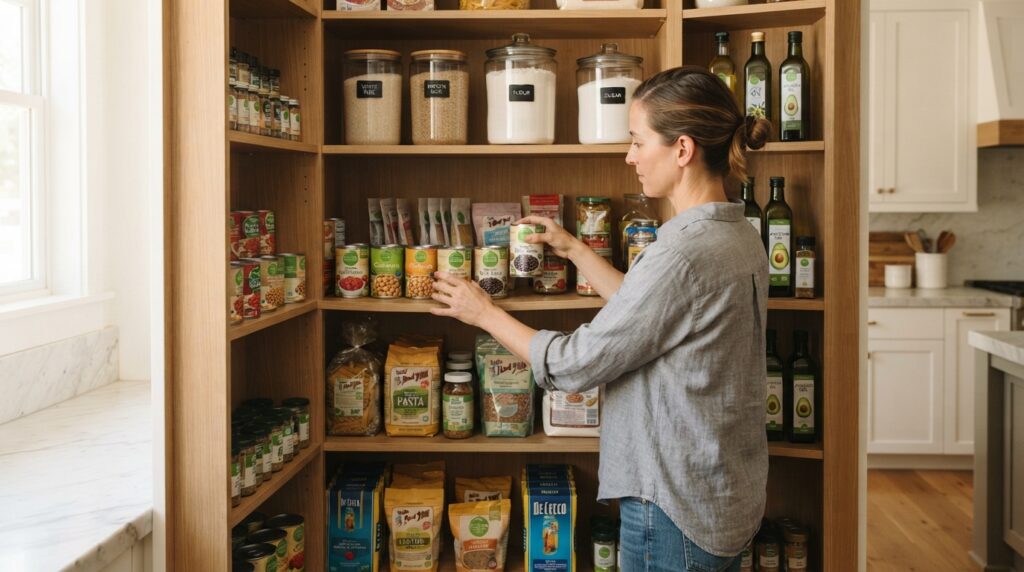
Keeping a Pantry Organized long-term comes down to how you unpack groceries. When new items arrive, pull older cans or boxes forward and place newly purchased stock behind them, the same first-in, first-out (FIFO) method used in professional kitchens.
Pay attention to what date labels actually mean so good food isn’t thrown out prematurely. According to the FDA, confusion over date labels (“Best if Used By,” “Sell-By,” and “Use-By”) accounts for roughly 20 percent of consumer food waste, even though most dates on shelf-stable foods indicate peak quality rather than a hard safety deadline. When in doubt about how long an opened or unopened staple keeps, consult the USDA FoodKeeper reference and check for off odors, moisture, or packaging damage.
Even properly stored dry goods lose flavor, texture, or nutritional quality over time, especially whole-grain flours and oils whose natural fats can turn rancid. Use these general quality benchmarks alongside package dates when deciding which items need to move to the front of the shelf:
| Pantry Staple | Typical Unopened Quality Window | Best Storage Practice Once Opened |
| White rice & dried pasta | 1–2 years | Keep in a sealed container or clipped bag in a cool, dry cabinet |
| Brown rice & whole-wheat flour | 3–6 months | Store airtight; refrigerate or freeze for longer storage |
| All-purpose white flour & sugar | 8–12 months (flour); indefinite (sugar) | Keep flour airtight; keep brown sugar sealed to prevent hardening |
| Commercially canned beans & tomatoes | 1–2 years (high-acid) to 2–5 years (low-acid) | Discard any bulging, leaking, or deeply dented cans immediately |
| Cooking oils (olive, vegetable, nut) | 6–12 months unopened | Store away from stove heat; refrigerate delicate nut oils |
| Ground spices vs. whole spices | 6–12 months (ground); 2–3 years (whole) | Keep away from steam and direct sunlight |
Follow Safe Pantry Placement Rules
Good organization also protects food quality and household safety:
- Keep Food Cool and Dry: The USDA recommends storing canned and shelf-stable foods in a clean, cool, dry cabinet, never directly above a stove, next to a dishwasher vent, or under a damp sink where heat and humidity degrade packaging.
- Separate Food From Cleaning Supplies: Per FDA food-safety recommendations, never store household cleaners, detergents, or chemicals in the same cabinet as non-perishable food.
- Clean Spills Immediately: Wiping up sticky honey drips or spilled flour right away prevents pantry pests and keeps shelves easy to maintain.
Prevent Pantry Pests Before They Spread
Indian meal moths and grain weevils rarely originate inside your kitchen, they usually hitch a ride home inside bulk grains, birdseed, nuts, or whole-grain flours. A few simple storage habits stop a single infested package from spreading across your entire pantry:
- Quarantine or Decant High-Risk Grains: Transfer flour, rolled oats, cornmeal, nuts, and dried fruit into rigid, gasket-sealed glass or thick food-grade plastic containers, pests can easily chew through thin paper and cellophane bags.
- Wipe Shelf Seams During Resets: Crumbs and spilled flour dust trapped in shelf corners attract pests; run a damp cloth along shelf edges before restocking new groceries.
- Avoid Over-Buying Bulk Grains You Rarely Use: Unless you bake weekly, buying smaller bags of specialty flours and nuts keeps inventory fresh and reduces the risk of forgotten bags sitting untouched for months.
Four Pantry Habits That Quietly Cause Food Waste
Even a tidy pantry can generate unnecessary grocery waste if everyday habits hide half-used ingredients:
- Leaving Multiple Half-Empty Bags Open: Consolidate matching open bags of pasta, rice, or chocolate chips (or clip them together in the same front bin) so you finish one before opening another.
- Buying “Aspirational” Bulk Packs: Warehouse-size jars of specialty sauces or unfamiliar grains only save money if your household finishes them before they lose quality.
- Hiding “Eat First” Items in Normal Zones: Keep a small dedicated “Use This Week” basket at eye level for opened crackers, near-date broths, and leftover recipe ingredients so they get used in weeknight meals.
- Skipping a Pre-Shopping Shelf Check: Taking 60 seconds to scan your pantry and snap a quick phone photo of your shelves before heading to the store prevents buying a fourth jar of cumin or a third bag of lentils.
The 5-Minute, 4-Stage Weekly Pantry Reset
Instead of waiting for your pantry to collapse into chaos every six months, run a quick four-stage reset right before writing your weekly grocery list:
| Stage | Quick Action | Result |
| 1. Scan | Glance through each zone before shopping | Prevents buying duplicate ingredients you already own |
| 2. Sort | Return stray jars and snacks to their home zone | Restores order in under two minutes |
| 3. Rotate | Pull older cans and open packages to the front | Ensures older stock gets eaten first |
| 4. Refill | Move unopened backstock into empty front spots | Keeps active shelves stocked and backstock controlled |
Keep Your Pantry Practical, Not Perfect
A well-run pantry isn’t measured by how uniform its containers look, it is measured by three simple questions: Can you see what you own, can you reach it without moving three other items, and can you put groceries away in seconds? Focus on clear zones, shallow visibility, basic stock rotation, and a quick weekly reset, and your pantry will stay functional long after organizing day is over.