How to Choose a Blender and Food Processor Combo That Actually Replaces Both Machines
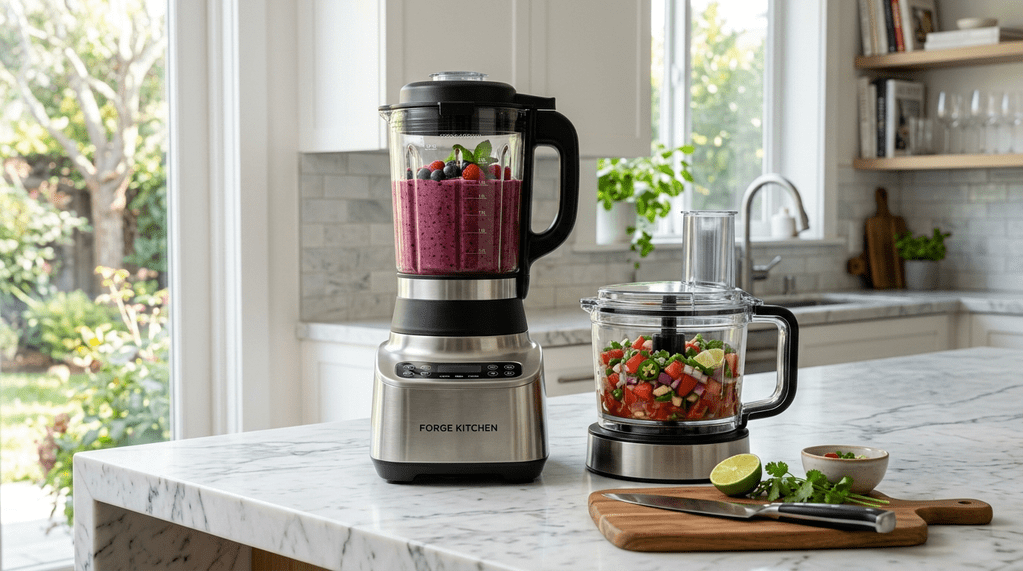
Combining a high-powered Blender and a full-featured Food Processor onto a single motor base is one of the smartest ways to save counter space, provided the machine doesn’t compromise on either job. Many combo systems blend smoothies effortlessly yet struggle to slice soft vegetables evenly, or shred cheese cleanly while leaving frozen fruit chunky.
Understanding how blade geometry, bowl shape, and motor torque differ between blending and food processing makes it easy to spot a system that genuinely earns its spot on the counter. Below is a practical look at what separates a true dual-purpose workhorse from an underpowered compromise, how combo units stack up against standalone appliances, and what specs matter most before buying.
Table of Contents
Why Combo Systems Are Replacing Separate Countertop Appliances
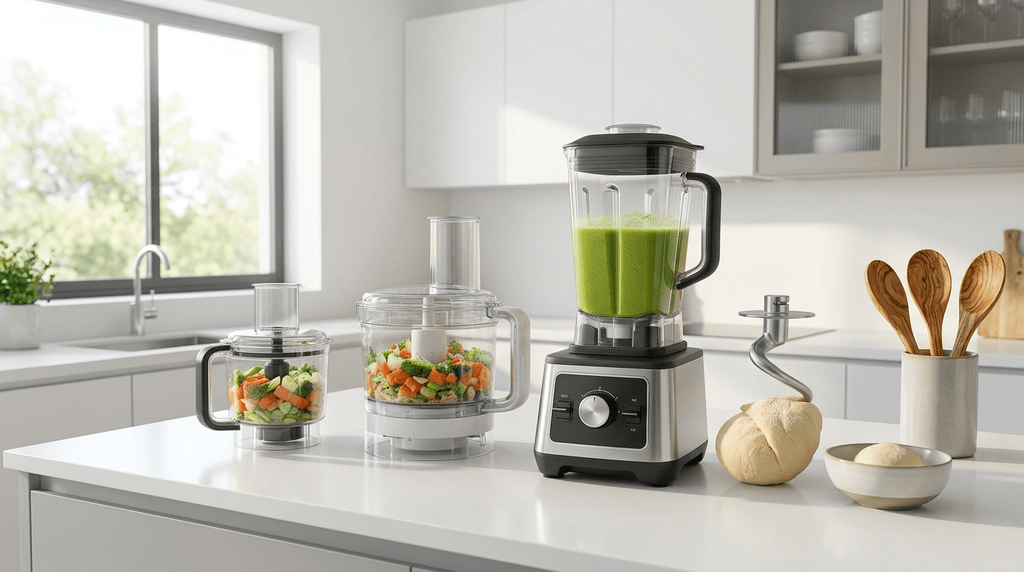
For years, equipping a home kitchen meant sacrificing prime counter or cabinet space to two bulky machines: a tall pitcher blender for smoothies, soups, and sauces, and a wide-bowl food processor for slicing vegetables, shredding cheese, and mixing pastry dough. While standalone machines excel at their specific jobs, owning both doubles the footprint, cord clutter, and storage headache.
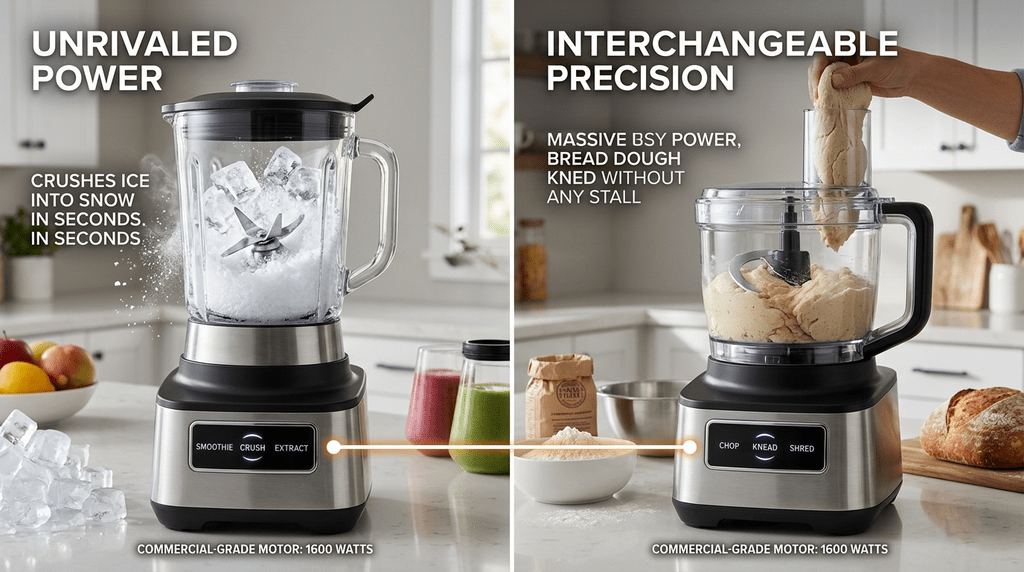
Modern combo systems solve that problem by pairing a single high-torque motor base with interchangeable attachments, typically a tall blending pitcher, a wide food processor bowl with a feed chute, and sometimes personal single-serve smoothie cups. Because the base recognizes which container is locked in place and adjusts its speed and pulse patterns accordingly, one footprint handles both high-speed liquid emulsifying and low-speed, high-torque chopping or dough kneading.
| Feature | Blender & Food Processor Combo | Separate Blender + Food Processor |
| Counter & Cabinet Footprint | One motor base with stackable attachments | Two heavy motor bases and separate cords |
| Upfront Cost | $150–$350 for a capable dual system | $250–$600+ to buy two quality standalone units |
| Smoothies, Ice & Purees | Strong performance with tall pitcher attachment | Dedicated blade vortex handles dense frozen blends |
| Slicing, Shredding & Dough | Good for everyday prep (typically 6–8 cup bowl) | Larger capacity (10–14 cups) for heavy batch prep |
| Cleanup & Maintenance | Shared base; attachments generally top-rack dishwasher safe | Twice as many bases to wipe down and store |
How Texture and Food Prep Needs Shape the Right Choice
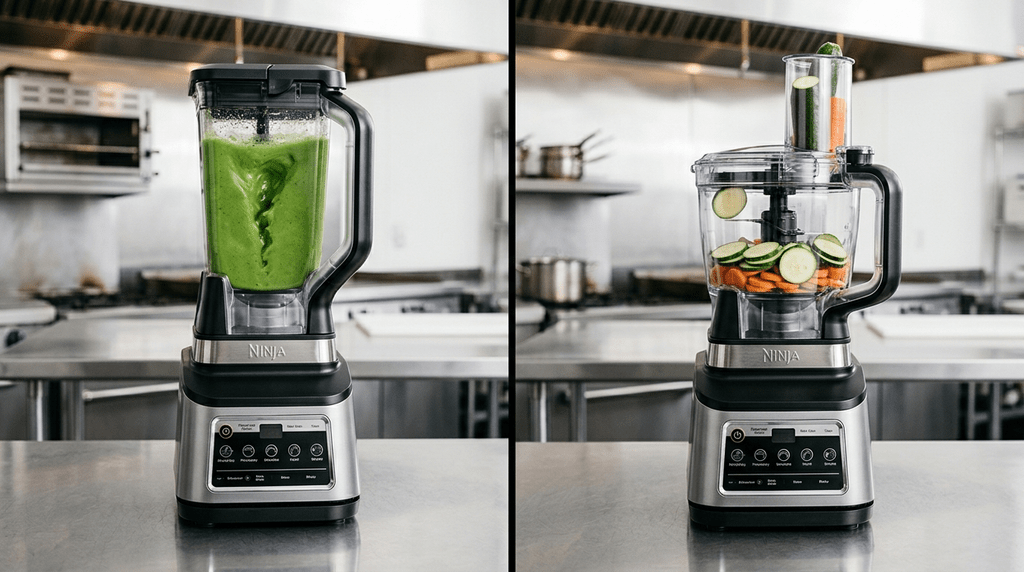
Choosing between a blender and food processor combo and standalone appliances comes down to the textures you cook with most often. High-speed blenders excel at shearing ingredients into smooth liquids using a deep vortex, whereas food processors rely on wide, flat-bottomed bowls and slicing or shredding discs to cut solids cleanly without turning them into puree.
| Appliance Type | Primary Strengths | Texture & Food Strengths | Best Fit For |
| Blender & Food Processor Combo | Dual functionality on one shared motor base | Handles both silky smoothies/sauces and chopped veggies, dips, or doughs | Cooks with limited counter/cabinet space who want versatile everyday prep |
| Standalone High-Powered Blender | High RPM vortex blending and heavy-duty ice/frozen crushing | Smooth shakes, nut butters, soups, and fibrous greens without chunkiness | Daily smoothie and soup makers who rarely slice or shred solids |
| Dedicated Food Processor / Chopper | Wide bowl capacity, feed chute slicing/shredding discs, and dough blades | Even vegetable slices, grated cheese, salsa, hummus, and pastry/bread dough | Frequent batch preppers and bakers who don’t need high-speed liquid blending |
Keep realistic expectations on trade-offs: a combo processor bowl typically holds around 6 to 8 cups rather than the 12- to 14-cup capacity of a large standalone processor, and switching attachments takes an extra minute, a small compromise in exchange for saving space and money.
Smart Buyer’s Guide: What Specs Actually Matter in a Combo System
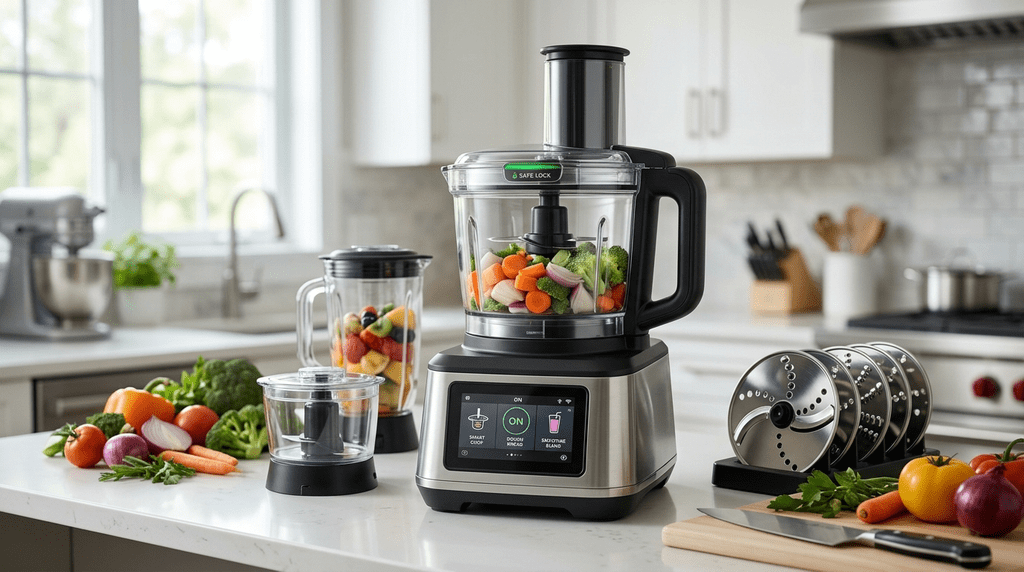
Not every multi-attachment blender performs equally well across both functions. Before buying, look past marketing buzzwords and check four practical specifications that determine daily durability, capacity, and ease of use.
1. Motor Power and Low-Speed Torque
Wattage alone doesn’t tell the whole story, though 1,000 to 1,500 peak watts provides reliable power for crushing ice and fibrous greens without stalling. Just as important is how the motor handles low-speed torque: kneading heavy pizza dough or shredding firm blocks of cheddar requires steady, controlled power at lower RPMs so the motor doesn’t overheat.
2. Practical Attachment Capacities
Match the container sizes to how many people you typically cook for:
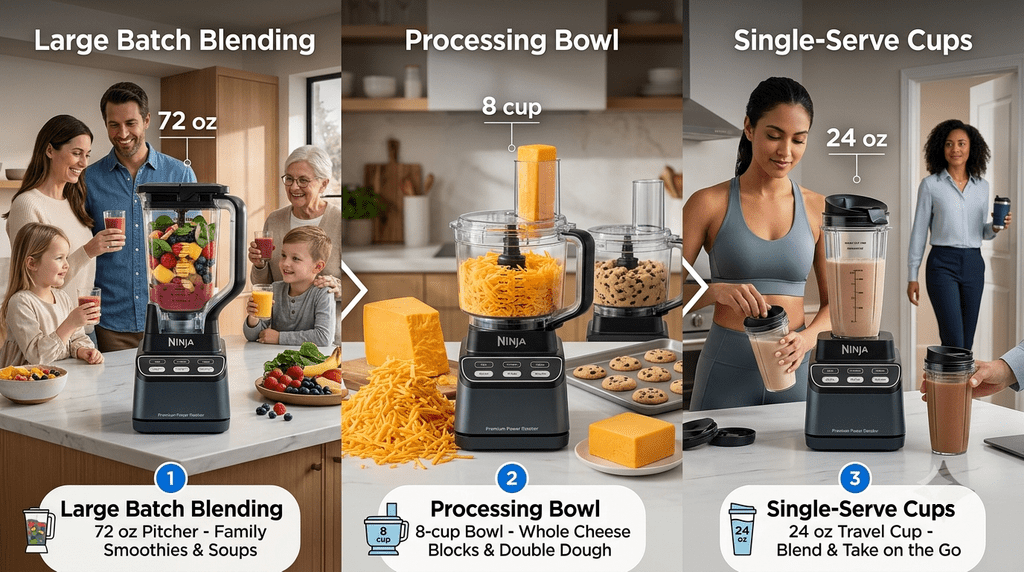
- Full-Size Blending Pitcher (64 to 72 ounces): Gives enough headroom to blend four to six smoothies or a full batch of soup without liquid overflowing near the lid.
- Food Processor Bowl (at least 8 cups): Smaller 4- or 5-cup mini-chopper bowls fill up after two onions; an 8-cup bowl with a wide feed chute handles full blocks of cheese, sliced potatoes, or a single batch of pie dough comfortably.
- Single-Serve Blending Cups (16 to 24 ounces): Useful if you make morning protein shakes or salad dressings and want to blend directly in a cup with a travel lid.
3. Durable, Food-Safe Construction
Pay close attention to the drive coupling, the gear mechanism connecting the motor base to the pitcher or bowl. Metal-to-metal or reinforced composite drive couplings resist stripping far better than soft plastic gears when you blend frozen fruit or knead dense dough.
For containers and blades, look for:
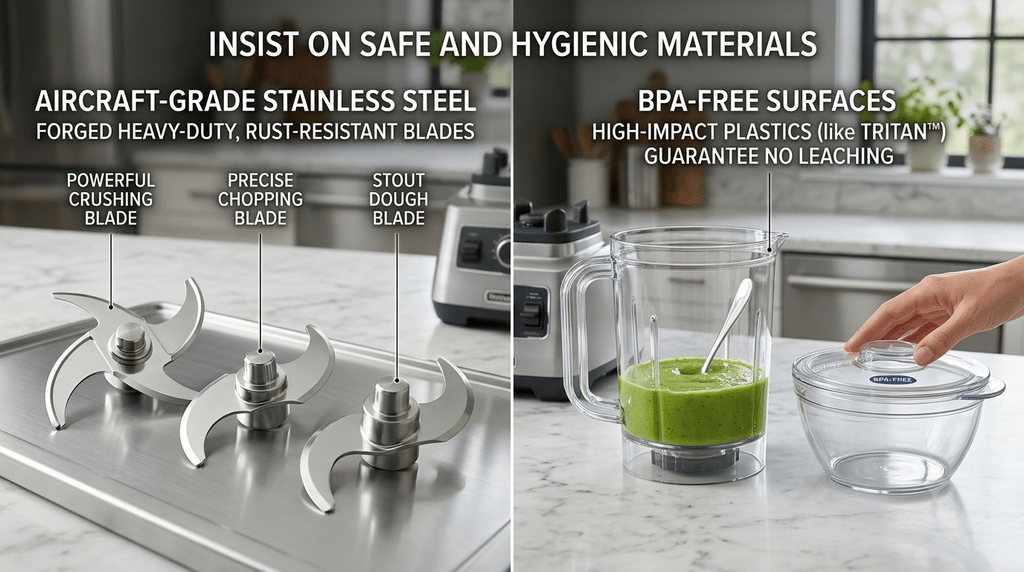
- Hardened Stainless Steel Blades and Discs: Rust-resistant stainless steel S-blades, dough paddles, and reversible slicing/shredding discs hold their edge through repeated dishwasher cycles.
- Shatter-Resistant, BPA-Free Pitchers (such as Tritan): Lightweight, clear, and durable enough for cold blends, though if you frequently blend hot soups, check the manufacturer’s maximum temperature rating and always vent the center lid cap so steam pressure doesn’t build up.
4. Useful Preset Programs Over Gimmicks
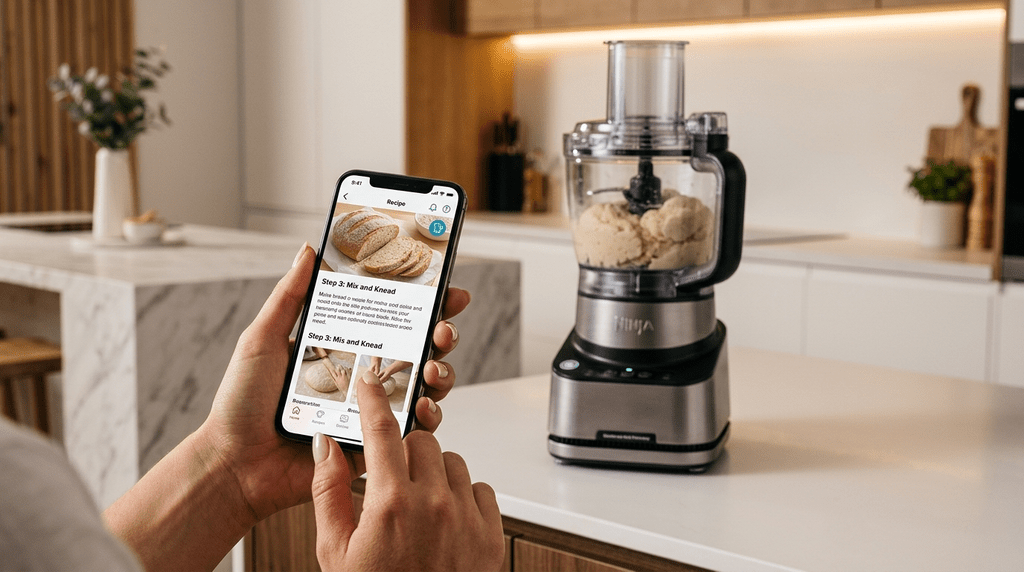
Pre-programmed cycles, such as Smoothie, Ice Crush, Chop, and Dough, genuinely improve results by automating pulse-and-pause intervals so ingredients settle back onto the blades instead of air-pocketing. Skip models that inflate the price with Wi-Fi or smartphone apps; blending and food processing take 30 to 90 seconds and always require hands-on supervision for safety.
How to Get Better Results (and Clean Up Safely)
Even a high-wattage combo system can leave frozen fruit stuck around the blades or turn salsa into soup if you load ingredients in the wrong order. A few simple habits improve texture immediately and keep blades sharp longer.
Smart-Base Recognition and Blade Selection
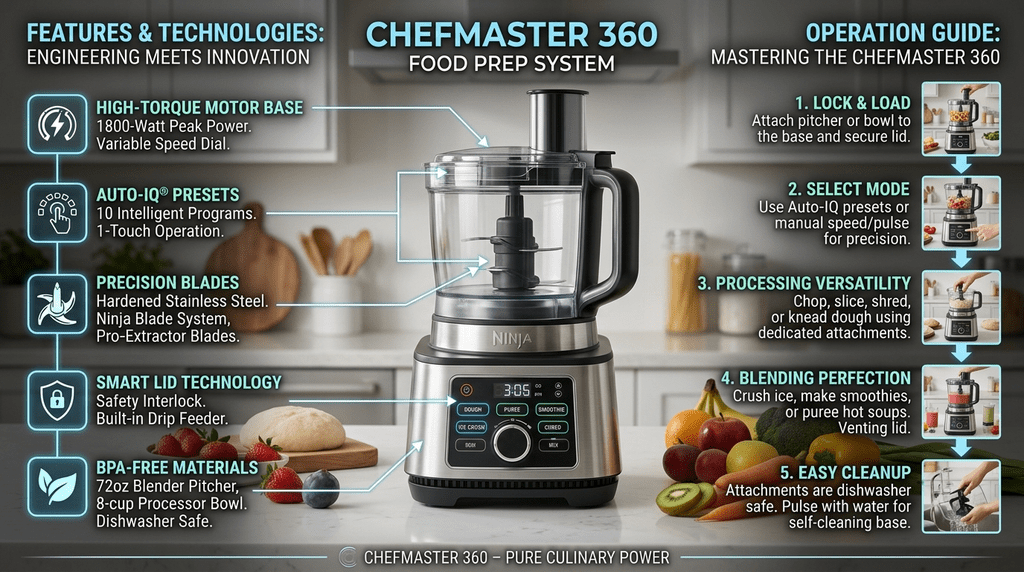
Most modern combo systems use magnetic or mechanical interlocks in the base to detect which vessel is locked in place. Snapping on the tall pitcher activates high-speed blending presets (such as Smoothie, Ice Crush, or Puree), while locking on the wide food processor bowl switches the control panel to lower-speed, high-torque modes (Chop, Dough, or continuous Disc speed for slicing and shredding).
Match the blade to the job before adding food:
Reversible Slicing/Shredding Disc: Mounts on a center spindle at the top of the processor bowl so vegetables and cheese drop cleanly downward after passing through the feed chute.
Stacked or Multi-Level Blender Blade: Built for creating a liquid vortex that pulls ice, frozen berries, and leafy greens downward.
Stainless Steel S-Blade (Chopping Blade): Sits low in the flat processor bowl to dice onions, mince herbs, or emulsify hummus and nut butters without liquefying everything at once.
Plastic Dough Blade: Uses blunt edges to fold and knead bread or pizza dough without tearing the gluten network or straining the motor.
Four Operating Habits for Consistent Textures
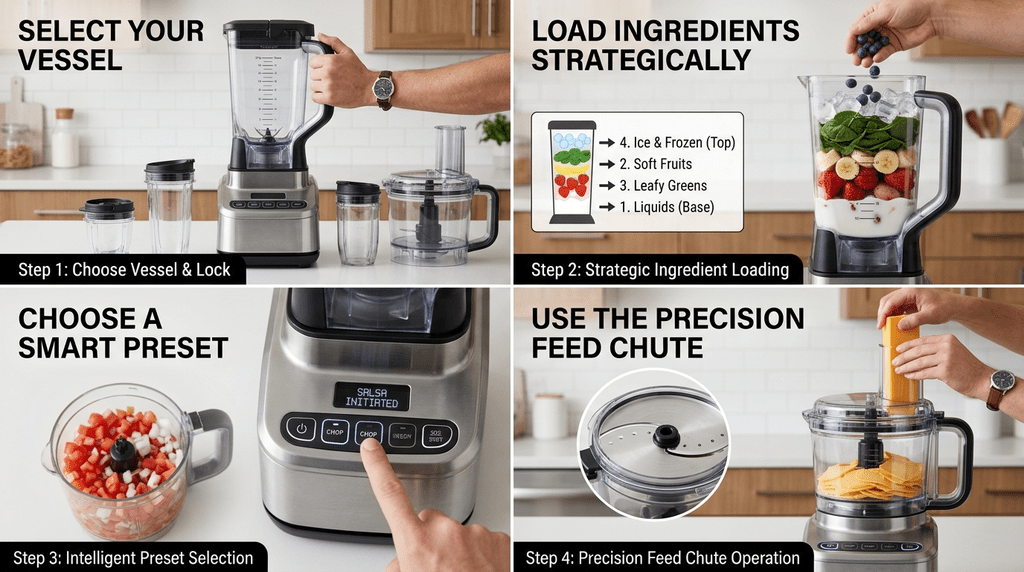
- Lock the Vessel and Lid Before Powering On: Interlock safety switches prevent the motor from spinning until both the container and lid click into place, never force a sticky lid; check that the gasket and feed chute pusher are seated properly.
- Load Smoothies From Liquid to Frozen: Pour water, milk, or yogurt in first, add soft fruit and leafy greens in the middle, and place ice or frozen fruit on top so the heaviest ingredients push everything down into the blades.
- Pulse Rather Than Run Continuously When Chopping: For salsa, mirepoix, or chopped nuts in the processor bowl, use short 1- to 2-second pulses (or the Chop preset) so ingredients fall back between cuts instead of turning into paste.
- Chill Firm Cheeses Before Shredding: Cold mozzarella or cheddar shreds cleanly through the feed chute without smearing across the disc; always use the plastic food pusher rather than your fingers.
Cleaning and Maintenance Without Dulling Blades
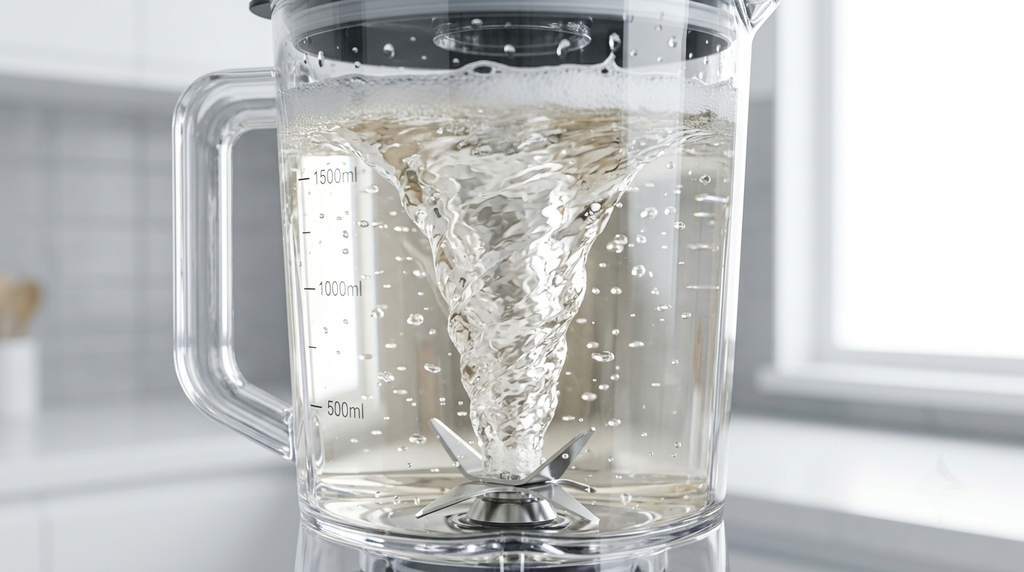
- Use the Soap-and-Water Vortex for the Blender Pitcher Only: Right after pouring a smoothie or sauce, fill the pitcher halfway with warm water, add one drop of dish soap, secure the lid, and run on high for 30 to 45 seconds before rinsing. (Do not try this in the food processor bowl, as water will leak up through the center spindle column.)
- Rinse Processor Bowls and Discs Immediately: Dried cheese, dough, and fibrous herbs cling stubbornly once hardened; a quick warm rinse right after prep saves scrubbing near sharp edges.
- Check Dishwasher Placement: Most BPA-free pitchers, bowls, lids, and detachable blade assemblies are top-rack dishwasher safe, though hand-washing removable blade assemblies and drying them promptly preserves their edge and prevents gasket wear.
- Wipe Down the Motor Base: Unplug the unit and wipe splashes around the control panel and drive socket with a slightly damp microfiber cloth, never submerge the base or spray cleaner directly into the motor vents.
When a Blender and Food Processor Combo Makes the Most Sense
For most home cooks, buying a dual-purpose system comes down to balancing daily convenience against cabinet space and budget. A well-built combo earns its spot on the counter when your weekly cooking regularly crosses between liquid blending and solid food prep:
- Faster Weeknight Prep: Switching from slicing vegetables for a stir-fry to blending a marinade or soup base takes seconds on the same motor base, cutting down repetitive knife work on busy evenings.
- Less Counter and Cabinet Clutter: Replacing two heavy motor bases with one footprint frees up prime counter space, especially valuable in apartment kitchens or homes without deep appliance garages.
- More Control Over Everyday Staples: Making your own hummus, nut butters, pesto, salad dressings, and pizza or pie dough from scratch lets you adjust salt, oil, and texture while costing a fraction of specialty store-bought jars.
- Lower Upfront Cost Than Two Mid-Range Machines: Purchasing a capable combo unit typically costs $100 to $250 less than buying a separate high-wattage blender and a full-size food processor of comparable build quality.
When to skip a combo: If you routinely bake large batches of heavy bread dough or host big family gatherings requiring a 12- to 14-cup processor bowl, two dedicated standalone machines will handle heavy workloads more comfortably without motor strain.
If a dual-purpose system fits your kitchen routine and cabinet space, you can compare current prices and full attachment specs on our recommended blender and food processor combos here before deciding which capacity matches your household.
Smart Storage Tips for a Multi-Attachment Combo System
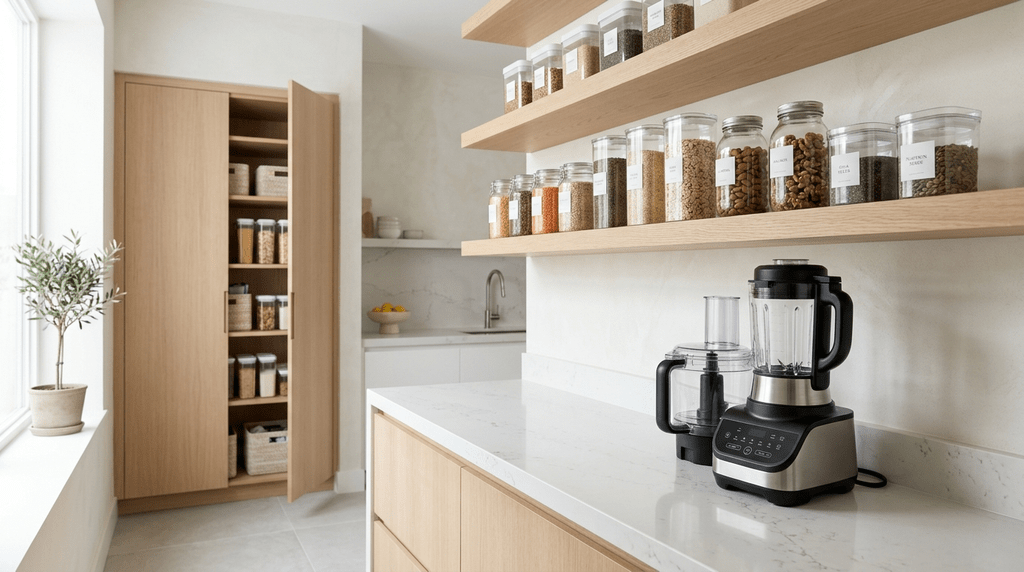
One of the few drawbacks of owning a blender and food processor combo is storing the extra bowls, lids, and sharp slicing discs when they aren’t on the motor base. A few simple storage habits keep everything accessible without crowding your cabinets:
- Keep the Motor Base Out, Store Extra Attachments Nearby: Leave the sleek motor base with your most-used container (usually the blending pitcher) on a dedicated prep corner of the counter, and store the food processor bowl, pusher, and single-serve cups in the cabinet directly below.
- Use a Slim Bin for Sharp Blades and Discs: Slicing discs, dough paddles, and S-blades can easily chip or nick fingers if tossed loose into a drawer. Store all blade attachments upright inside a dedicated narrow plastic bin or original blade storage case so every piece stays protected and easy to grab.
- Tame the Power Cord: Stick a small adhesive cord wrapper onto the back of the motor base so excess cord stays coiled neatly out of sight rather than trailing across the backsplash.
- Follow the “Rinse Right Away” Rule: Run the 30-second warm-water-and-soap vortex in the blender pitcher or rinse the processor bowl immediately after pouring, dried seeds, cheese, and dough take three times longer to scrub once hardened.
Choosing One Machine That Does Both Jobs Well
A thoughtfully chosen blender and food processor combo eliminates the clutter and expense of running two separate countertop machines without sacrificing everyday cooking performance. Focus on a sturdy 1,000- to 1,500-watt motor base with reinforced drive couplings, an 8-cup or larger processor bowl, a generous Tritan pitcher, and straightforward presets you will actually use.
Ready to compare top models? If a dual-purpose system fits your kitchen layout and cooking routine, you can compare current prices, motor ratings, and included attachments for our top-rated blender and food processor combos here.