
The 500 $ Kitchen Upgrade: How Smart Cabinets Beat a Full Renovation
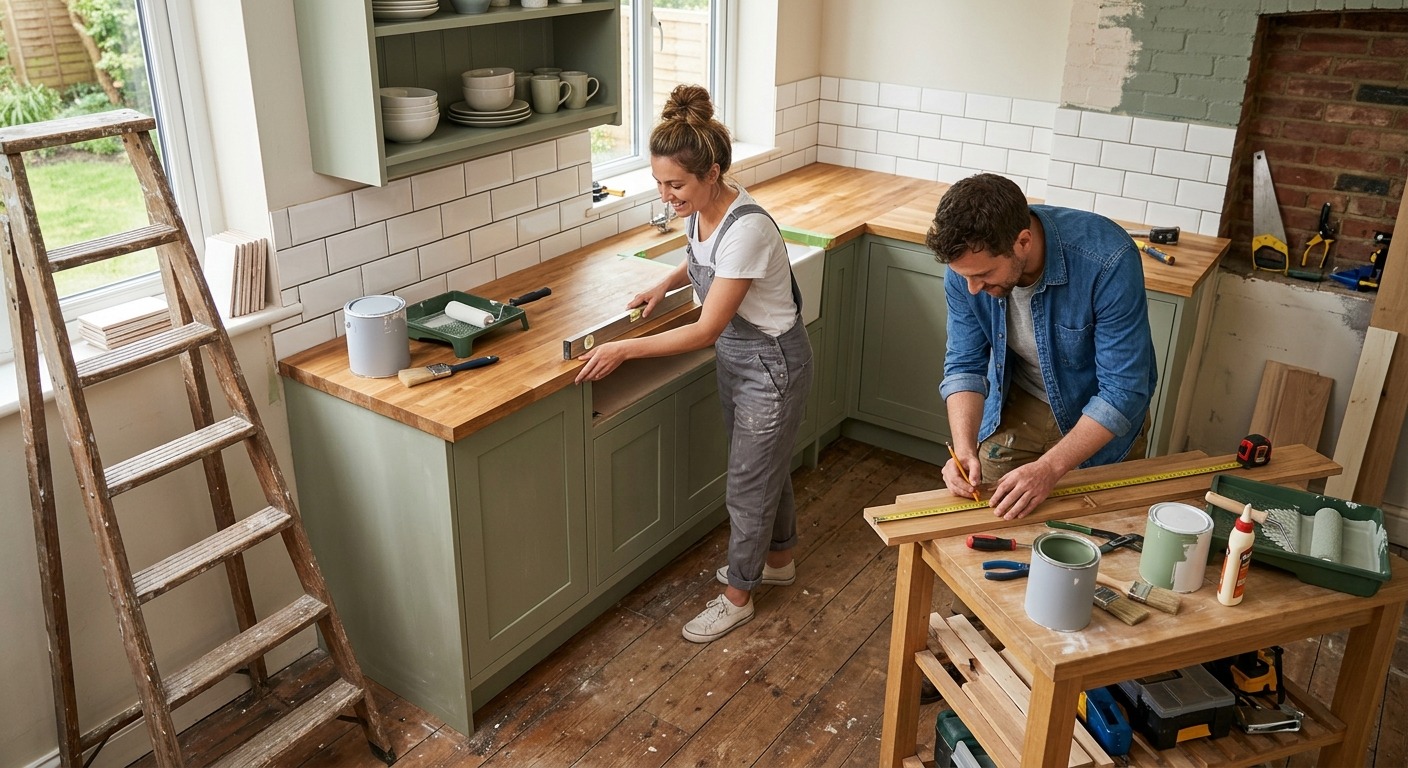
Skip the new cabinets. Pull-out shelves, drawer dividers, door racks, and upright dividers will fix most of what’s wrong with your kitchen storage — usually for less than $500, and without hiring anyone.
I’ve spent years organizing kitchens for landlords and small business owners, and the same story shows up over and over. Someone insists they need more cabinet space. Then we open the cabinets and find half of it wasted on dead corners, stacked pans, and stuff nobody’s touched in years.
The space was there all along. It was just badly used.
The Real Cost of a Messy Cabinet
Think about how many times a day you dig through a drawer looking for one thing. Now multiply that by everyone in your household. It adds up fast.
Storage isn’t a nice-to-have, either. When the National Kitchen & Bath Association surveys homeowners about renovations, storage ranks near the top of the priority list almost every time. People don’t renovate kitchens for looks alone — they’re tired of fighting their cabinets.
I still remember the first corner cabinet I fixed with a simple lazy Susan. A week later the client called me, half-joking, half-annoyed: “Why did I live like that for eight years?”
That’s the level of difference we’re talking about.
My rule for every client: organize before you renovate. You’d be surprised how many “we need more cabinets” problems vanish after a $200 weekend.
Start With an Audit (Yes, an Actual Empty-Everything Audit)
Clients ask me about this constantly, so here’s exactly how I do it. Take everything out of every cabinet. All of it. Then sort into four piles:
- Daily use — this gets the best spots, at waist height
- Weekly use — upper shelves and edges
- Occasional use — deep corners and high cabinets
- Never use — donate it. Be honest with yourself here.
Last month I did this to my own kitchen and found three identical spatulas plus a fondue set I’d completely forgotten existed. Everyone finds something like that. Getting rid of it frees up room you didn’t know you had.
One mistake cost me two hours early on: measuring the outside of cabinets instead of the inside. Frames and hinges eat 2–3 inches per side. Always measure the interior before ordering any organizer.
Pull-Out Shelves: The Best Money You’ll Spend
Here’s the truth about deep base cabinets — anything past the first row might as well not exist. That’s where bags of rice go to expire quietly.
Pull-out trays fix it for good. And thanks to retrofit kits, this is very much a DIY job now.
| Solution | Typical Cost | Difficulty | Impact |
|---|---|---|---|
| Roll-out shelf kits (DIY) | 30–30 –30–80 per shelf | Easy–Moderate | Huge |
| Full pull-out systems (pro install) | 150–150 –150–400 per cabinet | Hire a pro | Maximum |
| Sliding wire baskets | 25–25 –25–60 | Easy | High |
We converted an entire set of base cabinets in one weekend. Here’s how it went:
- Saturday morning: measured every base cabinet’s inside width, depth, and height
- Saturday afternoon: ordered kits to match
- Sunday: mounted the rails, slid in the trays, restocked everything by category
Roughly $350 total. Nothing has been lost in the back since.
A word of caution, learned the hard way: cheap slides sag when you load them with cast iron. My first budget set broke under a stack of Dutch ovens. Pay the extra $15 or so for full-extension ball-bearing slides and never think about it again.
Drawer Dividers: Cheap Fix, Daily Payoff
Junk drawers aren’t a character flaw. They’re a missing divider.
Adjustable dividers run 10–10–10–30 per drawer and end the utensil avalanche immediately. Deeper drawers do even better with stacked inserts — two layers of storage in the same footprint.
| Drawer Type | What Works Best | Cost |
|---|---|---|
| Cutlery | Expandable bamboo tray | 15–15 –15–35 |
| Pots & pans | Vertical pan dividers | 20–20 –20–50 |
| Spices | Tiered or angled insert | 20–20 –20–45 |
| Utility/junk | Modular adjustable bins | 10–10 –10–30 |
If you only try one thing from this section, make it vertical dividers. Standing cutting boards, baking sheets, and lids upright turns a chaotic deep drawer into something like a filing cabinet. I’ve set this up in three client kitchens now, and every single person said the lid drawer alone justified the whole project.
Don’t Ignore Your Cabinet Doors
Doors are vertical space doing absolutely nothing. Mounting storage on them costs pocket change and adds real capacity:
- Lid racks — lids stop nesting into chaos (15–15 –15–30)
- Spice racks — frees up a whole shelf (20–20 –20–40)
- Cutting board slots — boards stand instead of lean (15–15 –15–25)
- Wrap and foil holders — off the counter, always within reach (10–10 –10–20)
Over-the-door versions need zero drilling, so renters can join in too. I tested adhesive-mounted ones recently and the good brands held up fine — but keep them light. Overload a door and the hinges start complaining within months.
Corner Cabinets: Fixing the Kitchen’s Worst Flaw
Corners swallow storage because reaching the back requires octopus arms. Luckily there are proven fixes at different price points:
| Solution | Cost Range | Best For |
|---|---|---|
| Lazy Susan retrofit | 40–40 –40–120 | L-shaped corners, quick fix |
| Pull-out corner organizer | 200–200 –200–500 | Blind corners, daily access |
| Diagonal pull-out drawers | 300–300 –300–700 | Full renovations |
Honestly? A basic two-tier lazy Susan handles most of the problem for under $100. Keep everyday items on it and stash seasonal stuff elsewhere. Don’t fight physics — work around it.
Look Up: Free Space Above and Between Shelves
Most kitchens waste a solid foot of space above the upper cabinets, plus awkward gaps between shelves. Both are free storage if you claim them.
Shelf risers are the easiest win. Pop one under your mugs and suddenly you’ve got two visible rows instead of one buried stack. They cost 10–10–10–25 each and require literally no skill to install.
The space above cabinets suits things you rarely touch — holiday platters, bulk paper towels, the air fryer that comes out monthly. Baskets keep the dust off and make it look deliberate instead of cluttered.
Under the Sink: The Hardest Spot, Handled
Under-sink cabinets have to share space with pipes, disposals, and constant moisture. Most standard organizers fail here.
What actually survives down there:
- Stackable caddy bins shaped around plumbing (15–15 –15–35)
- Tension rods to hang spray bottles (5–5 –5–10)
- Two-tier pull-outs made specifically for sink bases (40–40 –40–90)
Avoid cardboard and particleboard entirely — moisture always wins eventually. Stick to plastic and coated wire. I watched a client’s wooden organizer swell shut within a year, and that was enough of a lesson for me.
Where to Start If Budget Is Tight
Work through this list top to bottom. Each step makes the next one easier:
| Upgrade | Cost | Effort | Impact | Priority |
|---|---|---|---|---|
| Declutter + zone audit | $0 | Low | High | 1 |
| Drawer dividers | 50–50 –50–100 | Low | High | 2 |
| Pull-out base shelves | 150–150 –150–350 | Medium | Very High | 3 |
| Door-mounted racks | 60–60 –60–115 | Low | Medium | 4 |
| Corner solutions | 40–40 –40–500 | Medium | High | 5 |
| Shelf risers | 30–30 –30–75 | Low | Medium | 6 |
By step three, you’ll finally know what you actually own — which changes how you organize everything after it.
Skip These Money Traps
I’ve watched clients burn cash on the same things again and again:
- Custom built-in organizers — retrofit kits get you most of the function for a fraction of the price
- Matching designer bin sets — pretty labels don’t make anything easier to reach
- Single-purpose gadgets — novelty organizers end up in the donate pile
- Buying bins before decluttering — organizing stuff you should’ve donated is just moving clutter around
The Bottom Line
Good cabinet storage comes down to three things: can you see it, can you reach it, and do you actually use it?
So start with the audit. Add pull-outs wherever things disappear. Divide the drawers you open every day. Use your doors. Save the corners for last — once everything else works, they matter far less than you’d think.
Follow that order and a few hundred dollars will genuinely feel like a new kitchen. I’ve seen it happen on project after project. Your cabinets are sitting on the same hidden potential right now.