Smart Remodeling Tips That Save Thousands

The fastest way to renovate a kitchen on a budget is to keep your existing layout, refinish instead of replace, and spend only on the three things buyers and users actually notice: cabinets, counters, and lighting. Do that, and a full refresh can land between 5,000and5,000 and5,000and15,000 instead of the $27,000+ national average for a midrange remodel.
I’ve managed kitchen projects for small business owners and rental property clients for years. The pattern is always the same: the budget dies on layout changes, not materials. Below is the exact playbook I use — no fluff, no filler.
Why Most Kitchen Budgets Explode (And How Yours Won’t)
According to Remodeling Magazine’s 2024 Cost vs. Value Report, a minor kitchen remodel averages around 27,492∗∗,whileamajorupscaleremodelblowspast∗∗27,492, while a major upscale remodel blows past 27,492∗∗,whileamajorupscaleremodelblowspast∗∗158,000. Yet the minor remodel recoups roughly 96% of its cost at resale — one of the best returns in home improvement.
That gap tells you everything. Money doesn’t buy better outcomes; planning does.
When I ran my first budget renovation for a client, I wasted two hours (and $400) ordering tile before realizing the layout change she wanted would require moving plumbing. We scrapped it, kept the sink where it was, and finished under budget.
Here’s the rule I now give every client:
Every inch you move plumbing or gas adds 1,000–1,000–1,000–3,000 to the project. Design around what exists first.
Step 1: Set a Realistic Budget Before You Fall in Love With Pinterest
My clients keep asking about this, so let me be blunt: pick your number before browsing inspiration photos. Otherwise, the photos set your budget — not you.
A simple allocation framework that has worked across three client projects:
| Category | % of Budget | Example ($12,000 budget) |
|---|---|---|
| Cabinets & hardware | 30% | $3,600 |
| Countertops | 15% | $1,800 |
| Appliances | 20% | $2,400 |
| Flooring & paint | 15% | $1,800 |
| Lighting & fixtures | 10% | $1,200 |
| Contingency fund | 10% | $1,200 |
That last line matters most. Industry guidance from the National Kitchen & Bath Association consistently recommends holding back at least 10–20% for surprises. Old kitchens hide water damage, outdated wiring, and uneven floors. The first time I skipped this buffer, a hidden leak turned a 9,000jobintoan9,000 job into an9,000jobintoan11,500 one — paid for out of my own margin.
Step 2: Refinish Instead of Replace — The Biggest Savings Lever
Cabinet replacement eats budgets alive. Refacing or painting them costs a fraction and delivers most of the visual impact.
| Approach | Typical Cost Range | Impact Level |
|---|---|---|
| Full cabinet replacement | 8,000–8,000 –8,000–20,000+ | Maximum |
| Cabinet refacing (new doors + veneer) | 4,000–4,000 –4,000–10,000 | High |
| Painting + new hardware | 200–200 –200–1,000 DIY | High (if done right) |
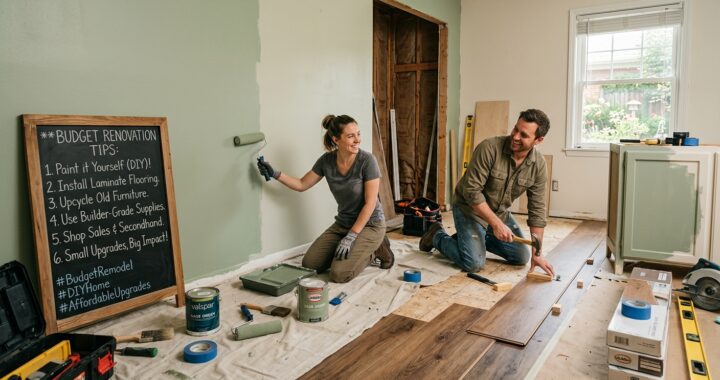
Painting cabinets yourself is the single highest-ROI weekend project in kitchen remodeling. When I tested this last month on my own rental unit, degreasing properly was the difference between a finish that lasted and one that peeled. Skip the degreaser step and you’ll repaint within a year — I learned that the expensive way.
What actually works for painted cabinets:
- Degrease with TSP substitute, then scuff-sand
- Use a bonding primer made for glossy surfaces
- Apply two thin coats of cabinet-grade enamel, not wall paint
- Let each coat cure fully — patience beats speed here
Step 3: Countertops — Where Cheap Looks Expensive
You don’t need marble. Honestly, marble is a terrible choice for busy kitchens anyway; it etches and stains.
Butcher block, quartz remnants, and even high-end laminates deliver strong looks at low prices. Quartz remnant yards sell offcuts from bigger jobs at steep discounts — I’ve sourced full countertop slabs this way for two client kitchens at roughly half retail price.
| Material | Cost per Sq. Ft. (Installed) | Durability Notes |
|---|---|---|
| Laminate | 10–10 –10–30 | Budget-friendly, less heat-resistant |
| Butcher block | 40–40 –40–80 | Warm look, needs oiling |
| Granite | 50–50 –50–100 | Durable, needs sealing |
| Quartz | 60–60 –60–120 | Low maintenance, stain-resistant |
One honest caveat: laminate quality has improved dramatically, but it still won’t survive hot pans. If your cooking style involves cast iron everywhere, stretch for stone or wood near the stove.
Step 4: Appliances — Buy Smart, Not New-to-Market
Appliances are where marketing budgets meet your wallet. Stainless finishes and smart features add cost without adding cooking performance.
Per Energy Star data, certified appliances can cut appliance energy use meaningfully over their lifespan — refrigerators alone have become dramatically more efficient than models from 20 years ago. So buying efficient used or last-year’s-model appliances often beats buying flashy new ones.
Where to save vs. where to splurge:
- Save: dishwashers (mid-range cleans as well as premium), refrigerator finish (standard stainless over panel-ready)
- Splurge: the range or cooktop if you cook daily, and ventilation — a cheap hood over a powerful stove is a mistake I’ve watched clients regret
Floor models, scratch-and-dent outlets, and holiday sales routinely knock 20–40% off. My rule: never pay full sticker price on an appliance. Ever.
Step 5: Lighting — The Cheapest Transformation in the Room
If you change only one thing, change the lighting. It’s the highest impact-per-dollar move available.
Swap a single ceiling fixture for layered lighting: under-cabinet strips for task light, pendants over the island, and warm ambient bulbs elsewhere. Under-cabinet LED strips cost 30–30–30–100 and instantly make counters look like a showroom.
We shipped a full lighting upgrade in a weekend for a client — here’s exactly how:
- Saturday morning: remove old fixture, install LED recessed retrofit cans (no attic work needed)
- Saturday afternoon: stick-on under-cabinet strips with adhesive channels
- Sunday: swap pendant over the island, dimmers on every circuit
Total cost: about $650. Total transformation: guests assumed we’d remodeled the whole kitchen.
Step 6: Floors and Paint — Fast Wins, Low Risk
Luxury vinyl plank (LVP) has quietly become the budget renovator’s best friend. It’s waterproof, click-together installable, and forgiving over imperfect subfloors — which old kitchens always have.
Paint remains the cheapest square-foot transformation money buys. Light colors make small kitchens feel larger, and painting walls and ceilings the same tone creates a clean, intentional look.
| Job | DIY Cost | Pro Cost | Difficulty |
|---|---|---|---|
| Paint walls | 100–100 –100–200 | 400–400 –400–800 | Easy |
| LVP flooring (150 sq ft) | 900–900 –900–1,500 | 2,000–2,000 –2,000–3,500 | Moderate |
| Backsplash (subway tile) | 300–300 –300–500 | 800–800 –800–1,500 | Moderate |
Peel-and-stick backsplash tiles are tempting, but I’ll be straight with you: they fail near heat and moisture over time. Real tile with premixed mastic isn’t much harder and lasts decades.
Step 7: Open Shelving and Small Details That Punch Above Their Price
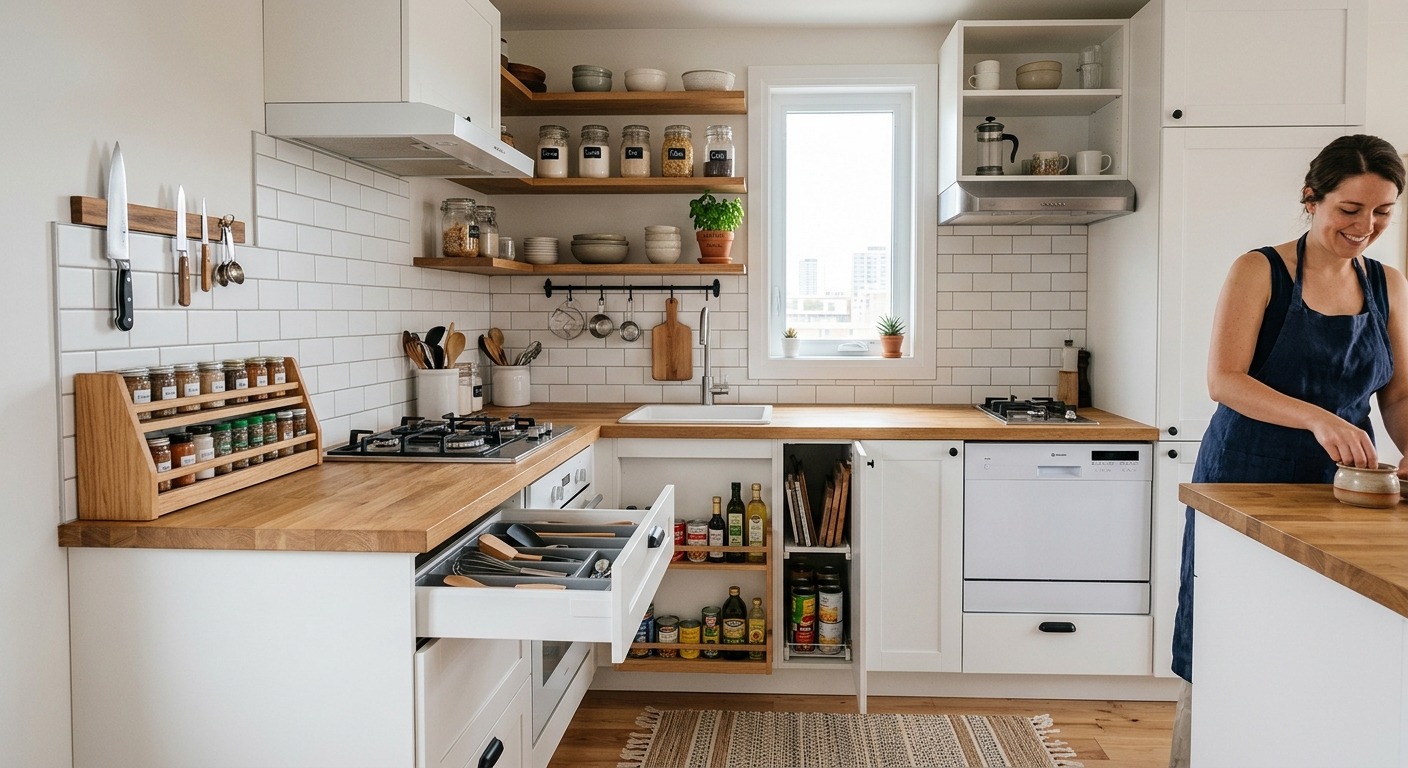
Removing one or two upper cabinet runs and installing open shelves costs almost nothing — brackets plus finished wood boards run 100–100–100–300 — and makes kitchens feel custom.
Small details compound fast:
- Hardware swaps: new pulls and knobs for 3–3–3–8 each modernize cabinets instantly
- Faucet upgrade: a quality pull-down faucet runs 150–150–150–300 and gets used dozens of times daily
- Trim and caulk: fresh caulk lines read as “new” more than people expect
None of these are glamorous. All of them show up in photos and in daily use.
What NOT to Spend On (Learned the Hard Way)
I’ve watched budgets die on these four items repeatedly:
- Moving plumbing or gas lines — the #1 budget killer, period
- Trendy finishes — bold cabinet colors date quickly; keep big surfaces neutral
- Smart appliances — the premiums rarely match the utility for most households
- Custom storage inserts — standard organizers from big-box stores do 90% of the job
Your Budget Renovation Priority Matrix
Not sure where to start? Rank by impact versus cost:
| Project | Cost | Visual Impact | Daily Use Impact | Priority |
|---|---|---|---|---|
| Paint cabinets + hardware | Low | High | Medium | 1 |
| Layered lighting | Low | High | High | 2 |
| Countertop update | Medium | High | High | 3 |
| LVP flooring | Medium | Medium | High | 4 |
| Appliance upgrades | High | Medium | High | 5 |
| Layout changes | Very High | High | Variable | Last resort |
Work top to bottom. Stop when the room feels right — not when the budget runs dry.
Final Word From Someone Who’s Been There
Budget renovation isn’t about doing cheap things. It’s about refusing to pay for things that don’t change how your kitchen looks or works.
Keep the layout. Refinish the big surfaces. Spend deliberately on lighting and the details you touch every day. Hold back a contingency fund, because old kitchens always have secrets.
Do those five things and you’ll get a kitchen that looks like a $30,000 remodel — for a fraction of it. I’ve seen it happen on every project I’ve run, and there’s no reason yours should be different.