Smart Pantry Habits: Food Storage Safety, Date Labels, and Zero-Waste Rotation
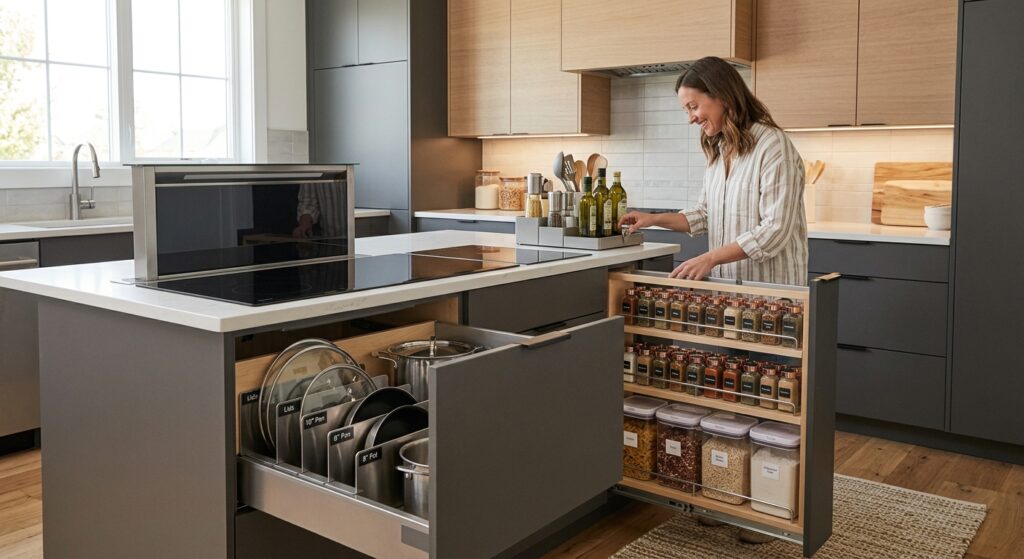
A well-organized pantry, Food Storage Safety is less about matching acrylic bins and more about knowing at a glance what you have, where it belongs, and what needs to be cooked first. When shelves are crowded or poorly arranged, even simple weeknight meals start with digging behind half-open bags, and end with buying duplicate groceries you already own.
You do not need an expensive pantry makeover to fix that. Combining practical shelf zones with basic food-safety rules from the U.S. Department of Agriculture (USDA) and waste-reduction habits from the Environmental Protection Agency (EPA) keeps dry goods safe, visible, and easy to manage every week.
Table of Contents
Clear the Shelves and Inspect Packaging First
Before buying a single bin or turntable, empty the pantry completely so you can see everything you actually own. Sorting one shelf at a time hides duplicates tucked into back corners.
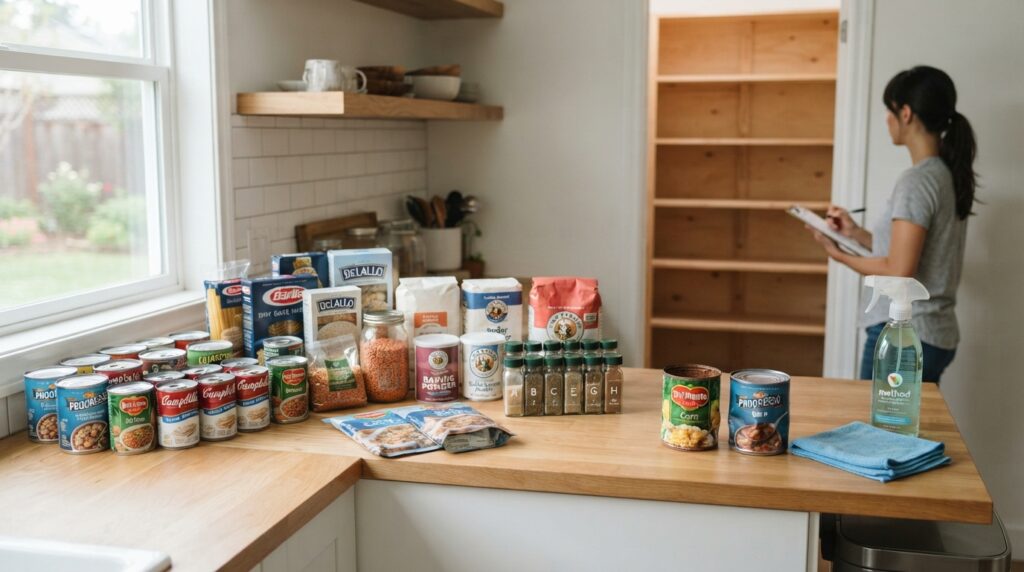
As you group similar items on the counter, inspect cans, jars, and boxes carefully:
- Check Can Integrity: According to USDA food-safety guidance, discard any cans that are leaking, bulging, badly rusted, or severely dented, especially along the seam.
- Understand Food Date Labels: The USDA notes that most dates printed on shelf-stable packages (“Best if Used By” or “Best Before”) refer to peak quality rather than food safety, meaning intact dry goods and canned foods often remain safe past that date if stored properly.
- Clean Before Reloading: Wipe down bare shelves according to the manufacturer’s instructions and let them dry completely before putting food back.
| What You Find During a Clear-Out | Immediate Action |
| Duplicate open packages | Group them together and place the older one in front |
| Leaking, bulging, or deeply dented cans | Discard immediately rather than risking spoilage |
| Items stored in the wrong spot | Return them to their matching category zone |
| Past-date dry goods with intact seals | Check appearance and smell, and move to the front to use soon |
Store Foods Where Temperature and Moisture Stay Safe
Convenience should never override safe storage conditions. A spot near a warm appliance or under a damp sink can shorten shelf life or damage packaging.
- Keep Pantry Staples Cool and Dry: The USDA recommends storing shelf-stable foods, such as rice, pasta, flour, sugar, spices, and cooking oils, in a clean, cool, dry cabinet away from heat sources.
- Avoid Over-the-Stove and Under-Sink Cabinets: The USDA specifically advises against storing canned goods above the stove (where heat accelerates quality loss) or under the sink (where moisture and cleaning chemicals pose risks).
- Read Every Product Label: Not every canned item is shelf-stable, the USDA points out that certain canned hams and seafood products require refrigeration, so packaging instructions always take priority over general pantry rules.
How Long Common Pantry Staples Actually Stay Fresh
Even when stored in a cool, dry cabinet, pantry staples do not age at the same pace. Ingredients higher in natural oils, such as whole-grain flours, brown rice, and nuts, turn rancid much faster than refined white flour or white rice:
| Pantry Staple | Typical Unopened Shelf Life | Once Opened (Best Quality) | Storage Tip |
| White Rice & Dry Pasta | 1 to 2 years | 1 year | Keep dry and sealed against pantry pests |
| Brown Rice & Whole-Wheat Flour | 6 to 12 months | 3 to 6 months | Refrigerate or freeze for longer storage |
| All-Purpose White Flour & Sugar | 1 to 2 years | 6 to 12 months (flour) / indefinite (sugar) | Store in airtight containers away from moisture |
| Cooking Oils (Olive, Vegetable) | 1 to 2 years | 3 to 6 months | Keep away from direct sunlight and stove heat |
| Ground Spices vs. Whole Spices | 2 to 3 years (ground) / 3 to 4 years (whole) | 6 to 12 months for peak aroma | Smell before cooking; replace if aroma is flat |
| Low-Acid Canned Goods (Beans, Corn, Broths) | 2 to 5 years | Refrigerate leftovers immediately in a separate container | Discard any rusted, leaking, or bulging cans |
Decoding Food Date Labels Without Guessing
Confusion over printed dates is one of the biggest drivers of unnecessary food waste at home. Because federal date-labeling rules in the U.S. apply mainly to infant formula, most dates on pantry items are manufacturer quality estimates rather than expiration deadlines:
- “Best if Used By” / “Best Before”: Tells you when the product will have peak flavor and texture, not when it becomes unsafe to eat.
- “Sell-By”: A retail inventory guide telling stores how long to display the product for sale; food typically remains good well after this date if handled properly.
- “Use-By”: The last date recommended for peak quality (and the only safety-critical deadline on infant formula).
- Closed Manufacturer Codes: Series of letters and numbers stamped on cans or jars help manufacturers track production lots, not expiration dates. If a can is intact, unbulged, and stored in a cool, dry spot, it remains safe well past its quality window.
Group Food Into Broad, Habit-Based Categories
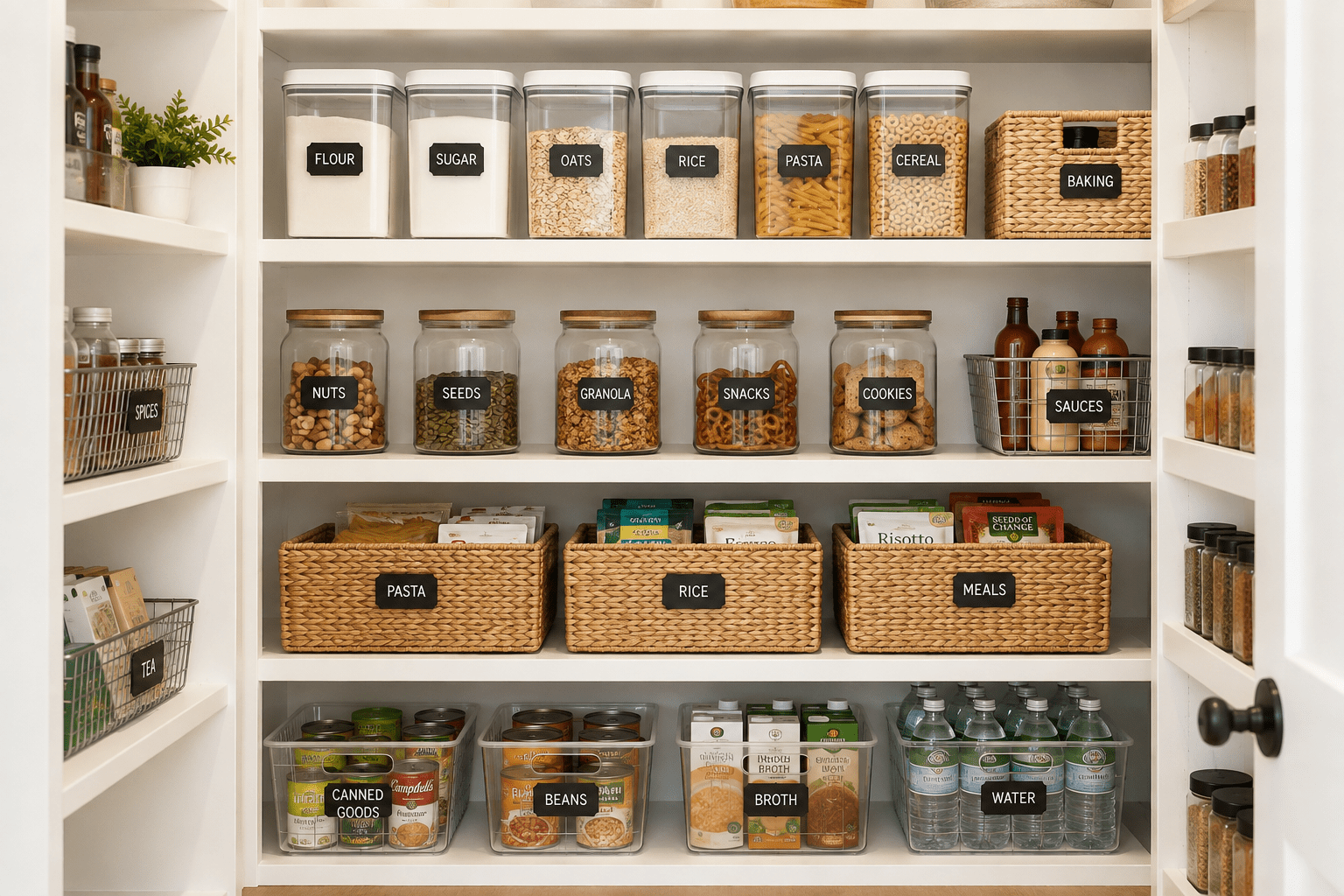
Over-complicating a pantry with twenty narrow subcategories makes unpacking groceries a chore. Stick to six or seven broad groups tailored to how your household actually cooks:
- Breakfast Staples (oats, cereal, nut butters, pancake mix)
- Pasta, Rice, and Grains
- Canned and Jarred Goods (beans, tomatoes, broths, olives)
- Baking Supplies (flour, sugar, baking powder, chocolate chips)
- Cooking Oils, Vinegars, and Condiments
- Spices and Seasonings
- Everyday Snacks
Place everyday staples at eye level, heavy bulk bags and multipacks on lower shelves for safe lifting, and occasional or lightweight items on upper shelves.
Separate Active Stock From Unopened Backups
One of the fastest ways a pantry gets out of control is letting unopened backup packages mix with open bags. Keep currently open items in your main front zone, and group unopened extras in a clearly designated backup bin or upper shelf.
Whenever an active item runs out, pull the backup forward, you immediately see when an ingredient truly needs to go on your grocery list. According to the EPA, checking what food you already have on hand before shopping is one of the simplest ways to cut household food waste (which the EPA estimates costs an average U.S. family of four roughly $2,913 per year across all household food).
Practice Simple First-In, First-Out (FIFO) Rotation
When unpacking new groceries, place newly purchased cans and boxes behind older ones so older stock naturally gets used first:
| Pantry Category | Simple Rotation Habit |
| Canned Goods | Slide new cans to the back and pull older labels forward |
| Dry Grains & Pasta | Finish open bags before opening fresh bulk refills |
| Oils, Nuts & Spices | Keep older bottles toward the front; store bulk nuts cool to prevent rancidity |
| Open Snack Bags | Clip tightly and place in a dedicated front-row bin |
Measure First and Use Containers Only Where They Help
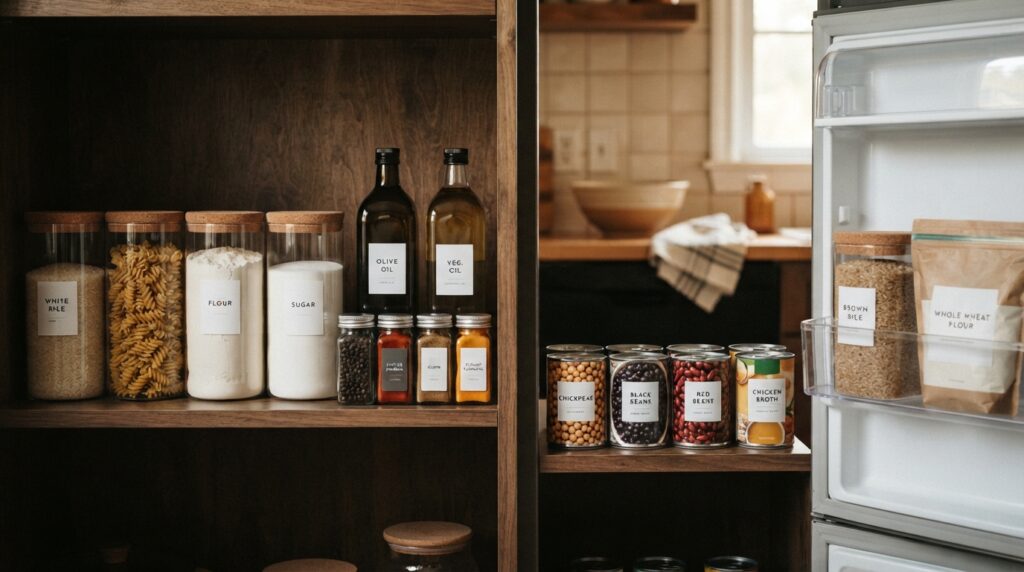
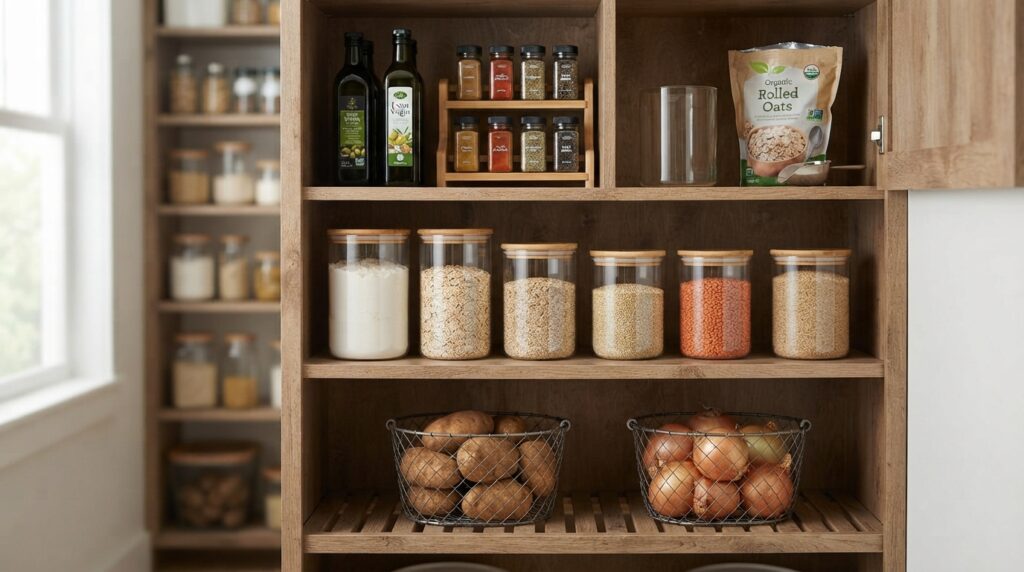
Buying matching containers before measuring shelf height, width, and depth almost always leads to wasted space. Keep original packaging whenever it seals well and stands neatly on its own, and reserve clear, airtight containers for bulk staples that lose freshness once opened.
The EPA recommends storing bulk grains and dry goods in airtight, clearly labeled containers marked with both the contents and purchase or transfer date. Skip labeling obvious items like a clear box of spaghetti, and focus labels on opaque bins and decanted flours or grains where contents are easy to confuse.
Five Pantry Storage Habits That Quietly Ruin Freshness
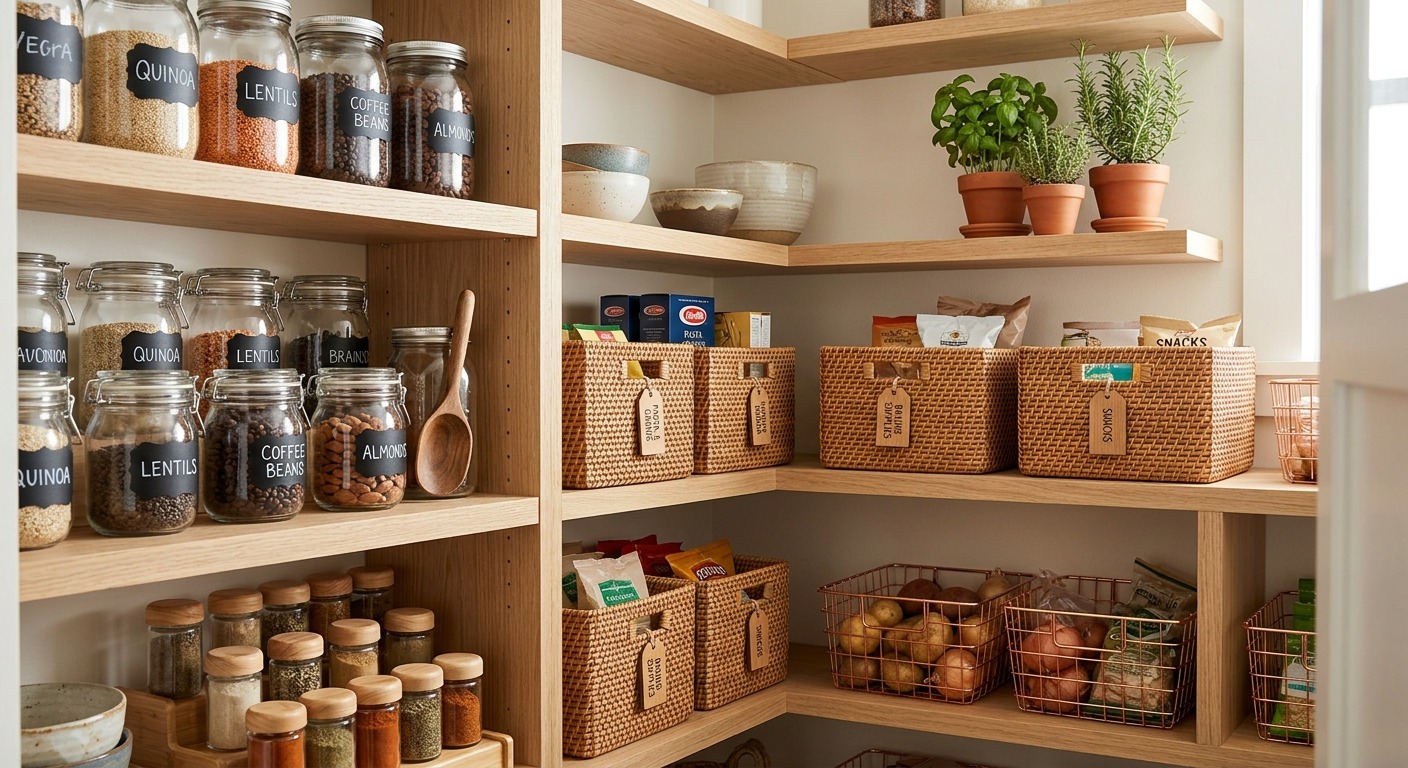
- Storing Onions and Potatoes Side by Side: Onions release moisture and ethylene-like gases that cause potatoes to sprout and spoil faster, keep them in separate, ventilated baskets in a cool, dark spot.
- Keeping Oils and Spices Right Next to the Range: Heat and steam from daily cooking rapidly degrade olive oil and flatten the essential oils in dried herbs and spices.
- Leaving Opened Flour or Grains in Thin Paper Bags: Rolled-down paper bags let ambient humidity in and make it easy for pantry moths or beetles to spread; transfer opened grains into gasket-sealed containers.
- Refilling a Jar Before Finishing the Old Batch: Dumping new flour, oats, or spices on top of older stock traps the oldest ingredients permanently at the bottom, always empty and wipe the container before refilling.
- Overstuffing Shelves Until Labels Disappear: Leaving 15 to 20 percent breathing room on every shelf keeps air circulating and prevents items from getting pushed into dark back corners.
Run a 5-Minute Pre-Shop Check and Monthly Reset
A practical Pantry System stays tidy through small, repeatable habits rather than marathon weekend cleanouts:
- Before Grocery Shopping: Spend two minutes scanning your zones to see what is genuinely low so you avoid duplicate purchases.
- Once a Month: Check canned goods for damage, pull older packages forward, return misplaced items to their category, and wipe down crumbs or spills.
When your pantry answers four simple questions at a glance, what do I have, where does it go, what should I use first, and what do I need to buy? staying organized becomes effortless.