A Smarter Kitchen Renovation Starts Inside the Cabinets
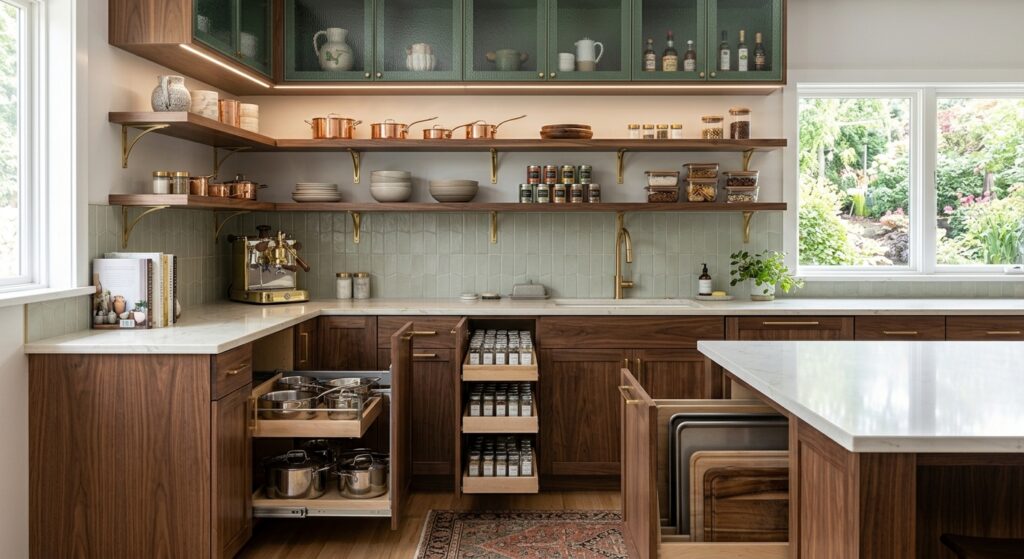
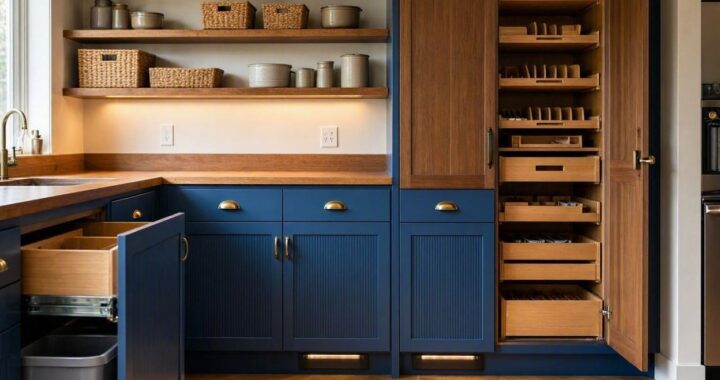
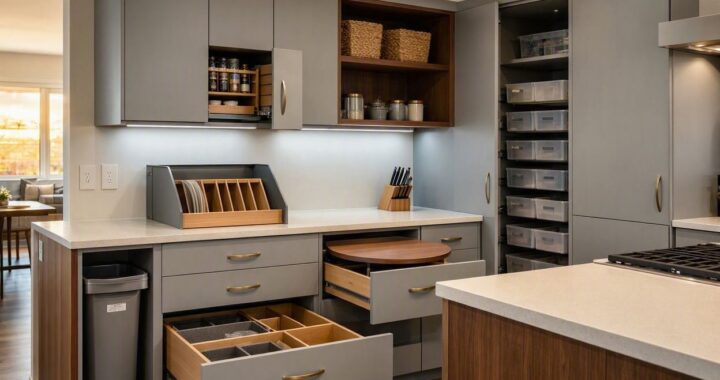
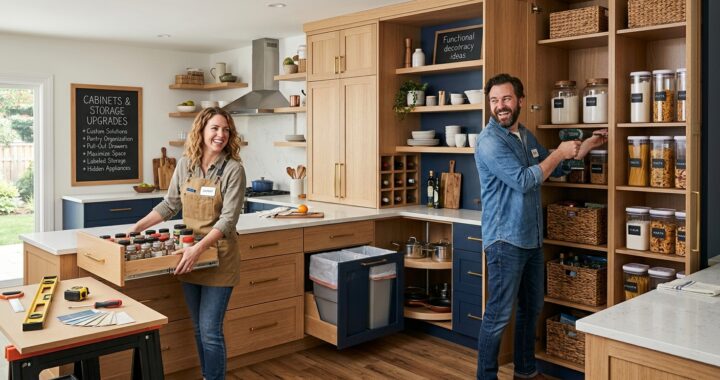
The best cabinet upgrades do more than change the kitchen’s appearance. They make storage easier to reach, organize, and live with.
That is why I would put cabinet function ahead of decorative details when planning a kitchen renovation.
A beautiful door style cannot rescue a cabinet layout that wastes space or makes everyday items awkward to reach.
Instead, start with the storage itself. Then choose the finishes that make the improved system look right.
For entrepreneurs managing renovation decisions, that order matters.
It keeps the conversation focused on measurable improvements rather than expensive features that simply look impressive in a showroom.
Start With a Ruthless Cabinet Audit
Before replacing cabinets, take a close look at what you already have.
Measure the cabinet openings, interior depths, shelf positions, drawer dimensions, and available clearances.
Then, identify the actual problems.
Is storage difficult to reach? Are shelves fixed at inconvenient heights? Are drawers poorly organized? Are corner cabinets difficult to access?
Those answers should shape the renovation.
I would also photograph the existing interiors before demolition. It creates a useful reference when reviewing plans, measurements, and contractor proposals later.
A Practical Cabinet Audit
| Check | Record | Why it matters |
|---|---|---|
| Cabinet boxes | Width, depth, height, condition | Determines replacement or modification |
| Shelves | Depth, position, adjustability | Reveals wasted interior space |
| Drawers | Size and operation | Helps plan better storage |
| Doors | Swing and clearance | Prevents hardware conflicts |
| Corners | Access and usable depth | Identifies difficult storage |
The first time I reviewed a cabinet plan without checking internal dimensions, the drawings looked fine until the hardware entered the picture.
That experience taught me a simple rule: measure the inside before designing the outside.
Unlock Better Access With Smarter Storage Hardware
Once the measurements are clear, consider how each cabinet actually opens and functions.
Deep shelves can become awkward when items at the back are difficult to reach.
Pull-out shelves can address that problem in suitable cabinets.
Likewise, full-extension drawers allow more of the drawer contents to become accessible from the front.
HUD’s residential remodeling guidance specifically discusses pull-out shelves, full-extension drawers, revolving shelves, and pull-down storage.
However, hardware should always match the cabinet dimensions and installation requirements.
A clever accessory is not automatically a useful accessory.
Match the Upgrade to the Cabinet
| Cabinet issue | Potential direction | Check before ordering |
|---|---|---|
| Deep base cabinet | Pull-out shelving | Interior depth and clearance |
| Deep pantry | Pull-out or revolving shelves | Width and door opening |
| Difficult upper storage | Pull-down mechanism | Mounting space and reach |
| Hard-to-reach corner | Revolving or extending shelves | Corner cabinet geometry |
I prefer solving one storage problem at a time.
That approach keeps the renovation from turning into an accessory shopping spree.
After all, every organizer takes up space too.
Build Organization Around Real Cabinet Dimensions
Good organization starts with the cabinet, not the container.
Measure the drawer or shelf first. Then select dividers, trays, or organizers that actually fit.
Otherwise, you can end up with gaps, blocked doors, or storage accessories that make the cabinet harder to use.
Adjustable components can be especially useful when the dimensions allow them.
They give the interior some flexibility without requiring you to predict every future storage need.
Strong Interior Upgrades
| Upgrade | Main benefit | Planning point |
|---|---|---|
| Adjustable shelves | Flexible shelf heights | Confirm shelf-pin spacing |
| Drawer dividers | Cleaner organization | Measure usable drawer width |
| Pull-out shelves | Easier deep access | Check hardware capacity |
| Door organizers | Additional reachable storage | Check door construction |
There is also a temptation to fill every inch.
I would resist it.
A cabinet does not become better simply because every available space contains something.
Instead, leave enough room for items to move easily in and out.
That makes the finished kitchen feel calmer and makes the storage easier to maintain.
Choose Cabinet Materials With Proof, Not Marketing
Cabinet material deserves careful attention, especially when composite wood products are involved.
In the United States, EPA regulates certain composite wood products under TSCA Title VI.
The covered materials include hardwood plywood, medium-density fiberboard, and particleboard.
That matters because these materials can appear in finished goods such as cabinetry.
Therefore, ask the manufacturer or supplier for the relevant product documentation.
Do not rely solely on phrases such as “green,” “eco-friendly,” or “low emission.”
Those descriptions mean little without supporting information.
EPA also maintains a current list of recognized third-party certifiers for regulated composite wood products.
That gives buyers a practical way to verify certification information rather than simply trusting a sales statement.
What to Ask the Cabinet Supplier
| Question | Documentation to request |
|---|---|
| What material is used? | Product specification |
| Does regulated composite wood apply? | Material documentation |
| Is the product TSCA Title VI compliant? | Compliance statement |
| Who certified the material? | Recognized certifier information |
When I am reviewing specifications, I would rather see one clear document than five vague promises.
That is especially true when the renovation budget is substantial.
Protect the Kitchen’s Indoor Environment
Formaldehyde is one reason material documentation deserves attention.
EPA explains that its composite wood rule was created to reduce formaldehyde exposure from regulated products.
That does not mean every cabinet creates a dangerous indoor environment.
It means certain composite wood products are subject to specific emission standards and certification requirements.
That distinction matters.
Good renovation writing should never turn a regulatory standard into an unsupported health promise.
Instead, ask what material is being supplied and what documentation supports its compliance.
For U.S. projects, EPA states that regulated composite wood products manufactured or imported after March 22, 2019 must carry TSCA Title VI compliance labeling.
So, documentation becomes part of responsible specification.
Make Accessibility a Design Decision, Not an Afterthought
Cabinet access deserves attention while the layout can still be changed.
HUD guidance recommends features such as pull-out shelves and full-extension drawers because they can make stored items easier to reach.
The same guidance discusses pull-down shelves for some wall cabinets and pull-out or revolving storage for deep pantry areas.
The point is not to install every accessibility feature.
Instead, consider how cabinet height, shelf placement, drawer movement, and hardware operation affect the finished kitchen.
My clients often ask for “better storage” when what they really want is easier access.
Those are related, but they are not exactly the same thing.
That difference can change the cabinet specification considerably.
Create a Cabinet Specification Contractors Can Actually Price
A renovation quote becomes much easier to compare when the cabinet scope is clearly written.
Start with the cabinet construction.
Then specify the interior storage, hardware, finish, and installation responsibilities.
Finally, identify exclusions.
Without those details, two cabinet proposals may look comparable while offering different levels of work.
Build a Clear Cabinet Scope
| Area | Specify | Avoid |
|---|---|---|
| Construction | Cabinet materials and construction | Generic descriptions |
| Storage | Shelves, drawers, accessories | “Storage included” |
| Hardware | Product or approved equivalent | Unnamed hardware |
| Finish | Finish and locations | Vague finish allowances |
| Installation | Responsibilities and exclusions | Unclear scope |
I have found that vague cabinet language creates more questions than it saves.
A few extra lines in the specification can make the purchasing conversation considerably cleaner.
That is useful for homeowners, contractors, designers, and business owners alike.
Compare Cabinet Quotes Like a Business Owner
Price deserves attention, but price alone is a poor comparison tool.
Instead, compare what each proposal actually includes.
One contractor might include pull-out shelves while another prices them separately.
One might include installation while another leaves installation outside the cabinet allowance.
Those differences can materially change the final project cost.
A Better Quote Comparison
| Category | Proposal A | Proposal B |
|---|---|---|
| Cabinet construction | Defined | Defined |
| Interior storage | Defined | Defined |
| Hardware | Defined | Defined |
| Finish | Defined | Defined |
| Installation | Defined | Defined |
Ask suppliers to price the same specification whenever possible.
That gives you a much cleaner comparison.
It also makes missing items easier to identify before ordering.
I would rather spend an extra hour clarifying a proposal than discover an omission after the cabinets arrive.
Avoid Flashy Upgrades That Add Little Value
Kitchen showrooms are very good at making storage accessories look irresistible.
Some deserve the attention.
Others simply add another line to the invoice.
Before approving an upgrade, ask:
- Does it solve a documented storage problem?
- Does it improve access?
- Does it fit the measured cabinet?
- Can its specifications be verified?
If the answer is unclear, leave it out for now.
There is nothing wrong with spending money on premium hardware.
The problem starts when the hardware has no clear job.
The first time I looked at a cabinet upgrade purely from a design perspective, it was easy to over-specify.
Looking at the interior dimensions changed the conversation completely.
Sequence the Renovation Before You Order
Cabinet projects become easier when decisions happen in a sensible order.
First, measure the existing kitchen.
Next, identify the storage problems.
Then, establish the cabinet layout.
After that, specify materials, interiors, hardware, and finishes.
Finally, verify the complete package before ordering.
A Cleaner Cabinet Workflow
| Stage | Main task | Result |
|---|---|---|
| 1 | Measure | Accurate existing conditions |
| 2 | Audit | Defined storage problems |
| 3 | Design | Cabinet layout |
| 4 | Specify | Materials and hardware |
| 5 | Verify | Final order information |
This sequence may sound obvious, but it prevents a surprisingly common mistake.
People often choose cabinet styles before deciding how the cabinets need to function.
I would reverse that process.
Function first. Appearance second.
The final kitchen can still look exceptional, but the design decisions now have a practical foundation.
Demand Evidence Before Approving Material Claims
If a supplier says a cabinet material meets a particular standard, ask for evidence.
For TSCA Title VI-regulated composite wood, EPA requires certification through recognized third-party certifiers and establishes labeling requirements.
That gives you something concrete to verify.
It also keeps renovation discussions grounded in documentation rather than sales language.
For imported regulated composite wood products, EPA describes additional certification and recordkeeping requirements.
However, those requirements apply specifically within the U.S. regulatory framework.
If your renovation is elsewhere, check the rules applicable to that jurisdiction instead of assuming U.S. requirements automatically apply.
That small distinction keeps the advice accurate.
Make Storage the Strongest Part of the Renovation
Cabinets are not simply the visual backdrop of a kitchen.
They control how storage is accessed, organized, and maintained every day.
Therefore, the strongest cabinet renovation begins with measurements and ends with a clear specification.
Choose hardware because it solves a problem.
Choose materials because their properties and documentation are clear.
Choose organizers because they fit the cabinet rather than because they look clever.
And choose finishes after the functional decisions are settled.
That process gives the renovation something more valuable than another trend.
It gives the kitchen a storage system that makes sense.
For an entrepreneur managing costs, timelines, or renovation decisions, that clarity has real value.
You can compare proposals more fairly, identify missing scope earlier, and avoid paying for features that do not improve the finished cabinet system.
The best cabinet upgrade is rarely the one with the most accessories.
It is the one where every drawer, shelf, door, material, and hardware choice has a clear reason for being there.
That is where a kitchen renovation starts feeling less like a collection of purchases and more like a well-designed busines