Before You Buy Organizers: How to Maximize Your Kitchen Cabinet Space
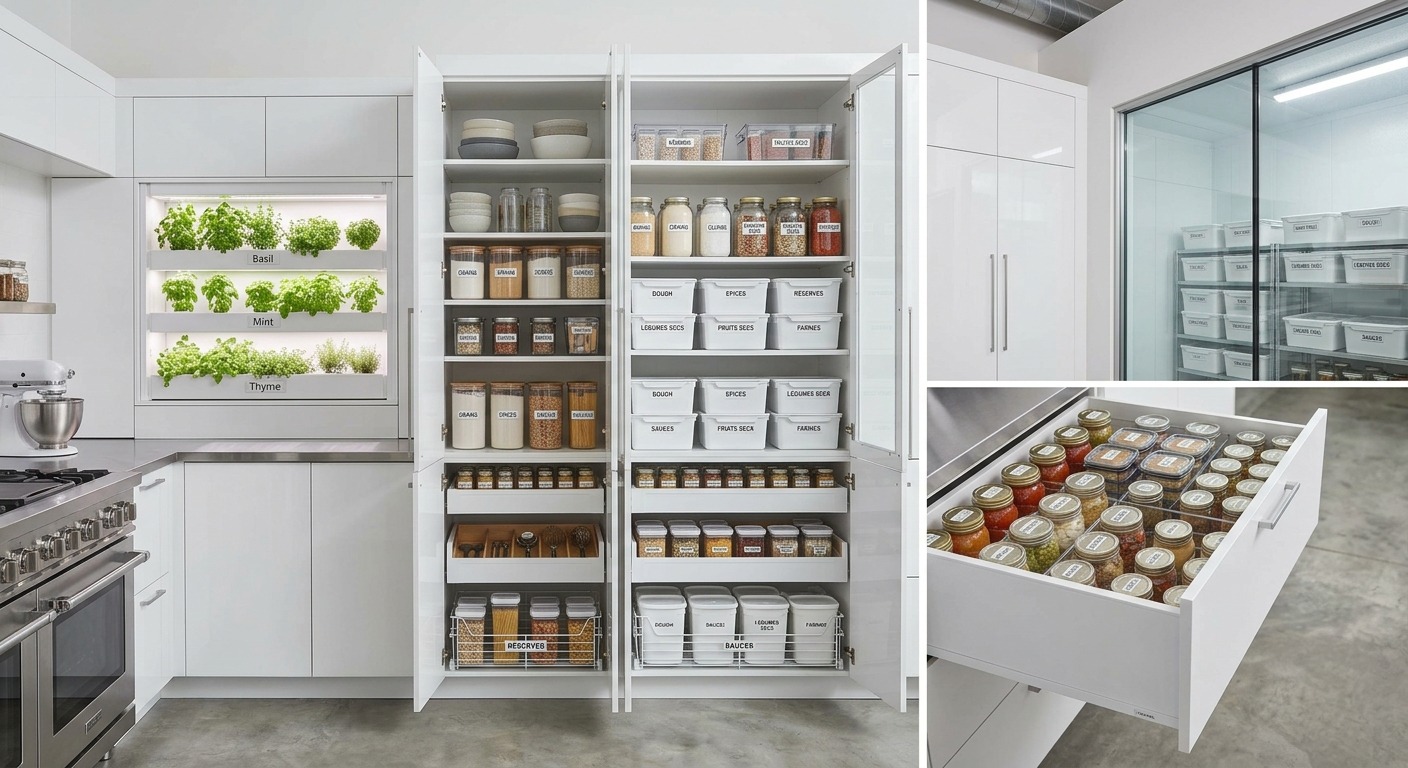
The best cabinet and drawer storage makes your kitchen easier to use without forcing you to buy more storage than you actually need.
Instead, start with the cabinet interior, improve access, and then add organization where it genuinely solves a problem.
That simple shift can make kitchen storage feel far more intentional.
The National Kitchen & Bath Association (NKBA) includes cabinetry, functional storage, accessibility, and systems coordination among its professional kitchen-planning topics.
So, storage deserves attention during the design process rather than being treated as an afterthought.
Powerful Cabinet Storage Starts Behind the Door
A cabinet can look generous from the outside and still feel frustrating once you start using it.
Usually, the problem isn’t the cabinet’s existence.
It’s what happens inside.
Deep shelves can hide items, fixed compartments can limit flexibility, and poorly positioned drawers can make everyday access awkward.
When I look at cabinet storage, I start with one question:
Can you reach what you need without moving everything else first?
That question tells you much more than the cabinet’s advertised capacity.
Make Access Your First Priority
More storage isn’t automatically better storage.
For example, adding another shelf may increase the number of surfaces available while making the rear of the cabinet harder to reach.
Instead, think about how the cabinet opens and how much of the interior becomes accessible.
The NKBA’s fourth-edition planning guidelines specifically cover cabinetry and casework, functional storage, accessibility, and systems coordination.
That gives you a useful principle to work from:
Good storage should improve access, not simply increase capacity.
| Cabinet feature | What to inspect | Better direction |
|---|---|---|
| Shelves | Reach and visibility | Avoid unnecessary depth |
| Drawers | Extension and access | Match height to contents |
| Pull-outs | Movement and clearance | Check surrounding openings |
| Corners | Rear access | Consider functional storage hardware |
Transform Deep Cabinets With Better Access
Deep cabinets aren’t necessarily a problem.
They become a problem when depth makes the contents difficult to see or reach.
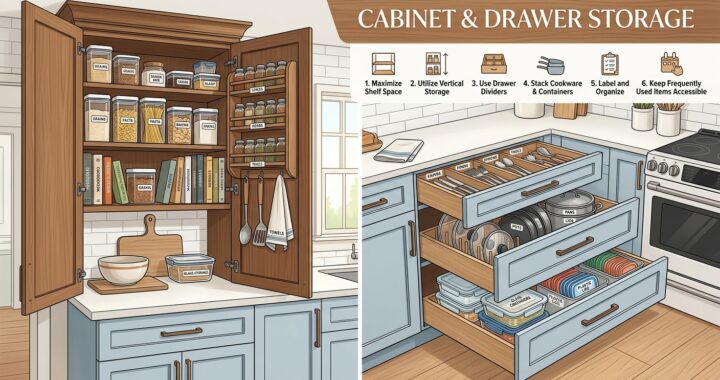
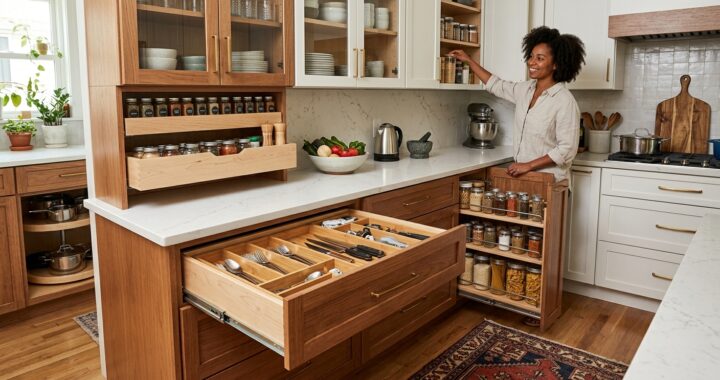
That’s where pull-outs and suitable drawer systems can make a meaningful difference.
Rather than reaching toward the back of a fixed shelf, the storage can move toward you.
However, don’t choose hardware based only on how good it looks in a showroom.
Measure the cabinet first.
Then check the manufacturer’s specifications for dimensions, compatibility, and installation requirements.
This is one of those small details that can save you from a very expensive mistake.
I prefer to treat cabinet hardware as part of the storage plan from the beginning.
After all, the cabinet, runner, drawer, and organizer have to work together.
Unlock Better Drawers With Flexible Dividers
Drawers already have one major advantage over deep shelves: the contents can come forward.
Still, an empty drawer can become a messy collection of items surprisingly quickly.
That’s where internal dividers can help.
For example, Blum’s ORGA-LINE system uses containers and dividers designed for compatible drawers and pull-outs.
Blum also describes its system as flexible enough to adjust to changing storage needs.
That flexibility is useful because your storage needs don’t have to remain fixed forever.
| Drawer element | Main purpose | What to check |
|---|---|---|
| Dividers | Separate contents | Adjustability |
| Containers | Create sections | Internal dimensions |
| Drawer hardware | Improve movement | Compatibility |
| Deep drawer box | Increase usable height | Clearance and load |
Still, don’t divide every drawer into tiny compartments.
A drawer should be organized enough to stay orderly without becoming a puzzle.
The best layout usually gives each category a clear place while leaving some room to adapt.
Measure First, Then Buy
This is the part most people want to skip.
It’s also one of the easiest ways to avoid buying the wrong storage accessories.
Before purchasing an insert, tray, divider, or pull-out, measure the actual usable interior.
Don’t rely solely on the cabinet’s advertised width.
The cabinet box and hardware can reduce the space available inside.
Blum’s ORGA-LINE range, for instance, lists specific nominal drawer lengths and compatible systems rather than presenting one universal size.
That tells you something important.
Storage accessories need to be matched to real dimensions.
Keep These Measurements Handy
Before shopping, record:
- Internal width
- Internal depth
- Internal height
- Drawer-box dimensions
- Hardware clearance
- Fixed obstructions
- Opening clearance
Then compare those numbers against the manufacturer’s specifications.
It takes a few minutes.
Replacing an organizer that doesn’t fit takes considerably longer.
Build a Stronger Storage Hierarchy
Once the measurements are right, think about accessibility.
Frequently accessed storage generally benefits from convenient positioning.
Less frequently accessed storage can occupy less convenient areas.
You don’t need an elaborate system to make that work.
Instead, give each cabinet or drawer a clear reason for existing.
| Storage area | Planning priority | Organization approach |
|---|---|---|
| Easy-access drawers | High | Keep layouts simple |
| Lower cabinets | High | Improve visibility and access |
| Deep shelves | High | Reduce unnecessary stacking |
| Tall interiors | Variable | Divide excessive open space |
This approach also keeps your storage system from becoming overly complicated.
A perfectly organized drawer isn’t helpful if putting something away feels like solving a logic problem.
Strengthen Storage With Better Hardware
Internal organization can’t completely fix unsuitable cabinet hardware.
Drawer runners affect how the drawer moves and how much of the interior you can reach.
Hinges affect door movement and surrounding clearances.
Therefore, hardware should be considered alongside the cabinet design.
The NKBA’s planning material treats cabinetry, functional storage, and systems coordination as connected parts of kitchen planning.
That makes practical sense.
The cabinet box creates the space.
The hardware controls movement.
The internal organization gives that space structure.
Check The Whole Opening
A drawer can work perfectly by itself and still interfere with a nearby door.
Likewise, a pull-out may fit inside one cabinet while creating clearance problems elsewhere.
So, check the entire opening before committing to the design.
Measure.
Open.
Close.
Then measure again where necessary.
That little bit of discipline can prevent a surprisingly frustrating installation problem.
Create Flexible Organization That Can Adapt
Kitchen storage shouldn’t become obsolete every time the contents change.
That’s why adjustable internal organization can be useful.
Blum describes ORGA-LINE containers and dividers as flexible and configurable for different drawer and pull-out arrangements.
The broader idea is more important than the brand.
Where practical, choose components that can be moved, removed, or rearranged.
At the same time, don’t buy adjustability just because it sounds impressive.
A fixed insert can work perfectly when its dimensions suit the storage requirements.
The goal is flexibility where flexibility actually matters.
Make Corner Cabinets Less Frustrating
Corner cabinets have an obvious challenge: the shape can make parts of the interior difficult to access.
So, don’t judge a corner cabinet by its empty volume.
Judge it by how much of that volume you can realistically reach.
The NKBA’s kitchen planning guidance includes a specific recommendation that at least one corner cabinet should include a functional storage device when corner cabinets are present.
That doesn’t mean every kitchen needs the same hardware.
Instead, it reinforces a useful design principle:
Corner storage should be planned around access.
Before choosing an accessory, check the opening, cabinet dimensions, and movement around the corner.
Turn Vertical Space Into Useful Storage
Tall cabinet interiors can create another problem.
One large opening may leave unused space above shorter items while encouraging unnecessary stacking below.
A shelf or internal division can make that vertical space easier to manage.
However, adding more shelves isn’t automatically the answer.
Every shelf changes what you can see and reach.
Therefore, aim for a balance between separation and accessibility.
I’d rather have three useful storage levels than six awkward ones.
Avoid Costly Cabinet Storage Mistakes
Most storage problems don’t start with a bad organizer.
They start when someone buys an organizer before figuring out what the cabinet actually needs.
First, identify the problem.
Then measure the space.
Afterward, choose the simplest solution that addresses it.
| Common mistake | Why it causes trouble | Better approach |
|---|---|---|
| Buying organizers first | Dimensions may not match | Measure first |
| Over-dividing drawers | Flexibility disappears | Divide selectively |
| Ignoring hardware | Access may remain poor | Review movement |
| Filling every gap | Storage becomes harder to manage | Keep practical space |
This is also where product marketing can get a little distracting.
An organizer can look clever online and still be completely wrong for your cabinet.
Check the dimensions.
Read the installation requirements.
Then make the decision.
Create A Simple Cabinet Storage Audit
Before changing an existing cabinet, empty it completely.
That sounds obvious, but it changes what you see.
Without the clutter, you can identify whether the real issue is depth, height, access, movement, or organization.
Then measure the interior.
After that, check how the doors and drawers move.
Finally, write down the actual problem.
| Audit question | What to inspect | Possible direction |
|---|---|---|
| Can everything be reached? | Rear and lower areas | Improve access |
| Is vertical space wasted? | Empty height | Add suitable divisions |
| Does movement feel smooth? | Runners and clearance | Review hardware |
| Can the layout change? | Fixed organization | Consider adjustable components |
That last step matters.
If you can’t clearly explain what is wrong with the current storage, you’re probably not ready to buy anything.
Keep Drawer Organization Simple
A drawer doesn’t need to look like a showroom photograph.
It needs to make sense when you open it.
Start with broad sections.
Then add dividers where contents regularly move into the wrong area.
Avoid creating a separate compartment for every single item.
That can make the drawer look impressively organized while making it less adaptable.
Blum’s ORGA-LINE system, for example, combines containers and flexible divider options rather than relying on one fixed configuration.
That principle is useful even if you choose a completely different product.
Make Cabinet Storage Easier to Maintain
Good organization shouldn’t require constant rearranging.
It should also be reasonably easy to clean and adjust.
For example, Blum states that ORGA-LINE containers are removable and dishwasher-safe.
That’s a specific product feature, though, not a universal claim about drawer organizers.
So, always check the specifications for the exact product you’re considering.
The bigger lesson is simple:
Maintenance belongs in the storage plan.
If an organizer is difficult to remove, clean, or rearrange, it may eventually become another thing you have to work around.
A Smarter Cabinet & Drawer Storage Formula
Good cabinet organization doesn’t require filling every available space with accessories.
Instead, use a straightforward process:
Measure → diagnose → improve access → organize → review.
First, measure the real interior.
Next, identify the actual storage problem.
Then, improve access through the cabinet layout or suitable hardware.
Afterward, add internal organization where it genuinely helps.
Finally, review the finished setup.
If an organizer makes access harder, remove it.
If a divider creates unnecessary restrictions, change it.
The goal isn’t to create the most elaborate cabinet interior.
It’s to create one that works without demanding constant attention.
Final Thoughts: Better Storage Starts Behind The Door
Cabinet and drawer storage is really about what happens after the kitchen looks finished.
The doors close.
The countertops look clean.
Then you open a drawer and need something quickly.
That’s when the storage design proves whether it actually works.
Good organization makes access feel natural.
It uses available space without forcing everything into rigid compartments.
It also leaves enough flexibility for the storage system to change.
The NKBA’s current planning guidelines continue to treat functional storage, cabinetry, accessibility, and coordination as important parts of professional kitchen planning.
So, before buying another organizer, step back.
Look at the cabinet.
Measure it.
Understand its limitations.
Improve the access first.
Then organize the interior.
That’s the difference between a kitchen that simply has storage and one that is genuinely easy to use.