Your Kitchen can be a Super-Kitchen

The best refrigerator and freezer organization system does three things: keeps food visible, protects safe storage, and makes everyday cleanup easier.
You do not need a picture-perfect refrigerator.
Instead, you need a layout that makes sense when groceries arrive, leftovers pile up, and life gets busy.
That is where a simple kitchen organization system makes a real difference.
I prefer systems that are easy to repeat rather than systems that look impressive for one afternoon.
So, instead of filling your refrigerator with unnecessary organizers, start by giving every area a clear purpose.
Start Strong: Check Temperature Before Organizing
Before moving a single container, check the temperature.
The USDA recommends keeping the refrigerator at 40°F (4.4°C) or below and the freezer at 0°F (-17.8°C) or below. USDA food-storage guidance confirms these targets.
A refrigerator thermometer gives you a much better answer than guessing from the appliance display.
The FDA also recommends checking appliance temperatures periodically. FDA refrigerator thermometer guidance explains why this simple check matters.
Once the temperature is right, organization becomes much easier.
You can then focus on visibility, access, separation, and maintenance.
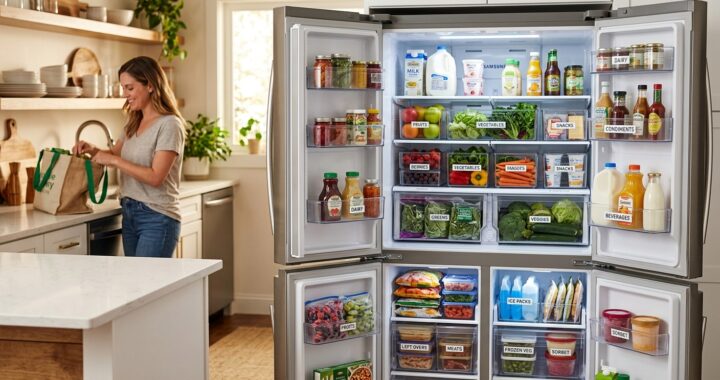
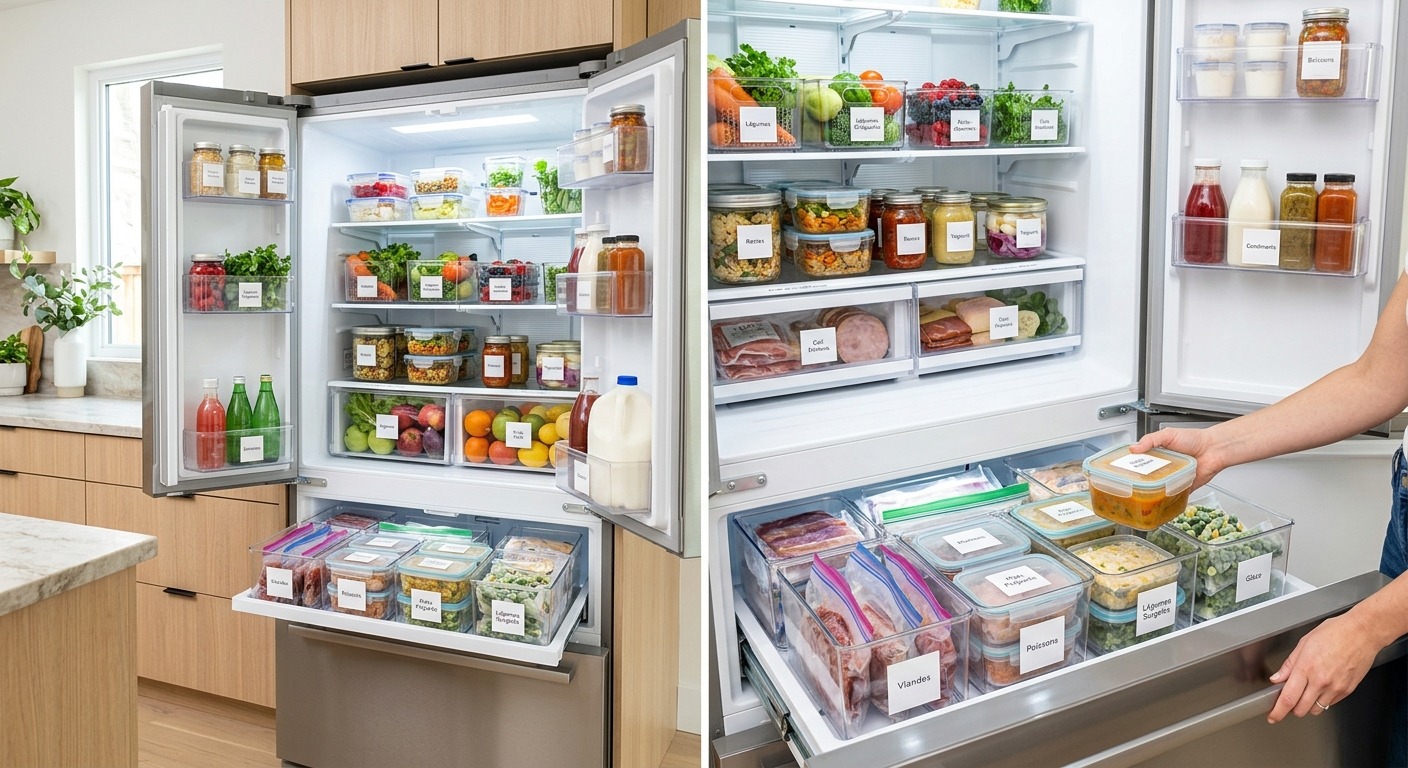
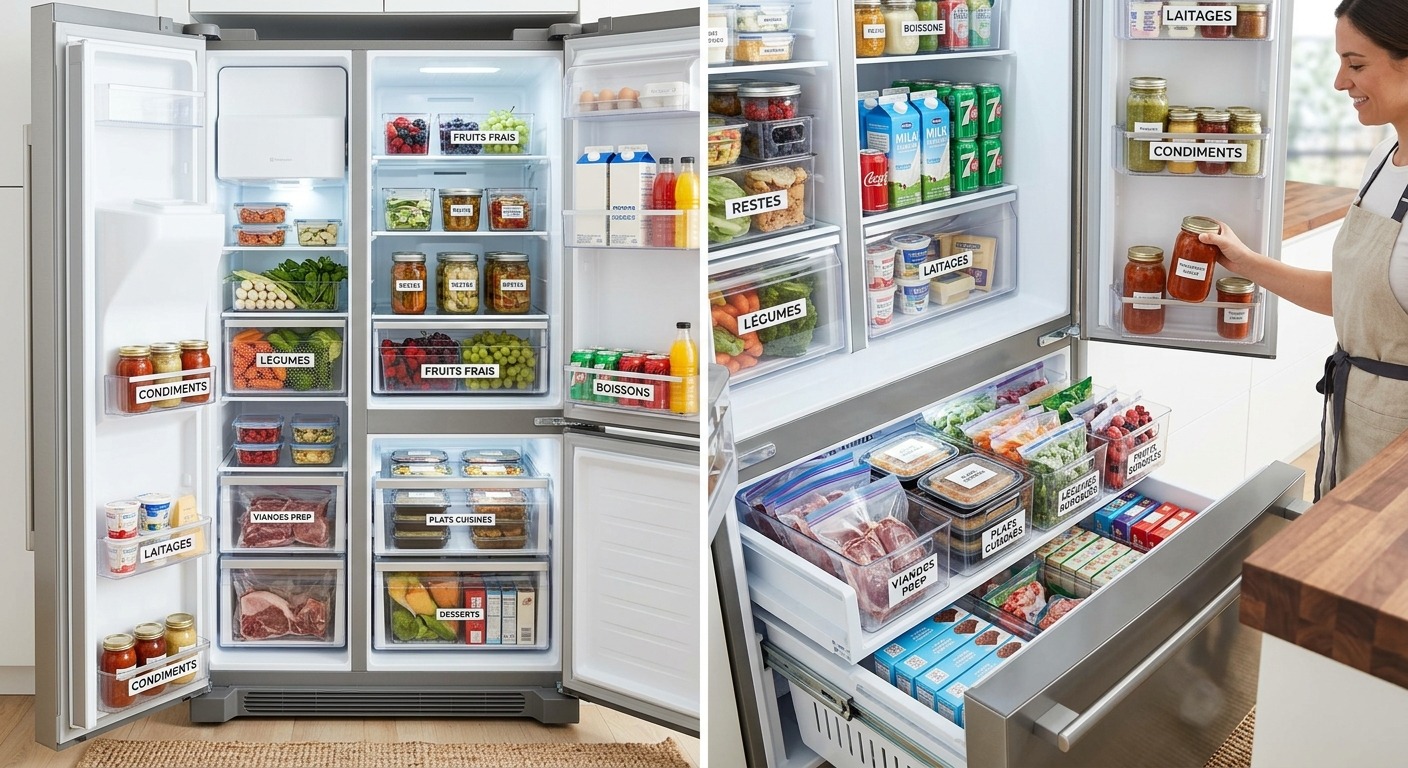
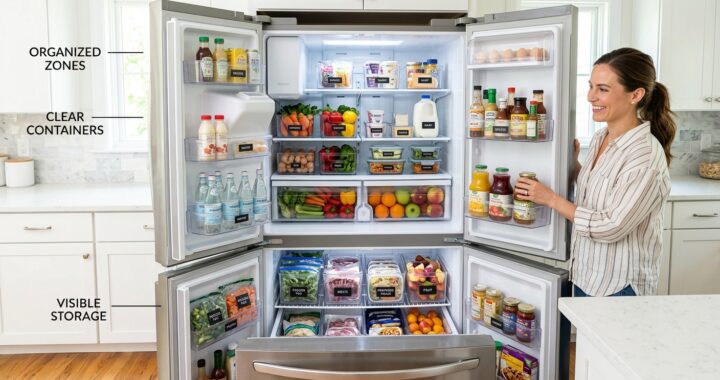
Build Clear Refrigerator Zones That Actually Work
The biggest mistake I see with refrigerator organization is treating every shelf as random storage.
Instead, give each area a consistent purpose.
Your refrigerator does not need a complicated color-coded system.
It simply needs enough structure that you can find things without moving half the contents.
| Refrigerator area | Primary goal | Organization approach |
|---|---|---|
| Upper shelves | Easy visibility | Keep frequently accessed foods together |
| Middle shelves | Everyday storage | Group similar foods |
| Lower shelves | Secure storage | Keep raw foods contained |
| Drawers | Category separation | Follow the drawer’s intended purpose |
| Door shelves | Convenient access | Store items appropriate for door storage |
The USDA explains that refrigerator temperatures should be 40°F or below throughout the unit. USDA refrigeration guidance also recommends keeping raw meat, poultry, and seafood sealed or securely wrapped.
That means you do not need to obsess over assigning one exact food to one exact shelf.
Instead, prioritize safe containment and easy access.
That distinction makes refrigerator organization much more practical.
Create a Powerful “Use First” Zone
One of my favorite organization tricks is creating a small area for foods that need attention soon.
It can be a shelf section, drawer, or clearly defined container.
The point is simple: foods that need using should not disappear behind newer groceries.
Put older leftovers and opened foods toward the front.
Then, place newer items behind them whenever practical.
This creates a natural rotation system without requiring a complicated inventory spreadsheet.
For leftovers, dates are especially useful.
The USDA recommends using most cooked leftovers within 3 to 4 days when refrigerated. USDA leftovers guidance provides the specific storage recommendation.
So, write the date on containers when you store leftovers.
That tiny habit can make the refrigerator much easier to manage.
Make Your Refrigerator Easy to See
A refrigerator can be technically organized and still feel chaotic.
Usually, that happens when containers are opaque, shelves are overcrowded, or food gets buried.
Instead, create clear sightlines.
Transparent containers can help because you can identify contents without opening everything.
However, you do not need to replace every container in your kitchen.
Use what already works first.
Then, replace only the pieces that repeatedly create problems.
| Problem | Better approach | Why it helps |
|---|---|---|
| Food disappears behind other items | Keep frequently used foods forward | Faster access |
| Containers look identical | Add simple labels | Easier identification |
| Shelves become crowded | Remove unnecessary duplicates | More usable space |
| Open packages spread everywhere | Group similar items | Cleaner visual structure |
When I test an organization system, I pay attention to what happens after the first grocery trip.
That is the real test.
A system that works only when everything is perfectly arranged is not a useful system.
Protect Airflow Instead of Stuffing Every Gap
Empty refrigerator space is not automatically wasted space.
The FDA specifically advises against crowding the refrigerator or freezer so tightly that air cannot circulate. FDA food-storage guidance explains the connection between airflow and proper chilling.
So, resist the temptation to fill every available inch.
Instead, leave enough room for cold air to move around refrigerated foods.
This also gives you something else: easier access.
When shelves are packed tightly, every small task becomes harder.
You have to move containers, shift packages, and search behind stacks.
A little breathing room can make the entire refrigerator feel more functional.
Store Raw Foods With Care
Organization should never create a food-safety problem.
Raw meat, poultry, and seafood need to be contained so their juices cannot contaminate other foods.
The USDA specifically recommends sealed containers or secure wrapping for these foods. USDA refrigeration guidance explains the storage principle.
Therefore, choose organization around containment rather than appearance.
A simple sealed container can be more useful than an attractive open bin.
The goal is straightforward: keep raw foods separated and prevent leaks from spreading.
If something spills, clean it promptly rather than waiting for your regular refrigerator-cleaning day.
The FDA recommends wiping spills immediately, particularly spills from thawing meats. FDA food-safety guidance explains why prompt cleanup matters.
Turn Your Freezer Into an Organized Storage System
Freezers become messy for one main reason: everything tends to disappear underneath everything else.
The answer is better visibility.
Group similar foods together, then position packages so labels remain readable.
For example, you can create broad sections for proteins, prepared foods, vegetables, and ingredients.
Keep the categories simple.
If you create too many categories, maintaining them becomes more work than the original mess.
| Freezer section | Simple organization | Visibility tip |
|---|---|---|
| Proteins | Group similar items | Keep labels facing outward |
| Prepared foods | Stack by category | Date and identify containers |
| Frozen vegetables | Keep together | Avoid burying smaller bags |
| Ingredients | Create one defined area | Label unfamiliar packages |
Flat packages can also make stacking easier.
However, the best arrangement depends on your freezer’s shape and drawer configuration.
The key is not copying someone else’s freezer.
It is making your own storage space predictable.
Label Your Food Without Overcomplicating It
Good labels answer useful questions quickly.
What is it?
When was it stored?
And, when necessary, what does it contain?
That is usually enough.
For leftovers, the storage date is particularly useful because recommended refrigerator storage times are limited.
For freezer containers, labels also prevent the classic “What exactly is this?” problem.
| Label | When to use it | Information to include |
|---|---|---|
| Leftovers | Prepared food | Food name and date |
| Freezer meals | Homemade frozen food | Name and date |
| Similar containers | Multiple related foods | Clear food description |
| Unusual ingredients | Hard-to-identify items | Name and useful detail |
I would not label every bottle of milk or familiar package.
That creates unnecessary work.
Instead, label anything where the information could genuinely save time later.
Choose Containers for Function, Not Instagram
This is where refrigerator organization can become unnecessarily expensive.
You see a beautifully organized refrigerator online and suddenly want twenty matching bins.
Pause before buying them.
First, measure your shelves and drawers.
Then, think about how you actually reach your food.
A container that looks beautiful but blocks access is not improving the system.
Likewise, a deep bin that hides everything underneath creates another version of clutter.
Choose containers based on:
- Visibility
- Easy access
- Appropriate size
- Easy cleaning
The USDA recommends storing refrigerated foods in covered containers or sealed storage bags. USDA refrigeration guidance supports containment as part of safe storage.
So, the best container is not necessarily the prettiest one.
It is the one that fits your refrigerator and makes food easier to manage.
Create a Fast Weekly Refrigerator Reset
A good organization system should not require another three-hour cleaning session every week.
Instead, create a short reset routine.
Pick one regular day and quickly scan the refrigerator and freezer.
Move foods that need attention toward the front.
Check leftovers.
Remove anything that should no longer be kept.
Then, wipe visible spills and return misplaced items.
The USDA recommends regularly checking stored foods and using leftovers within recommended storage periods. USDA refrigeration guidance provides general storage recommendations.
This small reset protects the system from gradually collapsing.
The secret is consistency, not perfection.
Handle Leftovers With a Smarter System
Leftovers are often where refrigerator organization breaks down.
They get placed wherever there is room.
Then, a few days later, nobody remembers when they were made.
Instead, give leftovers a predictable home.
Use shallow containers when storing larger amounts because the USDA recommends shallow containers to encourage rapid cooling. USDA leftovers guidance explains this recommendation.
Cover the food securely.
Then, add the date.
Most importantly, refrigerate or freeze perishable foods promptly.
The USDA recommends refrigerating or freezing perishable foods within 2 hours, or within 1 hour when temperatures exceed 90°F. USDA food-safety guidance provides these time limits.
These rules fit naturally into your organization system.
You are not creating extra work.
You are attaching simple safety habits to something you already do.
Avoid These Refrigerator Organization Mistakes
Some organization ideas look clever but create more work.
First, avoid buying containers before measuring the refrigerator.
Second, avoid making every shelf a separate category.
Third, avoid stacking food so deeply that you cannot see it.
Finally, avoid filling the refrigerator so tightly that airflow becomes restricted.
The FDA recommends avoiding overpacking because cold air needs to circulate around refrigerated foods. FDA storage guidance supports this point.
A good system should reduce friction.
If an organizational rule makes everyday storage harder, change the rule.
Make the System Easy for Everyone to Follow
A kitchen organization system works best when it does not depend on one person’s memory.
That is especially true in busy households, shared kitchens, and business environments.
Give categories obvious homes.
Keep labels consistent.
Then, avoid changing the layout every few days.
When I design a practical system, I want someone unfamiliar with it to understand the basics quickly.
That is a much better test than whether the refrigerator looks impressive in a photograph.
Consistency beats complexity.
Use the Freezer Without Turning It Into a Food Archive
Freezing can be a useful way to preserve food for longer storage.
The USDA states that food kept continuously at 0°F remains safe indefinitely, although quality can decline over time. USDA storage guidance explains the distinction between safety and quality.
That distinction matters.
A freezer should not become a place where unidentified packages live forever.
Instead, label frozen food and keep categories visible.
Then, rotate older items toward the front.
This keeps the freezer useful rather than turning it into a forgotten storage box.
A Simple Refrigerator Organization Framework
You do not need dozens of rules.
A few repeatable decisions can handle most of the work.
| Stage | What to do | What it creates |
|---|---|---|
| 1 | Check appliance temperatures | Safer storage |
| 2 | Remove unnecessary clutter | More usable space |
| 3 | Assign broad zones | Faster retrieval |
| 4 | Contain raw foods | Better separation |
| 5 | Date leftovers | Easier rotation |
| 6 | Group freezer categories | Better visibility |
| 7 | Reset regularly | Longer-lasting organization |
Start with the refrigerator you already have.
Then, change one problem at a time.
If the freezer is difficult to search, fix visibility first.
If leftovers disappear, create a dedicated area.
If groceries have nowhere to go, simplify existing categories before buying more storage.
That approach keeps the project practical.
Build a Refrigerator That Stays Organized
The real goal is not a perfect refrigerator.
It is a refrigerator that stays reasonably organized after normal life happens.
Groceries will arrive.
Containers will move.
Someone will put something in the wrong place.
That is normal.
A good system simply makes recovery easy.
Keep categories broad.
Keep labels readable.
Keep older food visible.
Keep raw foods contained.
Keep enough space for cold air to circulate.
Then, reset the refrigerator regularly.
The strongest kitchen organization systems are not complicated.
They are predictable.
The Best Refrigerator Organization Is the One You Keep
A beautifully arranged refrigerator means very little if it falls apart after one busy week.
Instead, build around habits you can actually maintain.
Start with temperature.
Then, create clear zones.
After that, improve visibility.
Add labels where they genuinely help.
Finally, establish a short reset routine.
That sequence gives you structure without turning refrigerator organization into another household chore.
The FDA recommends keeping refrigerators at or below 40°F and freezers at 0°F, while also avoiding overcrowding that prevents proper air circulation. FDA refrigerator guidance provides both recommendations.
From there, the rest is simple.
Give everything a sensible home.
Keep food visible.
Rotate what needs attention.
Clean spills quickly.
And make the system easy enough that everyone can follow it.
That is what makes refrigerator and freezer organization genuinely useful.
Not the matching containers.
Not the perfect labels.
Not the picture-perfect shelves.
The real win is opening the door and immediately knowing what you have, where it belongs, and what needs your attention first.