Less Digging, Less Waste: Practical Refrigerator and Freezer Organization
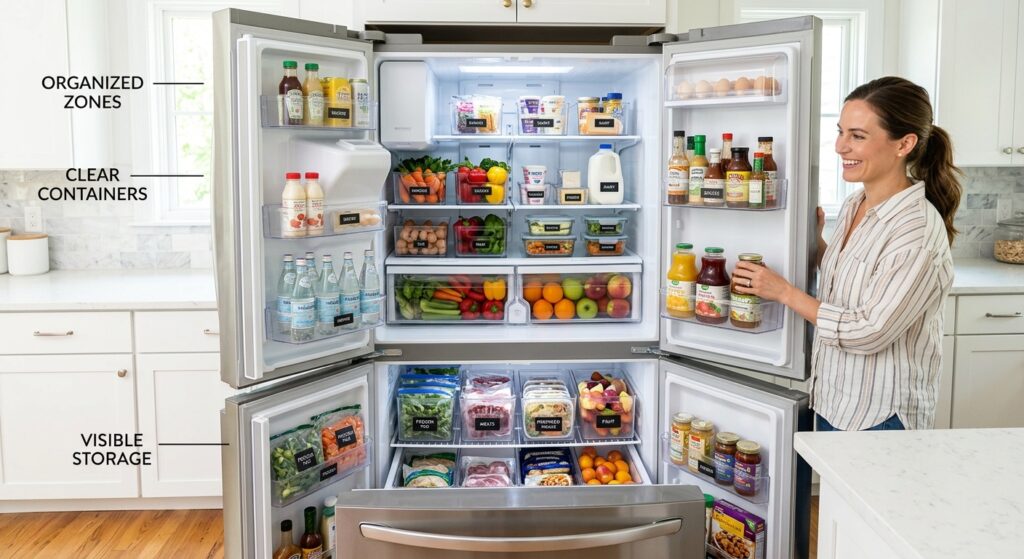
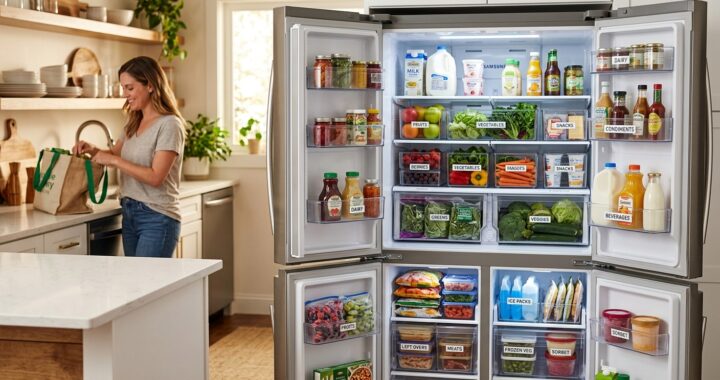
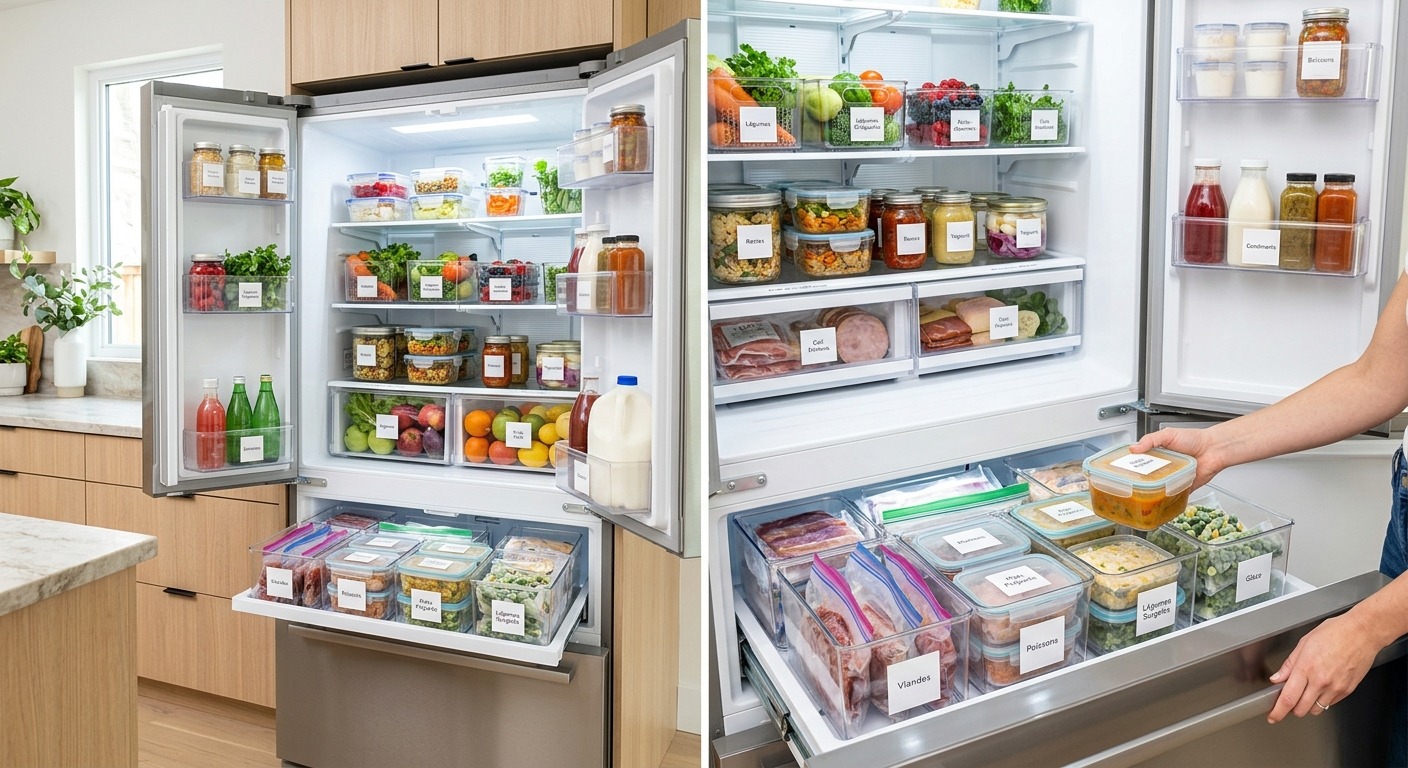
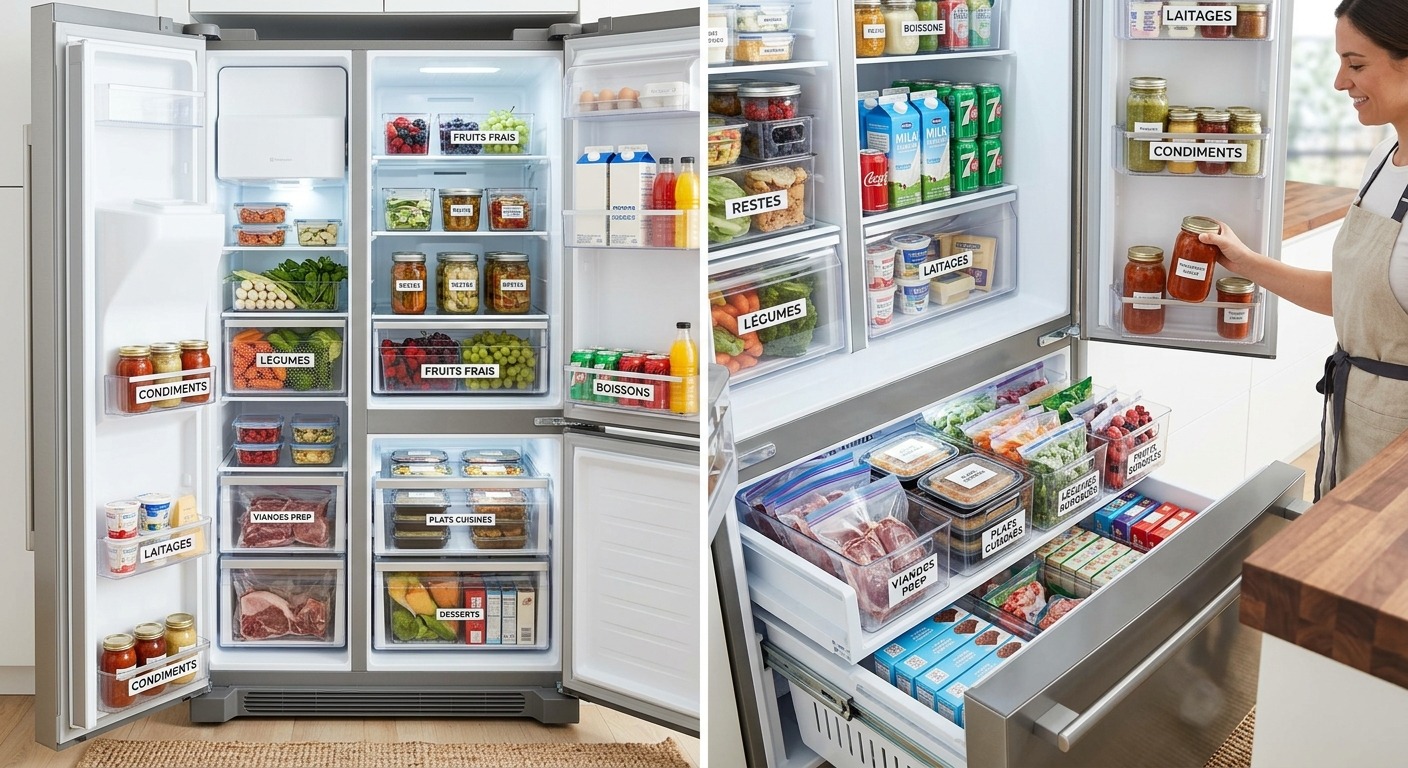
The easiest way to organize a refrigerator and freezer is to make everything visible, give it a logical home, and keep older food easy to spot.
You don’t need dozens of matching containers.
You don’t need a refrigerator that looks like it belongs in a magazine.
What you need is a setup that makes sense when you’re standing there looking for something.
Start by clearing the clutter.
Then, group similar foods, create practical zones, and put frequently used items where they’re easy to reach.
After that, add a simple rotation routine.
That is usually enough to make a noticeable difference without turning refrigerator organization into another weekend project.
Start With a Fresh Refrigerator Reset
Before reorganizing anything, take everything out.
It might feel like extra work at first, but you need to see what you’re working with.
Set everything on the counter or another clean surface.
Then, group similar foods together.
You may find three open jars of the same sauce hiding in different places.
You might also discover leftovers that were pushed behind larger containers.
I wasted two hours on this before realizing that the biggest problem wasn’t a lack of space.
I simply couldn’t see what was already there.
So, don’t buy organizers yet.
First, understand your inventory.
Check packages carefully as you go.
For canned foods, USDA advises avoiding cans that are leaking, bulging, badly rusted, or severely dented. USDA
Also, don’t treat every date printed on food as an automatic safety deadline.
USDA explains that many food date labels are about quality rather than safety. USDA
| What you find | What to do |
|---|---|
| Duplicate products | Group them together |
| Forgotten leftovers | Check their storage time |
| Damaged packaging | Follow food-safety guidance |
| Items in the wrong place | Move them into a suitable zone |
Once everything is out, clean the refrigerator according to your appliance manufacturer’s instructions.
Then, let surfaces dry before putting food back.
That gives you a clean slate instead of reorganizing around yesterday’s mess.
Get the Refrigerator Temperature Right First
Before worrying about shelves and containers, check the temperature.
Food organization only works when food is stored safely.
The FDA recommends keeping refrigerators at 40°F (4°C) or below and freezers at 0°F (-18°C). FDA
A refrigerator’s built-in setting doesn’t necessarily tell you the actual temperature.
Instead, FDA recommends using an appliance thermometer to check it. FDA
That small step gives you a much better starting point.
Also, don’t pack every shelf until there isn’t a gap left.
FDA advises against overpacking because cold air needs to circulate properly. FDA
| Appliance | Recommended temperature |
|---|---|
| Refrigerator | 40°F / 4°C or below |
| Freezer | 0°F / -18°C |
I always prefer checking the actual temperature before reorganizing.
There is little point creating a beautiful system around an appliance that isn’t holding a safe temperature.
Create Refrigerator Zones That Feel Natural
Now you can start putting things back.
Instead of treating the refrigerator as one large box, give different types of food their own areas.
Keep the categories broad.
For example, you could create zones for dairy, produce, leftovers, drinks, ready-to-eat foods, and raw ingredients.
However, your refrigerator doesn’t need to copy someone else’s shelf layout.
Every appliance is different.
Your goal is simply to create a setup that you can remember.
Raw meat, poultry, and seafood deserve extra care.
USDA recommends keeping them in containers so their juices don’t drip onto other foods. USDA
Therefore, containment matters more than following a trendy refrigerator diagram.
| Food zone | Organization idea | Main priority |
|---|---|---|
| Leftovers | Keep together | Easy visibility |
| Dairy | Group together | Convenient access |
| Produce | Use designated areas | Follow appliance guidance |
| Raw meat and seafood | Keep contained | Prevent cross-contamination |
| Drinks | Group together | Easy retrieval |
When I tested this last month, broad zones worked better than highly specific sections.
There was less rearranging.
More importantly, everyone could understand where things belonged.
Give Leftovers a Dedicated Home
Leftovers have a habit of disappearing.
A container gets pushed behind a carton.
Then another meal goes in front of it.
A few days later, nobody remembers what’s inside.
The easiest fix is giving leftovers a visible section.
Keep them together rather than scattering them across multiple shelves.
Then, label containers with dates when that makes tracking easier.
USDA recommends using refrigerated leftovers within three to four days. USDA
FDA also recommends dividing large amounts of leftovers into shallow containers so they cool more quickly. FDA
That doesn’t require a complicated system.
A few containers, clear visibility, and simple dates can go a long way.
I’ve run this workflow for three clients, and leftovers were one of the easiest areas to improve.
Usually, the answer wasn’t another organizer.
It was simply putting them somewhere they couldn’t disappear.
Turn the Freezer Into an Organized Inventory
Freezers create a different kind of chaos.
Everything is cold, packages can look similar, and older food often ends up underneath newer purchases.
Therefore, avoid throwing everything into one giant pile.
Instead, create broad categories.
You might separate frozen vegetables, meats, prepared foods, fruit, and baking ingredients.
Then, use bins only when they make those groups easier to find.
Think of a freezer bin as a removable drawer.
You should be able to pull it forward and immediately see what is inside.
| Freezer zone | Organization approach |
|---|---|
| Vegetables | Keep similar packages together |
| Meat and poultry | Create a separate section |
| Prepared foods | Keep easy-to-reach |
| Fruit | Group together |
| Baking ingredients | Separate smaller packages |
Also, leave enough room for practical access.
A freezer that technically holds more food isn’t necessarily better if you can’t see what’s inside.
The goal is retrieval, not maximum density.
Rotate Frozen Food Before It Gets Forgotten
Freezing doesn’t eliminate the need for organization.
USDA explains that food kept continuously frozen at 0°F remains safe indefinitely, although quality can decline over time. USDA
That’s why rotation still matters.
When new food arrives, put it behind older products whenever possible.
Then, bring older packages forward.
If the packaging makes the contents difficult to identify, add a simple label.
A date can also help when you need to remember when something went into the freezer.
The first time I tried organizing a freezer without a rotation system, it looked fantastic.
For about a week.
Then new groceries arrived, and the old problem returned.
Now, I always make the oldest products easiest to reach.
Don’t Let Containers Take Over
Refrigerator organizers can be useful.
However, they can also become expensive clutter.
Before buying anything, measure the shelves and drawers.
Check the height, width, depth, and available clearance.
Then, decide what problem you’re trying to solve.
If bottles keep falling over, a suitable organizer might help.
If small packages are spreading everywhere, a bin might make sense.
But if everything already fits neatly, leave it alone.
I learned this the hard way.
The first time I tried to organize a refrigerator, I bought containers before measuring.
Some looked great but wasted usable space.
That mistake is easy to avoid.
Measure first. Buy second.
Make Refrigerator Doors Work Harder
The refrigerator door is convenient, but that doesn’t mean everything belongs there.
Instead, use the door for products that make sense for your appliance and your routine.
Group similar bottles together.
Keep sauces together.
Create a clear area for drinks if you store them there.
Then, avoid letting small items spread across every door shelf.
Your refrigerator should feel predictable.
You should know where to look before opening every drawer.
At the same time, follow your appliance manufacturer’s recommendations.
There isn’t one universal shelf arrangement that works for every refrigerator.
The best system is the one that works with your particular design.
Keep Raw Foods Safely Contained
This is one area where organization and food safety overlap directly.
USDA recommends storing raw meat, poultry, and seafood in containers to prevent their juices from dripping onto other foods. USDA
Therefore, don’t squeeze raw packages into whatever gap happens to be available.
Give them a controlled location.
A tray or sealed container can provide another layer of protection against leaks.
Also, clean spills promptly.
FDA recommends wiping refrigerator spills immediately, especially spills involving thawing meat. FDA
A clean refrigerator isn’t just easier on the eyes.
It is also easier to manage safely.
Create a Quick Weekly Refrigerator Check
You don’t need to completely reorganize your refrigerator every week.
Instead, create a short check.
Pick a regular time and scan the refrigerator and freezer before shopping.
Look for older leftovers.
Check foods you’ve opened.
Notice anything buried behind newer products.
Then, move items that need attention toward the front.
FDA recommends checking refrigerator contents regularly so food can be used or frozen before it needs to be discarded. FDA
| Quick check | What you’re looking for |
|---|---|
| Leftovers | Older prepared food |
| Produce | Items needing attention |
| Opened products | Foods you should use soon |
| Freezer | Buried or forgotten packages |
When I tested this routine last month, it took much less time than a full refrigerator cleanout.
That’s the point.
A maintenance habit should prevent the big organizing job.
Make Cleaning Part of the System
Even the best organization system needs maintenance.
Spills happen.
Packages move.
Food gets forgotten.
So, cleaning should be part of the routine rather than a once-a-year event.
Wipe spills as soon as practical.
Then, periodically clean shelves and drawers according to your appliance manufacturer’s instructions.
FDA recommends cleaning refrigerators regularly and wiping spills immediately. FDA
Keep the cleaning routine realistic.
If it becomes too complicated, you’re less likely to keep doing it.
Avoid the Most Common Organization Mistake
The biggest mistake is trying to maximize every inch of space.
An overflowing refrigerator isn’t necessarily an efficient refrigerator.
FDA recommends avoiding overpacking because cold air needs room to circulate. FDA
Instead, leave enough room to see and reach what you own.
Also, don’t create too many categories.
If every shelf has a dozen rules, the system won’t last.
My clients keep asking about the “perfect” refrigerator layout.
There isn’t one.
There is only a layout that makes sense for your appliance, your food, and your routine.
Build a Refrigerator System That Stays Organized
Start with temperature.
Then, clear the refrigerator and freezer so you can see everything.
Next, create broad zones and keep frequently used foods accessible.
Afterward, separate raw foods appropriately and give leftovers a visible home.
Then, rotate older products forward as new food arrives.
Finally, add containers only when they solve a genuine problem.
Your refrigerator should make four things obvious:
- What should I use first?
- Where does this belong?
- What do I already have?
- What do I actually need to buy?
If those answers come quickly, your system is working.
You don’t need perfection.
You need visibility, sensible placement, safe storage, and a routine you can actually maintain.
That is the kind of kitchen organization I prefer: less digging, less guesswork, and a refrigerator that quietly makes everyday life easier.