Heavy-Duty Nonstick Baking Sheet Sets: How to Choose, Use, and Care for Carbon Steel Sheet Pans
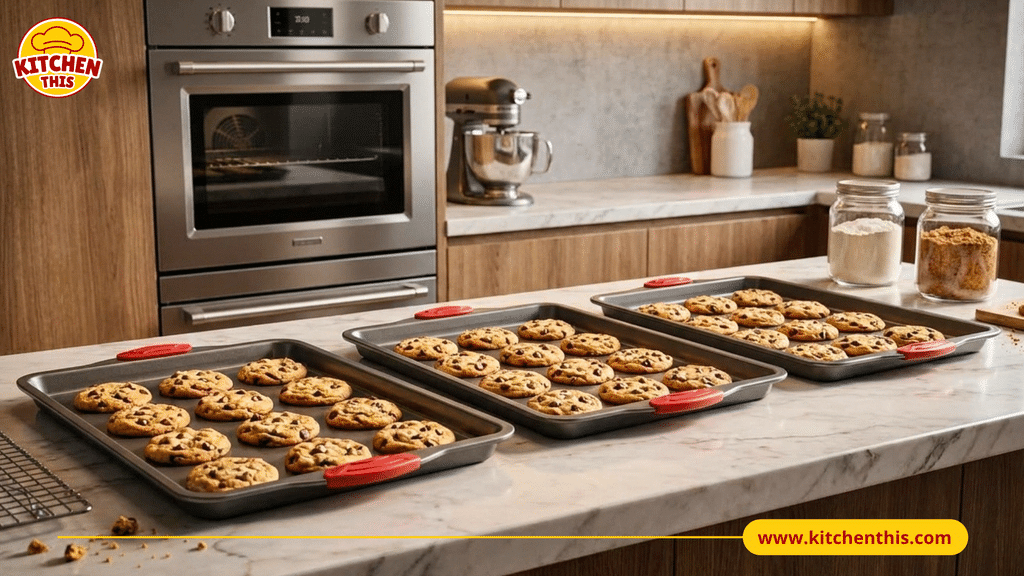
Why heavy-gauge carbon steel sheet pans bake cookies more evenly than thin aluminum trays plus standard pan dimensions, safe temperature limits, and care rules that prevent warping and peeling.
Table of Contents
Few Kitchen frustrations compare to pulling a batch of chocolate chip cookies from the oven only to find the edges burnt while the centers remain raw or hearing a loud metallic pop as a thin baking pan twists diagonally inside a hot oven. Upgrading to a heavy-gauge nonstick carbon steel baking sheet set solves both issues at once, pairing even heat distribution with effortless food release for weeknight sheet-pan dinners and weekend baking.
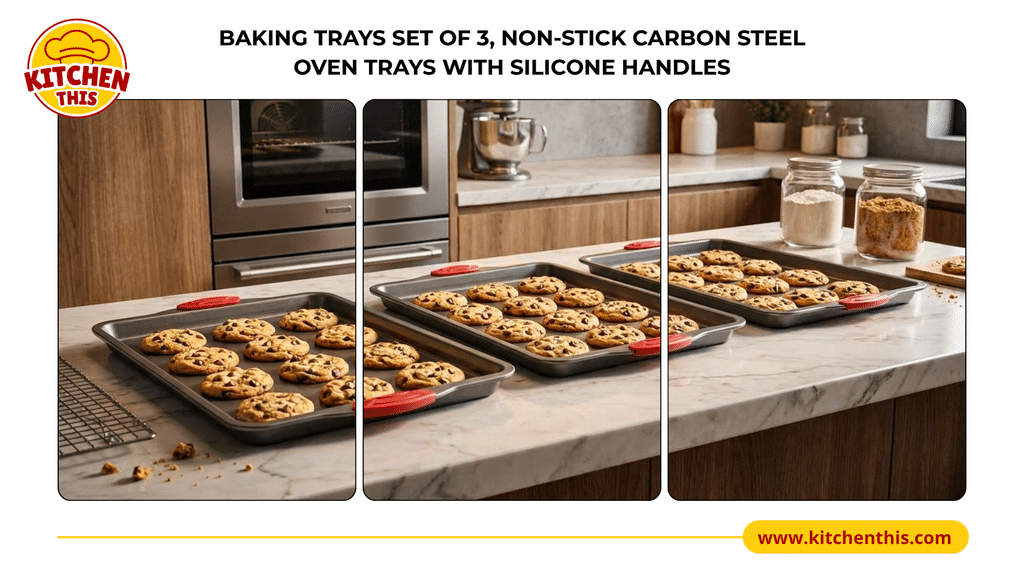
Understanding how nonstick carbon steel compares to uncoated aluminum, stainless steel, and glass bakeware and knowing which pan sizes and care habits protect the coating helps you choose a three-piece set built to stay flat for years.
How Nonstick Carbon Steel Compares to Other Bakeware Materials
Every baking pan material conducts heat and handles high-temperature roasting differently:
| Bakeware Material | Heat Distribution & Browning | Release & Cleanup | Best Culinary Uses | Practical Limitations |
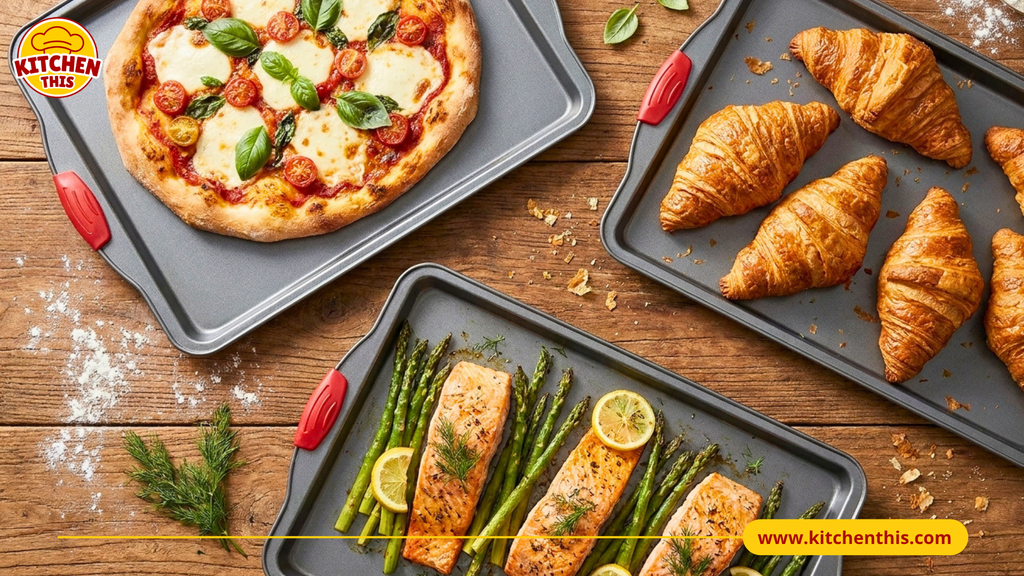
| Heavy-Gauge Nonstick Carbon Steel | Absorbs heat quickly and browns bottoms evenly without dark hot spots | Smooth PTFE- and cadmium-free release; wipes clean in seconds | Drop cookies, pastries, roasted vegetables, fish fillets, and sheet-pan meals | Safe up to 425°F–450°F (220°C–230°C); avoid broiler heat and metal utensils |
| Commercial Uncoated Aluminum (Half-Sheet) | Superior thermal conductivity and crisp browning | Food sticks unless lined with parchment paper or a silicone baking mat | Artisan breads, high-heat roasting, and heavy-duty batch baking | Discolors in the dishwasher and reacts with acidic tomatoes or lemon |
| Uncoated Stainless Steel Sheet Pan | Slower, less uniform heat transfer unless aluminum-core clad | Requires generous oil or parchment lining to prevent sticking | High-heat broiling and acidic marinades | Prone to sticking with delicate baked goods and requires heavier scrubbing |
| Tempered Glass Baking Dish | Heats slowly and retains warmth long after leaving the oven | Non-porous and dishwasher safe, though baked-on edges need soaking | Lasagna, enchiladas, fruit crisps, and deep casseroles | Too thick and slow-heating for crisp cookies or roasted sheet-pan vegetables |
Buyer’s Guide: Four Details That Separate Durable Sheet Pans From Flimsy Trays
- Standard Oven-Friendly Dimensions (Half, Quarter, and Jelly-Roll Sizes): Look for a three-piece set anchored by a true half-sheet pan measuring roughly 18 × 13 inches (46 × 33 cm) the largest standard size that still leaves proper airflow around all four sides inside a residential oven paired with a jelly-roll pan (15 × 10 inches / 38 × 25 cm) and a quarter-sheet pan (13 × 9 inches / 33 × 23 cm) for smaller side dishes or toaster ovens.
- Heavy-Gauge Carbon Steel With Rolled Rims: Thin sheet metal flexes and warps whenever one corner heats faster than the center. Choose 0.8 mm to 1.0 mm heavy-gauge carbon steel reinforced with tightly rolled edges so the pan stays dead flat at 425°F (220°C).
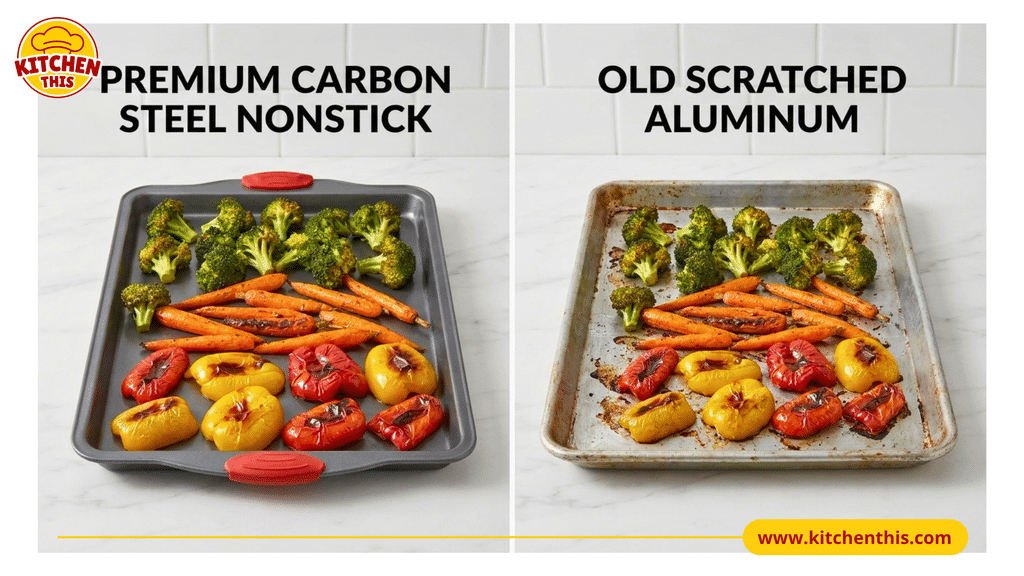
3. PFAS-, PFOA-, Lead-, and Cadmium-Free Nonstick Coating: Verify that the nonstick finish is certified free from PFOA, lead, and cadmium, and avoid razor-thin single-layer paints that scratch the first time you slide a spatula across the surface.
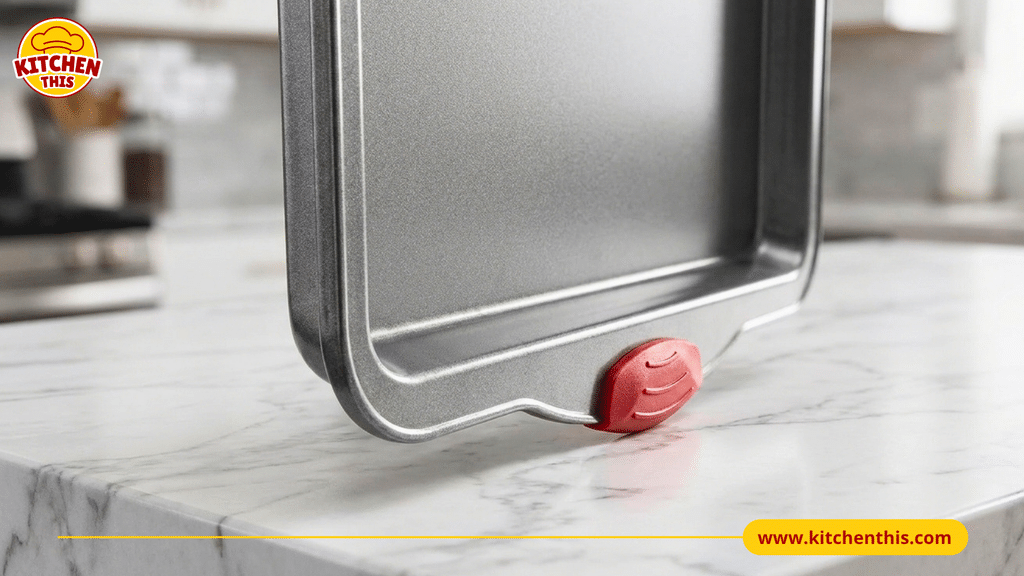
4. Wide Lipped Handles or Heat-Resistant Silicone Grips: Deep rims (at least 1 inch / 2.5 cm tall) keep roasting juices from spilling onto the oven floor, while wide side rims or removable silicone grips give bulky oven mitts a secure hold.
Step-by-Step: How to Use and Care for Nonstick Baking Sheets
Nonstick carbon steel requires very little maintenance, provided you avoid thermal shock and abrasive cleaners:
- Skip Aerosol Cooking Sprays: Propellant-based nonstick sprays leave behind a gummy lecithin residue that bakes onto nonstick coatings and ruins their release over time. When a recipe calls for grease, brush on a thin film of neutral oil, melted butter, or line the pan with parchment paper.
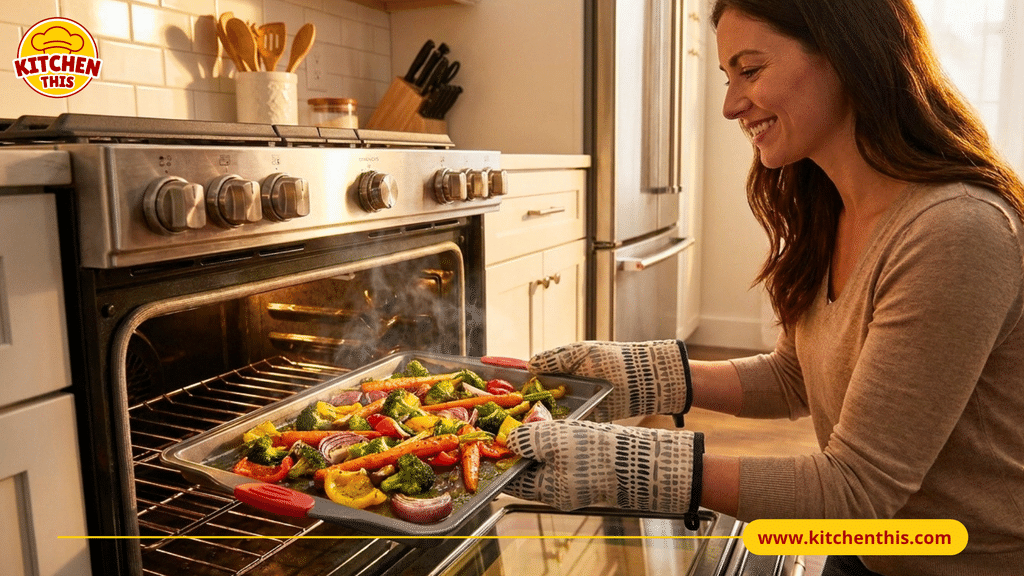
- Stay Within Safe Oven Temperature Limits: Most nonstick carbon steel sheet pans are rated between 425°F and 450°F (220°C to 230°C). Never place a nonstick pan directly beneath an overhead broiler element, where temperatures exceed 500°F (260°C) and degrade the coating.
- Use Silicone, Nylon, or Wooden Utensils: Metal spatulas, pizza cutters, and serrated knives gouge nonstick surfaces. Lift cookies and roasted vegetables with flexible silicone turners or flat nylon spatulas.
4. Let Pans Cool to Room Temperature Before Washing: Plunging a scorching-hot baking sheet into cold sink water causes sudden metal contraction the fastest way to warp even heavy-gauge steel. Let pans cool completely on a wire rack first.
5. Hand-Wash With Warm Soapy Water and a Soft Sponge: Even when labeled dishwasher safe, hand-washing nonstick sheet pans with mild dish soap and a soft sponge preserves the slick release coating and prevents water from seeping under rolled rims. Dry thoroughly with a towel before storing.
Upgrading warped, stained cookie trays for everyday baking and roasting? Explore our Nonstick Baking Sheet Sets comparison to find heavy-gauge carbon steel pans with rolled rims and toxic-free coatings.
Three Simple Ways to Store and Use a Three-Piece Sheet Pan Set
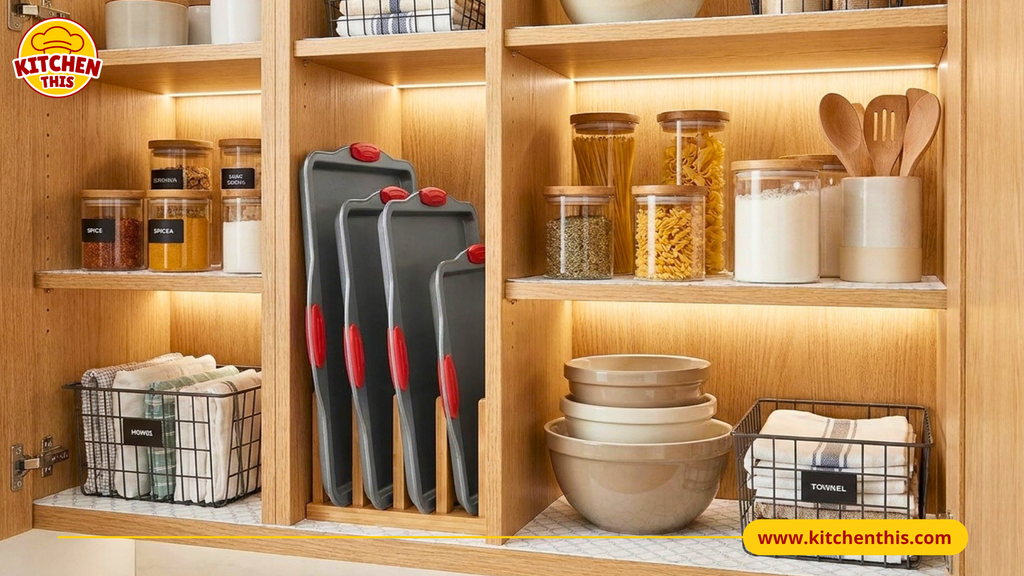
- Store Sheet Pans Vertically Using a Cabinet Divider Rack: Stacking baking sheets flat inside a low drawer forces you to lift three heavy pans just to reach the bottom one and risks scratching the nonstick coating. Sliding a simple vertical wire file rack into a lower base cabinet or above the refrigerator lets you pull out the exact pan size you need with one hand.
- Cook Complete Multi-Tray Dinners on One Oven Rack: Pair a half-sheet pan of seasoned chicken thighs with a quarter-sheet pan of broccoli florets side by side on the middle oven rack so dinner finishes simultaneously with minimal cleanup.
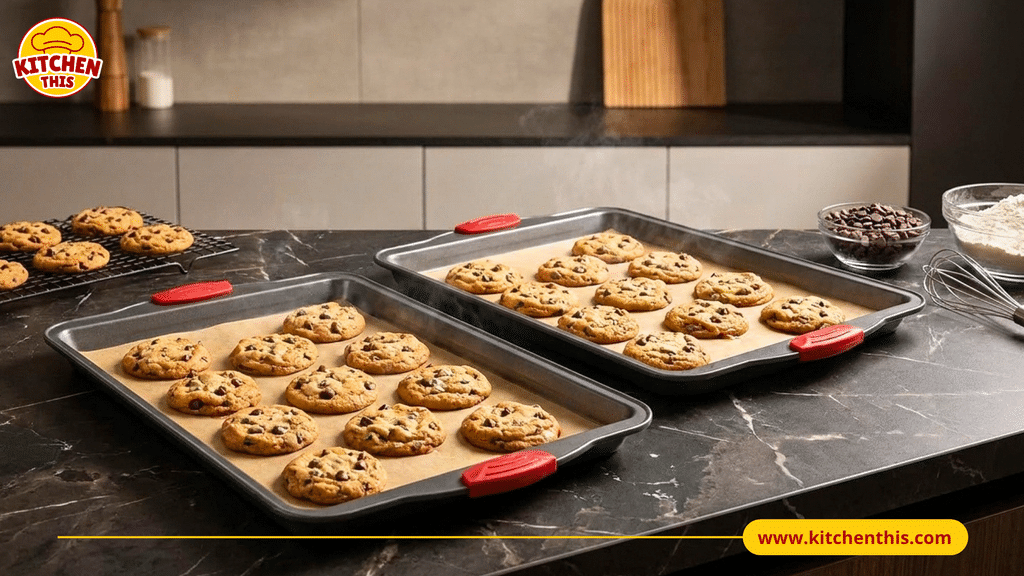
. Reserve One Pan Exclusively for Sweet Baking: Dedicating your cleanest sheet pan solely to cookies, scones, and pastries ensures delicate sugar doughs never pick up lingering garlic or onion aromas from savory sheet-pan roasts.
A well-built set of heavy-gauge nonstick carbon steel baking sheets brings consistency to everyday cooking delivering evenly browned cookies, crisp roasted vegetables, and effortless sink cleanup without warped metal or burnt spots.