How to Use a Silicone Baking Mat for Better Cookies and Easy Cleanup
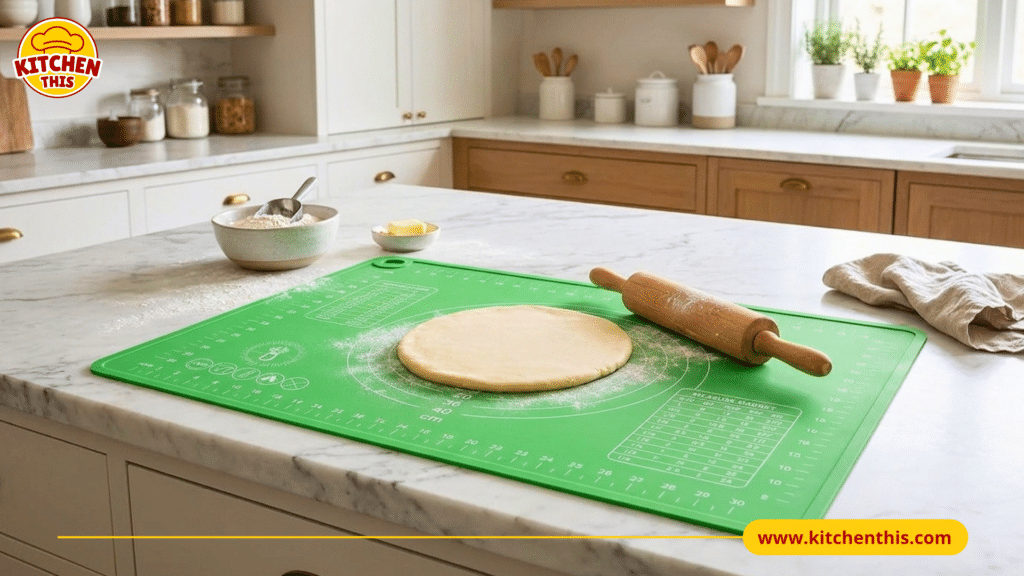
Reusable silicone baking mats replace rolls of disposable parchment paper, prevent cookies from scorching on dark baking sheets, and double as non-slip surfaces for rolling pie crust and bread dough. Here is how they affect baking heat, what sizes to buy, and how to clean them without leaving lingering grease behind.
Table of Contents
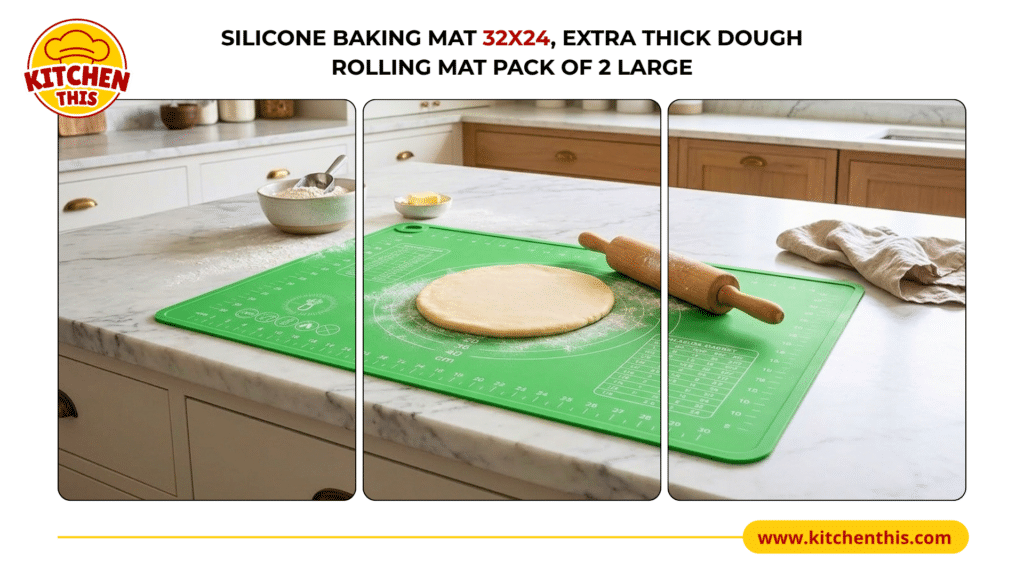
If you bake even twice a month, going through roll after roll of parchment paper quickly adds up and parchment still curls at the corners, tears when you roll sticky dough, and slides across smooth granite or quartz countertops. A reusable Silicone Baking Mat solves both problems at once, replacing thousands of disposable sheets over its lifespan while giving bakers a reliable nonstick surface for both oven baking and countertop dough rolling.
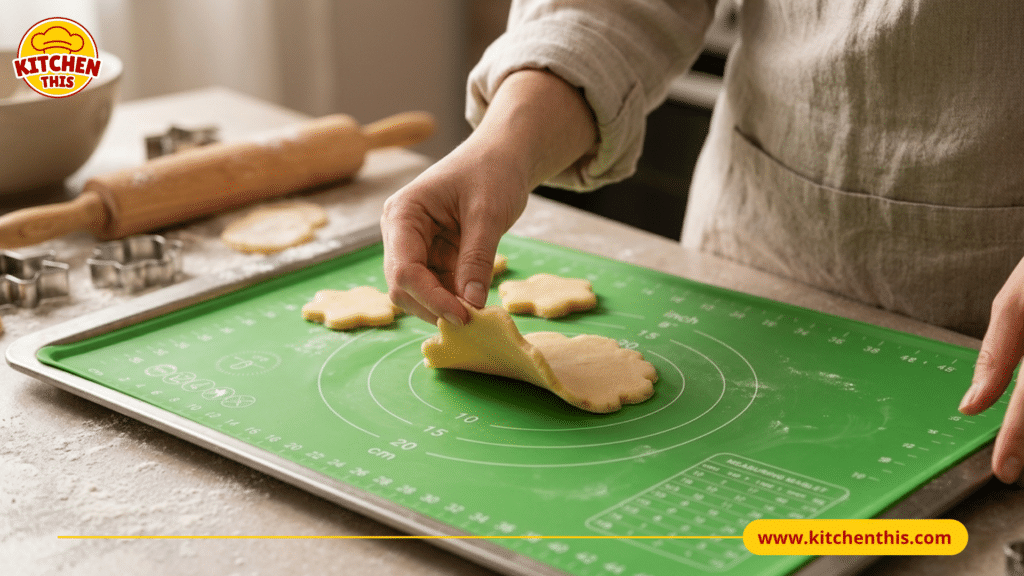
Before swapping out your parchment completely, though, it helps to understand how silicone conducts heat compared to bare metal or paper, and which style of mat fits the way you actually bake.
Two Types of Silicone Mats (And How to Tell Them Apart)
Not every silicone mat belongs inside a hot oven. Shopping with the right format in mind saves frustration:
- Oven Baking Mats (Fiberglass-Reinforced): Sized to fit inside standard rimmed baking sheets most commonly half-sheet pans (16.5 × 11.6 inches) or quarter-sheet pans (11.5 × 8.5 inches) these mats feature a woven fiberglass mesh sealed inside food-grade silicone. That fiberglass core distributes oven heat evenly across the sheet pan and withstands temperatures up to 480°F (250°C) without warping.
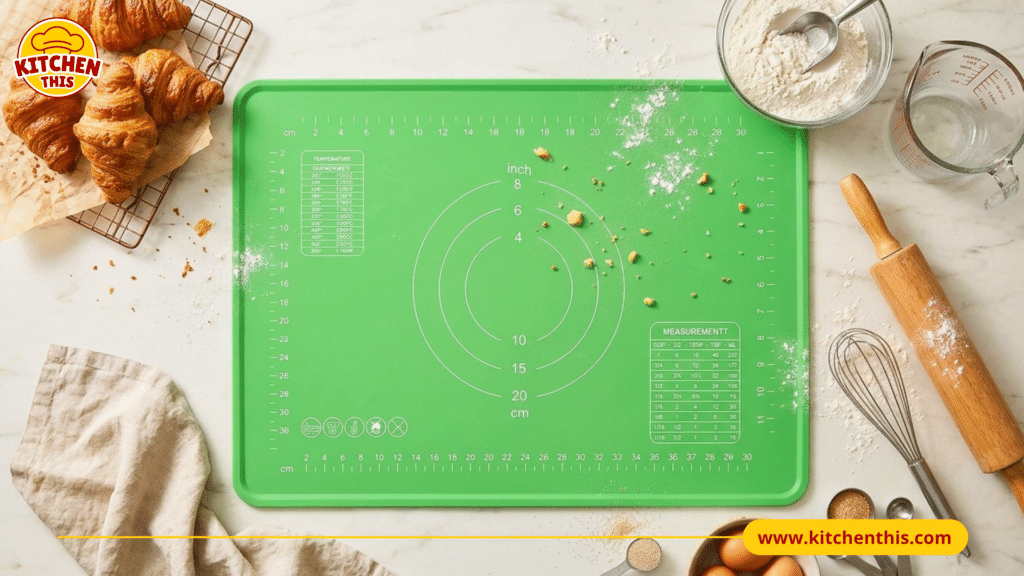
- Extra-Large Countertop Pastry Rolling Mats: Oversized mats such as 32 × 24-inch countertop mats are designed to grip slick marble, laminate, or quartz counters while you knead bread, roll pizza dough, or shape pie crusts. Printed circular diameter rings (from 6 to 14 inches) and ruler edges let you roll dough to exact pan dimensions without dirtying your countertop. (Always check the manufacturer’s heat rating before putting an oversized countertop mat in the oven, as most exceed standard pan dimensions and are meant strictly for prep work.)
How a Silicone Baking Mat Changes Cookie Texture
Switching from parchment paper to a silicone mat subtly alters how cookie dough bakes, because silicone insulates the bottom of the dough slightly more than thin paper:
- No Scorched Bottoms: On thin or dark metal pans, cookies often burn underneath before the tops finish setting. A fiberglass-reinforced silicone mat buffers direct metal heat so bottoms bake to an even, golden brown.
- Slightly Wider Spread & Chewier Centers: Because the smooth silicone surface releases butter easily and slows down bottom browning, drop cookies tend to spread a fraction wider with soft, chewy centers and tender edges.
- Zero Grease or Flour Needed: Even high-sugar items like tuiles, brandy snaps, macarons, and caramel-bottomed sticky buns lift cleanly off cooled silicone without cooking spray.
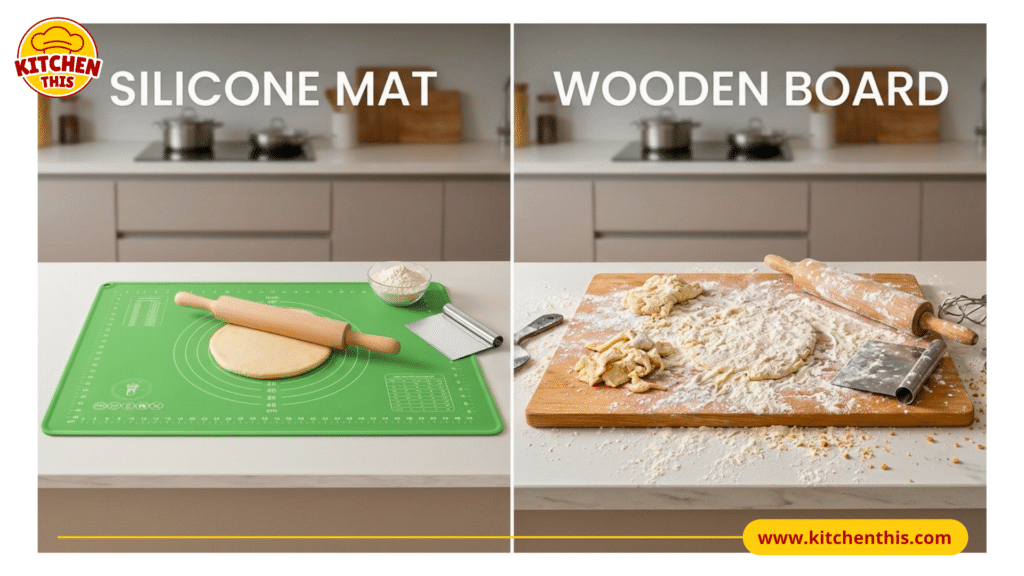
Silicone Baking Mat vs. Parchment Paper vs. Wooden Pastry Board

| Surface Type | Best Kitchen Use | Heat & Baking Behavior | Cleanup & Storage |
| Fiberglass-Reinforced Silicone Baking Mat | Drop cookies, macarons, pastries, scones, and rolling small doughs | Oven-safe up to 480°F; insulates pan bottom for even browning and chewy cookie centers | Wash with warm soapy water, air dry, and roll loosely or store flat |
| Extra-Large Countertop Pastry Mat (e.g., 32″ × 24″) | Rolling pie crusts, pizza dough, cinnamon rolls, and protecting quartz/granite counters | Non-slip backing grips smooth counters; printed size guides eliminate guesswork | Wipe down or rinse in the sink; roll into a compact cylinder in a drawer |
| Disposable Parchment Paper | Ultra-crisp cookies, high-heat roasted vegetables (425°F+), and transporting cakes | Conducts heat slightly faster for crisper edges; single-use | Toss after baking; ongoing grocery expense and paper waste |
| Traditional Wooden Pastry Board | Heavy yeast bread kneading and hand-cut pasta | Not oven-safe; absorbs flour to prevent sticking | Cannot be submerged in water; requires scraping and periodic food-grade mineral oil |
(Note: Keep parchment paper on hand for roasting vegetables with olive oil at 425°F or higher high-heat oils polymerize onto silicone over time, leaving a tacky brown film that is tough to scrub off.)
Four Rules for Using and Caring for Silicone Mats
A quality 100% food-grade, BPA-free silicone mat such as a heavy-gauge extra-large silicone pastry and baking mat set lasts for years if you avoid four common habits:
- Never Cut Directly on Silicone: Even a dull butter knife or metal pizza wheel will slice right through silicone and expose the inner fiberglass threads. Always use a plastic or silicone dough scraper on your mat, and transfer baked cookies or pastry onto a wooden board before slicing.
- Place the Mat on the Pan Before Preheating: Never lay a cold silicone mat onto a blazing-hot baking sheet, and never let the edges hang over a pan rim near an exposed oven heating element.
- Wash With Hot Soapy Water Skip the Dishwasher: Dishwasher detergents leave a cloudy, slightly sticky residue on silicone over time. Instead, wash your mat in the sink with hot water, a few drops of grease-cutting dish soap, and a soft sponge, then rinse thoroughly and hang it over a dish rack or wipe dry with a lint-free microfiber towel.
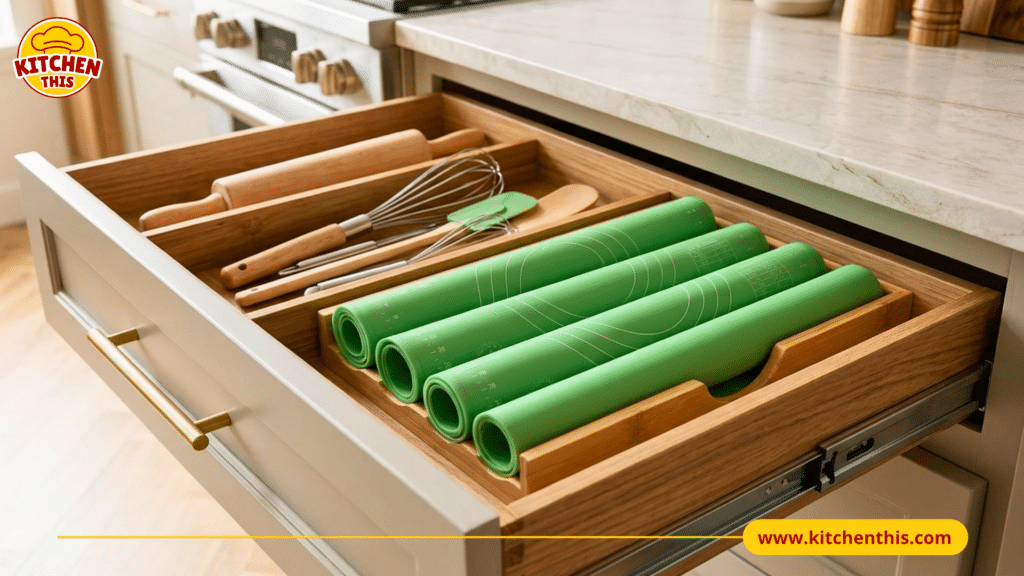
- Roll Loosely or Store Flat Never Fold: Folding a silicone mat creases the internal fiberglass mesh, permanently weakening the mat along the fold line. Store baking mats flat inside your sheet pans, or roll countertop pastry mats loosely into a cylinder secured with a silicone band inside a deep kitchen drawer.

Removing Stubborn Grease or Baking Odors
If a mat ever feels slightly slick after baking buttery shortbread or develops a faint savory odor from garlic dough, sprinkle 2 tablespoons of baking soda over the damp mat, add a drop of dish soap, rub gently into a paste with a soft sponge, and let it sit for 15 minutes before rinsing with hot water. For occasional sanitizing, you can also bake a clean, dry oven-rated silicone mat on a sheet pan at 350°F (175°C) for 10 minutes to burn off trapped volatile oils.
What do you find yourself rolling out or baking most often weekend cookie batches, homemade pie crusts, or pizza dough?
Let us know how you set up your baking station in the KitchenThis comments below!