How to Choose an Automatic Espresso Machine for Busy Mornings
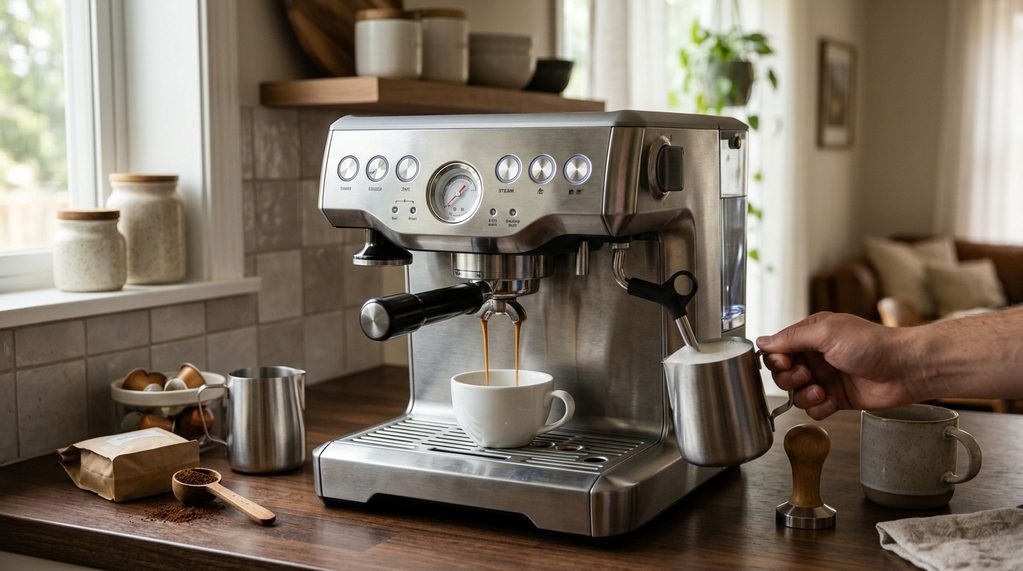
Making café-style espresso, cappuccinos, or lattes at home used to mean grinding beans separately, tamping portafilters, steaming milk by hand, and cleaning up coffee grounds afterward. A bean-to-cup automatic espresso machine simplifies the entire routine, grinding fresh whole beans, tamping, extracting under steady pump pressure, and frothing milk at the touch of a button.
Table of Contents
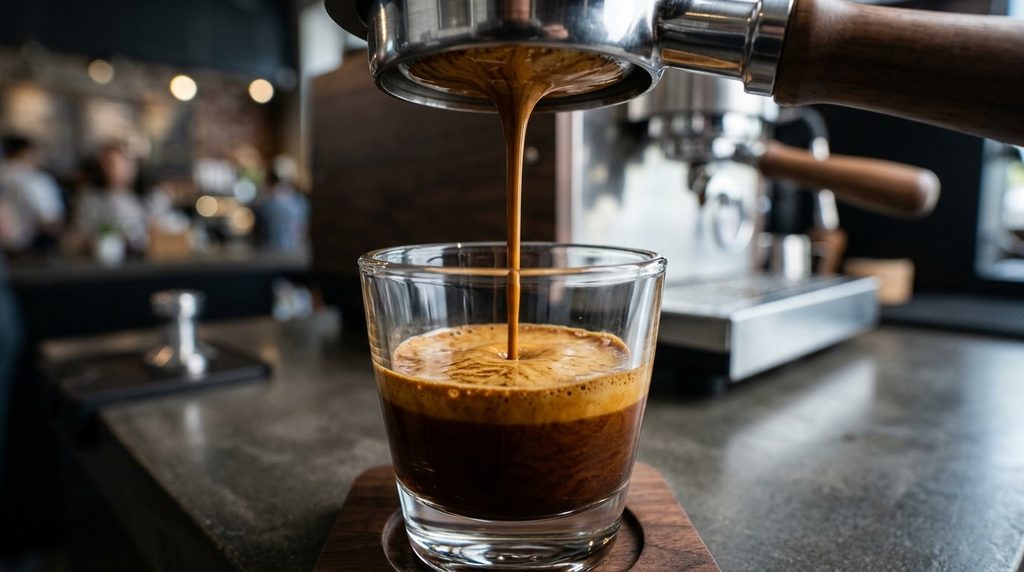
Whether you want a fast weekday morning coffee without drive-thru lines or a reliable machine that lets everyone in the house customize their drink strength, understanding how these machines work makes it much easier to pick the right model. Here is what to look for in a bean-to-cup espresso maker, how it compares to pod machines and manual setups, and how to keep it running smoothly for years.
Why a Bean-to-Cup Espresso Machine Makes Sense for Everyday Mornings
Weekday mornings rarely leave ten spare minutes to weigh beans, dial in a manual grinder, tamp a portafilter, and steam milk separately. A bean-to-cup automatic espresso machine handles all of those steps internally in under a minute, delivering fresh coffee without slowing down your morning routine:
- Freshly Ground Whole Beans on Demand: Built-in conical or flat burr grinders mill whole beans seconds before brewing, preserving the natural oils and aroma that pre-ground coffee loses quickly after opening.
- Consistent Extraction Without Guesswork: Automated dosing, tamping, and digital water temperature control eliminate the trial-and-error of manual espresso setups, giving you a reliable crema and balanced shot every morning.
- Custom Profiles for Everyone in the House: Most modern machines let you save individual settings for coffee strength, water volume, temperature, and milk foam ratio, so one person can brew a strong ristretto while another makes a mild latte with a single tap.
- Lower Cost Per Cup Than Daily Coffee Runs: While the upfront price is higher than a basic drip brewer, whole beans cost a fraction of café drinks or single-serve pods, allowing a frequently used machine to pay for itself over time.
- Less Counter Clutter and Faster Cleanup: Combining the grinder, espresso brewer, and milk frother into one compact unit frees up counter space and automatically rinses internal brewing lines after use.
If you want to compare features, dimensions, and current pricing, you can check out our listing top-recommended Automatic Espresso & Coffee Machine right here.
How Pressure-Control Valves Prevent Bitter Over-Extraction
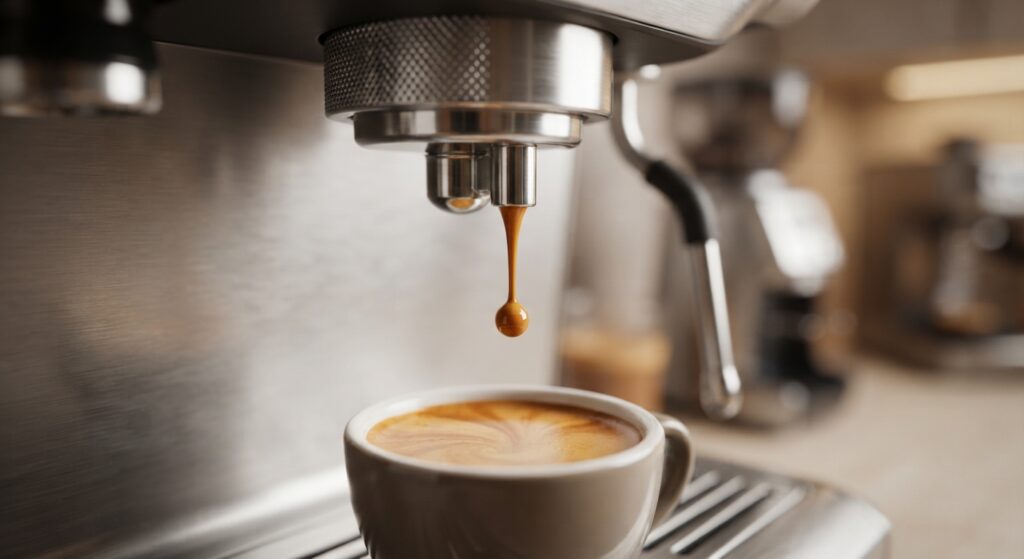
One of the biggest differences between an entry-level espresso maker and a well-engineered automatic machine is how quickly the pump stops water flow the moment your shot finishes.
In quality automatic espresso machines, an internal three-way solenoid valve (paired with an over-pressure relief valve) acts like an instant pressure brake at the end of the brewing cycle. The millisecond extraction reaches your target volume, the valve snaps shut to cut water flow to the coffee puck and vents excess pressure safely into the drip tray.
Without rapid pressure release, hot water continues seeping slowly through the spent coffee grounds after the pump turns off, pulling bitter tannins into the cup and leaving a soggy, messy puck behind. Precision pressure control gives you a cleaner, sweeter finish on every shot while keeping internal brew components cleaner between cycles.
Automatic Espresso Machine vs. Traditional Coffee Makers

Choosing the right coffee setup depends on how much hands-on effort you want to put in before your first sip and what kind of coffee texture you enjoy most. Here is how a bean-to-cup automatic espresso machine compares to three other common home brewing methods:
| Brewing Method | Primary Function | Texture & Output | Best-Suited Pairings | Best Kitchen Fit |
|---|---|---|---|---|
| Automatic Espresso Machine | One-touch grinding, tamping, brewing, and milk frothing | Rich crema, velvety micro-foam, and full-bodied espresso | Croissants, biscotti, and café-style breakfast pastries | Busy households that want fresh café drinks with minimal daily effort |
| Manual Portafilter Machine | Hands-on grinding, dosing, tamping, and manual steam-wand texturing | Dense crema and customizable milk texture (skill-dependent) | Dark chocolate, espresso desserts, and delicate pastries | Home baristas who enjoy the hands-on craft and dialing in shots |
| Standard Drip Coffee Maker | Batch-brewing larger pots of filter coffee | Clean, lighter body with no crema | Pancakes, eggs, and weekend family brunches | Households that drink several mugs of black or drip coffee at once |
| French Press | Full-immersion steeping of coarsely ground beans | Heavy, oil-rich body with light sediment at the bottom | Savory quiches, toast, and hearty weekend breakfasts | Weekend coffee drinkers who prefer a simple, low-tech setup |
For households that want the rich crema and steamed milk of a café latte without spending ten minutes grinding, tamping, and steaming by hand, a bean-to-cup automatic machine offers the most practical balance of speed and quality.
What to Look for Before Buying an Automatic Espresso Machine
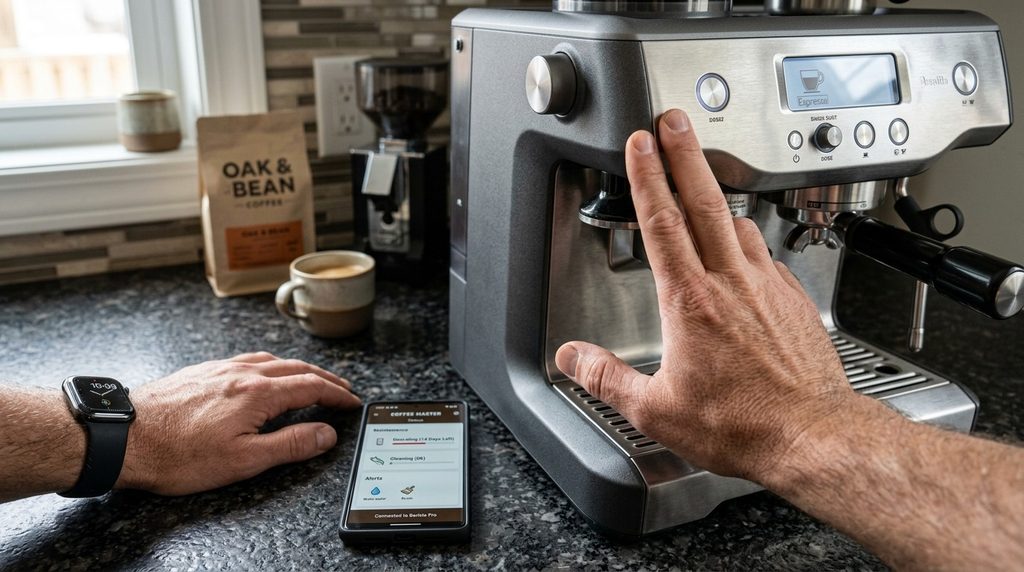
Not all bean-to-cup machines offer the same build quality, grinder precision, or ease of maintenance. If you are comparing models, or browsing current specifications on our featured Automatic Espresso & Coffee Machine listing, focus on four practical details before buying:
Practical Water Tank and Bean Hopper Capacity: Look for a removable water reservoir holding at least 60 ounces (around 1.8 liters) and a sealed bean hopper that fits a standard 8-to-10-ounce bag of whole beans. Larger capacities mean fewer mid-week refills and better bean freshness thanks to UV-tinted, gasket-sealed lids.
Food-Safe, Durable Internal Materials: Prioritize machines built with stainless steel thermoblocks or boilers and BPA-free water and milk pathways. Stainless steel heating systems warm up quickly, hold steady brewing temperatures, and avoid imparting any plastic aftertaste to hot water or steamed milk.
Helpful Digital Controls and App Features: Clear touchscreen menus, customizable user profiles, and guided on-screen maintenance prompts save time every day. Connected apps are most useful for fine-tuning drink strength, temperature, and milk ratios, and for tracking descaling or filter-replacement schedules.
Three-Way Solenoid Valve and Pressure Regulation: Check that the machine includes a three-way solenoid valve and over-pressure relief valve rather than a basic spring-loaded valve. Instant pressure release at the end of extraction keeps coffee pucks dry, prevents bitter post-brew dripping, and reduces residue buildup inside the brew group.
Key Technologies Inside a Modern Automatic Espresso Machine
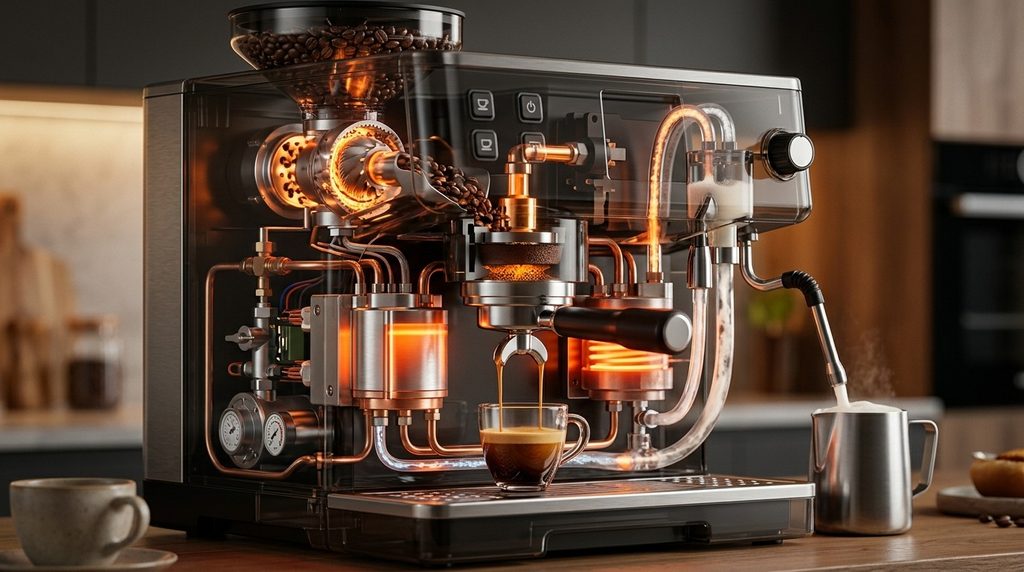
Understanding how the internal components work together helps explain why bean-to-cup machines deliver much better consistency than basic pod or drip brewers:
- Integrated Conical Burr Grinders: Unlike blade grinders that chop beans unevenly and generate excess heat, ceramic or hardened-steel conical burrs mill whole beans into uniform particles. Consistent grind size is essential for even water flow and balanced espresso extraction.
- Automatic Milk Frothing Carafes and Tubes: Integrated milk systems siphon cold milk directly from a detachable carafe or milk carton, heat it with steam, and aerate it into fine micro-foam straight into your cup, no manual pitcher positioning required.
- Color TFT Touchscreen Displays: High-resolution touchscreens replace cryptic warning lights and multi-button combinations with clear visual menus. You can adjust grind strength, water temperature, shot volume, and milk texture on screen, then save those settings under personal user profiles.
- Dual Thermoblock Heating Systems: Higher-end models use two independent heating elements, one dedicated to brewing espresso at optimal extraction temperatures (around 195°F–205°F) and a second dedicated to producing dry steam for milk. Having separate heating circuits eliminates waiting time between brewing and frothing, speeding up back-to-back lattes and cappuccinos.
How to Operate and Maintain Your Automatic Espresso Machine
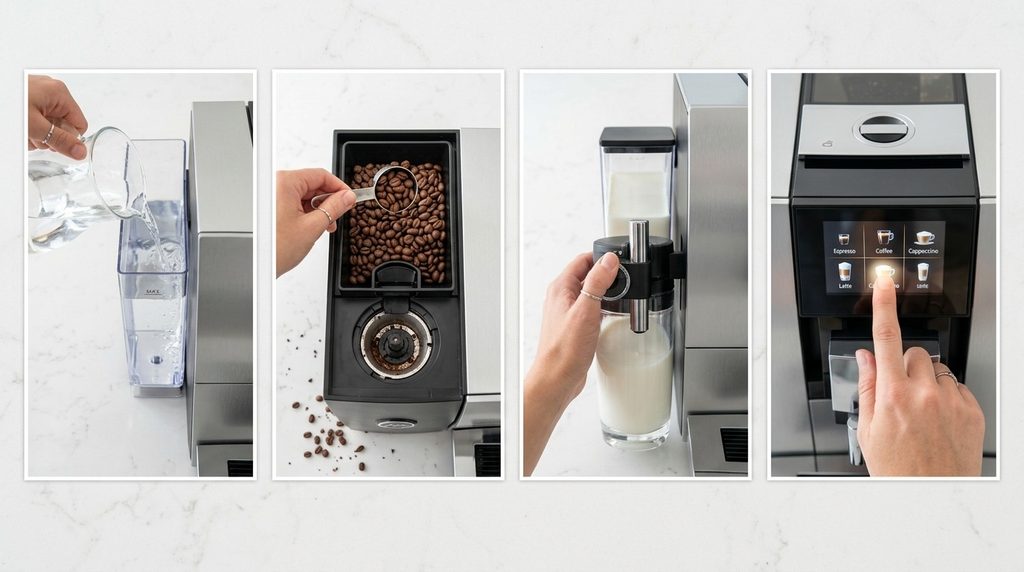
An automatic espresso machine handles the hardest parts of brewing on its own, but following a simple daily routine keeps your coffee tasting fresh and prevents coffee oils and mineral scale from building up inside the machine.
Daily Brewing Steps
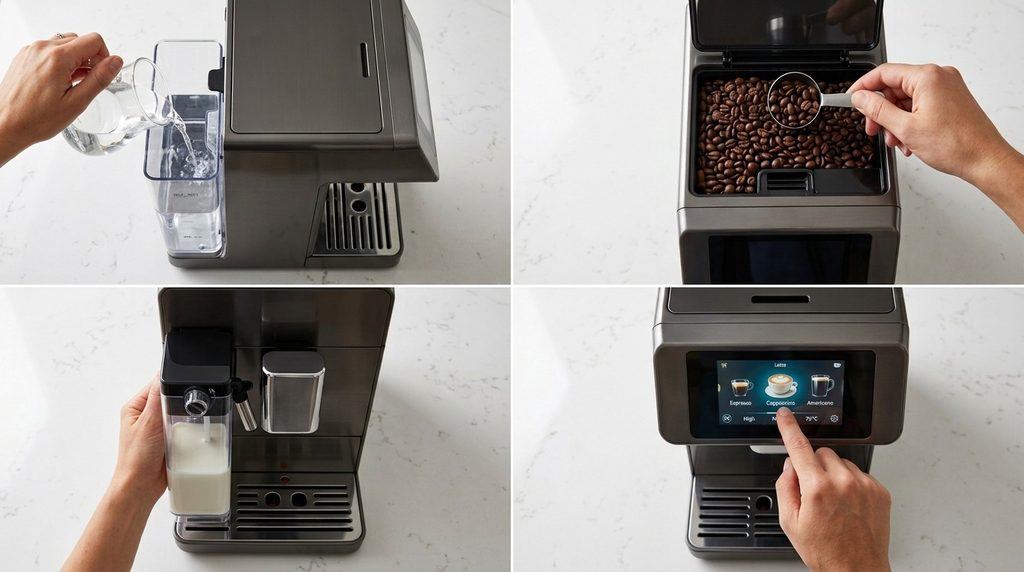
Fill the Tank, Hopper, and Milk Carafe: Fill the water reservoir with fresh, filtered water to reduce mineral buildup, and pour whole, unflavored coffee beans into the hopper (flavored or heavily oiled beans can clog built-in burrs). If you are making a milk drink, fill the carafe with cold milk and lock it securely into place.
Power On and Catch the Rinse Cycle: Turn the machine on and let the heating system reach brewing temperature. Most automatic models run a short hot-water rinse through the coffee spouts at startup to warm the internal lines, place a small cup underneath to catch the rinse water instead of letting it fill your drip tray.
Select and Customize Your Drink: Use the touchscreen menu to pick your espresso, americano, cappuccino, or latte, then adjust the coffee strength (dose), water temperature, and milk-to-coffee volume to match your cup size.
Start Brewing: Press start and let the machine grind, tamp, extract under steady pump pressure, using its internal three-way solenoid valve to cut water flow cleanly at the end of the shot, and dispense steamed micro-foam into your cup.
Routine Cleaning and Maintenance
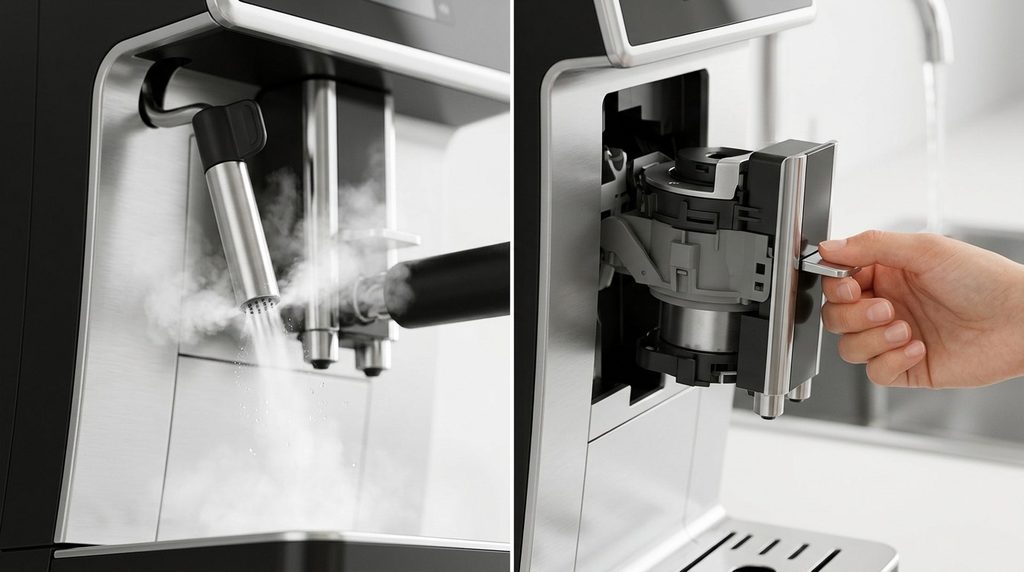
Rinse the Milk System Immediately After Use: Milk proteins and fats spoil quickly inside narrow steam lines. Right after frothing milk, run the machine’s automatic steam purge or “Quick Clean” cycle to flush residual milk out of the wand or carafe tubes, and store any leftover milk carafe in the refrigerator.
Empty the Drip Tray and Grounds Container Daily: At the end of the day, slide out the drip tray, empty the spent coffee pucks into your trash or garden compost, and wash the tray and grid with warm, soapy water before drying them thoroughly.
Rinse the Brew Group Weekly: Once a week, open the side or front service door and remove the central brew unit. Rinse it under warm running water, without soap or detergent, which can strip food-safe lubricants from the seals, and let it air-dry completely before sliding it back into place.
Descale Monthly (or When Prompted): Even when using filtered water, calcium and mineral deposits gradually build up inside the thermoblock and water lines. Run a full descaling cycle using a manufacturer-approved descaling solution whenever the machine’s maintenance alert appears, typically every one to three months depending on your local water hardness.
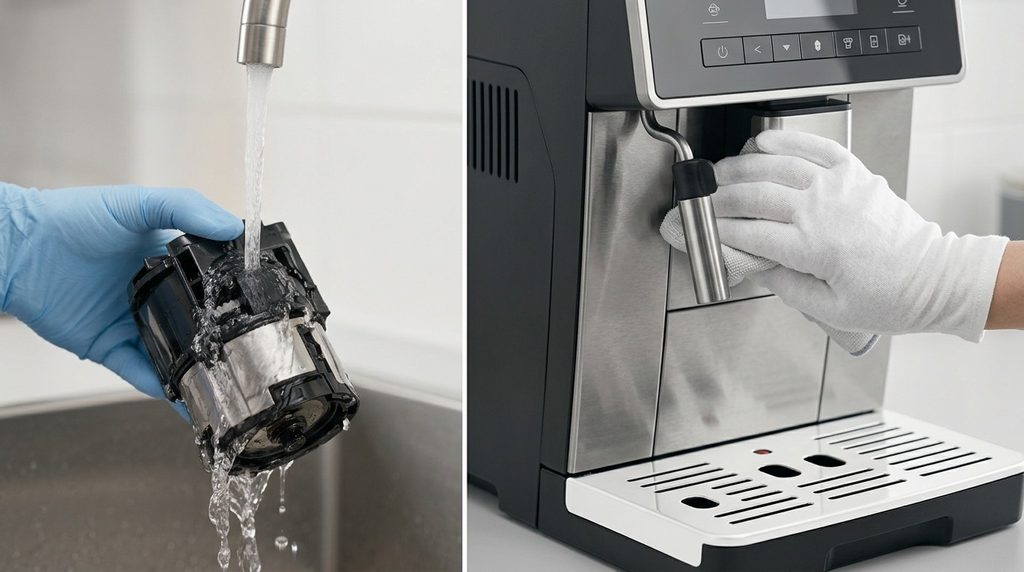
Descale Monthly (or When Prompted): Even when using filtered water, calcium and mineral deposits gradually build up inside the thermoblock and water lines. Run a full descaling cycle using a manufacturer-approved descaling solution whenever the machine’s maintenance alert appears, typically every one to three months depending on your local water hardness.
Setting Up a Clutter-Free Morning Coffee Station
An automatic espresso machine works best when the space around it is organized to save steps during busy mornings. Grouping your coffee essentials in one dedicated corner of the counter, keeping your machine near an outlet and water source, storing mugs on an adjacent shelf, and keeping airtight bean canisters within arm’s reach, turns morning prep into a quick, seamless routine.
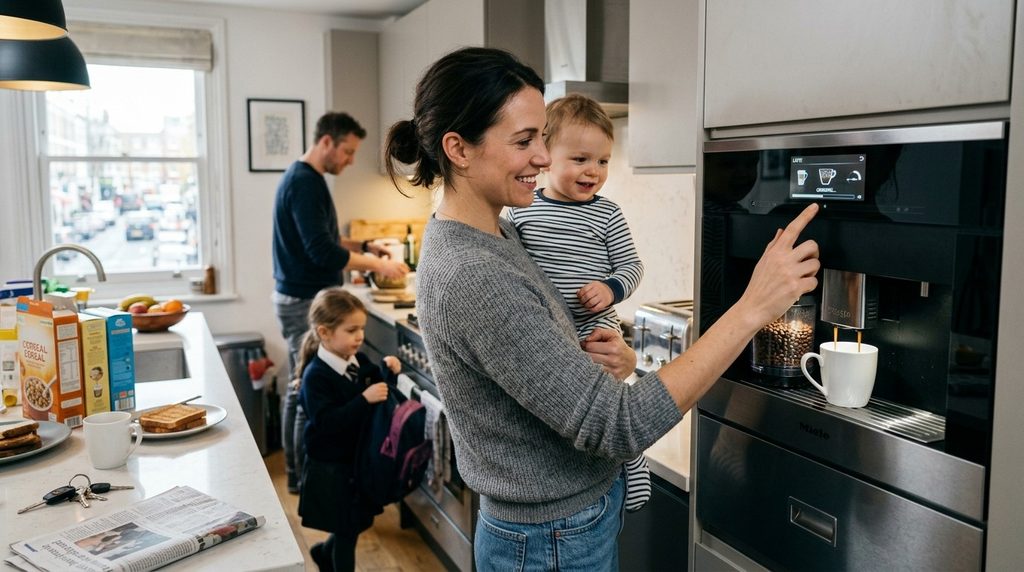
Clearing away rarely used countertop clutter gives your espresso maker plenty of breathing room for refilling the water tank, accessing the brew group door, and steaming milk comfortably. With fresh beautiful whole beans , custom drink profiles saved, and a simple rinse routine in place, you can brew café-style espresso and lattes at home in under a minute without extra mess or guesswork.