How to Design High-Performance Kitchen Drawers and Cabinets That Actually Fit
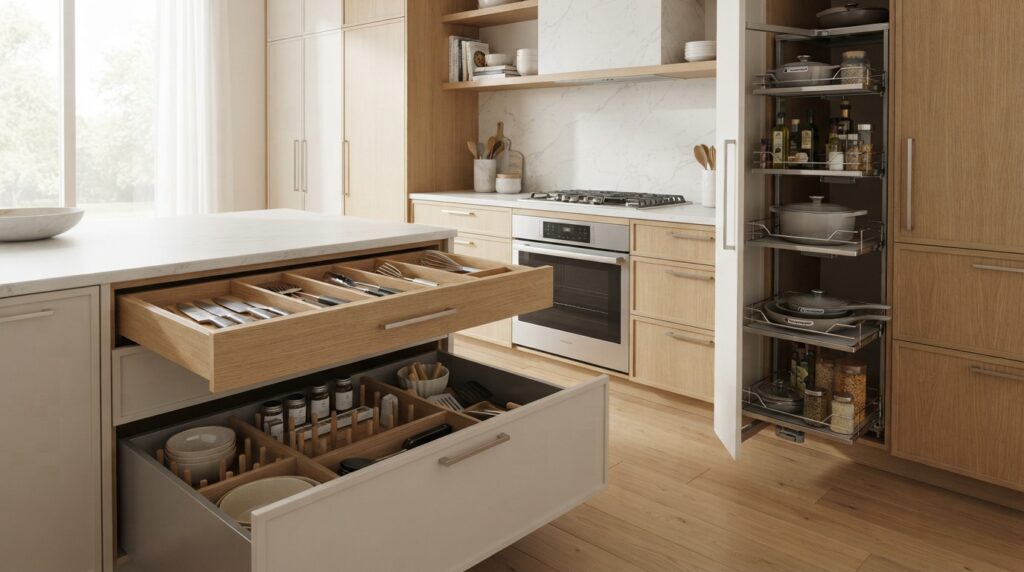
Cabinet and drawer storage works best when it is planned around real measurements, easy access, and the way you actually cook every day. While storage is often treated as an afterthought at the very end of a kitchen remodel or organization project, reversing that order produces far better results. Starting with exact interior cabinet dimensions lets you choose drawers, dividers, shelves, and pull-outs that genuinely fit your space, rather than forcing store-bought organizers into cabinets where they waste valuable inches.
Table of Contents
Why Smart Cabinet Storage Starts With Better Planning
Kitchen storage has become one of the most important priorities in modern kitchen layouts rather than an add-on after the cabinets are installed. According to the National Kitchen & Bath Association’s (NKBA) 2026 Kitchen Trends Report, 76% of surveyed design professionals expect kitchen footprints to grow over the next three years, driven by demand for deeper drawers, floor-to-ceiling cabinetry, dedicated pantries, and storage-focused islands.
However, adding more cabinets does not automatically create a better-organized kitchen. If deep shelves are hard to reach or awkward to see into, extra square footage simply collects clutter at the back. Planning cabinet storage works best in three clear stages:
- Measure the physical interior: Record the exact usable width, depth, and vertical clearance inside each cabinet box.
- Map out item categories: Decide what will live in each zone based on where you prep, cook, and plate meals.
- Select compatible hardware: Choose drawer systems, pull-outs, and dividers that match both your measurements and the weight of what you plan to store.
Measure Your Cabinets Before Buying Hardware or Organizers
The most common storage mistake in any kitchen is buying drawer organizers or pull-out baskets before measuring the interior cabinet box. Even a half-inch difference in hinge clearance, face-frame lip, or internal depth can prevent a drawer from closing properly.
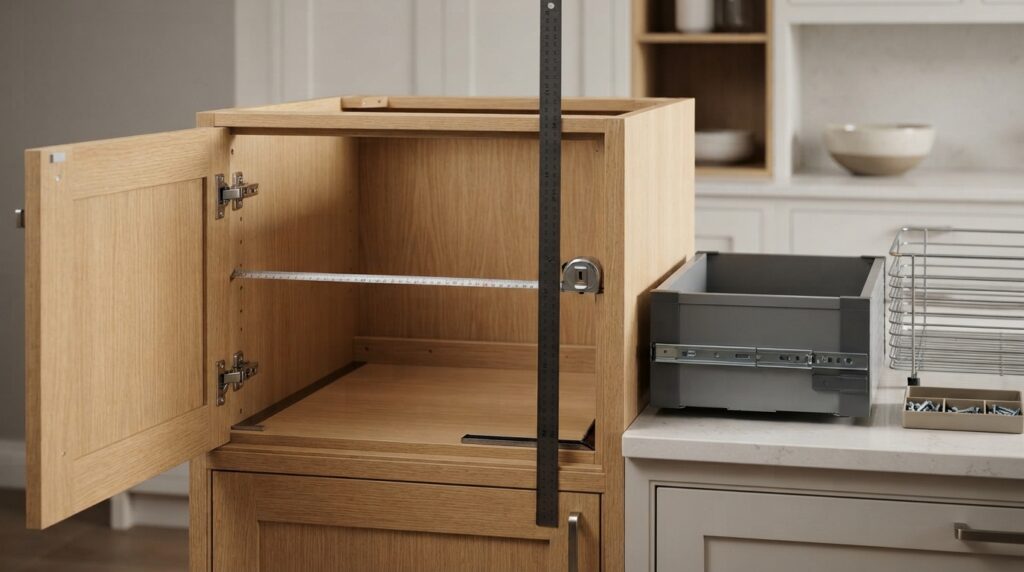
High-end drawer systems, such as Blum’s LEGRABOX range, are manufactured in specific heights, nominal lengths, and weight capacities (such as 40 kg and 70 kg load-bearing classes depending on the configuration). Checking these numbers against your cabinet box before ordering prevents costly returns and installation headaches.
| Measurement | What to Check | Why It Matters |
| Internal Width | Side-to-side clearance inside the cabinet box (accounting for door hinges) | Determines which drawer runners or pull-out frames will physically fit |
| Internal Depth | Front-to-back space from the back wall to the inside of the closed door | Prevents clearance issues and dictates the maximum nominal drawer length |
| Opening Height | Available vertical space between shelves or top/bottom rails | Determines drawer box height and whether tall bottles or pots will clear |
| Load Capacity | Manufacturer weight rating for the runners and bottom panel | Ensures drawers holding cast-iron cookware, dishes, or pantry jars won’t sag |
Taking five minutes to write down these four measurements eliminates guesswork and ensures every component fits the first time.
Choosing Between Shelves, Standard Drawers, and Pull-Outs
Deep base cabinets with fixed shelves are notorious for hiding pots, mixing bowls, and small appliances in dark back corners. Replacing lower shelves with full-extension drawers brings contents out into the light so you can see and reach everything from above without kneeling on the floor.
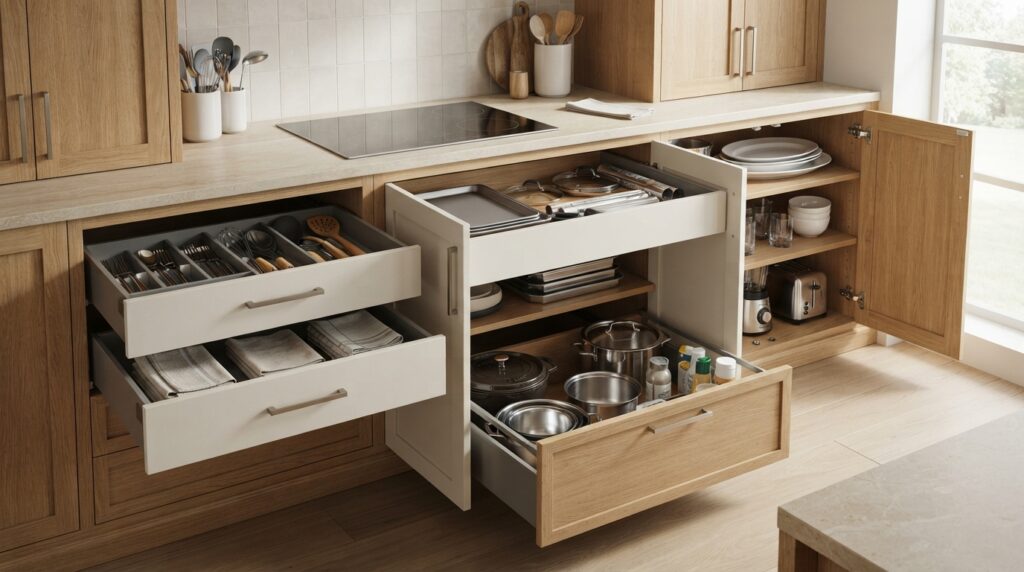
Still, every cabinet style has its own strengths depending on what you store inside:
| Storage Format | Main Strength | Best Used For | Key Planning Check |
| Standard Drawer | Direct top-down visibility and effortless reach | Everyday utensils, cutlery, prep tools, spices, and folded dish towels | Exact cabinet width and nominal runner depth |
| Inner Drawer | Adds a hidden secondary tier behind a tall drawer front or cabinet door | Flat lids, baking sheets, foil wraps, or shallow pantry packets | Vertical clearance above the lower drawer contents |
| Deep Pull-Out | Brings heavy or bulky items forward smoothly | Dutch ovens, stand mixers, tall olive oil bottles, and trash/recycling bins | Load-bearing rating and hinge clearance |
| Fixed Shelf | Simple, cost-effective structure with no moving hardware | Lightweight bulky items, seldom-used platters, or upper-cabinet glassware | Adjustable shelf pin spacing for tall items |
Rather than trying to squeeze drawers into every single cabinet, ask where a sliding mechanism will genuinely improve daily access. A few well-placed deep drawers often outperform a wall of complicated hardware.
How to Organize Drawers Without Over-Compartmentalizing
Drawer dividers are helpful, but filling every inch with rigid plastic or bamboo compartments often backfires. Over-divided drawers lock you into fixed slot sizes that no longer work the moment you buy a wider spatula or a new set of measuring spoons.
Following basic kitchen workflow principles, such as those highlighted in Houzz’s kitchen cabinet and drawer organization guides, works best when you group items by broad category and store them right next to where they are used:
- Group related tools together: Keep prep knives, peelers, and measuring spoons near your main cutting board, and store cooking spoons, tongs, and thermometers beside the stove.
- Separate only what tangles or slides: Use simple dividers for cutlery, sharp knives, or spice jars that roll around, while leaving wider open sections for bulky whisks, ladles, and rolling pins.
- Leave 15% to 20% breathing room: Avoid packing dividers edge-to-edge so you can easily add new tools or shift layouts as your cooking habits change.
- Skip bulky organizers that steal depth: Thick-walled trays can eat up an inch or more of usable height in shallow top drawers.
Tailoring Storage to Difficult Cabinet Shapes
Every cabinet box in a kitchen has different proportions, so a one-size-fits-all organizer rarely works across the entire room. Matching the hardware to the specific shape of the cabinet turns awkward spaces into functional storage:
- Narrow Base Cabinets (9 to 15 inches wide): Ideal for vertical pull-out racks holding cooking oils, vinegars, cutting boards, or baking sheets right next to the range.
- Extra-Deep Cabinets: Benefit most from full-extension runners so items stored 21 to 24 inches back remain just as accessible as those in front.
- Tall Pantry Cabinets: Work best when divided into zones, eye-level shelves for daily dry goods, pull-out drawers at waist height for heavy cans and jars, and upper shelves for lightweight paper goods or seasonal platters.
- Shallow Drawers: Require low-profile organizers and careful height checks so tall ladles or garlic presses do not catch on the countertop overhang.
How to Read Hardware Specifications Before You Buy
When shopping for replacement drawer slides, pull-out baskets, or custom cabinetry, product photos rarely tell the whole story. Manufacturer specification sheets give you the exact numbers needed to compare quality objectively:
- Minimum Internal Cabinet Depth: Always verify the minimum depth required for a given nominal drawer length so the back of the drawer box does not hit the cabinet wall.
- Weight Ratings (Load Classes): Check whether runners are rated for light everyday loads (around 30–40 kg) or heavy-duty storage (up to 70 kg) if you plan to store stacks of ceramic dinnerware or cast-iron pans.
- Extension Type: Full-extension slides allow the entire drawer box to clear the cabinet opening, whereas three-quarter extension slides leave the back few inches tucked under the counter.
- Motion Technology: Look for integrated soft-close dampers that prevent slamming and keep dishes or spice jars from shifting when you close a drawer quickly.
A Simple Step-by-Step Workflow for Any Cabinet Project
Whether you are upgrading a single cluttered utensil drawer or planning an entire wall of base cabinets, following a consistent sequence keeps the project straightforward:
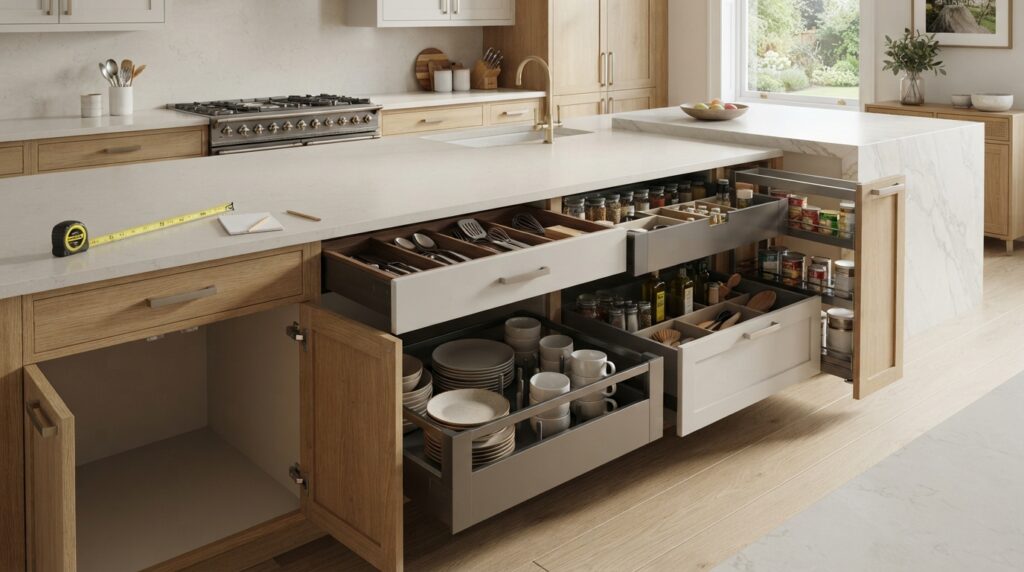
- Empty and measure the cabinet box: Write down the exact internal width, depth, and height, noting any hinges, pipes, or face-frame lips.
- Sort items by frequency and zone: Keep daily essentials within easy waist-to-shoulder reach near the prep or cooking area.
- Choose the right storage format: Match drawers, pull-outs, or adjustable shelves to the size and weight of the items.
- Verify hardware dimensions and load ratings: Confirm nominal lengths and clearances against the manufacturer’s spec sheet before purchasing.
- Edit out unnecessary extras: Remove any divider or insert that takes up space without making items easier to grab.
Final Check: Does Every Component Earn Its Space?
Well-designed kitchen drawers and cabinets make daily cooking feel effortless rather than complicated. When you start with accurate interior measurements, select hardware rated for the real weight of your cookware, and organize items around where you actually prep and cook, even a modest kitchen feels noticeably larger and easier to use.
Before buying another organizer or drawer insert, ask one simple question: Does this component make my everyday items easier to see and reach, or does it just take up space? Focusing on accessibility and exact fit ensures every inch of your cabinetry works harder for you.