How to Create a Kitchen That Stays Organized After the Weekend Reset
Almost anyone can Organize a Kitchen on a Sunday afternoon. The real challenge is keeping it that way by Wednesday evening, after three rushed weeknight dinners, a grocery delivery, school lunches, and a stack of mail that somehow landed beside the coffee maker.
Most organization systems fail not because people are messy, but because the setup requires too much effort when you are tired. A kitchen that stays organized relies on low-friction habits, smart drop zones, and realistic storage limits rather than rigid rules or dozens of matching containers.
Table of Contents
Why Organized Kitchens Slowly Fall Apart
Clutter rarely happens all at once; it builds up through tiny daily friction points:
- Too Many Steps to Put Something Away: If putting away a colander requires unstacking four mixing bowls first, it ends up left on the drying rack.
- No Designated Home for Incoming Clutter: Keys, mail, reusable shopping bags, and water bottles pile up on the nearest flat counter because there is nowhere else for them to land.
- Overstuffed Drawers and Cabinets: When a drawer is 100% full, every new item pushes something else out of place.
- Relying on Monthly Deep Cleans Instead of Daily Resets: Waiting until the whole room is overwhelmed turns tidying into a weekend chore.
1. Store Items at the Point of First Use
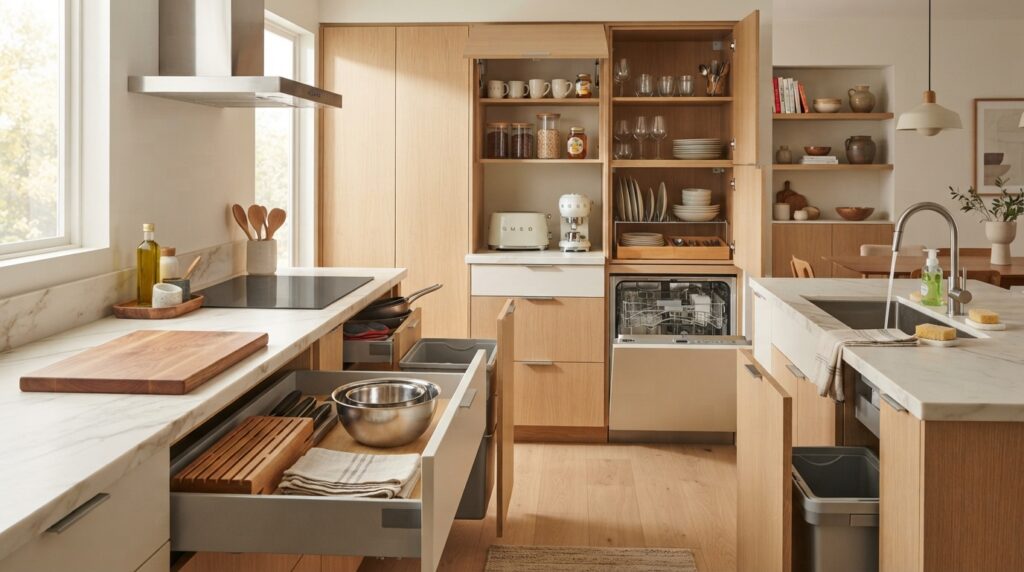
The single easiest way to keep counters clear is storing tools right where you actually reach for them, not where they look symmetrical:
| Kitchen Zone | What Should Live Right There | Why It Prevents Clutter |
| Beside the Range | Cooking oils, salt cellar, wooden spoons, everyday skillets, pot holders | Eliminates walking across the kitchen mid-cook and leaving bottles out |
| Primary Prep Counter | Chef’s knife, cutting boards, mixing bowls, prep towels, trash pull-out | Keeps peelings, wrappers, and tools contained to one spot |
| Coffee & Breakfast Station | Mugs, coffee beans/filters, toaster, oatmeal, honey | Morning routines stay self-contained without spreading across prep counters |
| Above or Beside the Dishwasher | Everyday plates, bowls, glasses, and flatware | Unloading takes two minutes instead of stacking dishes on the counter |
| Sink & Cleanup Zone | Dish soap, sponges, dish towels, recycling bin | Keeps wet items off main work surfaces |
2. Create a “Landing Zone” Outside the Main Work Counter
In nearly every home, the kitchen counter doubles as the household drop zone. Trying to ban mail, keys, and backpacks from the kitchen rarely works unless you give them an easier place to go:
- Place a Shallow Catch-All Tray Near the Kitchen Entry: Corrals keys, sunglasses, and incoming mail in one contained spot rather than across the island.
- Hang a Hook for Reusable Grocery Bags: Keep folded totes near the pantry or mudroom door so they go straight back to the car after unloading.
- Keep a Small Recycling Bin Within Arm’s Reach: Junk mail, empty shipping boxes, and food wrappers go straight into recycling instead of sitting on the counter “until later.”
3. Tame the Four High-Clutter “Trouble Spots”
Even well-planned kitchens lose order in the same four spots unless those areas have clear boundaries:
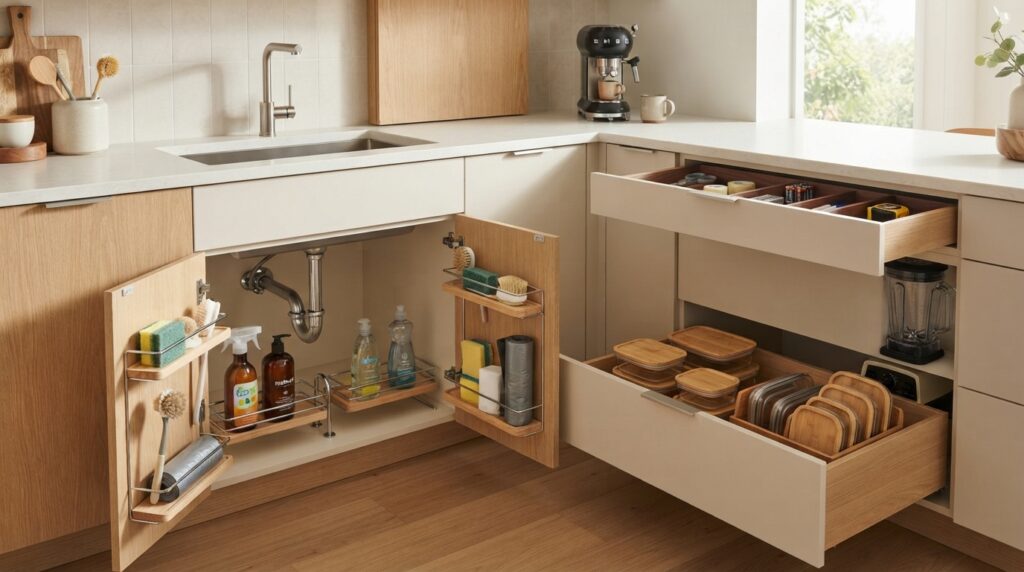
| Trouble Spot | Why It Always Gets Messy | Permanent Low-Maintenance Fix |
| Under-Sink Cabinet | Pipes block shelves and cleaning sprays get pushed to the back | Use narrow pull-out caddies on either side of the drain pipe + a door-mounted rack for sponges and trash bags |
| Food-Container & Lid Drawer | Mismatched tubs and loose lids avalanche every time you reach in | Keep only two nesting container sizes and file all lids upright in a narrow divider bin |
| The “Junk Drawer” | Batteries, rubber bands, tape, scissors, and takeaway menus mix together | Limit it to a single shallow compartmentalized tray, if it doesn’t fit in the tray, it doesn’t stay in the kitchen |
| Countertop Appliance Corner | Blender, toaster, air fryer, and stand mixer crowd prep space | Keep only daily-use appliances on the counter; store weekly appliances on an accessible lower pull-out shelf |
4. Leave 20% Breathing Room in Every Drawer and Cabinet
A cabinet packed edge-to-edge cannot stay organized during a busy week. Aim to fill drawers and shelves to roughly 80% capacity so items slide back into place with one hand:
- Use Adjustable Drawer Dividers Instead of Loose Trays: Custom-sized compartments keep spatulas, peelers, and measuring spoons from tangling without wasting corner space.
- Store Baking Sheets and Cutting Boards Vertically: Upright dividers let you pull out one pan without lifting a heavy stack.
- Apply the “One In, One Out” Rule: Whenever a new mug, water bottle, or gadget enters the kitchen, donate or recycle an older one the same day.
5. Make the System Self-Explanatory for the Whole Household
An organization system only survives if everyone living in the house can follow it without asking questions:
- Label Shelf Edges and Bins Clearly: Simple printed or painter’s-tape labels on shelf lips (“Snacks,” “Lunch Boxes,” “Baking,” “Water Bottles”) guide kids and partners to return items to the right spot automatically.
- Place Everyday Kids’ Items at Waist Height: Storing plastic cups, bowls, and after-school snacks in a lower drawer lets children help themselves without pulling down upper shelves.
- Keep Labels Visible Facing Outward: Turning canister and jar labels toward the front makes it effortless to spot what is running low while writing a shopping list.
6. Build Three Micro-Routines That Take Under Five Minutes
You do not need a complicated cleaning schedule, just three short anchor habits tied to routines you already do:
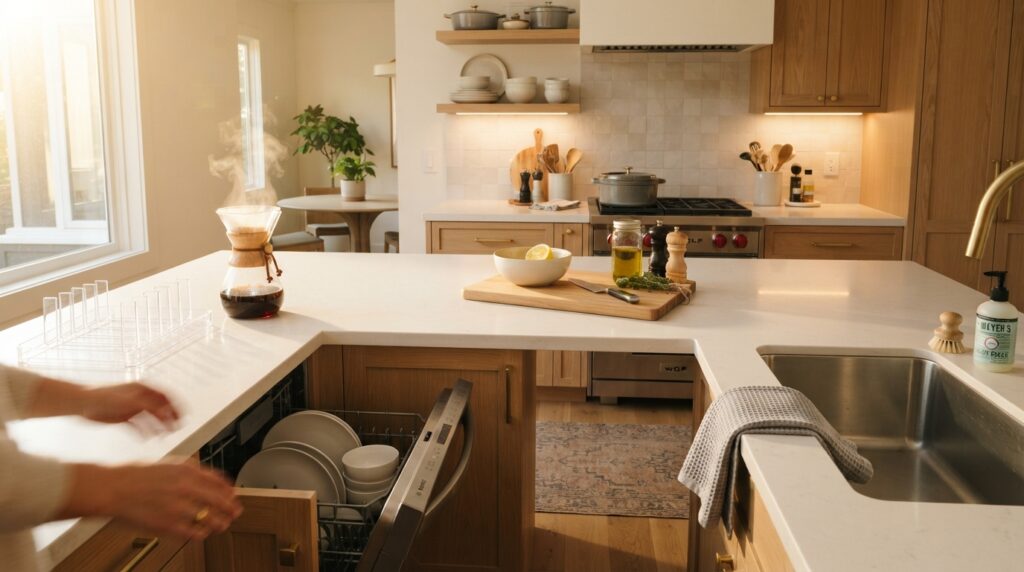
| Routine Timing | 3-Minute Reset Action | What It Prevents |
| While Coffee Brews (Morning) | Unload the dishwasher and clear the drying rack | Stops dirty breakfast dishes from piling up in the sink all day |
| While Dinner Simmers (Evening) | Toss prep scraps, wipe the cutting board, and put away spices/oils | Cuts after-dinner cleanup in half |
| Before Turning Off the Lights (Night) | Load remaining dishes, wipe the main counter, and reset the sink | Waking up to a clean, ready-to-use kitchen every morning |
7. Avoid Four Habits That Undo an Organized Kitchen
Even a thoughtful layout will slowly unravel if a few sneaky habits creep back in:
- Keeping “Just in Case” Duplicates: Holding onto four sets of measuring cups or six travel mugs eats up prime drawer space that everyday tools need.
- Stacking Unlike Items Together: Nesting frying pans inside baking dishes or stacking bowls on top of plates creates friction every time you need the bottom piece.
- Buying Organizers Before Decluttering: Adding plastic bins to an overstuffed cabinet simply packages clutter into smaller boxes.
- Waiting Until the Kitchen Is Overwhelmed: A two-minute tidy after dinner prevents a two-hour cleanup on Saturday morning.
8. Run a 10-Minute Weekly Reset Before Grocery Shopping
Once a week ideally right before making your grocery list spend ten minutes resetting the room before new supplies arrive:
- Clear Countertop Strays: Return migrated items (chargers, mail, stray mugs) to their proper rooms.
- Check High-Traffic Drawers: Straighten utensils, wraps, and food-storage lids before they jam.
- Audit Pantry & Countertop Baskets: Move opened boxes, grains, and fruit forward so they get used first.
- Empty Trash, Recycling, and Compost Bins: Start the week with empty bins so packaging never piles up beside the sink.
A kitchen stays organized when putting things away is faster than leaving them out. Design your Storage around real daily habits, protect 20% open space in your cabinets, and rely on five-minute daily resets and your kitchen will stay calm and functional long after the weekend organizing project is over.