Single-Serve Pod Coffee Machine and Milk Frother Guide: How to Make Café Drinks at Home
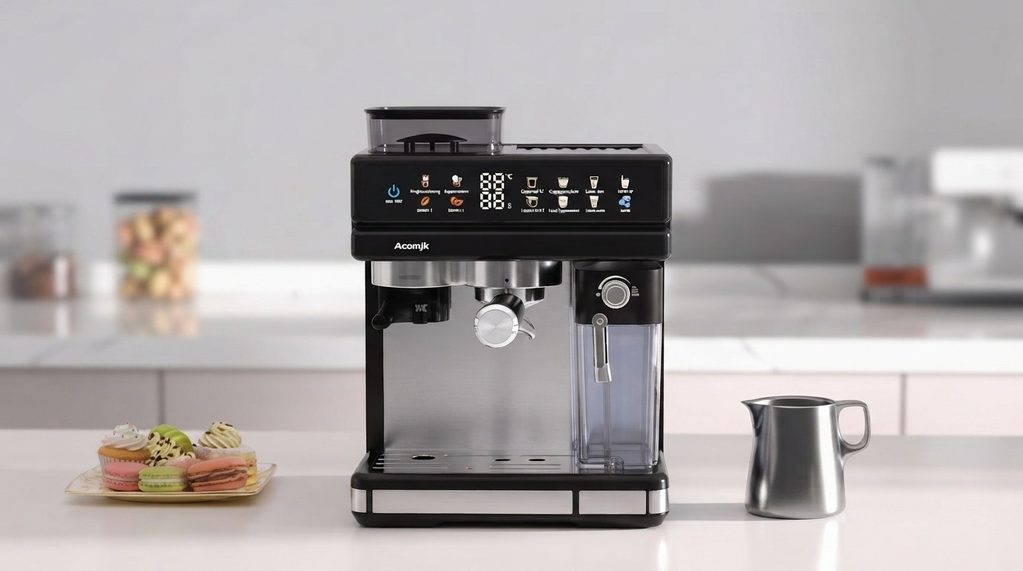
How to pair a compact pod brewer with a multi-function automatic milk frother for lattes, cappuccinos, and cold-foam drinks in under two minutes.
Table of Contents
A single-serve pod Coffee Machine paired with an automatic milk frother turns a basic morning cup into a structured cappuccino, flat white, or iced macchiato in roughly ninety seconds without grinding beans, tamping portafilters, or scrubbing a glass carafe afterward. While standalone pod brewers excel at fast black coffee and concentrated espresso shots, adding a dedicated electric frother bridges the gap between simple convenience and genuine café texture.
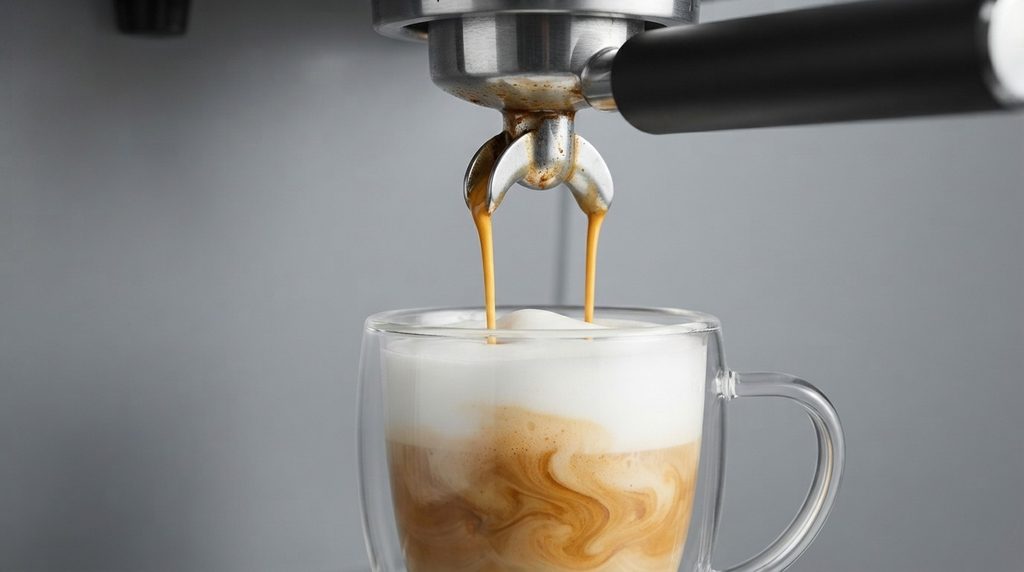
Choosing the right setup comes down to understanding how capsule extraction and induction milk heating work together, picking a footprint that fits your counter, and building a two-minute cleaning habit that keeps milk residue and mineral scale from shortening the life of either machine.
How a Pod Brewer and Automatic Frother Compare to Other Coffee Setups
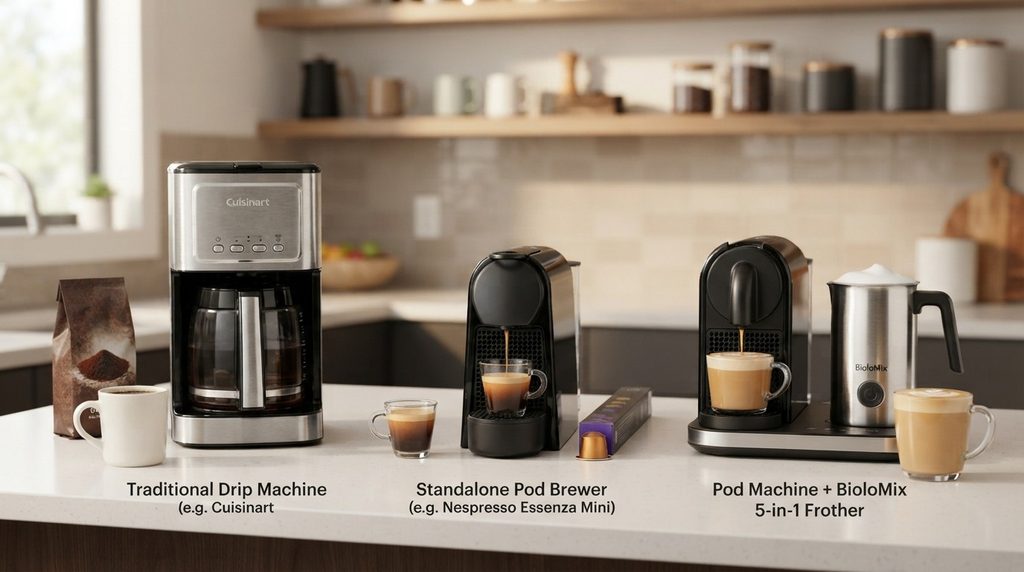
Different home coffee setups trade speed against drink variety and cleanup effort. Comparing the three most common countertop arrangements shows where a pod-and-frother station makes the most sense:
| Feature | Traditional Drip Coffee Maker | Standalone Pod Brewer | Pod Machine + Automatic Milk Frother |
| Primary Function | Brewing full carafes of filter coffee | Single-cup black coffee, lungo, or espresso shots | Full café-style hot and iced milk drinks plus black coffee |
| Drink Texture | Light body with no foam | Smooth body with light espresso crema | Rich coffee base topped with dense, velvety microfoam |
| Best-Suited Drinks | Multi-cup morning filter coffee | Quick Americanos, espressos, and brewed pods | Lattes, cappuccinos, flat whites, hot chocolate, and cold-foam iced coffee |
| Total Prep Time | 8 to 12 minutes | Under 60 seconds | 60 to 90 seconds (running both units side by side) |
| Cleanup Effort | Rinsing carafe and filter basket | Ejecting spent capsule and weekly drip-tray rinse | Ejecting capsule plus a 30-second warm water rinse of the frother pitcher |
Why Pairing a Separate Frother Beats Built-In Steam Wands for Everyday Speed
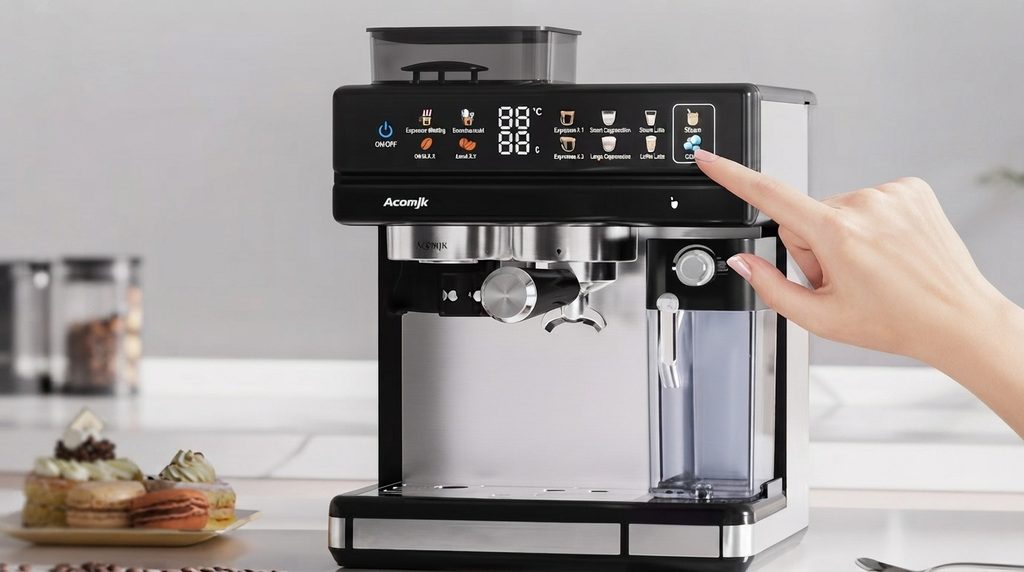
Many entry-level pod brewers include a small attached frothing whisk, while semi-automatic Espresso Machines rely on pressurized steam wands. A separate multi-function electric frother offers three distinct everyday advantages:
- Simultaneous Brewing and Frothing: You can start your capsule extraction and your milk cycle at the exact same moment both finish in just over a minute so hot espresso meets freshly textured milk at peak temperature.
- Precise Temperature Control Without Scorching: Quality digital frothers use internal temperature sensors to heat milk gently to the sweet spot around 60°C to 65°C (140°F to 149°F), preserving natural lactose sweetness instead of boiling or scorching milk proteins.
- Cold Foam and Non-Dairy Versatility: Multi-mode frothers whip cold milk without heat for iced lattes and cold brews, and work reliably with barista-style oat, soy, or almond milks alongside whole dairy milk.
Buyer’s Guide: Four Things to Check Before Buying
Before purchasing a single-serve capsule brewer or an automatic milk frother, evaluate four practical specifications:
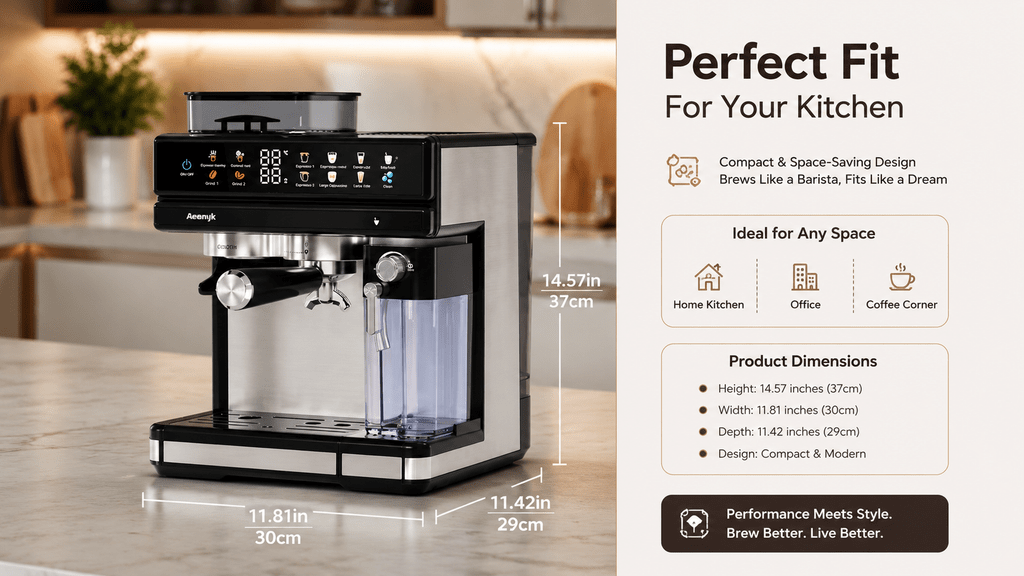
- Counter Footprint and Tank Capacity: If counter space is tight, look for a slim pod brewer under 6 to 8 inches (15 to 20 cm) wide with a removable water reservoir of at least 34 to 40 oz (1 to 1.2 liters) so you are not refilling water every two cups. For the frother, a 150 ml to 300 ml pitcher capacity handles one large latte or two cappuccinos cleanly.
- Stainless Steel Interior With Non-Stick Lining: Choose an electric frother with a food-grade stainless steel jug and a smooth non-stick interior coating. Magnetic-drive whisks (where the whisk spins via magnets through the base rather than a mechanical shaft) eliminate seals that can leak or trap milk residue.
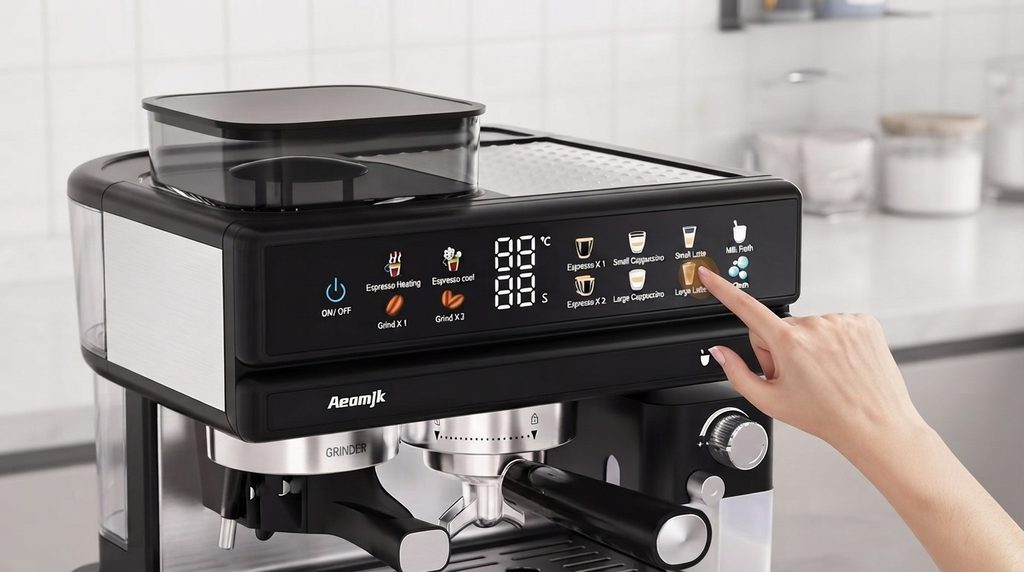
- Multiple Foam and Temperature Modes: Look for clearly labeled settings for dense warm foam (cappuccinos), light airy foam (lattes), heated milk without foam (flat whites or hot cocoa), and cold foam (iced coffee).
- BPA-Free Water Contact Parts: Confirm that removable water tanks, capsule holders, and lids are made from BPA-free food-grade materials and detach easily for hand washing.
Step-by-Step Routine for Café Drinks in 90 Seconds
Running both appliances in a consistent sequence keeps morning prep smooth and prevents lukewarm drinks:
- Fill Water and Cold Milk: Top up the pod machine’s reservoir with fresh filtered water. Pour cold milk into the frother pitcher staying strictly below the lower MAX foam line when frothing, or the upper MAX heat line when warming milk without foam.
- Insert the Capsule and Select Your Froth Mode: Lock your espresso or coffee capsule into the brewer chamber, place a pre-warmed mug underneath, and tap your desired setting on the frother (such as Dense Warm Foam or Cold Foam).
- Start Both Machines Together: Press brew on the coffee machine and start on the frother simultaneously. Both cycles finish within 60 to 90 seconds.
- Pour and Layer: Swirl the frother pitcher gently on the counter to settle large bubbles, then pour the silky microfoam directly over your freshly brewed coffee shot.
(Looking for a versatile countertop frother to pair with your capsule brewer? Explore our recommended Multi-Function Automatic Milk Frothers for models with adjustable temperature controls and stainless steel interiors.)
Cleaning and Descaling Habits That Prevent Breakdowns
Mineral scale inside the brewer’s boiler and dried milk film on the frother base are the two most common causes of premature wear. A simple routine keeps both appliances running reliably:
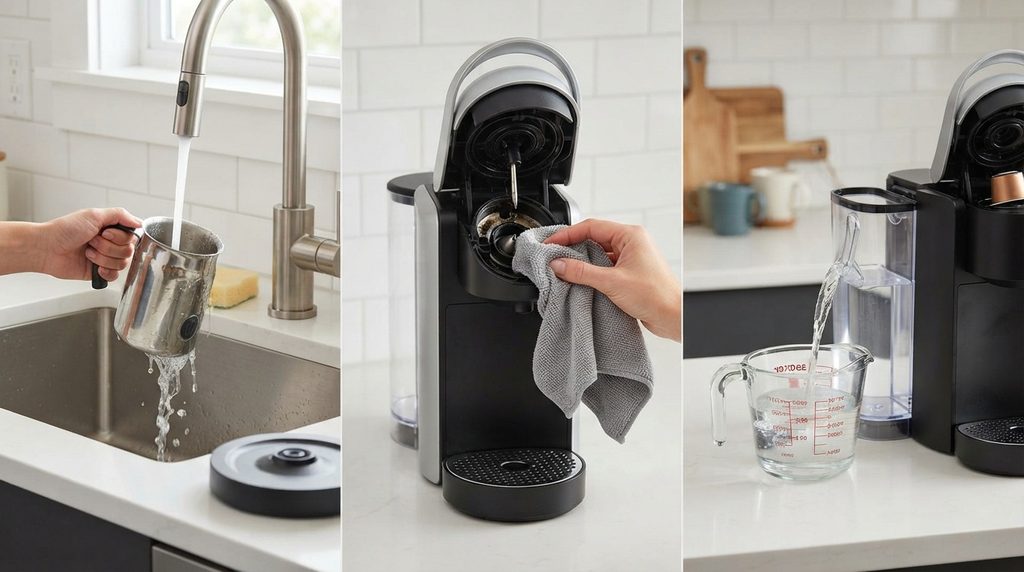
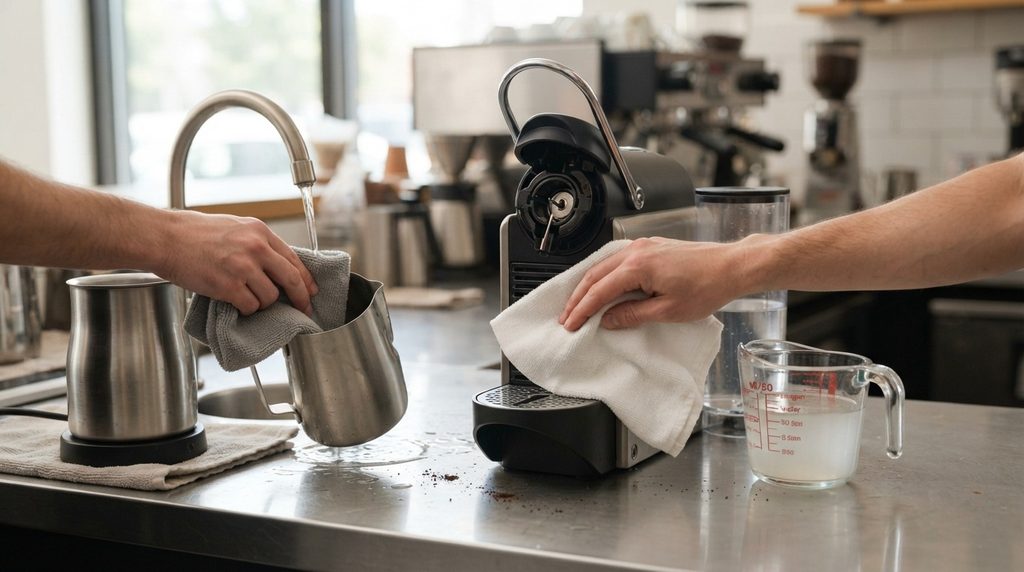
- Rinse the Frother Immediately (30 Seconds): As soon as you pour your milk, rinse the inside of the frother pitcher under warm tap water and wipe the bottom heating plate with a soft, non-abrasive sponge before residual milk dries onto the surface. Never submerge the electrical base or cord in water.
- Flush the Pod Machine Weekly: Once a week, run one blank hot-water cycle without a capsule inserted and wipe the piercing needle plate and drip tray with a damp microfiber cloth to clear coffee oils.
- Descale Every 1 to 2 Months: Run a manufacturer-approved descaling solution or a diluted citric acid solution through the water reservoir every 100 to 150 brews (more frequently in hard-water areas) to remove calcium buildup from internal heating tubes.
Three Simple Ways to Organize a Clutter-Free Coffee Station
- Group Everything Around One Dedicated Outlet: Keep your pod machine, milk frother, and a small spoon rest together on a single tray or corner mat near one wall outlet so coffee prep stays contained in one spot.
- Move Pods Into a Shallow Drawer Organizer: Replace bulky cardboard capsule boxes with a slim bamboo or acrylic drawer tray directly beneath the coffee station so flavors stay visible and countertops remain clear.
- Reset the Station at Night: Refilling the water tank, emptying the used-capsule bin, and setting out your morning mug before bed takes less than two minutes and makes the first cup effortless.
Pairing a reliable single-serve capsule brewer with a temperature-controlled automatic milk frother delivers consistent, café-quality hot and iced drinks every morning without crowding your counter or complicating cleanup.