Carbon Steel Baking Sheets & Stainless Steel Buffet Servers: How to Choose Heavy-Duty Bakeware and Entertaining Pans
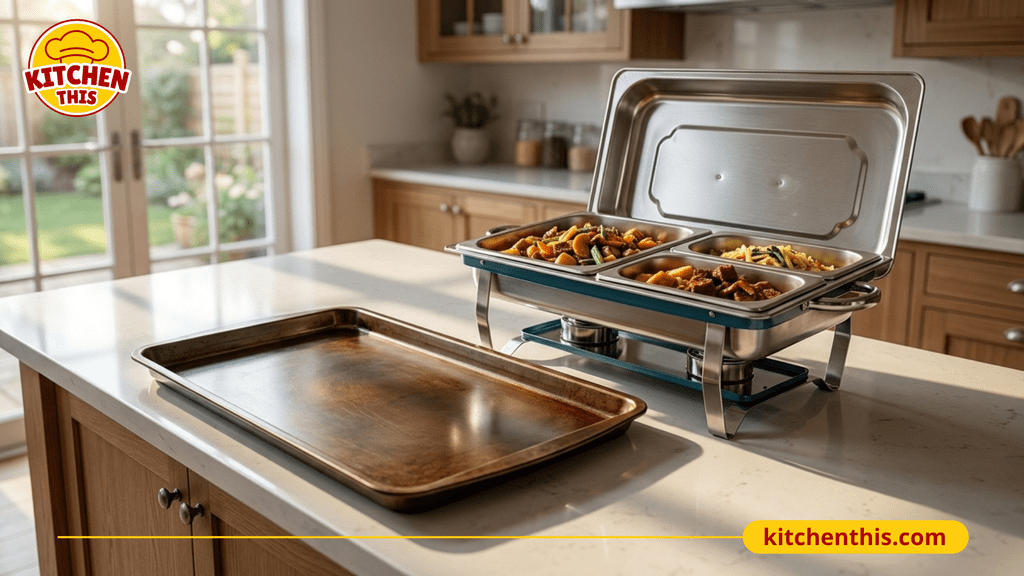
Why heavy-gauge carbon steel outperforms thin aluminum sheet pans for high-heat roasting and how a multi-compartment stainless steel buffet server keeps family gatherings warm without drying out food.
Table of Contents
A heavy-gauge carbon steel Baking sheet delivers crisp, deeply caramelized roasted vegetables, blistered flatbreads, and evenly browned cookies without warping or popping in a hot oven. Unlike lightweight aluminum pans that twist under sudden temperature changes, thick carbon steel retains heat steadily across its entire flat surface and develops a naturally slick, dark patina the more you cook with it.
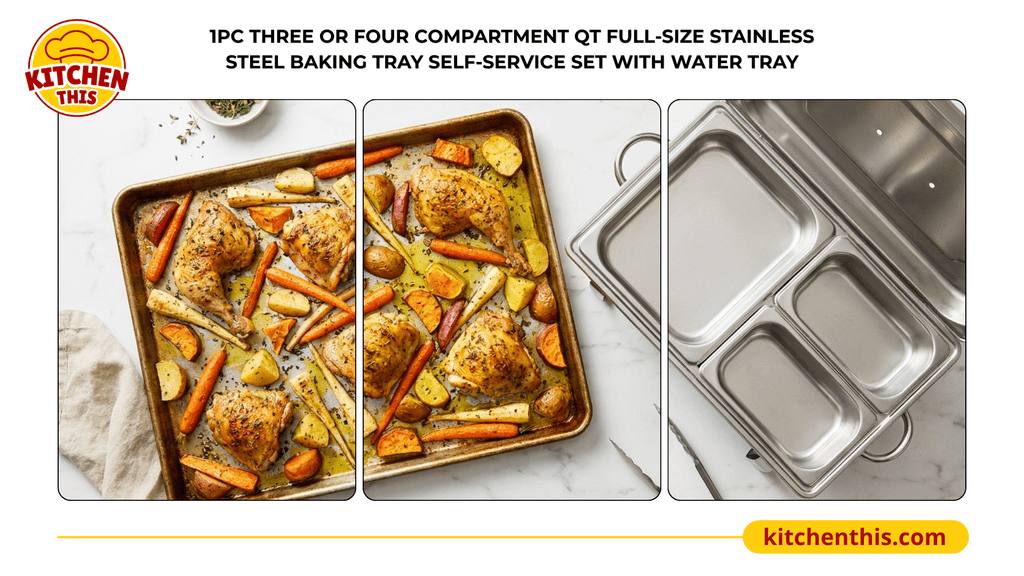
When you are cooking for holiday dinners, weekend family gatherings, or casual buffets, pairing a reliable oven roasting pan with a multi-compartment stainless steel buffet server (chafing dish) solves the second half of hosting: keeping multiple dishes hot and moist on the dining table without crowding your oven or reheating plates in batches.
How Carbon Steel Baking Sheets, Aluminum Pans, and Buffet Servers Compare
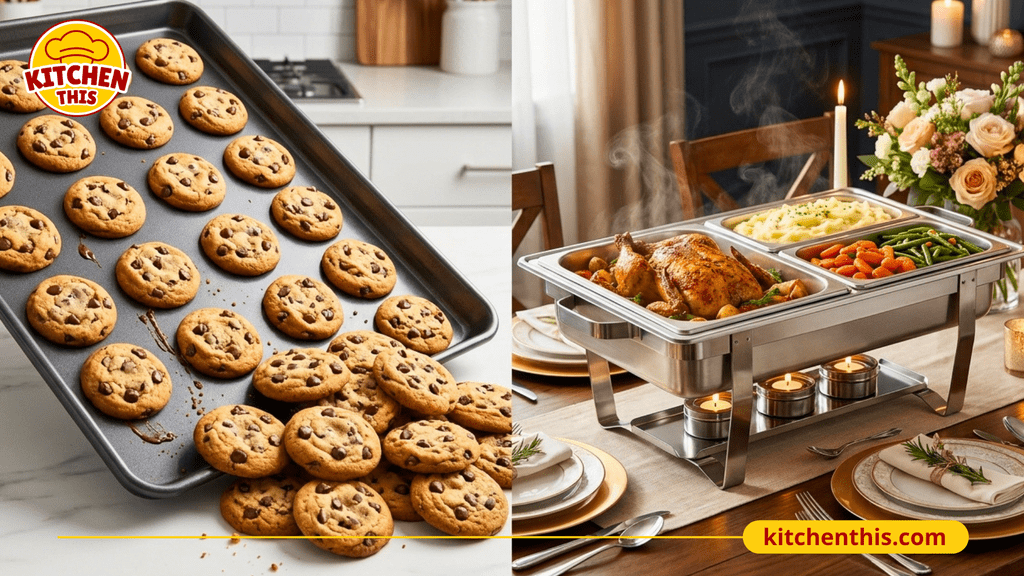
Each type of pan serves a distinct role in everyday cooking and entertaining. Comparing how they handle heat, surface wear, and serving makes it easier to build a practical bakeware lineup:
| Feature | Carbon Steel Baking Sheet | Standard Thin Aluminum Sheet Pan | Multi-Compartment Stainless Steel Buffet Server |
| Primary Kitchen Role | High-heat roasting, sheet-pan dinners, bread, and cookies | Everyday baking, cooling racks, and lining with parchment | Holding cooked entrées and sides warm for family buffets and parties |
| Heat Behavior & Warping | Heavy-gauge steel holds intense heat and resists warping at 230°C–260°C (450°F–500°F) | Heats and cools quickly, but thin gauges can buckle under high broiler or roast heat | Gentle, indirect steam-bath heat keeps food warm without scorching the bottom |
| Surface & Release | Seasoned bare metal develops a natural non-stick patina over time | Bare reactive metal; stains with acidic foods and requires parchment or oil | Non-reactive food-grade stainless steel; smooth, hygienic, and easy to wipe clean |
| Best-Suited Foods | Roasted potatoes, Brussels sprouts, chicken thighs, pizza, and crusty pastries | Sponge cakes, sheet-pan cookies, and reheating rolls | Pasta bakes, carved roasts, rice pilaf, steamed vegetables, and sauces |
| Cleanup & Care | Hand-wash with warm water, dry immediately on the stove, and rub with a drop of oil | Hand-wash with mild soap (dishwasher detergent causes gray oxidation) | Removable food pans wash easily in warm soapy water or the dishwasher |
Buyer’s Guide: What to Look for in Carbon Steel Bakeware and Buffet Trays
Not all metal pans are built to the same thickness or finish standard. Checking four practical details before buying ensures long-term durability:
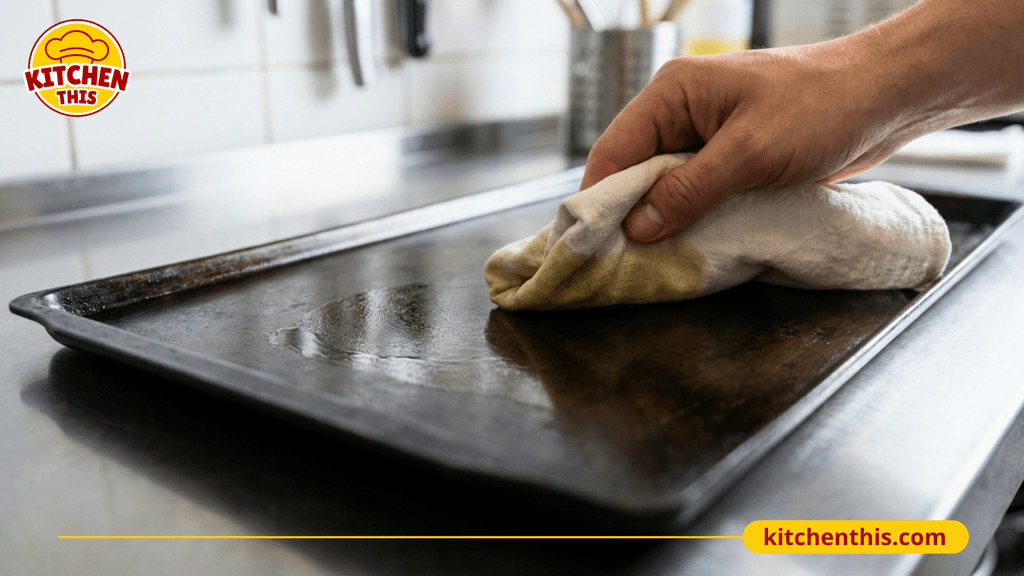
Heavy-Gauge Thickness (1.0 mm to 1.5 mm / 16- to 18-Gauge Steel): Thin carbon steel sheets can still flex when moved from a cold counter into a 450°F oven. Look for heavy-gauge carbon steel with rolled or reinforced rims that stay dead-flat during high-heat roasting and fit comfortably on standard oven racks (half-sheet size, roughly 18 × 13 inches / 45 × 33 cm, fits almost all home ovens).
Pre-Seasoned vs. Raw Unseasoned Finish: Some carbon steel baking sheets arrive pre-seasoned with vegetable oil, while others ship with a protective food-safe wax or oil coating that must be washed off before your first seasoning bake. Either option performs identically once seasoned properly.
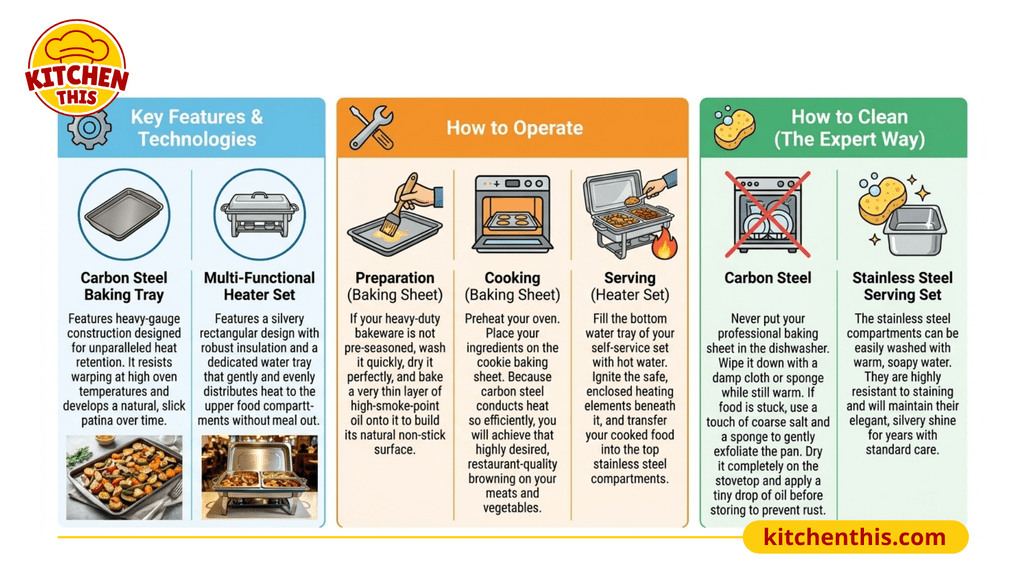
Food-Grade 304 Stainless Steel and Deep Water Pan on Buffet Servers: If you host large family dinners, a full-size rectangular stainless steel buffet set with three or four removable food compartments lets you serve an entrée alongside two or three side dishes from a single station. Check that the lower water pan sits deep enough to hold an even layer of hot water and includes sturdy side handles and a fitted lid to lock in moisture.
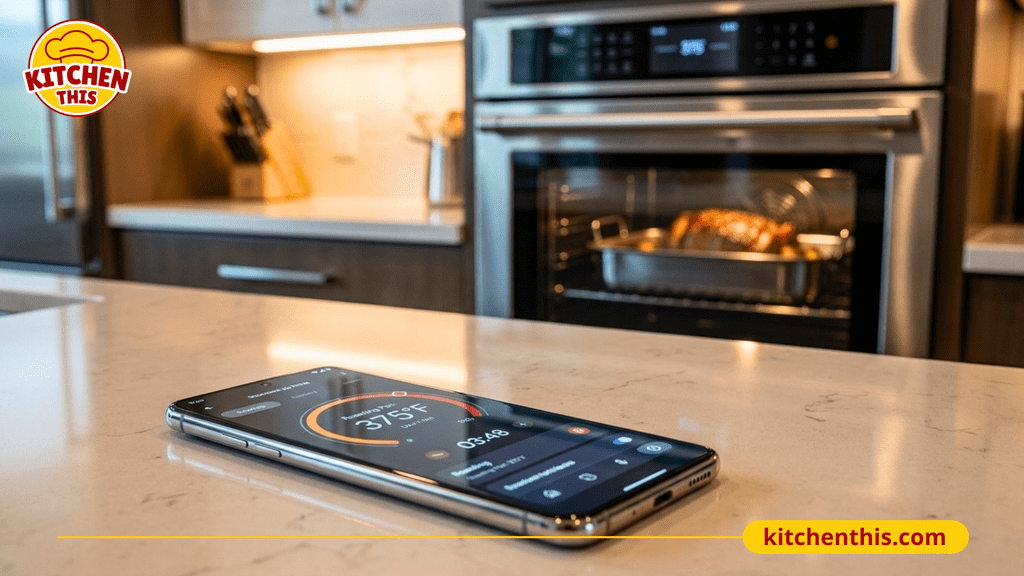
Pair High-Heat Roasting With a Leave-In Probe Thermometer: Because carbon steel conducts heat efficiently into the underside of meats and root vegetables, using a digital oven-safe probe thermometer helps you pull whole chicken or pork tenderloin at exact internal temperatures without overcooking.
How to Season, Use, and Clean a Carbon Steel Baking Sheet
Caring for carbon steel is similar to caring for cast iron or a carbon steel wok a few simple habits prevent rust and build a dark, naturally non-stick surface:
- Initial Seasoning (For Unseasoned Pans): Wash the new pan thoroughly in hot soapy water to remove any factory protective coating, then dry it completely. Rub ½ teaspoon of neutral, high-smoke-point oil (such as canola, grapeseed, or sunflower oil) across the entire surface, then wipe with a clean paper towel until the metal looks nearly dry. Bake upside down at 200°C (400°F) for 45 minutes, then let cool in the oven.
- Cooking Without Sticking: Always preheat the oven fully before sliding in your tray, and toss vegetables or proteins lightly in oil before spreading them in a single layer with breathing room so moisture evaporates instead of steaming.
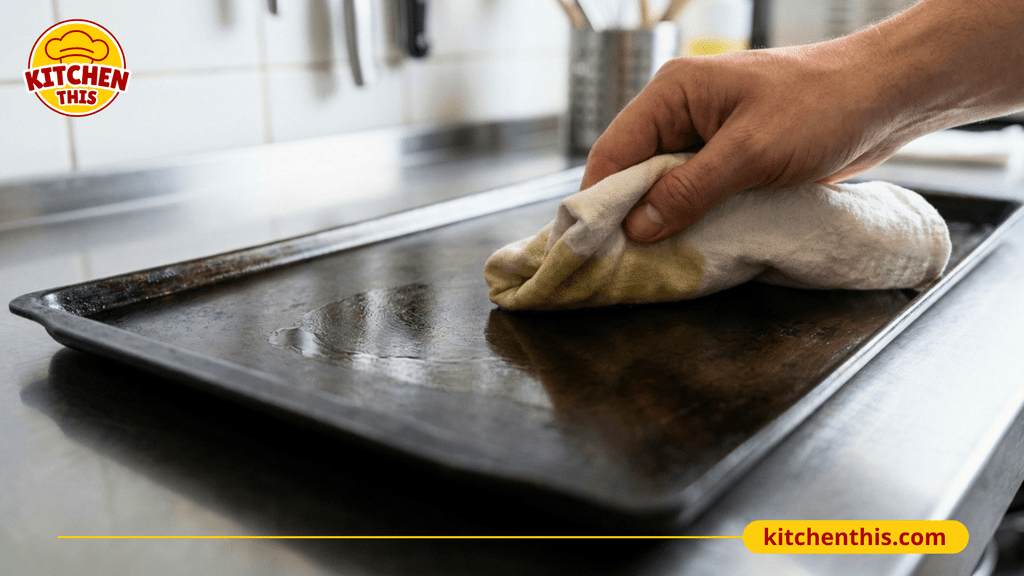
- Hand-Wash and Dry Immediately (Never Use the Dishwasher): After the pan cools, scrape off baked-on bits with a nylon scraper or coarse kosher salt and warm water. Rinse, dry immediately with a towel, warm the pan over a low stovetop burner for 60 seconds to evaporate any hidden moisture, and wipe on a microscopic film of oil before storing.
How to Set Up a Stainless Steel Buffet Server Safely
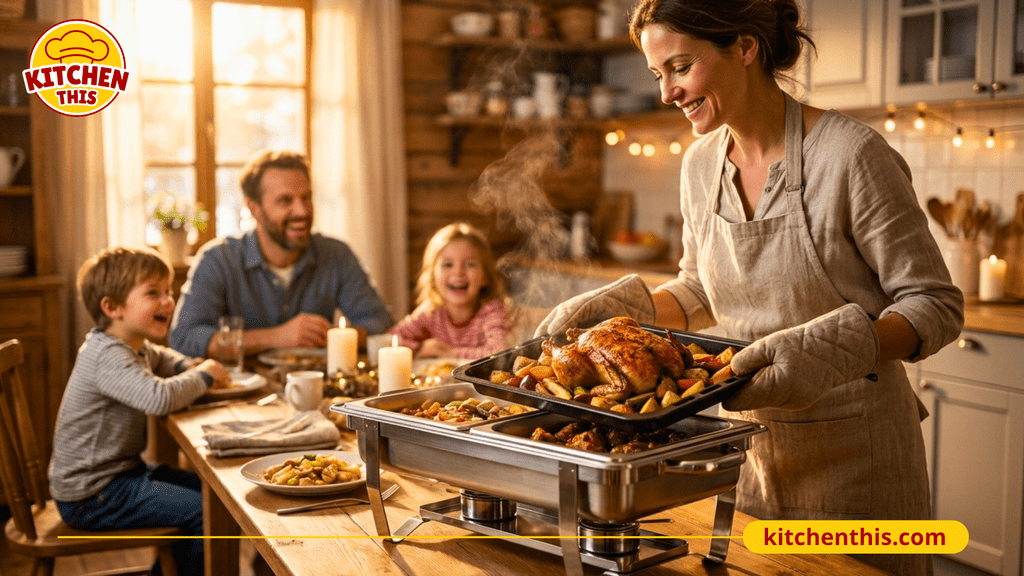
Using a water-pan buffet warmer keeps food appetizing for hours during family celebrations:
- Fill the Lower Water Pan With Hot Tap Water First: Pour 1 to 1.5 inches (2.5 to 4 cm) of hot water into the bottom basin before lighting canned chafing fuel or turning on the warming element starting with hot water brings the steam bath up to holding temperature immediately.
- Keep Lids Closed Until Serving: Place your cooked, hot dishes into the upper stainless steel compartments and keep the lid closed until guests begin serving so steam circulates evenly and prevents rice, pasta, or sliced meats from drying out.
- Wash Compartments After Cooling: Once the event wraps up and the water pan cools completely, lift out the stainless steel food trays and wash them with warm dish soap and a soft sponge to preserve their mirror polish.
Looking to upgrade your roasting pans or hosting setup? Browse our curated Carbon Steel Bakeware & Stainless Steel Buffet Servers guide to compare heavy-gauge sheet pans and multi-compartment serving sets.
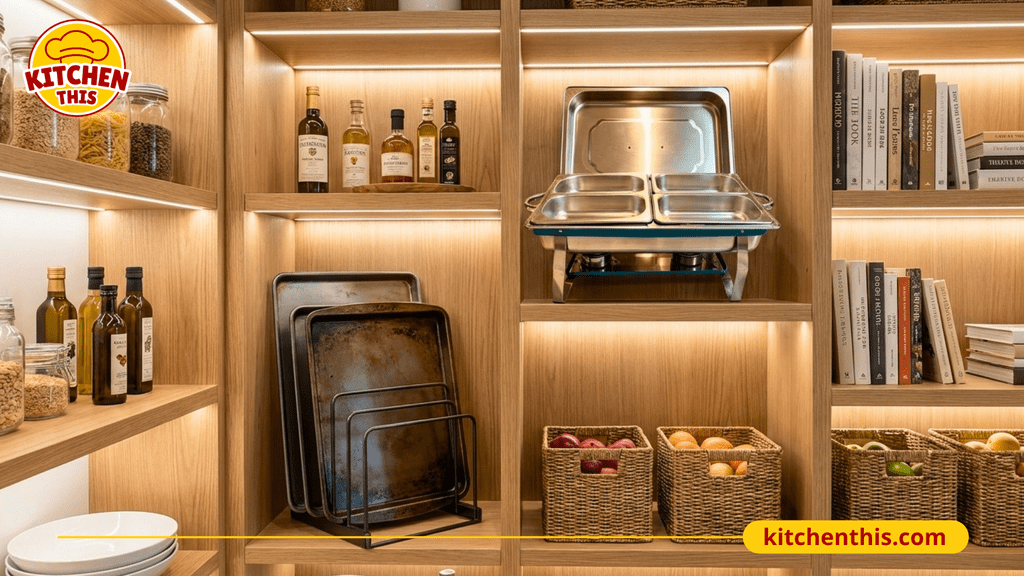
Three simple ways to store large sheet pans and serving sets
Nest Buffet Server Components Together: Store the stainless steel water pan, food compartments, frame, and lid nested inside one another on a high pantry shelf or utility rack so the entire hosting set stays together between holidays.
Store Baking Sheets Vertically With Divider Racks: Sliding sheet pans upright into a lower cabinet fitted with vertical wire dividers lets you pull out the exact tray you need with one hand without clattering through a heavy stack.
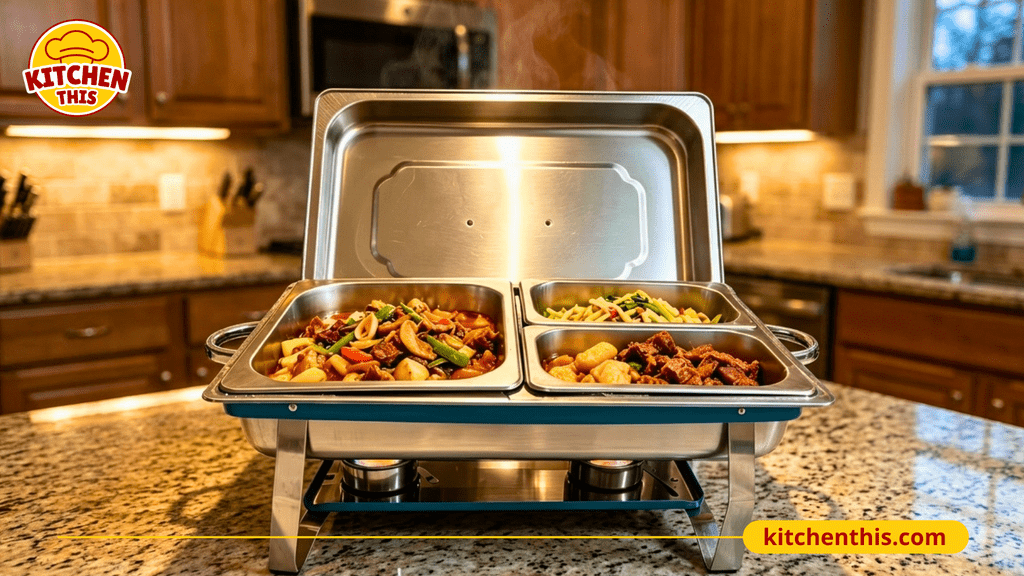
Plan One-Pan Weeknight Roasts: Pairing diced root vegetables, sausages, or chicken thighs on a single heavy-gauge carbon steel tray cuts prep and dishwashing down to one pan and one cutting board.
Investing in a warp-resistant carbon steel baking sheet for everyday roasting and a multi-compartment stainless steel buffet server for family gatherings gives your kitchen durable, chemical-free tools built for decades of reliable cooking.