Bean-to-Cup Espresso Machines: How to Choose the Right Model for Home Use
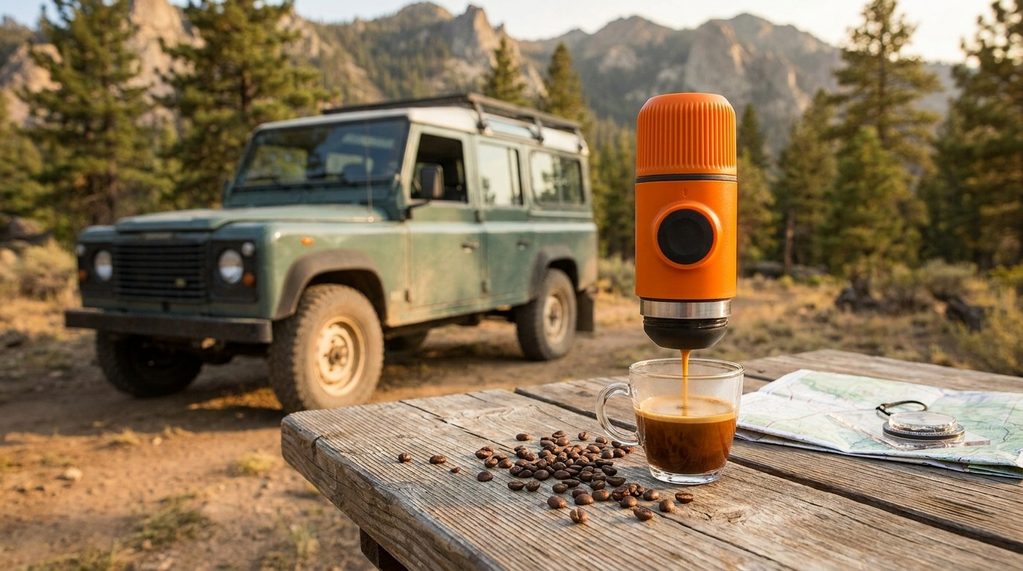
A bean-to-cup espresso machine grinds whole Coffee Beans, doses and tamps the grounds, and brews a fresh shot at the press of a button delivering rich crema without requiring you to learn manual barista tamping or milk-texturing techniques. Because super-automatic machines combine a burr grinder, pressurized brew group, heating block, and often a milk system inside one housing, they represent one of the bigger countertop investments in a home kitchen.
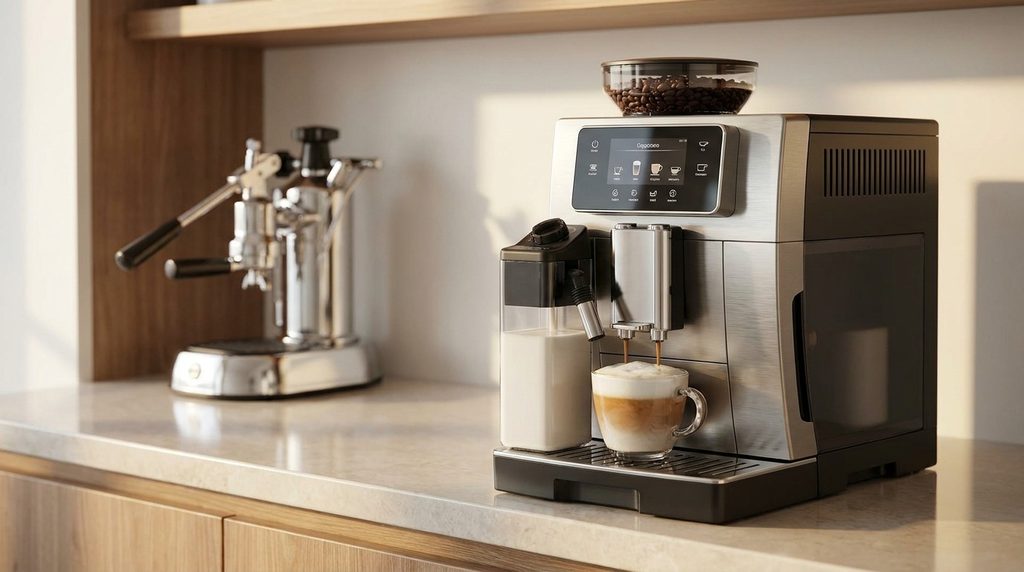
Comparing grinder materials, heating speed, milk-cleaning routines, and counter footprint before you buy helps you choose a machine that fits your morning pace and stays reliable for years.
Table of Contents
How a Bean-to-Cup Machine Compares to Other Espresso Setups
Choosing between a full-size super-automatic machine, a Semi-Automatic Espresso Maker, and a compact portable brewer depends on whether you prioritize one-touch convenience, hands-on control, or portability.
| Feature | Bean-to-Cup (Super-Automatic) Machine | Semi-Automatic Espresso Machine | Heated Portable Travel Espresso Maker |
| Primary Function | Grinds whole beans, tamps, brews, and often froths milk automatically | Brews espresso from ground coffee with manual tamping and steam wand control | Brews single espresso shots on the go using capsules or pre-ground coffee |
| Coffee Inputs | Whole roasted coffee beans (plus bypass chute for pre-ground decaf) | Freshly ground coffee (requires separate grinder) | Ground coffee and compatible espresso capsules (such as NS-style pods) |
| Drink Texture | Consistent espresso crema with automated milk foam | Café-grade crema and microfoam when dialed in manually | Smooth single-shot espresso with a light crema layer |
| Prep & Cleanup Time | 45 to 60 seconds per cup; automatic rinse cycles + weekly brew-unit wash | 3 to 5 minutes per drink; manual portafilter knock-out and wand wipe | 2 to 4 minutes (including water heating); quick sink rinse of cup and adapter |
| Best Fit | Busy households wanting fresh whole-bean espresso and lattes at one touch | Home coffee hobbyists who enjoy dialing in grind size and latte art | Commuters, road trips, office desks, and camping setups |
Four Core Specifications to Check in a Bean-to-Cup Machine
Not all automatic espresso machines extract coffee at the same temperature or handle oily dark-roast beans equally well. Evaluate four key components before comparing brands:
Removable Brew Group and Front-Access Tanks: The internal brew group is where ground coffee is compressed and extracted. Models with a removable brew group let you slide the mechanism out once a week and rinse away old coffee oils under warm tap water far more hygienic than sealed internal units that rely solely on chemical cleaning tablets. Front-loading water tanks and drip trays also save you from dragging a heavy machine out from under upper cabinets every morning.
Conical Burr Grinder Material (Stainless Steel vs. Ceramic): Built-in burr grinders crush beans uniformly rather than chopping them unevenly like blade grinders. Hardened stainless steel burrs cut dense, light-to-medium roast beans quickly and resist chipping if a tiny stone ever slips into a bag of beans, while ceramic burrs run slightly quieter and transfer minimal heat during grinding. Look for at least 5 to 12 grind-size settings so you can fine-tune extraction strength.
Thermoblock Heating System and Temperature Stability: Quality bean-to-cup machines use dual thermoblocks or rapid-heating stainless steel boilers that bring water to the ideal espresso extraction window of 90°C to 96°C (195°F to 205°F) in under 45 seconds and switch quickly between brewing temperature and steaming temperature without long waits.
Integrated Milk Carafe vs. Steam Wand:
One-Touch Milk Carafe Systems draw cold milk directly from a detachable pitcher, steam and froth it internally, and dispense layered cappuccinos or lattes automatically. Check that the carafe includes an automatic steam-flush cycle and fits easily inside your refrigerator door between uses.
Manual or Panarello Steam Wands take an extra 30 seconds to texture milk in a pitcher, but they have zero internal milk tubes to clog and take five seconds to wipe clean with a damp cloth.
When a Heated Portable Espresso Maker Makes Sense
While a countertop bean-to-cup machine anchors the home kitchen, many coffee drinkers also look for a compact travel brewer for road trips, office desks, or camping without relying on drive-thru coffee shops.
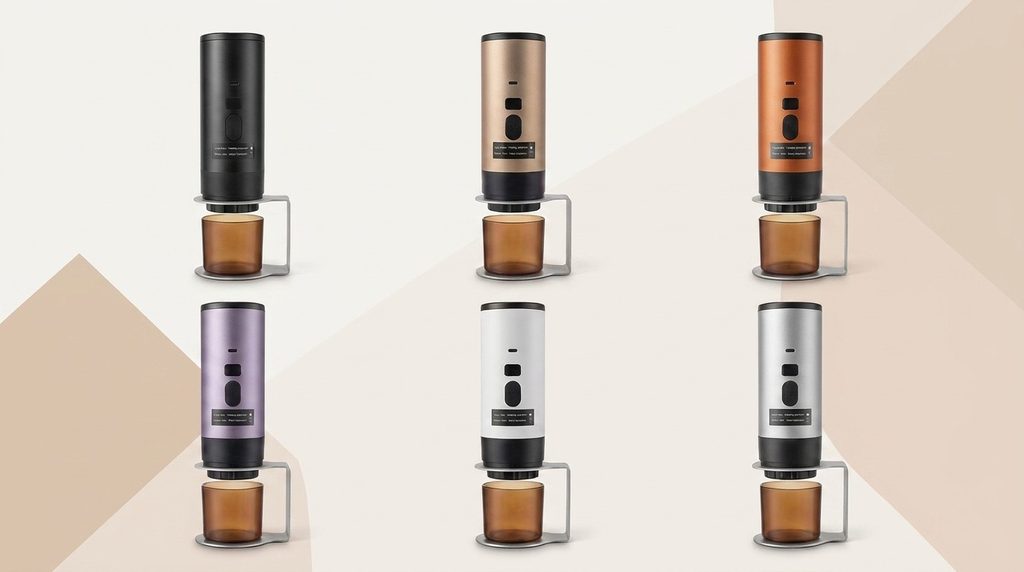
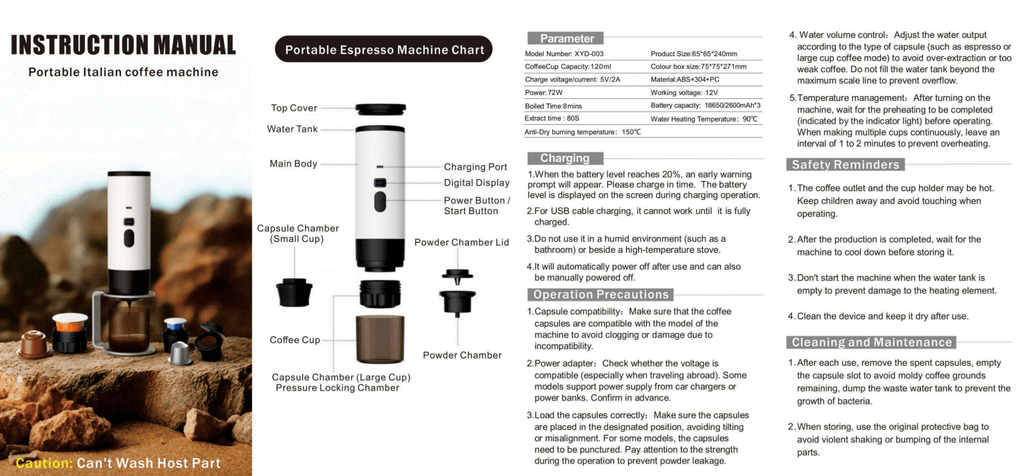
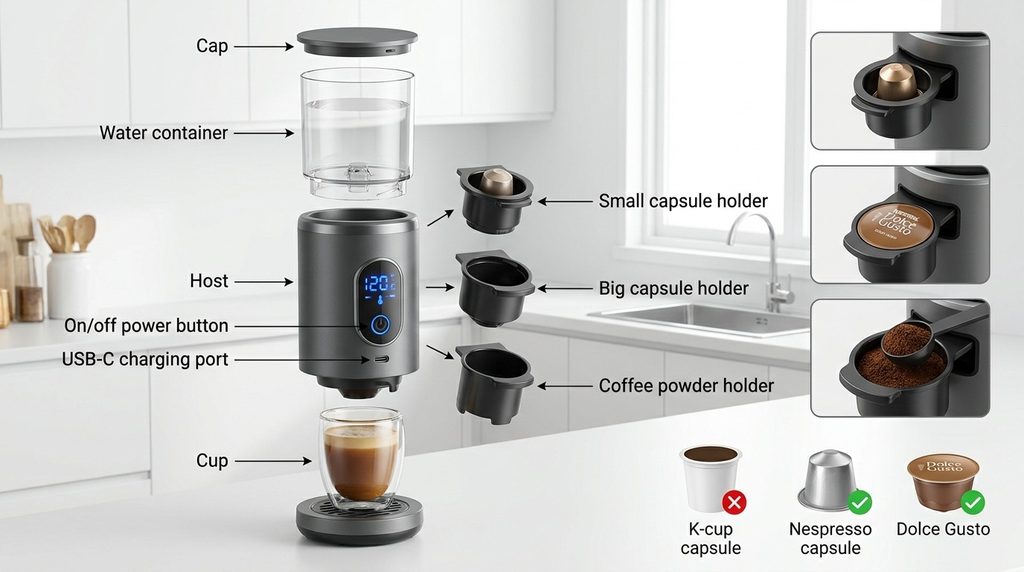
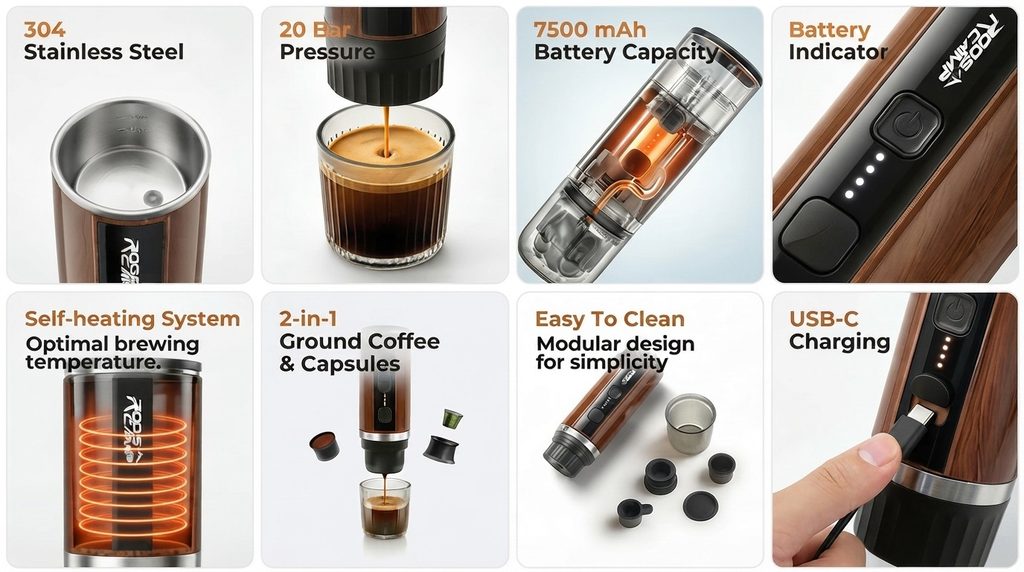
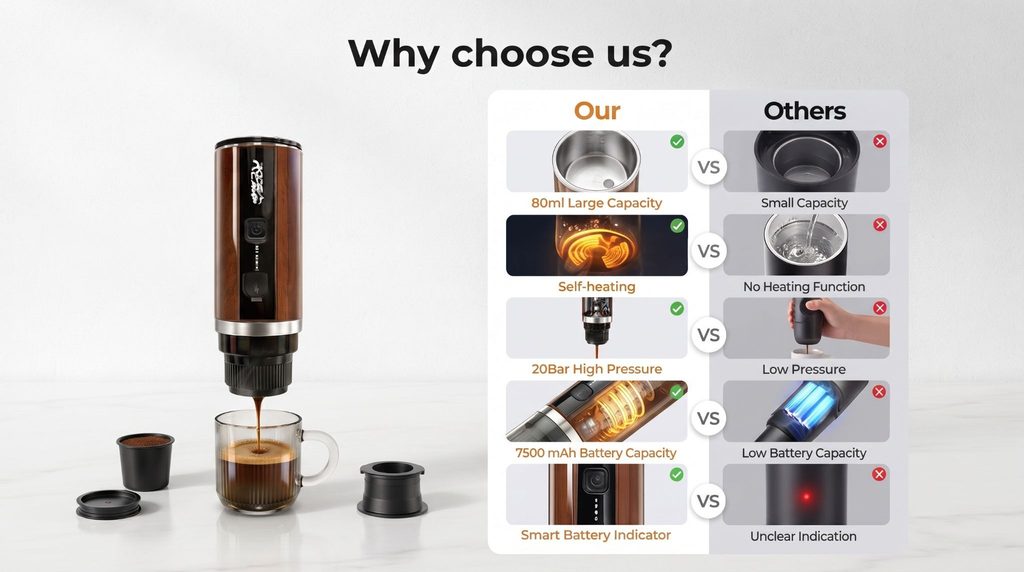
Modern USB-rechargeable heated portable espresso makers solve the biggest limitation of older hand-pump travel brewers by building a compact battery-powered heating element and a 15-bar micro-pump directly into a thermos-sized cylinder:
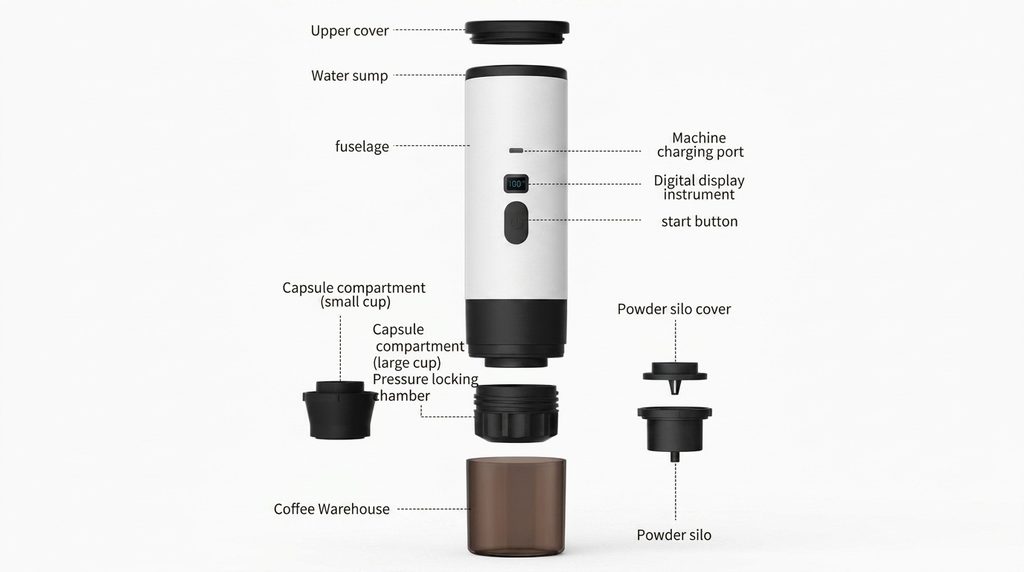
- Built-In Water Heating: Instead of carrying a separate thermos of boiling water, an integrated heating chamber warms cold water to brewing temperature in a few minutes using internal battery power, a USB-C charger, or a 12V car outlet.
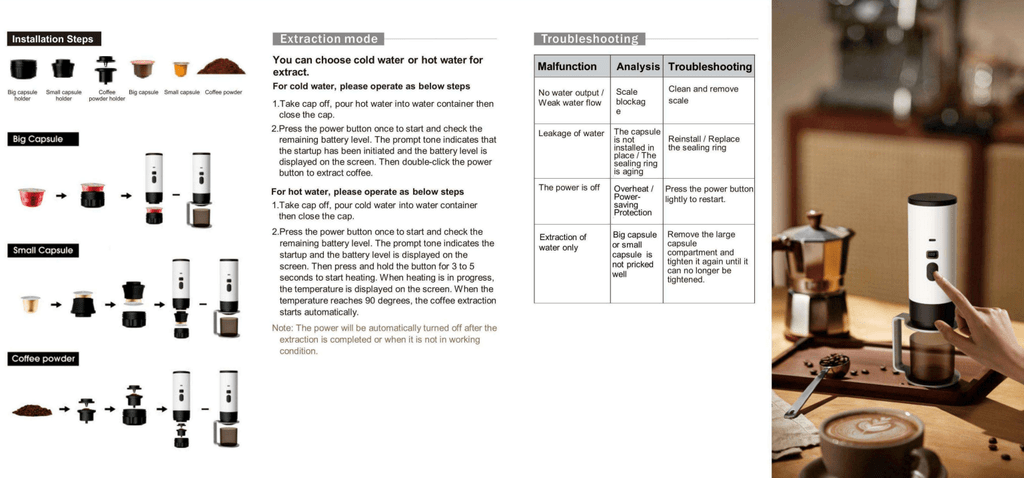
- Dual Coffee Compatibility: Many compact travel models accept both standard Nespresso-style capsules for zero-mess convenience and a reusable ground-coffee basket for your favorite freshly ground roast.
- Digital Battery and Temperature Display: An LED status indicator shows remaining battery charge and heating progress so you know how many heated shots you can pull before recharging.
If you are comparing models for home counters or daily commutes, browse our curated Portable & Countertop Espresso Machines guide to see top-rated options side by side.
Operating and Cleaning Habits That Keep Espresso Tasting Fresh
Even the most expensive bean-to-cup machine will produce bitter, flat shots if stale oils and mineral scale build up inside the brew path. A simple maintenance routine protects flavor and pump life:
- Use Medium-Roast Beans Over Ultra-Oily Dark Roasts: Heavily oil-coated dark roast beans can clog automatic hopper chutes and coat internal burr teeth over time. Smooth medium or medium-dark espresso blends feed reliably and grind cleanly.
- Rinse the Brew Group Weekly (Countertop Models): Once a week, power off the machine, remove the side or front service door, slide out the brew group, and rinse it thoroughly under lukewarm water (without soap, which strips food-safe lubricant from the gears). Let it air-dry before reinserting.
Flush Milk Tubes After Every Drink: If your machine uses a milk tube or carafe, run its quick steam-purge cycle immediately after pouring your latte so milk proteins never dry inside narrow nozzles.
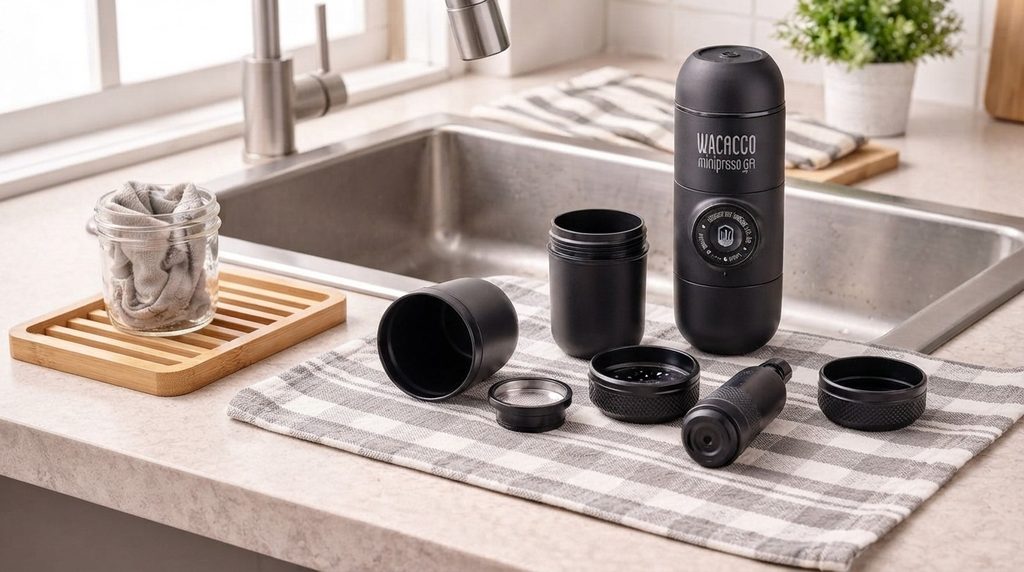
Clean Portable Brewers Right After Cooling: For a travel espresso maker, unscrew the drinking cup and capsule or filter basket once cool, discard spent grounds, rinse all removable parts under warm water, and wipe the motorized body with a damp cloth never submerging the charging port or main housing.
Descale on Schedule: Always follow your machine’s water-hardness test strip setting and run manufacturer-approved descaling solution whenever prompted to prevent calcium scale from blocking thermoblock channels.
Three simple ways to Organize Your Home Coffee Station
- Group Everything on One Countertop Mat or Tray: Keep your Espresso Machine, knock box, demitasse cups, and spoons together near a dedicated wall outlet so stray coffee grounds stay contained in one easy-to-wipe zone.
- Store Whole Beans in Opaque, Airtight Canisters: While clear jars look tidy, direct sunlight degrades coffee oils quickly use UV-tinted or opaque airtight canisters to keep whole beans aromatic for weeks.
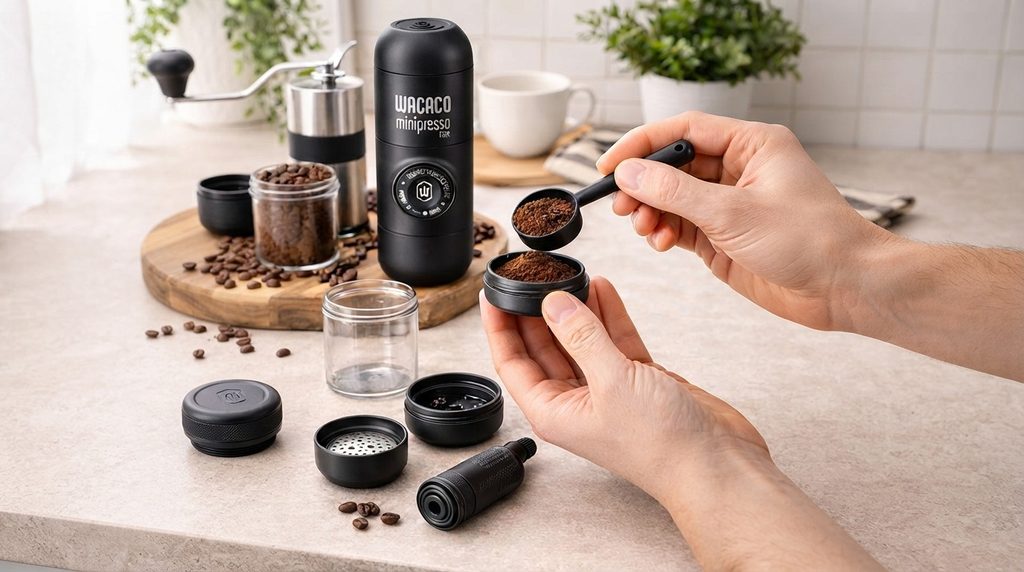
. Prep Water and Beans the Night Before: Topping up the water reservoir, emptying the used-puck bin, and setting out your morning mug before bed makes your first button press effortless.
Choosing a bean-to-cup espresso machine with a reliable burr grinder, front-access tanks, and an easy-to-rinse brew group gives you consistent café-quality espresso every morning with minimal cleanup.