How to Choose and Safety Use a Kitchen Mandoline Slicer
Slicing potatoes for a gratin, shaving fennel for a salad, or shredding half a head of cabbage with a chef’s knife takes time and rarely produces identical thickness. When slices vary between 1/16 inch and 1/4 inch, thin pieces burn or turn mushy while thicker ones stay undercooked. A kitchen mandoline solves that consistency problem quickly provided you choose a stable model and treat its exposed blade with real respect.
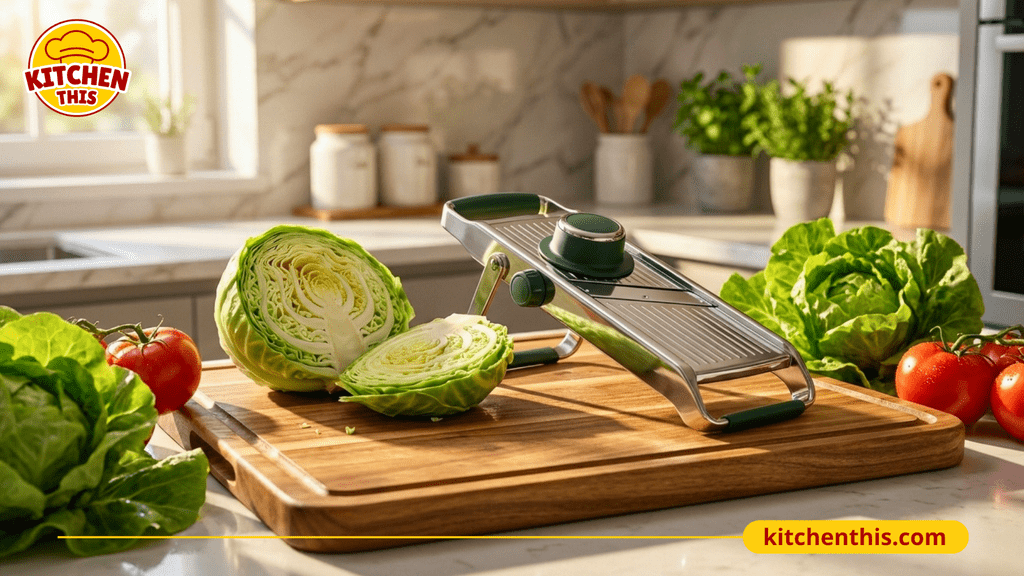
What a Mandoline Actually Does Best
A mandoline is a specialized slicing plane, not an all-purpose prep tool. Its main value is speed and repeatability on firm produce:
- Even cooking: Uniform 1/8-inch potato or zucchini slices roast, pan-fry, and simmer at the exact same rate.
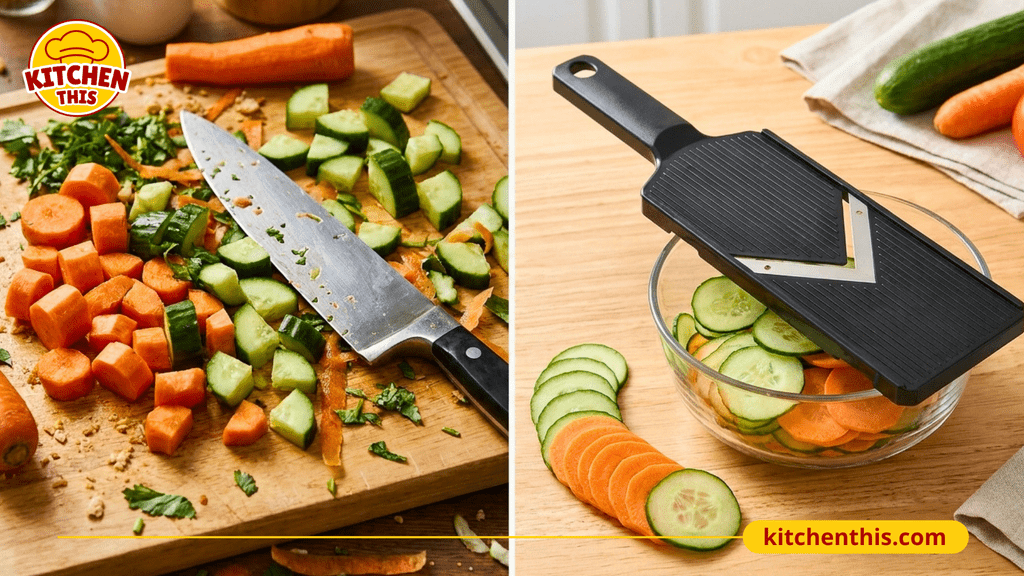
- Paper-thin raw cuts: Translucent cucumber, radish, red onion, or apple slices are difficult to achieve consistently by hand without restaurant Knife Skills.
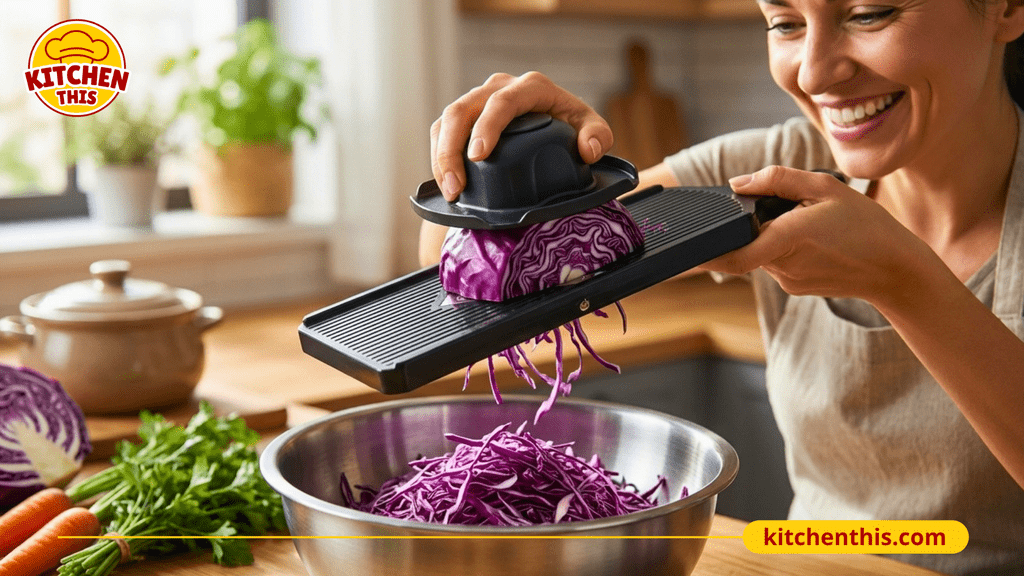
- Fast cabbage and slaw prep: Shredding cabbage or carrots takes a fraction of the time required with a knife and creates far less mess than hauling out a full-size food processor.
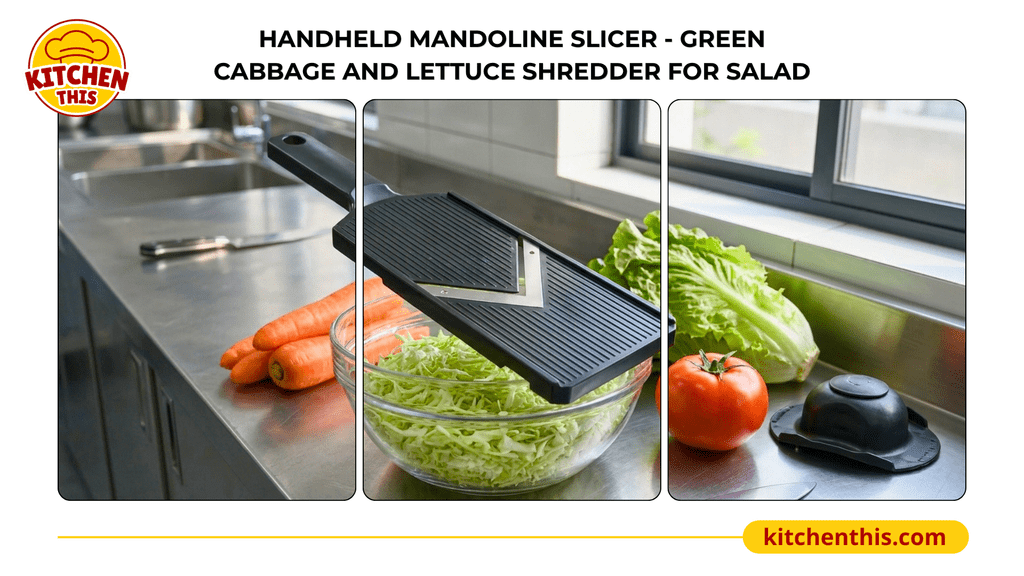
The trade-off is cleanup and risk. A mandoline is only worth pulling out when you are slicing more than a single onion or tomato, and its blade is sharp enough to cause a serious cut in a split second if your hand slips.
Mandoline Slicer vs. Chef’s Knife vs. Food Processor
Before buying a mandoline, it helps to see where it outperforms tools you already own and where it falls short.
| Tool | Primary Function | Slice Consistency | Best Food Types | Main Trade-Off |
| Mandoline Slicer | Rapid flat slicing, crinkle cuts, and julienne strips | Very high; locks to an exact millimeter or fraction-of-an-inch thickness | Potatoes, cabbage, onions, cucumbers, apples, firm root vegetables | High finger-cut risk; struggles with soft tomatoes, meats, and herbs |
| Traditional Chef’s Knife | Chopping, dicing, mincing, and general slicing | Variable; depends entirely on hand control and blade sharpness | Everything from soft herbs and tomatoes to dense squash and proteins | Slower for high-volume thin slicing; takes practice for uniform thickness |
| Electric Food Processor | Bulk shredding, slicing, chopping, and pureeing | Good for bulk, though soft produce can bruise or tear | Large batches of coleslaw, grated cheese, sauces, and dough | Heavy to lift, takes significant cabinet space, and has multiple parts to wash |
What to Look for Before Buying a Mandoline
Not all mandolines handle the same produce well. Handheld models work great over a bowl for quick onions or cabbage, while freestanding models with folding legs give better leverage for dense potatoes and turnips.
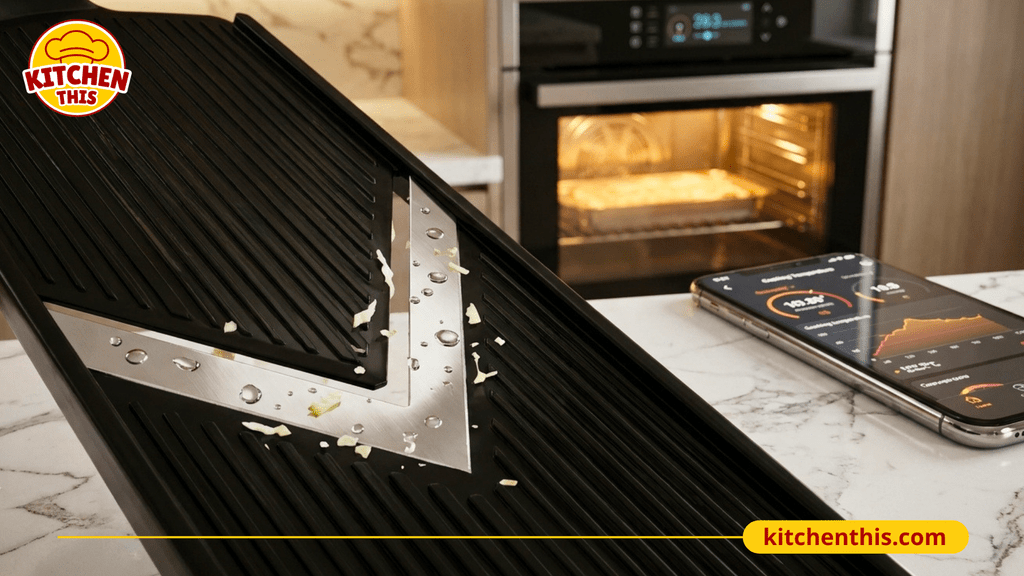
- Blade Angle and Steel Quality: Look for hardened stainless-steel blades. An angled (diagonal) or V-shaped blade slices through tough carrot or sweet potato fibers with much less resistance than a straight horizontal blade, which tends to catch and crush produce.
- Reliable Thickness Adjustment: Dial-controlled decks are safer and faster than models that force you to swap loose plastic insert plates with bare fingers. Look for a clear range from paper-thin (around 1 mm) up to 1/4 inch or thicker, plus a zero/lock setting for storage.
- Wide Slicing Deck: A wider runway lets you slice large russet potatoes, wide onions, or wedges of green cabbage without trimming them down into tiny pieces first.
- Non-Slip Feet or Bowl Notches: Rubberized feet keep freestanding slicers planted on wet countertops, while underside notches let handheld mandolines hook securely onto the rim of a mixing bowl.
- Usable Hand Guard: Many included food holders have short plastic prongs that slip off dense vegetables. Look for a guard with long steel pins and plan on pairing it with a cut-resistant kitchen glove anyway.
If you are looking for a compact handheld option for everyday salad prep, cabbage shredding, and quick slicing, you can check dimensions and blade specs on the Handheld Mandoline Slicer listing. (Affiliate link: I may earn a small commission at no extra cost to you.)
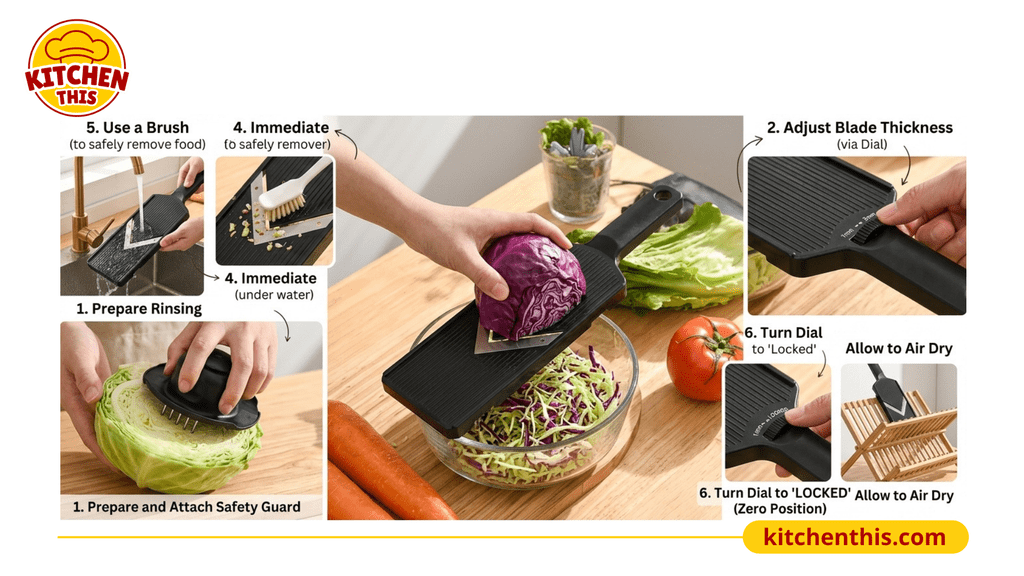
How to Use a Mandoline Without Cutting Yourself
Most mandoline injuries happen in the final two inches of a vegetable when people try to rush the last piece without protection.
- Wear a Cut-Resistant Glove: Even if your mandoline comes with a plastic food guard, wearing an ANSI A5-rated cut-resistant glove on your slicing hand gives reliable protection when the guard slips or when you are working with awkward shapes.
- Stabilize the Base: Set a freestanding mandoline on a clean, dry counter (or over a damp paper towel if the feet slide). For a handheld model, hook the notches firmly over a heavy mixing bowl so it cannot twist mid-stroke.
- Create a Flat Starting Face: Cut round potatoes, onions, or apples in half first so you have a flat, stable surface to grip.
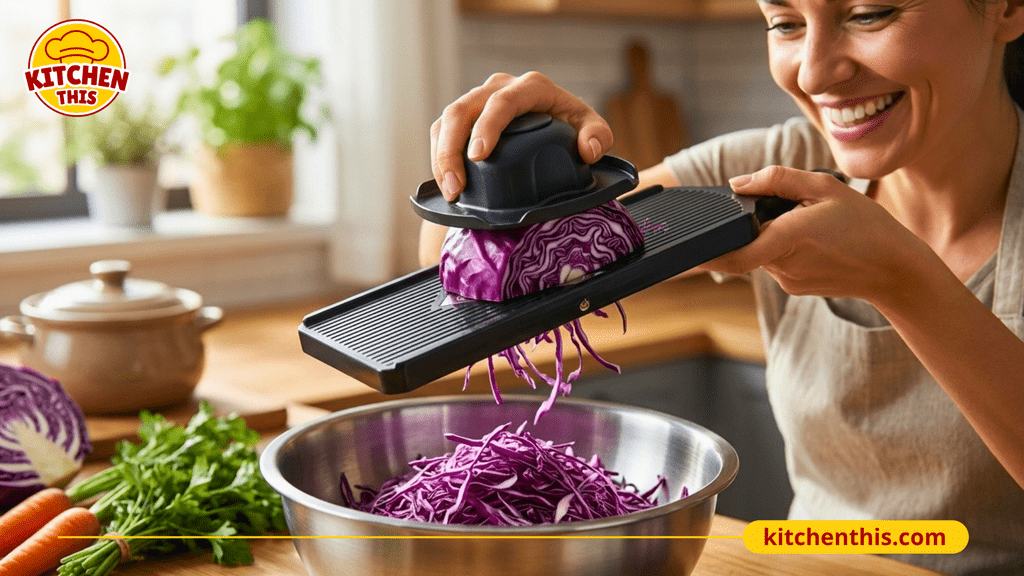
- Set Thickness and Engage the Guard: Dial in your slice thickness, press the prongs of the safety guard firmly into the uncut side of the vegetable, and keep your fingers above the guard’s rim.
- Use Smooth, Steady Strokes: Slide the food down the deck in one even pass without pressing down hard forcing produce into the blade causes jamming and sudden slips. Stop slicing before the guard touches the deck, and finish small end nubs with a knife.
Cleaning and Storing Your Mandoline Safely
- Rinse Immediately: Wash the mandoline under warm running water as soon as you finish slicing. Potato starch and dried cabbage juice harden quickly around blade seams and become much harder to scrub off later.
- Use a Long-Handled Brush, Never a Sponge: Wiping across a mandoline blade with a sponge puts your fingers millimeters from exposed steel. Use a stiff-bristled dish brush with warm soapy water to clean both sides of the blade safely.
- Skip the Dishwasher: High dishwasher heat warps plastic adjustment dials and dulls fine blade edges faster. Hand-wash and let the unit air-dry upright on a rack.
- Lock the Blade Before Drawer Storage: Always turn the thickness dial back to the locked or zero position or snap on the blade cover before putting the mandoline in a drawer or cabinet.

Practical Ways to Fit a Mandoline Into Your Kitchen Routine
- Store It Where You Prep: Keep the mandoline in the same drawer or cabinet bin as your cutting boards and vegetable peelers rather than buried in a back cupboard. If it takes two minutes to dig out, you will default to a knife every time.
- Shred Once for Two Meals: Because cleanup takes the same two minutes whether you slice one cup or six, shred a whole head of cabbage or slice extra onions at once. Store the leftovers in an airtight container for quick stir-fries, tacos, or slaw over the next two days.
- Keep a Box Grater Only If You Need Fine Grating: A mandoline handles slices and julienne strips far better than a box grater, though you will still want a traditional grater or microplane for hard cheeses, citrus zest, and garlic.
Used with a cut-resistant glove and rinsed right after prep, a simple mandoline turns tedious slicing into the fastest step of dinner without sacrificing safety.
Used with a cut-resistant glove and rinsed right after prep, a simple mandoline turns tedious slicing into the fastest step of dinner without sacrificing safety. If you are comparing models for everyday salad prep and cabbage shredding, you can check dimensions, blade details, and current pricing on the Handheld Mandoline Slicer