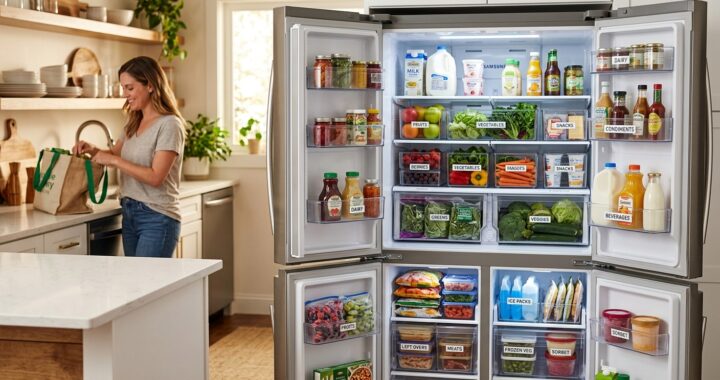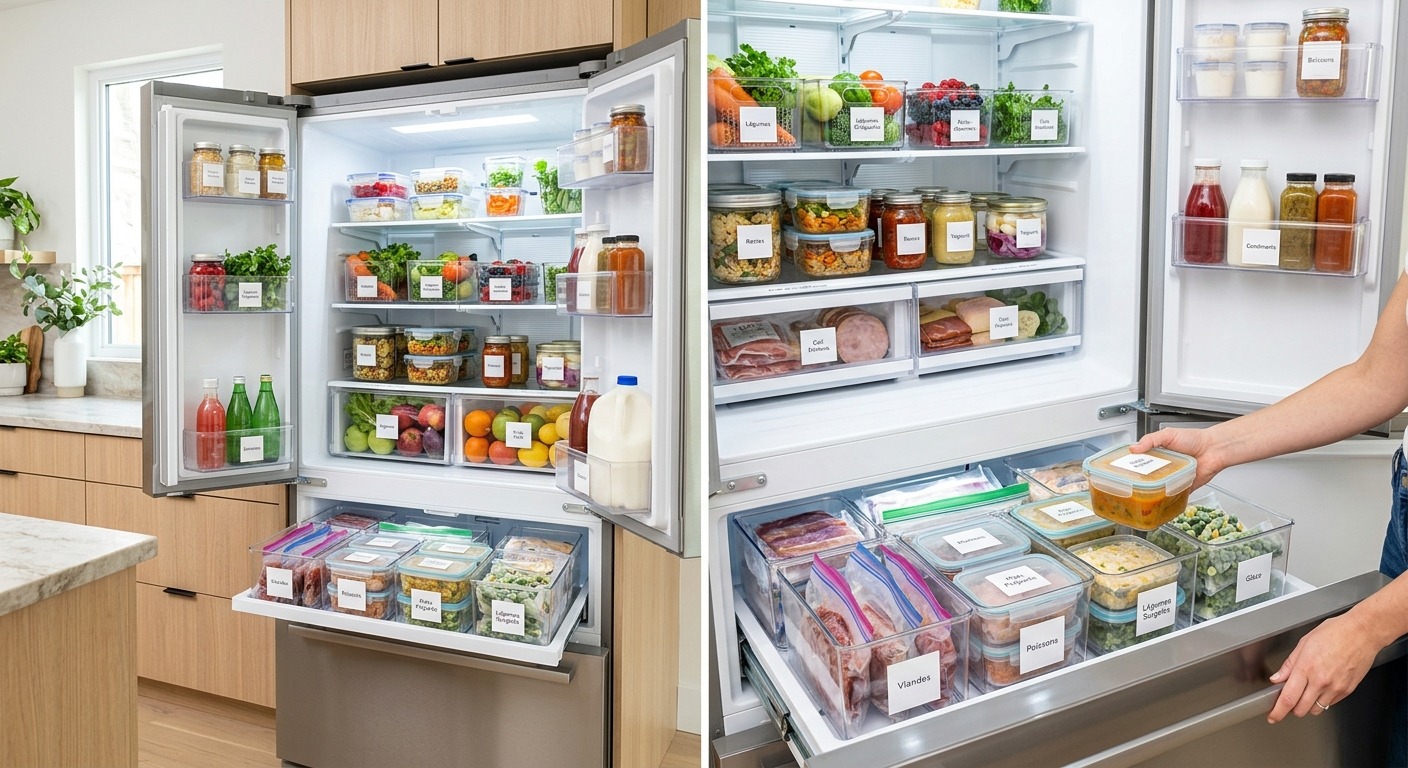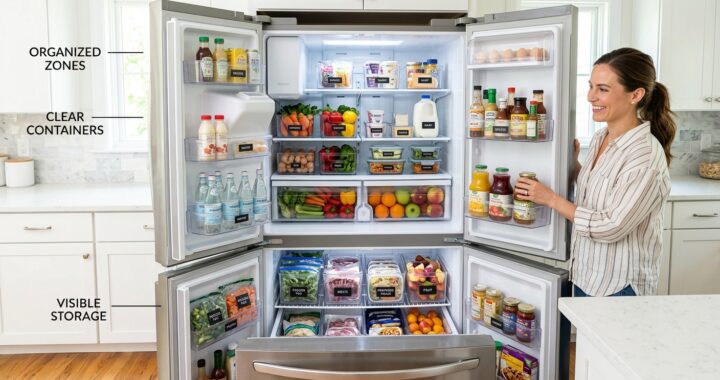
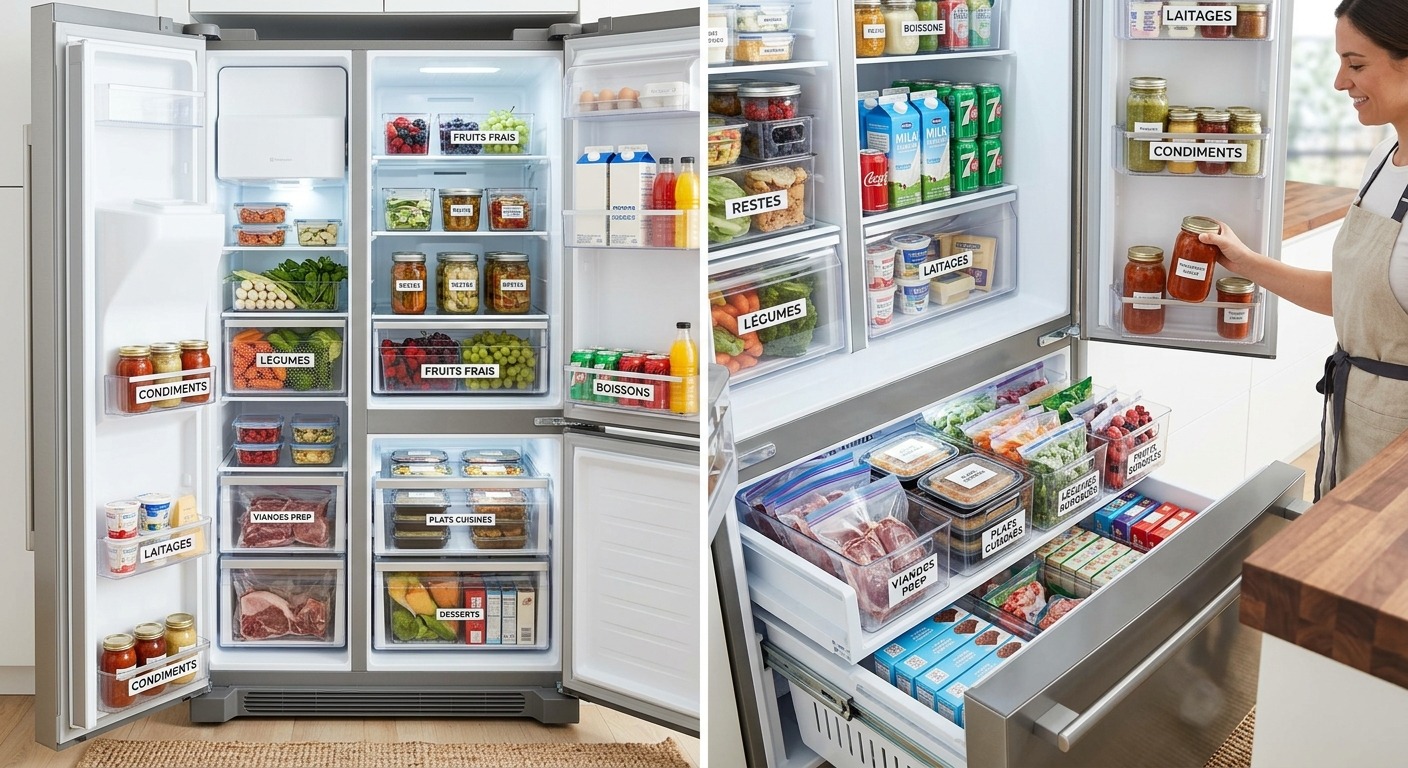
Simple Kitchen Organization That Actually Works
A messy refrigerator usually isn’t a storage problem. It is a system problem.
When everything has a place, you spend less time digging through shelves, forgetting leftovers, or wondering what is hiding behind the milk.
The good news is that you don’t need a refrigerator full of expensive organizers to fix it.
You need a few clear zones, sensible placement, and a routine you can actually stick with.
I’ve learned that the best kitchen organization systems are rarely complicated. They are simply easy to repeat.
Start With Temperature Before Organization
Before moving containers around, check your refrigerator temperature.
The FDA recommends keeping your refrigerator at 40°F (4°C) or below and your freezer at 0°F (-18°C). FDA refrigerator thermometer guidance
A refrigerator’s built-in dial does not always tell you the actual internal temperature.
For that reason, an appliance thermometer is a practical first step.
Once the temperature is under control, organization becomes much easier.
You can then focus on where food belongs instead of trying to solve several problems at once.
| Area | Recommended temperature | Main focus |
|---|---|---|
| Refrigerator | 40°F / 4°C or below | Air circulation |
| Freezer | 0°F / -18°C | Visibility |
| Leftovers | Refrigerate promptly | Date and identify |
| Raw foods | Keep contained | Prevent cross-contamination |
The USDA also recommends storing raw meat, poultry, and seafood in containers that prevent their juices from contacting other foods. USDA food storage guidance
That gives you a useful starting point: safety first, organization second.
Give Every Refrigerator Shelf a Job
One of the easiest ways to create refrigerator clutter is putting things wherever there happens to be space.
I’ve done it myself.
Then, a few days later, I’m moving three containers just to find something that should have been easy to reach.
Instead, give different areas a general purpose.
You don’t need a complicated chart.
You simply need to know where everyday foods normally go.
A practical setup can look like this:
- Top shelf: ready-to-eat foods and prepared items
- Middle shelf: dairy and packaged foods
- Lower shelf: raw foods stored securely
- Drawers: produce
- Door shelves: foods appropriate for that location
There is one catch.
Not every refrigerator is designed the same way.
Some models have special drawers, vents, or temperature-controlled compartments.
So, if your refrigerator manual gives specific storage instructions, follow those first.
The FDA recommends keeping refrigerated foods covered or sealed and cleaning spills as soon as possible. FDA food storage and safety guidance
Your organization system should make those habits easier.
Make Everything Easy to See
Here’s where refrigerator organization starts making a noticeable difference.
If you can’t see the food, you are much more likely to forget it exists.
That is why I prefer visibility over a perfectly styled refrigerator.
Keep older items toward the front.
Put newer items behind them when practical.
This creates a simple rotation system without requiring a complicated inventory spreadsheet.
My clients keep asking about this because it sounds almost too simple.
It isn’t.
A clear front row can tell you more about your food inventory than a refrigerator packed with matching containers.
Transparent containers can help, too.
However, don’t buy a dozen containers just because an organized refrigerator looks good online.
Containers should solve a specific problem.
Otherwise, you’re simply replacing food clutter with container clutter.
| Organization method | What it helps with | Watch out for |
|---|---|---|
| Clear containers | Seeing contents quickly | Overfilling |
| Shallow containers | Easy access | Limited capacity |
| Labels | Identifying food | Keeping labels current |
| Open shelving | Better visibility | Less separation |
The goal isn’t to make your refrigerator look like a showroom.
The goal is to make it obvious what you have and where it belongs.
Build a Freezer That Doesn’t Become a Black Hole
Freezers have their own personality.
Things go in.
Things get stacked.
Then, three months later, you’re holding a frozen package and wondering what it actually is.
A little structure goes a long way here.
Start by grouping similar foods.
For example, keep frozen vegetables together, prepared foods together, and raw proteins together.
Then label anything that could become difficult to identify later.
For frozen foods, write the food name and date directly on the container or package.
The USDA says food kept continuously at 0°F (-18°C) remains safe indefinitely, although its quality can decline over time. USDA freezer storage guidance
That distinction is useful.
Freezer organization isn’t about racing against an imaginary expiration timer.
Instead, you’re trying to protect quality and make older food easier to find.
| Freezer category | Simple approach | Useful label |
|---|---|---|
| Prepared meals | Stack similar containers | Name + date |
| Vegetables | Keep together | Type |
| Raw proteins | Store securely | Name + date |
| Small ingredients | Use one category area | Ingredient type |
I find vertical organization especially helpful when the freezer design allows it.
Packages become easier to pull out instead of disappearing beneath a heavy frozen pile.
Label the Food You Know You’ll Forget
Labels aren’t glamorous.
They are useful.
That’s enough.
For frozen food and leftovers, a basic label can remove a surprising amount of guesswork.
Write down what the food is and when you stored it.
You don’t need fancy stickers.
Painter’s tape and a marker can do the job perfectly well.
The USDA recommends using refrigerated leftovers within 3 to 4 days, or freezing them for longer storage. USDA leftovers guidance
So, a date on the container gives you something concrete to work with.
Instead of asking, “When did we make this?”
You can simply look at the container.
That tiny change makes refrigerator management much easier.
Use the “Older Food First” Rule
You don’t need to turn your kitchen into a warehouse.
Still, a simple first-in, first-out habit can make a big difference.
When new groceries arrive, check what is already there.
Move older items toward the front.
Then place newer items behind them where practical.
This takes seconds when you’re already putting groceries away.
It becomes much harder when you ignore the refrigerator for several weeks.
The FDA recommends checking refrigerated food regularly and using or freezing food before it needs to be discarded. FDA food-waste guidance
A quick reset can therefore be surprisingly valuable.
Try this:
- Move older items forward.
- Group similar foods.
- Remove food that should no longer be kept.
- Wipe visible spills.
- Check your refrigerator and freezer temperatures.
That’s it.
You don’t need a Saturday morning project every week.
Don’t Let Organization Override Food Safety
A beautiful refrigerator isn’t useful if food is stored unsafely.
For example, raw meat should not sit somewhere where leaking juices could reach ready-to-eat food.
The USDA recommends using containers that prevent those juices from contacting other foods. USDA safe storage guidance
Timing matters, too.
The FDA advises refrigerating or freezing perishable food within 2 hours of purchasing or cooking.
When temperatures are above 90°F (32°C), that window drops to 1 hour. FDA safe food handling guidance
So, don’t leave groceries sitting on the counter while you reorganize the refrigerator.
Put the food away first.
Organize afterward.
That order makes more sense.
Choose Organization Products Carefully
This is where refrigerator organization can get unnecessarily expensive.
You see a perfectly arranged refrigerator online.
Then suddenly you think you need twelve bins, matching labels, egg holders, can dispensers, lazy Susans, and three different drawer systems.
You probably don’t.
I wasted money on organization products before realizing that the refrigerator itself wasn’t the problem.
The problem was inconsistent placement.
Start with what you already have.
Then buy an organizer only when you can clearly explain what problem it solves.
| Product | Buy it when… | Skip it when… |
|---|---|---|
| Clear bin | Small items keep spreading | Your shelves are already clear |
| Lazy Susan | Items disappear at the back | You have little shelf depth |
| Food containers | Leftovers lack consistent storage | You already have enough |
| Labels | Food dates are frequently forgotten | You rarely need them |
That approach keeps your organization practical.
And, frankly, practical usually lasts longer than pretty.
Create Zones Around Your Habits
Your refrigerator doesn’t need to look like anyone else’s.
That’s something I wish more organization advice admitted.
The right setup depends on the refrigerator itself and the way you use the space.
If you regularly prepare meals, prepared foods may deserve an easy-to-reach area.
If you rarely store leftovers, you don’t need to dedicate half the refrigerator to them.
The system should fit your habits.
Not the other way around.
| Question | What you’re deciding |
|---|---|
| What do I reach for most? | Prime shelf locations |
| What gets forgotten? | Visibility and labeling |
| What needs separation? | Safer placement |
| What creates clutter? | Better categories |
Once you answer those questions, the organization starts becoming obvious.
Make the Weekly Reset Ridiculously Simple
A refrigerator organization system only works if you maintain it.
Fortunately, maintenance doesn’t need to take long.
Pick one regular moment to check the refrigerator.
Maybe it’s before grocery shopping.
Maybe it’s when you plan meals.
Maybe it’s simply when the shelves start looking crowded.
The exact timing matters less than having a repeatable trigger.
When I tested this approach, tying the reset to grocery shopping made more sense than choosing an arbitrary day.
The refrigerator gets checked before new food arrives.
Older items become easier to spot.
And new groceries have somewhere to go.
That is the kind of system I like: one habit supporting another.
The Best Refrigerator Organization System Is the One You Keep
You don’t need a Pinterest-perfect refrigerator.
You need one where you can quickly answer three questions:
What do I have?
What should I use first?
Where does this belong?
Everything else is optional.
Start with the correct temperature.
Then create simple zones.
Keep older food visible.
Label items that could become confusing.
Separate raw foods appropriately.
Finally, give the refrigerator a quick reset before clutter takes over again.
| Principle | Simple action |
|---|---|
| Temperature | Check refrigerator and freezer temperatures |
| Zones | Give food categories consistent homes |
| Visibility | Keep older items toward the front |
| Labels | Mark food when identification matters |
| Maintenance | Reset before clutter builds |
The first time I tried to create a perfect refrigerator system, I made it too complicated.
It looked great.
It lasted about a week.
That taught me something useful: the best organization system isn’t the most impressive one.
It’s the one you can follow when you’re tired, busy, and carrying groceries through the door.
Keep the system simple enough to survive real life.
That’s when refrigerator and freezer organization stops being another chore and starts making the kitchen genuinely easier to manage.