The Ultimate 3-Ply Stainless Steel Cookware Set Guide
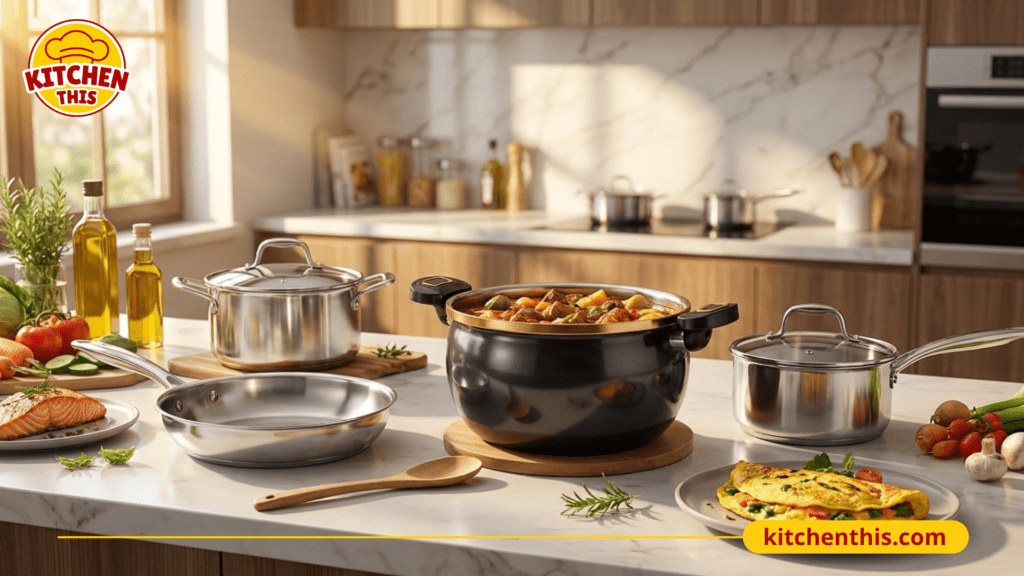
If your current pots scorch sauces in the center while the edges barely simmer, or your nonstick pans start flaking after a year of heavy weeknight use, switching to 3-Ply Stainless Steel solves both problems at once. A good clad cookware set heats evenly, handles metal utensils and high-heat searing without wearing out, and takes the guesswork out of everyday family cooking.
Table of Contents
What to Look for Before Buying Clad Pots and Pans
Most home cooks don’t need a massive 16-piece cookware collection they need reliable pans that heat predictably, handle high temperatures without warping, and clean up without delicate babying. Below, we compare how 3-ply stainless steel stacks up against the other common cookware materials on the market, followed by the specific construction details worth checking before you buy.
How 3-Ply Stainless Steel Compares to Other Cookware Materials
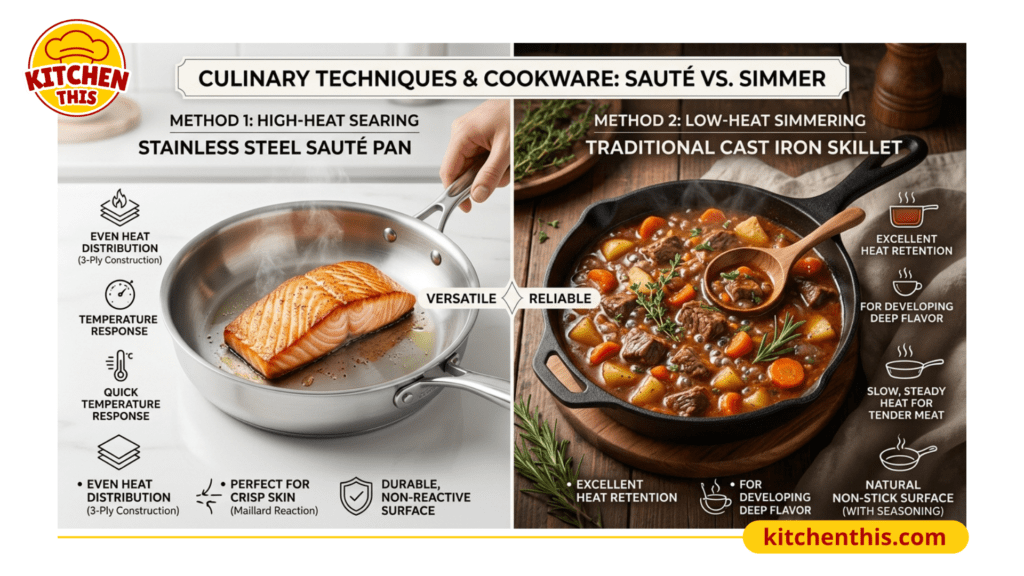
Every cookware material behaves differently on the burner. Weighing heat distribution, surface durability, and everyday maintenance side by side makes it clear why tri-ply stainless steel serves as the primary workhorse in most kitchens:
| Cookware Material | Best Cooking Tasks | Surface & Heat Distribution | Daily Kitchen Fit |
| 3-Ply Stainless Steel | Searing, sautéing, deglazing, boiling pasta, and simmering acidic tomato or wine sauces | Smooth, non-reactive steel exterior bonded to an aluminum core for fast, even heat with no hot spots | Built for daily weeknight cooking; tolerates metal utensils, high heat, and dishwashers for decades |
| Traditional Non-Stick Aluminum | Cooking eggs, crepes, pancakes, and delicate fish over low to medium heat | Slick coated surface that heats fast but scratches easily and degrades under high heat | Convenient for quick breakfasts, though coatings typically wear out within 2 to 4 years |
| Standard Cast Iron | High-heat steak searing, shallow frying, cornbread, and slow oven roasts | Heavy, seasoned surface with massive heat retention, though slow to cool down when adjusting burners | Great for weekend cooking, but heavy to lift and requires hand-drying and periodic oil seasoning |
| Ceramic-Coated Pans | Low- to medium-heat sautéing and gentle reheating | Smooth, slick coating with even initial heat that loses non-stick release if overheated | Easy to wipe clean early on, but less durable for heavy everyday searing |
If you want cookware that can sear meat on the stovetop and move straight into a hot oven without worrying about damaged coatings, a tri-ply stainless steel foundation is hard to beat.
What to Check Before Buying a Multi-Layer Cookware Set
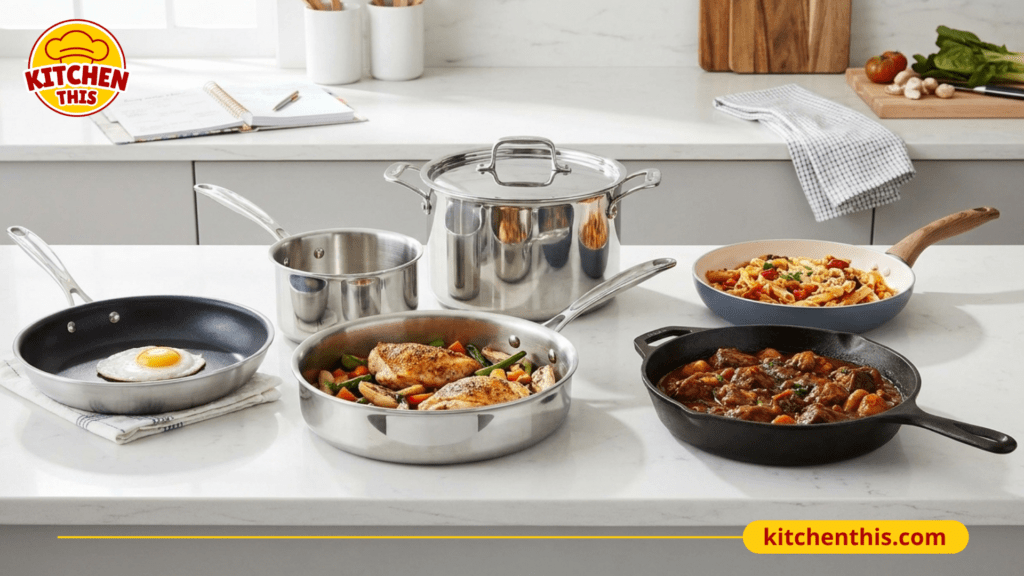
Quality varies widely between clad cookware sets, even when two boxes look nearly identical on the shelf. When comparing stainless steel pots and pans, pay close attention to these core details:
1. Look for 18/10 Food-Grade Stainless Steel
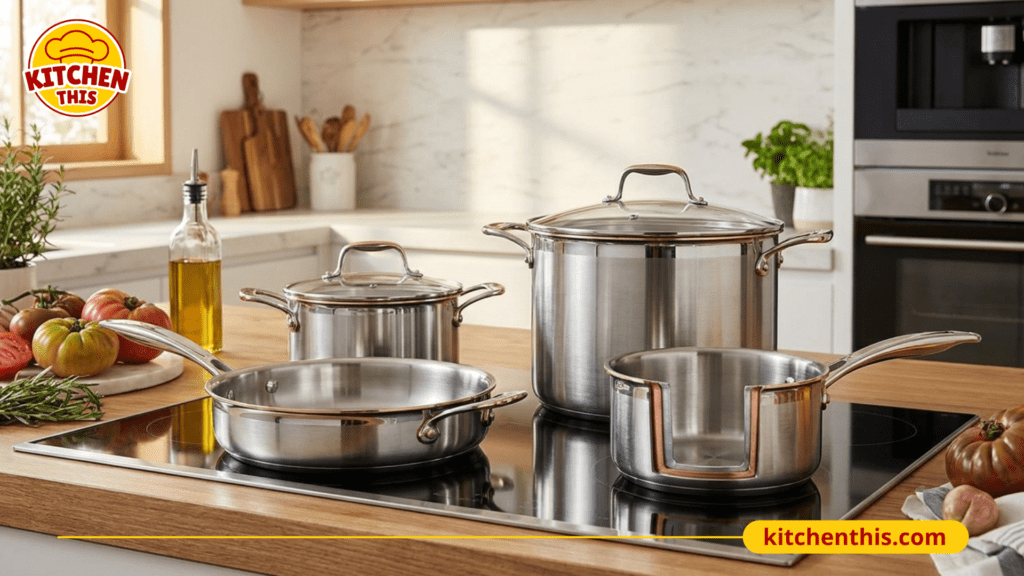
- Non-Reactive Interior Surface: Choose sets made with 18/10 food-grade stainless steel (18% chromium and 10% nickel) on the cooking surface. That alloy resists rust and pitting and will not react with acidic ingredients like crushed tomatoes, wine, or citrus juice.
- Uncoated, PFAS-Free Cooking: Because bare stainless steel relies on polished metal rather than synthetic nonstick coatings, you never have to worry about PTFE, PFOA, or flaking finishes ending up in everyday family meals. Check that any tempered glass lids or steamer inserts also use sturdy, BPA-free fittings if silicone gaskets are present.
2. Choose a Practical Set Size Over Inflated Piece Counts
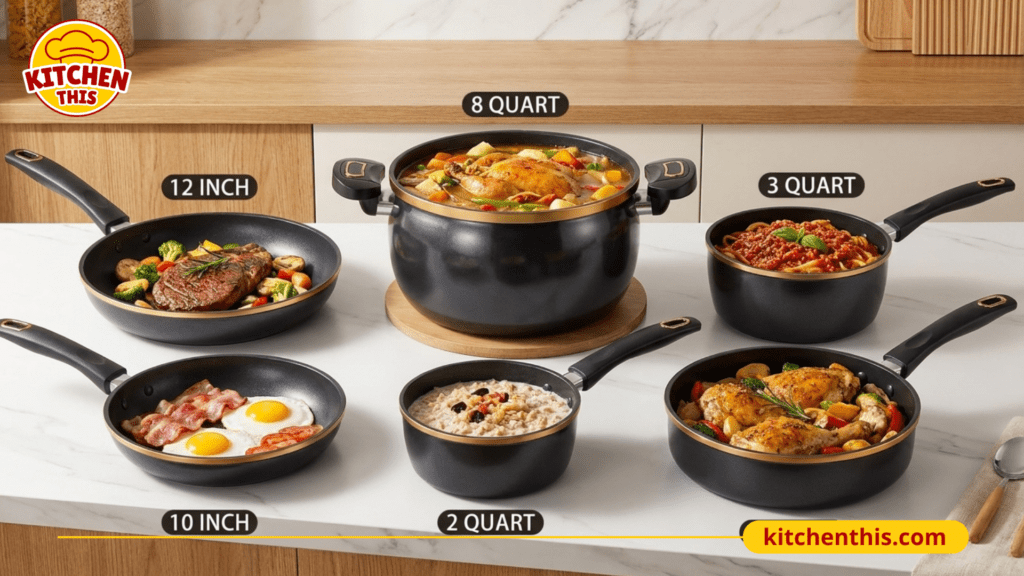
- The Everyday Sweet Spot: You do not need twenty mismatched pots crowding your cabinets. A well-balanced core collection includes 10-inch and 12-inch frying pans, 2-quart and 3-quart saucepans, a 4-quart straight-sided sauté pan, and an 8-quart stockpot enough to cover everything from boiling weeknight pasta to simmering a large batch of weekend soup.
3. Check Induction Compatibility and Thermometer Clearance
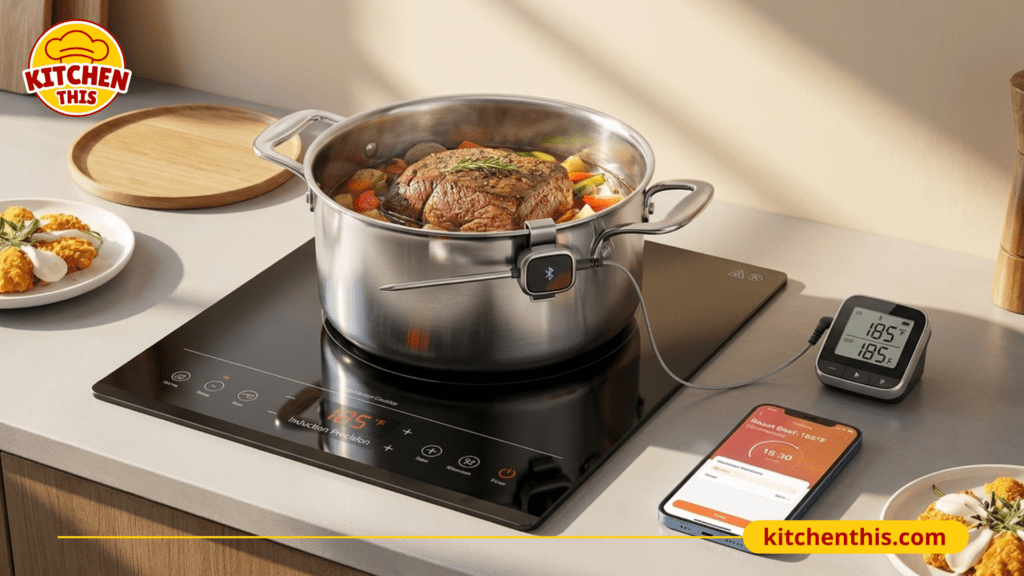
Clip-On Thermometer Room: Deep stockpots and straight-sided sauté pans with sturdy rims also make it easy to clip on a digital candy, oil, or wireless leave-in probe thermometer when deep-frying, making jam, or monitoring broth temperatures.
Magnetic Induction Base: Confirm that the outer layer uses magnetic stainless steel (typically 18/0) so the cookware works seamlessly across gas, electric, glass-top, and induction ranges. On an induction burner, responsive tri-ply pans hold a steady simmer at low settings without scorching the bottom of a sauce.
How to Cook With and Care for Clad Stainless Steel
Understanding how multi-layer steel handles heat makes everyday cooking noticeably easier. Because the aluminum core conducts heat fast and holds it evenly across the base and sidewalls, you rarely need to push your burner past medium once the pan is warm.
Pairing Stainless Steel With a Heavy-Duty Soup Pot
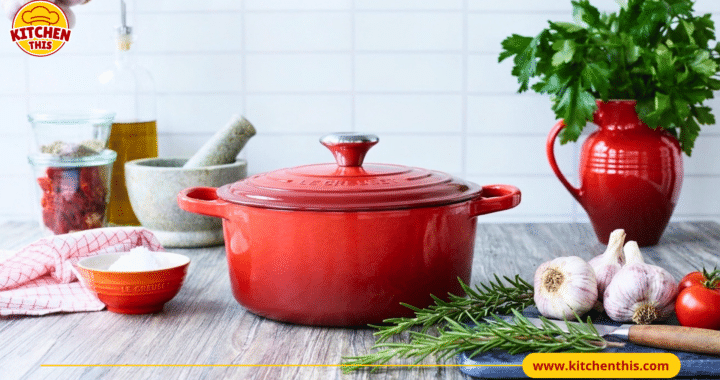
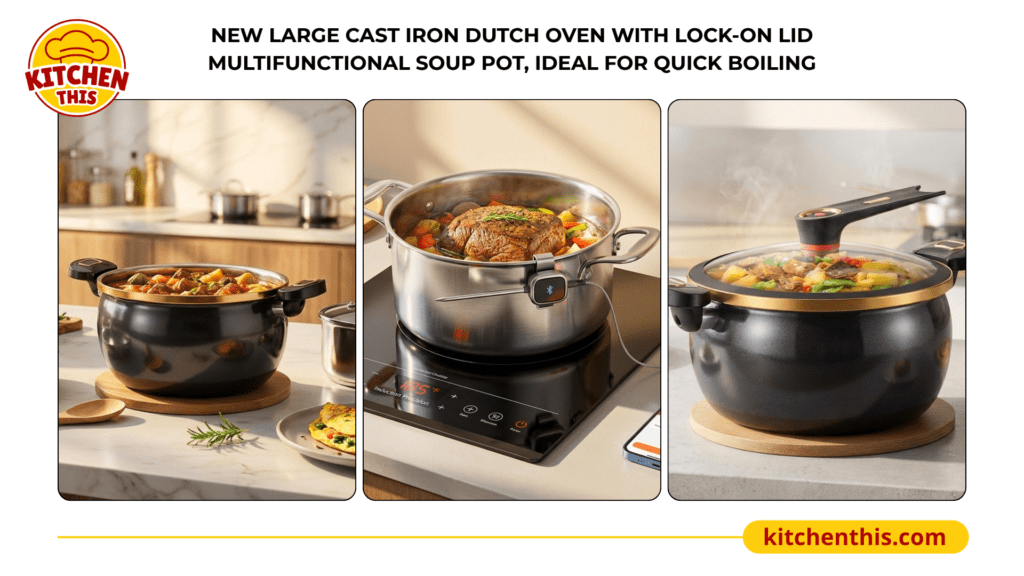
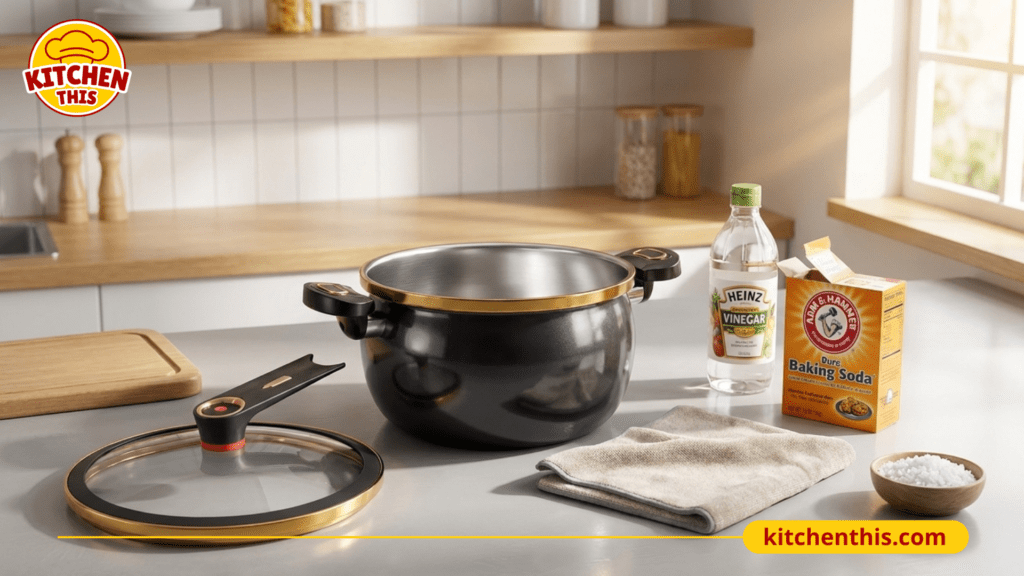
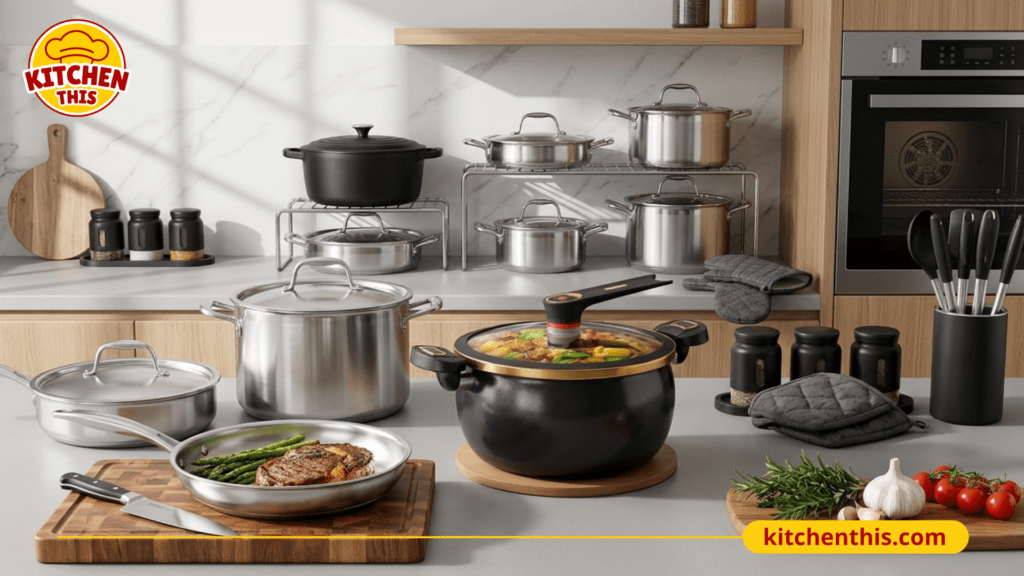
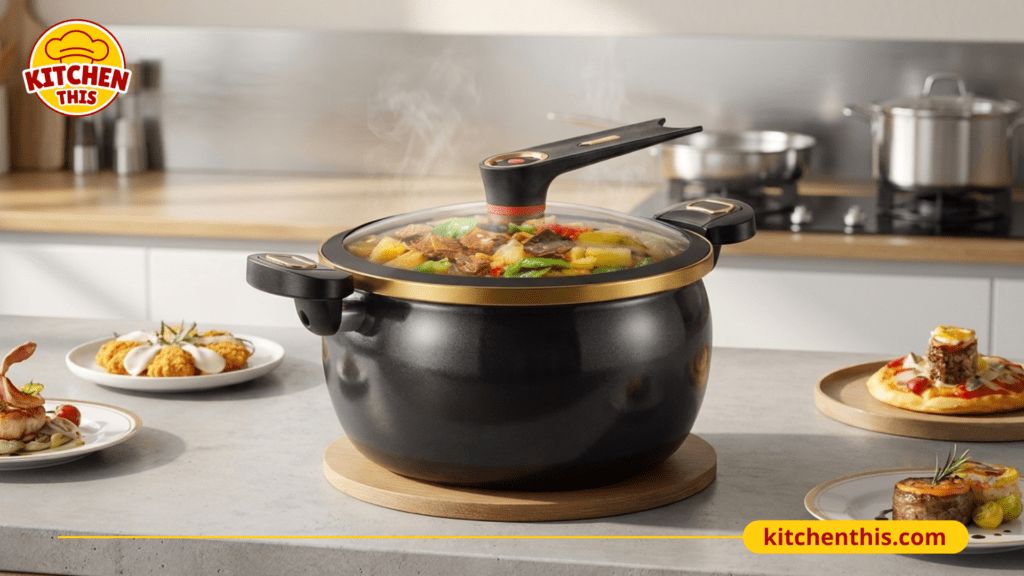
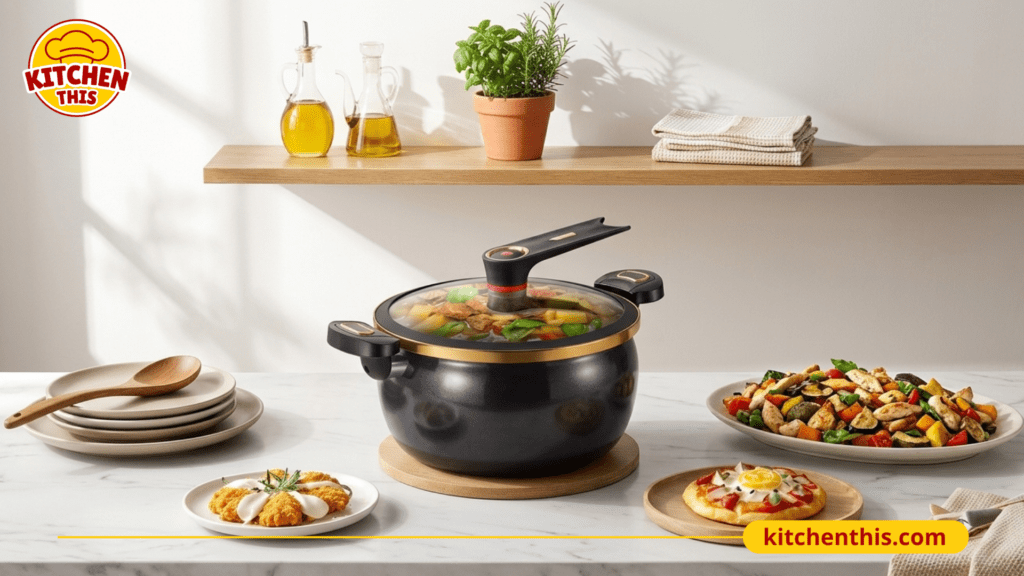
While a tri-ply stainless steel set handles daily searing, sautéing, and sauce making, adding a dedicated heavy-duty pot such as a cast iron Dutch oven or multipurpose stockpot with a tight lock-on glass lid rounds out the kitchen for large-batch cooking. A snug, locking lid traps steam effectively so soups, stews, and pasta water reach a boil faster using less burner energy, while a clean matte-black finish with warm metallic trim transitions neatly from the stovetop to the dinner table.
Three Habits for Stick-Free Cooking
Use Tight-Fitting Lids to Speed Up Simmering: Whether you are using your stainless steel stockpot or a lock-on lid soup pot, keeping the lid secured traps heat and moisture, cutting boil times for stocks, grains, and root vegetables.
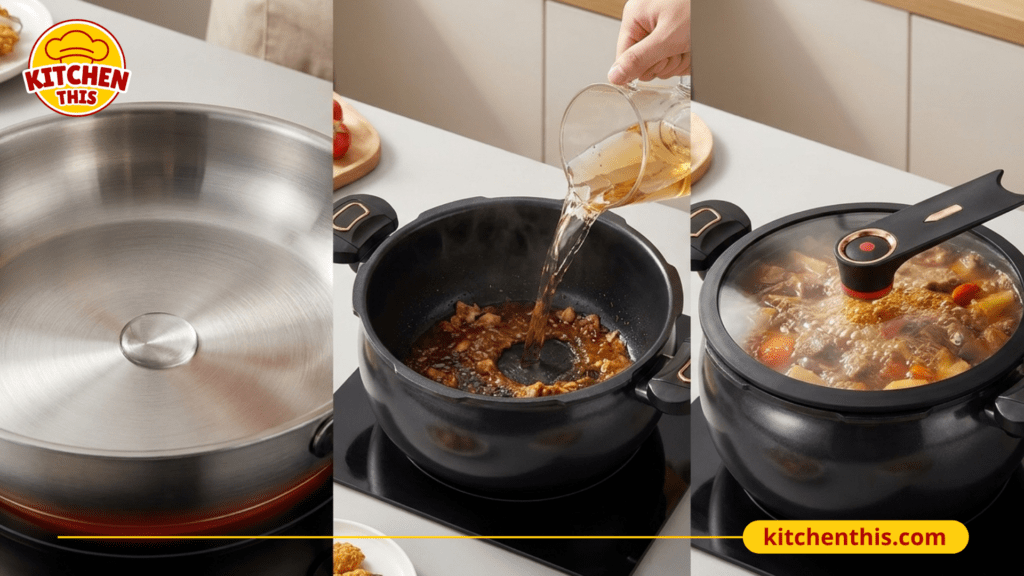
Preheat Before Adding Oil (The Water Drop Test): Bare stainless steel releases food cleanly only when the metal is properly heated. Warm the dry pan over medium heat for about two minutes, then flick a few drops of water onto the surface. If the water sizzles and evaporates immediately, the pan is still too cool; if a single droplet beads up and glides across the steel like mercury, add your oil, swirl to coat, and lay the food in.
Deglaze the Pan for Quick Sauces: When searing chicken, steak, or mushrooms, browned bits known as fond will naturally cling to the steel. Once you remove the meat, lower the heat and pour in a splash of stock, wine, or water. Scraping those browned bits up with a wooden spoon turns them into a rich pan sauce in under a minute.
Simple Cleaning and Maintenance
- Prevent Warping From Thermal Shock: Never run cold tap water into a scorching-hot stainless steel or cast iron pot. Rapid temperature drops can warp the metal base over time. Let pans cool on a turned-off burner for a few minutes before washing.
- Lift Burnt-On Food With Baking Soda: If a sauce scorches on the bottom, skip steel wool and harsh oven cleaners. Fill the cooled pan with warm water and two tablespoons of baking soda, bring it to a gentle simmer for ten minutes, and lift the softened residue away with a wooden spatula.
Remove Heat Tint With White Vinegar: High heat occasionally leaves a harmless, rainbow-colored tint on stainless steel. Wiping the surface with a splash of white vinegar or using a non-abrasive cleanser like Bar Keepers Friend removes the discoloration and restores the original finish.
Why Investing in 3-Ply Stainless Steel Pays Off
Upgrading to a well-built 3-ply stainless steel cookware set replaces a cabinet full of short-lived pans with a single core collection built for everyday reliability.
Consistent Heat Across Every Burner: An aluminum core sandwiched between stainless steel eliminates hot spots, preventing scorched sauces and unevenly browned meat.
No Coatings to Wear Out: Bare 18/10 stainless steel handles metal utensils, high-heat searing, and decades of regular washing without peeling or flaking.
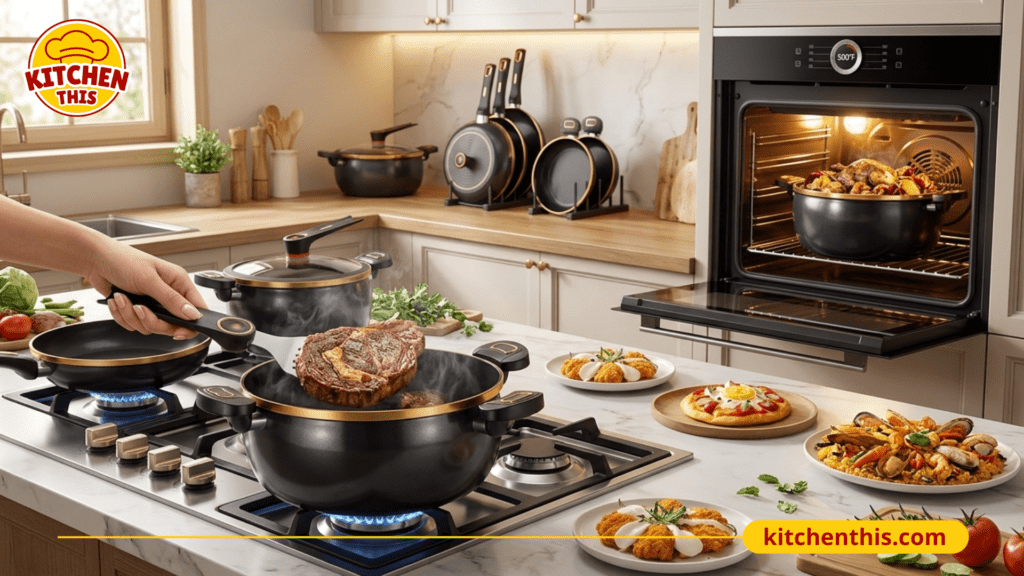
True Stovetop-to-Oven Flexibility: Most quality tri-ply sets are oven-safe up to 500°F (check tempered glass lid limits separately), letting you sear proteins on the burner and finish them in the oven in the same pan.
Long-Term Value: Instead of replacing scratched nonstick skillets every few years, a single clad set can easily last for decades of daily family meals.
If you are ready to compare top-rated sets or browse complementary pieces like a heavy-duty stockpot, explore our latest cookware reviews and buyer guides right here on KitchenThis.
Four Simple Habits to Keep Your Cookware Cabinet Organized
Even the best pots and pans slow you down if you have to dig through a cluttered cabinet every evening. A few practical storage adjustments keep everything within reach:
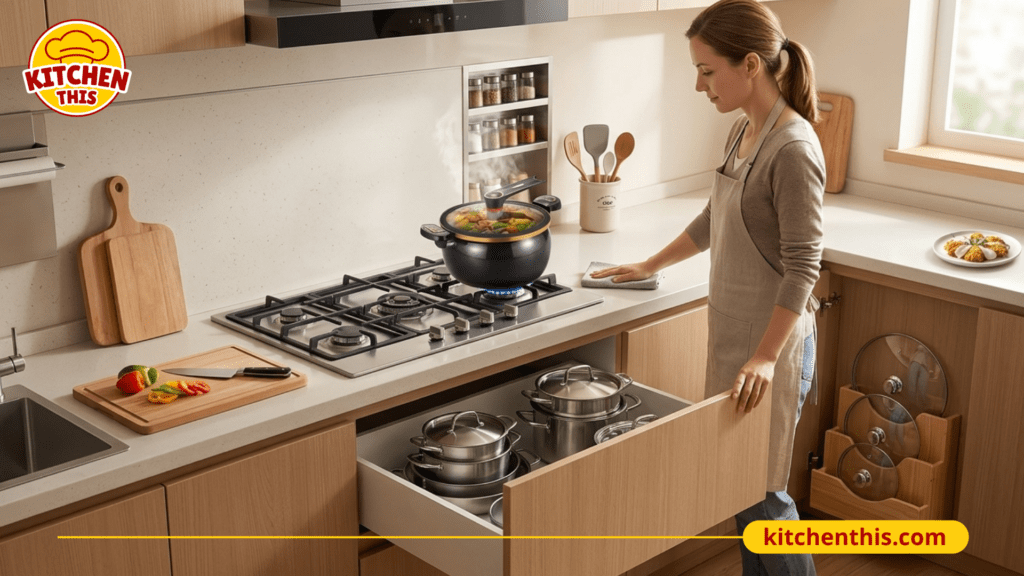
File Pot Lids Vertically: Stacking lids on top of pots causes scratches and noise. Place an inexpensive wire dish rack or upright file divider inside a cabinet to store glass and steel lids vertically.
Store Heavy Pots Near the Stove: Keep your most-used frying pans and saucepans in a deep drawer or lower cabinet directly beside or beneath the range so you are not carrying heavy cookware across the kitchen.
- Keep Everyday Counters Clear: Move rarely used small appliances into a Pantry or cabinet so you always have open prep space next to the stove.
- Wash Prep Tools While Food Simmers: Because clad cookware holds steady heat without constant stirring, you can rinse cutting boards, bowls, and utensils while a sauce simmers, leaving only the pan itself to wash after dinner.
Good cookware does not need complicated gadgets or constant babying. With a solid 3-ply stainless steel foundation and a few simple heat-control habits, everyday cooking becomes faster, cleaner, and far more predictable.