Grand Valrhona Chocolate Soufflé with a Salted Caramel Heart
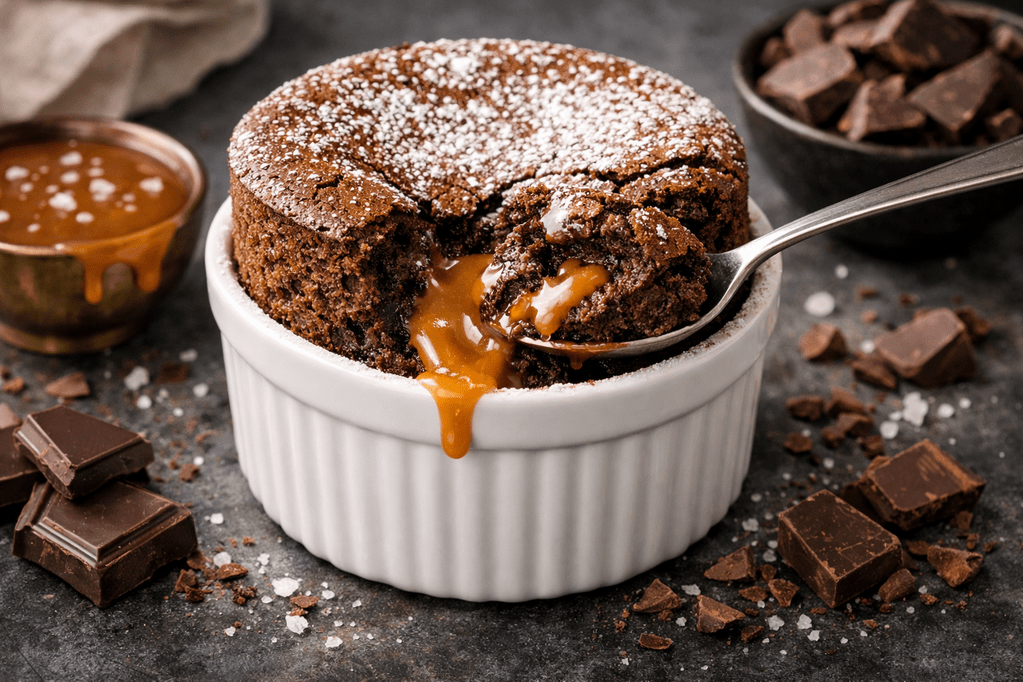
Few Desserts feel as special at the table as a freshly baked chocolate soufflé and few have a more intimidating reputation. In reality, a reliable soufflé comes down to three straightforward habits: properly greased ramekins, well-whipped egg whites, and careful folding.
Adding a frozen cube of salted caramel to the center turns a classic dark chocolate soufflé into an even richer dessert. As the batter bakes and rises around it, the caramel melts into a warm, glossy core without weighing down the airy crumb.
Table of Contents
Why Dark Couverture Chocolate Matters Here
Because a soufflé has so few ingredients, the quality of the chocolate carries the entire flavor of the dessert. A 70% dark couverture chocolate such as Valrhona Guanaja works particularly well for three reasons:
- Balanced Bitterness: Deep roasted cocoa notes keep the dessert from tasting overly sweet once paired with the salted caramel center.
- High Cocoa Butter Content: Couverture chocolate melts into a smooth, fluid base that blends cleanly with whipped egg whites without seizing.
- Reliable Structure: Adequate cocoa solids and fats give the batter enough body to climb straight up the ramekin walls.
Recipe Overview
- Prep Time: 30 minutes (plus 3+ hours freezing time for the caramel)
- Bake Time: 13 to 14 minutes
- Yield: 4 individual soufflés (8-ounce ramekins)
Ingredients
For the cleanest rise, weigh your ingredients on a digital kitchen scale rather than relying solely on volume cups.
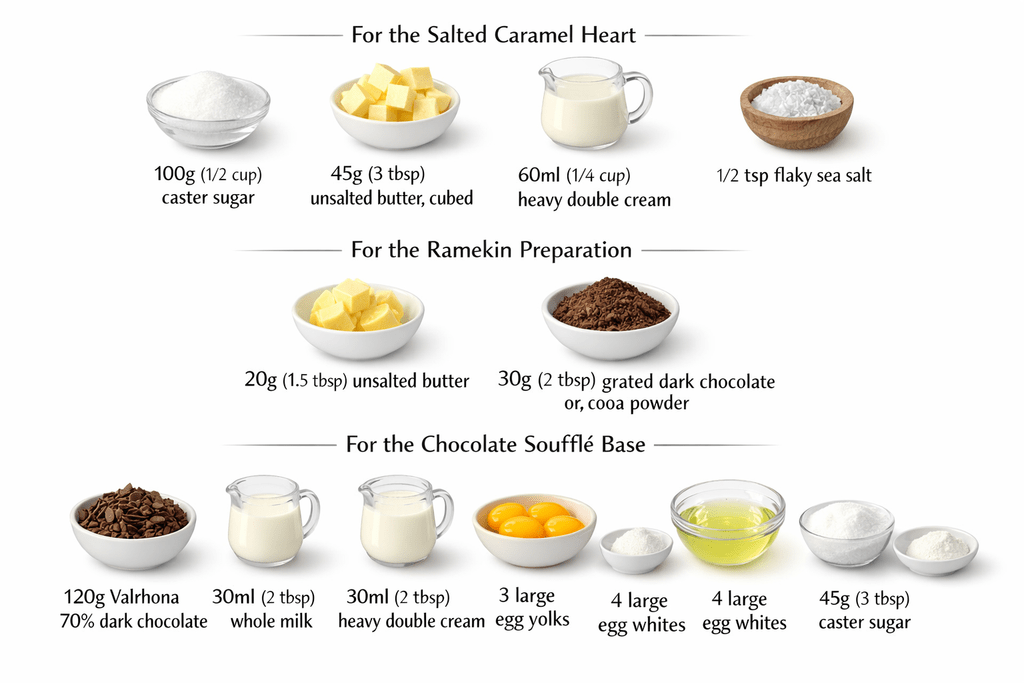
Salted Caramel Heart
- 100 g (1/2 cup) granulated or caster sugar
- 60 ml (1/4 cup) heavy cream, warmed
- 45 g (3 tbsp) unsalted butter, cubed and at room temperature
- 1/2 tsp flaky sea salt (such as Maldon)
Ramekin Prep
- 20 g (1 1/2 tbsp) unsalted butter, very soft
- 30 g (2 tbsp) finely grated dark chocolate or unsweetened cocoa powder
Chocolate Soufflé Base
- 120 g (4.2 oz) Valrhona Guanaja 70% dark chocolate, finely chopped
- 30 ml (2 tbsp) whole milk
- 30 ml (2 tbsp) heavy cream
- 3 large egg yolks, at room temperature
- 4 large egg whites, at room temperature (using one extra white provides extra lift)
- 45 g (3 tbsp) granulated or caster sugar
- 1/2 tsp cream of tartar (helps stabilize the whipped egg whites)
Equipment Needed
- 4 straight-sided ceramic ramekins (8-ounce capacity): Straight vertical sides are essential so the batter can climb evenly.
- Pastry brush: For brushing butter upward inside the ramekins.
- Spotlessly clean glass or stainless-steel mixing bowl: Even a trace of oil or yolk will keep egg whites from whipping properly.
- Stand mixer or electric hand mixer
- Flexible silicone spatula
Step-by-Step Instructions
Read through the steps before starting so your oven and ramekins are ready the moment the meringue is folded in.
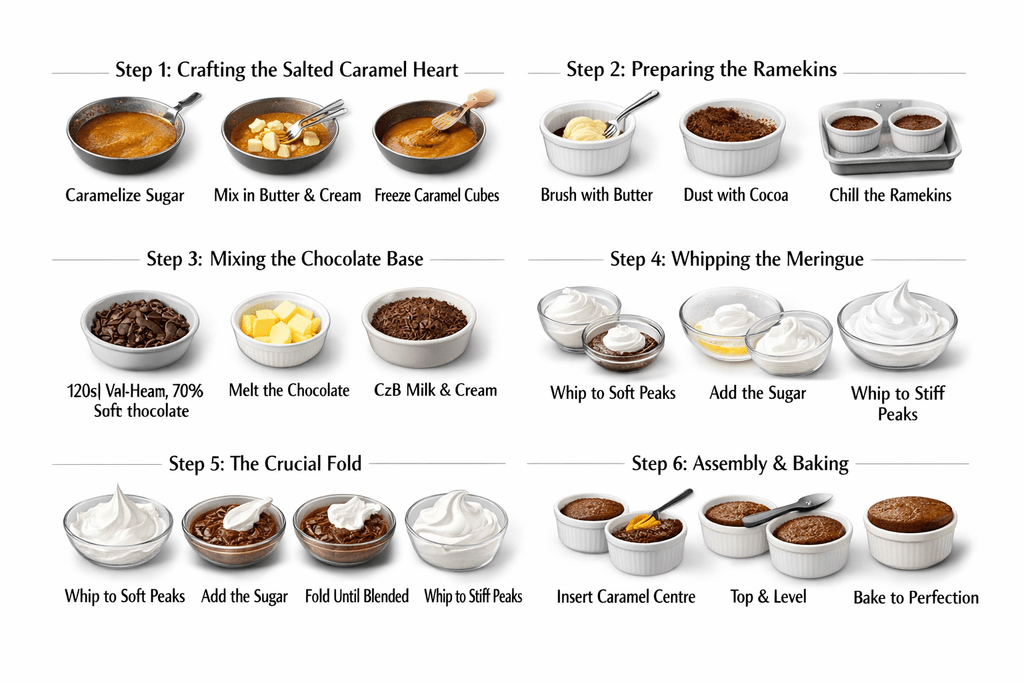
Step 1: Make and Freeze the Salted Caramel Center (Make Ahead)
Because caramel has a high sugar and fat content, it needs time to firm up in the freezer so it stays intact while you spoon the batter around it. You can make this up to three days ahead.
- Melt the Sugar: Spread the sugar in an even layer in a heavy-bottomed saucepan over medium heat. Let it melt undisturbed, gently swirling the pan if one side browns faster than the other.
- Cook to Deep Amber: Once the sugar dissolves into a deep copper-amber liquid with a toasted aroma, immediately pull the pan off the heat.
- Add Warm Cream and Butter: Slowly pour in the warm heavy cream while whisking carefully the mixture will steam and bubble vigorously. Once smooth, whisk in the room-temperature butter cubes until glossy, then stir in the flaky sea salt.
- Freeze Into Portions: Divide the caramel into four cavities of a small silicone ice cube tray or mini muffin mold (about 1 tablespoon per portion). Freeze for at least 3 to 4 hours, or overnight, until firm enough to unmold.
Step 2: Butter and Dust the Ramekins
How you coat the inside of the ramekins directly affects how straight your soufflés rise.
- Brush Upward: Using a pastry brush dipped in very soft butter, coat the bottom and inside walls of each ramekin using strictly upward vertical strokes from the base to the rim. Those tiny vertical grooves help the batter grip and climb evenly.
- Coat With Chocolate: Spoon grated dark chocolate or cocoa powder into the first ramekin, rotate it to coat the buttered interior completely, and tap out the excess into the next ramekin. Repeat with all four, then place the ramekins in the refrigerator for 10 minutes so the butter firms up.
Step 3: Melt the Chocolate Base
- Melt Gently: Place the chopped dark chocolate in a heatproof bowl set over a saucepan of barely simmering water (a bain-marie), making sure the bottom of the bowl does not touch the water. Stir until smooth.
- Whisk In Dairy and Yolks: Remove the bowl from the heat and whisk in the milk and heavy cream until glossy. Let the mixture cool for about 3 minutes so it is warm rather than hot, then vigorously whisk in the egg yolks one at a time until thick and smooth. Set aside.
Step 4: Whip the Egg Whites
- Start Slow: Combine the room-temperature egg whites and cream of tartar in a clean glass or metal bowl. Beat on medium-low speed until foamy and opaque, then increase to medium speed.
- Add Sugar Gradually: Once the whites hold soft, drooping peaks, add the sugar one tablespoon at a time while continuing to beat.
- Stop at Glossy Stiff Peaks: Beat just until the meringue looks shiny and holds firm peaks that bend slightly at the very tip when you lift the beaters. Avoid over-whipping dry, clumpy egg whites will not fold smoothly into the chocolate.
Step 5: Fold the Base and Meringue Together
- Lighten the Chocolate: Stir one-third of the whipped egg whites directly into the warm chocolate base with a spatula or whisk. Do not worry about deflating this portion loosening the thick chocolate makes it much easier to fold in the remaining whites without losing volume.
- Fold Gently in Two Additions: Add half of the remaining meringue. Cut straight down through the center of the bowl with your silicone spatula, sweep underneath the batter, and fold it over the top while rotating the bowl a quarter turn. Repeat with the final batch of meringue, stopping the instant no white streaks remain.
Step 6: Assemble and Bake
- Preheat Oven and Baking Sheet: Position a rack in the center of the oven, place a heavy baking sheet on the rack, and preheat to 400°F (200°C).
- Layer With the Caramel Core: Spoon the soufflé batter into the chilled ramekins until they are halfway full. Unmold one frozen caramel cube and press it gently into the center of each ramekin.
- Top, Level, and Rim: Spoon the remaining batter over the caramel to fill each ramekin completely to the rim. Run the flat edge of a palette knife or butter knife across the top to level it flush, then trace the tip of your thumb around the inside edge of the rim to create a shallow 2-millimeter groove. This keeps the batter from catching on the edge so the top rises in a clean cylinder.
- Bake Without Opening the Door: Set the ramekins onto the preheated baking sheet and immediately lower the oven temperature to 375°F (190°C). Bake for 13 to 14 minutes until puffed well above the rims with lightly set tops and slightly soft centers. Keep the oven door closed the entire time a sudden rush of cool air can cause the soufflés to sink before the structure sets.
Practical Tips for Reliable Results
- Separate Eggs While Cold, Whip at Room Temperature: Eggs separate much more cleanly straight from the refrigerator. Separate the yolks and whites first, cover both bowls, and let them sit on the counter for 30 minutes before whipping.
- Serve Immediately: A soufflé begins settling within two to three minutes of leaving the oven. Make sure everyone is at the table with spoons ready before you pull the baking sheet out.
- Pair With Something Cold and Light: A small scoop of vanilla bean ice cream or a spoonful of lightly whipped unsweetened cream balances the warm dark chocolate and salty caramel without competing with them.
If you want to prep ahead for a dinner party, you can make the frozen Caramel cubes up to three days in advance and butter, dust, and chill the ramekins several hours before guests arrive leaving only 15 minutes of active mixing and 14 minutes of baking when it is time for dessert.