Smart Air Fryer Ovens: How to Choose the Right Countertop Model for Everyday Cooking
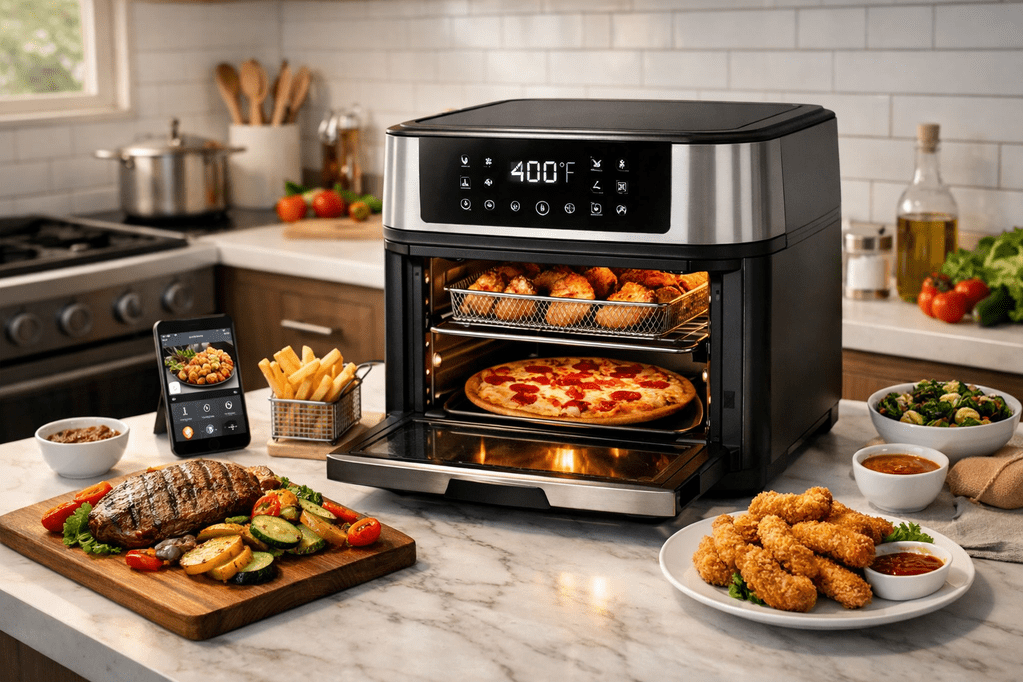
A practical look at capacity, airflow heating technology, smart controls, and everyday care to help you pick a countertop oven that earns its space.
Table of Contents
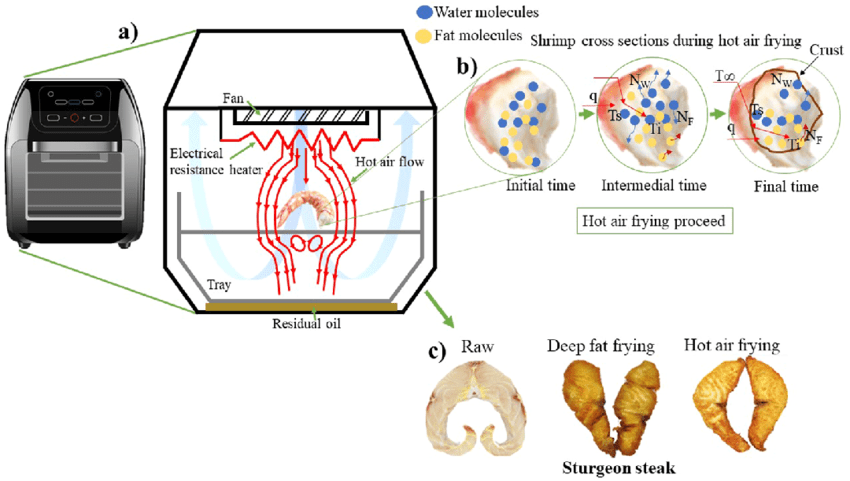
A Smart Air Fryer Oven combines high-velocity convection heat with compact countertop convenience, letting you roast, bake, toast, dehydrate, and crisp weeknight meals without waiting twenty minutes for a full-size wall oven to preheat.
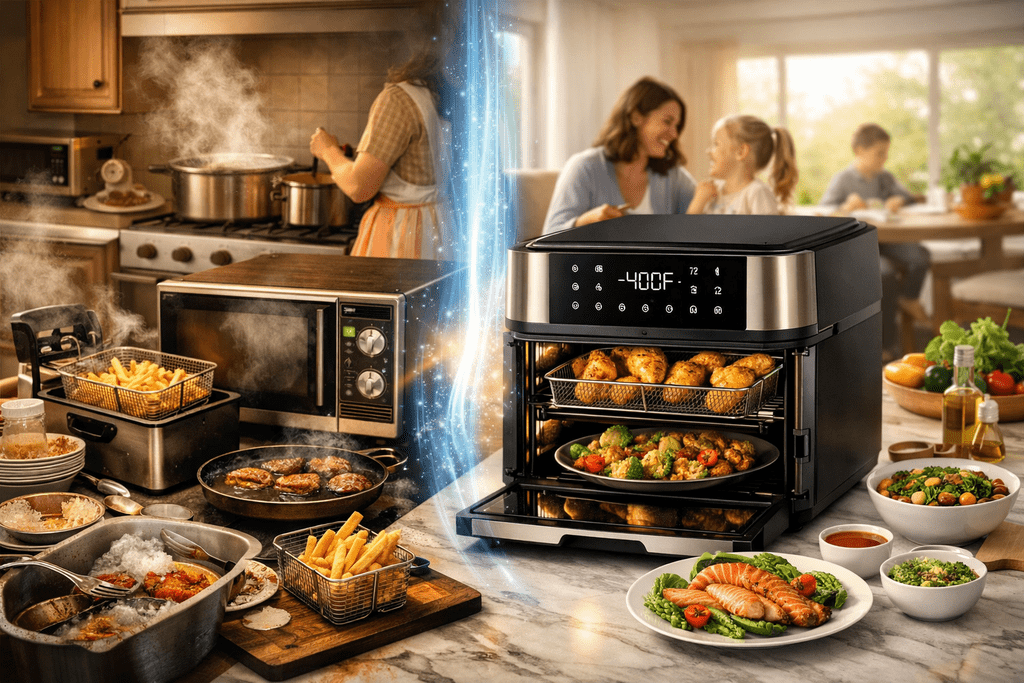
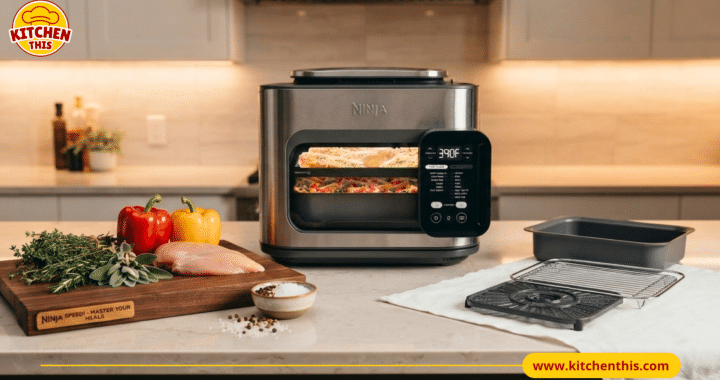
Unlike basket-style air fryers that crowd ingredients into a single deep drawer, front-opening air fryer ovens use flat racks and mesh trays giving you enough surface area to cook a batch of roasted vegetables alongside chicken thighs or bake a 12-inch pizza evenly.
Choosing the right model comes down to looking past flashy app features and focusing on interior capacity, heating element placement, build quality, and how easy the interior is to wipe clean after dinner.
How a Smart Air Fryer Oven Compares to Traditional Appliances
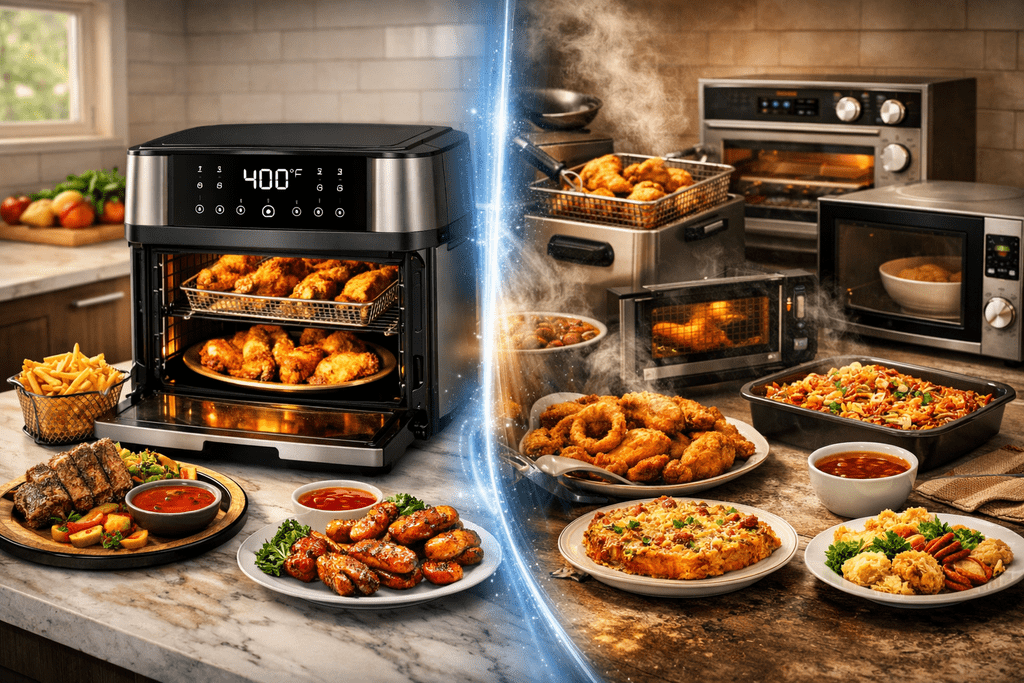
Understanding where a countertop air fryer oven excels and where a standard oven or microwave still makes sense helps you decide whether it deserves permanent space on your counter
| Appliance / Method | Primary Cooking Method | Food Texture Delivered | Best-Suited Foods | Ideal Kitchen Role |
| Smart Air Fryer Oven | High-speed circulating hot air + top/bottom heating elements | Crisp, browned exterior with a tender, juicy interior | Roasted vegetables, chicken wings and thighs, fries, fish fillets, toast, and 12-inch pizzas | Fast weeknight meals, small-batch baking, and crisping leftovers without heating a large oven |
| Traditional Deep Fryer | Full submersion in hot cooking oil | Heavy, rich, and uniformly crunchy | Battered fish, doughnuts, and classic pub-style fried foods | Occasional specialty frying when oil cleanup is not a concern |
| Conventional Full-Size Oven | Radiant heating elements in a large insulated cavity | Evenly baked, though slower to crisp surface moisture | Large holiday roasts, multi-rack sheet-pan meals, and large casseroles | Feeding big groups or cooking oversized roasting pans |
| Standard Microwave | Electromagnetic waves heating water molecules | Soft or steamed texture; does not brown food | Reheating soups, melting butter, and defrosting ingredients | Quick reheating when crispness is not required |
What to Look for Before Buying an Air Fryer Oven
Not all countertop convection ovens heat evenly or hold up to daily use. Four practical specifications separate a reliable workhorse from an appliance that collects dust:
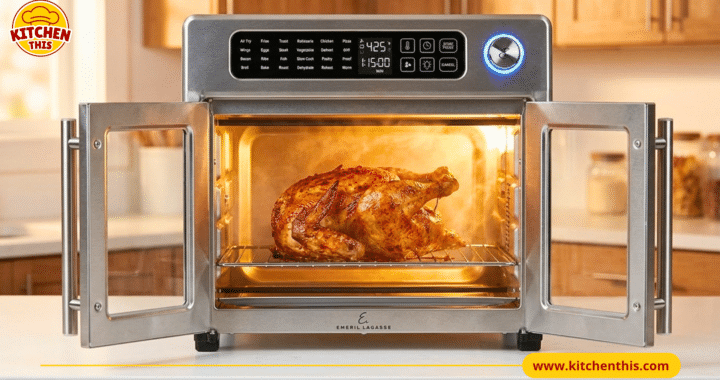
- Family-Size Interior Capacity (22 to 26 Liters / 0.8 to 0.9 cu. ft.): Compact pod-style air fryers work fine for single servings, but a front-opening oven with at least 24 to 26 liters of interior volume comfortably fits a 4-pound whole chicken, six slices of toast, or a full tray of roasted potatoes without overcrowding.
- Stainless Steel Interior Cavity: Look for a brushed stainless steel interior rather than thin coated metal. Stainless steel reflects heat evenly across the racks, resists warping at 230°C (450°F), and will not peel or flake over years of high-heat roasting.
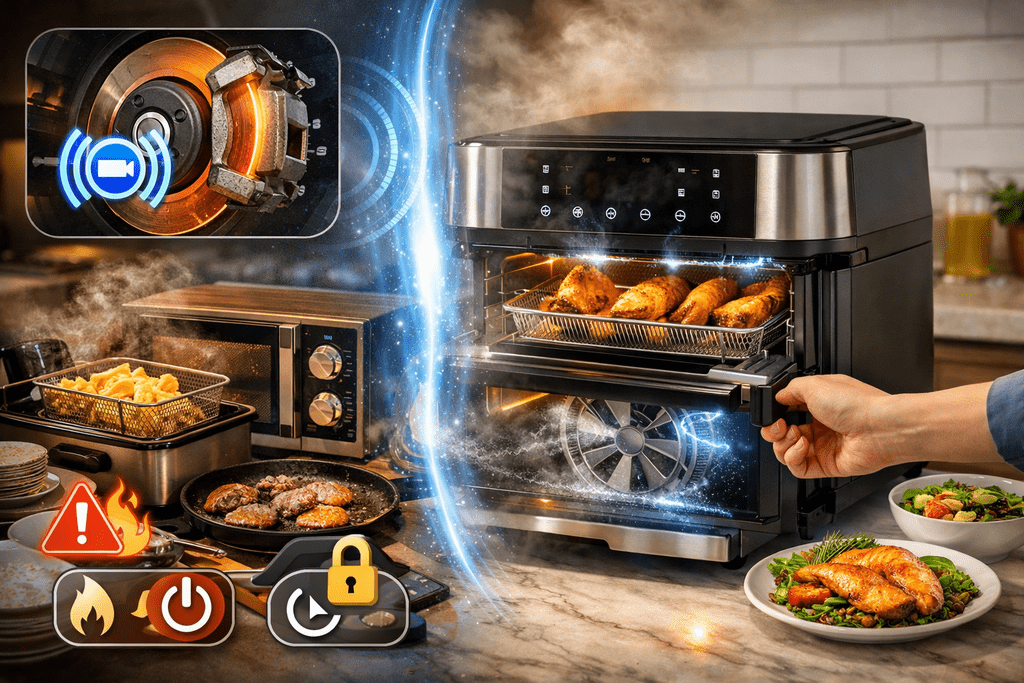
- Door-Activated Auto-Pause and Overheat Protection: Quality models include built-in door sensors that immediately pause the heating elements and high-speed fan the moment you open the glass door to flip food, resuming automatically when closed.
- Useful Smart Controls and Accurate Temperature Probes: Wi-Fi connectivity and companion apps are genuinely helpful when they let you monitor cook progress from another room, receive alerts when it is time to flip food, or pair with an integrated temperature probe so poultry and roasts hit exact internal temperatures without drying out.
Converting Standard Oven Recipes for an Air Fryer Oven
Because high-velocity fans push superheated air directly across the surface of your food, an air fryer oven cooks faster and browns more aggressively than a standard static oven. Apply two simple conversion rules to adapt any conventional oven recipe:
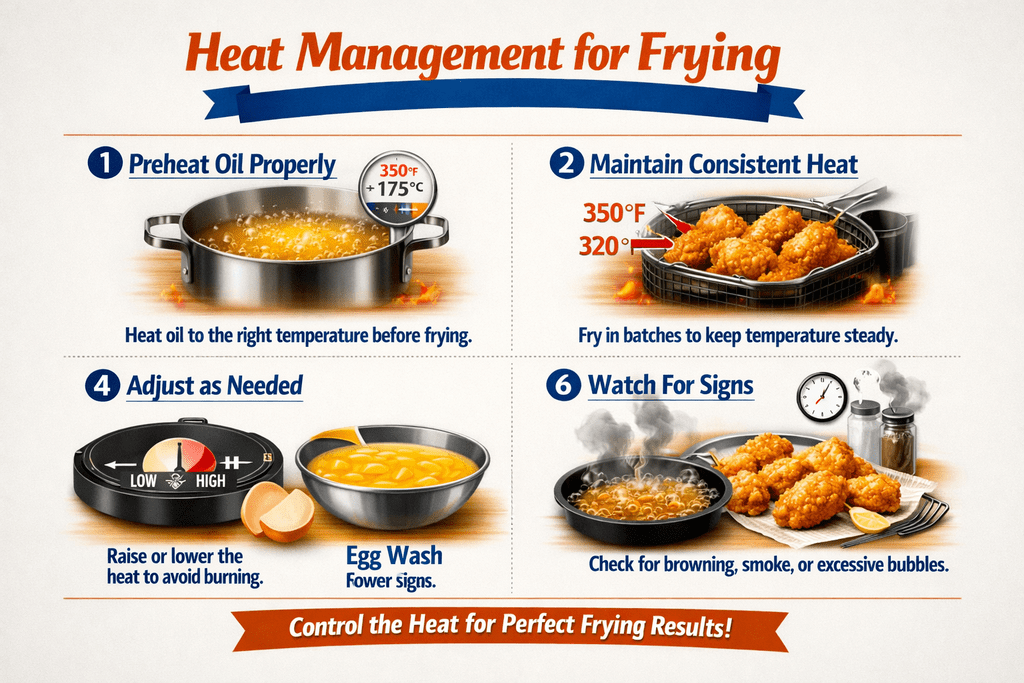
- Lower the Temperature by 25°F (15°C): Dropping the heat slightly prevents breading, glazes, and sugars from scorching before the center finishes cooking.
- Reduce Cooking Time by 20% to 25%: Start checking your food a few minutes earlier than the original recipe suggests until you learn how fast your specific model runs.
| Cooking Method | Typical Temperature Range | Best Foods | Practical Heat-Control Tip |
| Air Frying (Crisping) | 180–205°C (360–400°F) | Wings, fries, breaded cutlets, Brussels sprouts | Preheat 3 minutes; leave ½ inch of space between pieces for airflow |
| Convection Roasting | 175–200°C (350–390°F) | Whole chicken, salmon fillets, root vegetables | Place thicker vegetables near the center and delicate fish toward the edges |
| Convection Baking | 160–175°C (325–350°F) | Cookies, brownies, small quick breads, reheated pizza | Use the middle rack position and rotate the pan halfway through |
| Dehydrating | 50–70°C (120–160°F) | Apple slices, citrus wheels, beef jerky, fresh herbs | Use mesh trays on low fan speed for several hours until leathery or crisp |
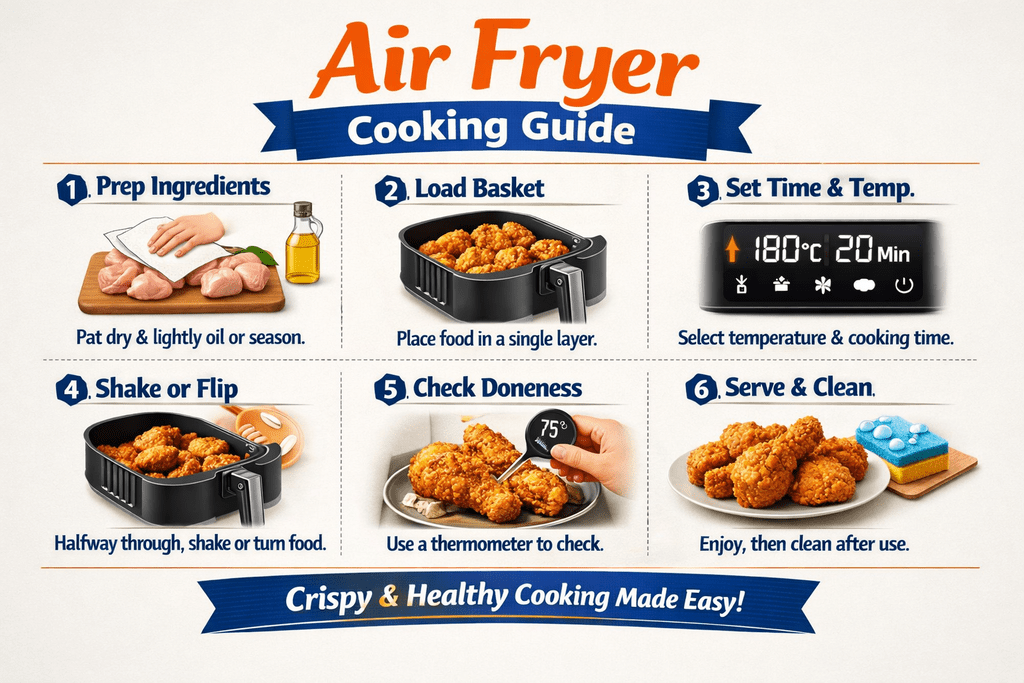
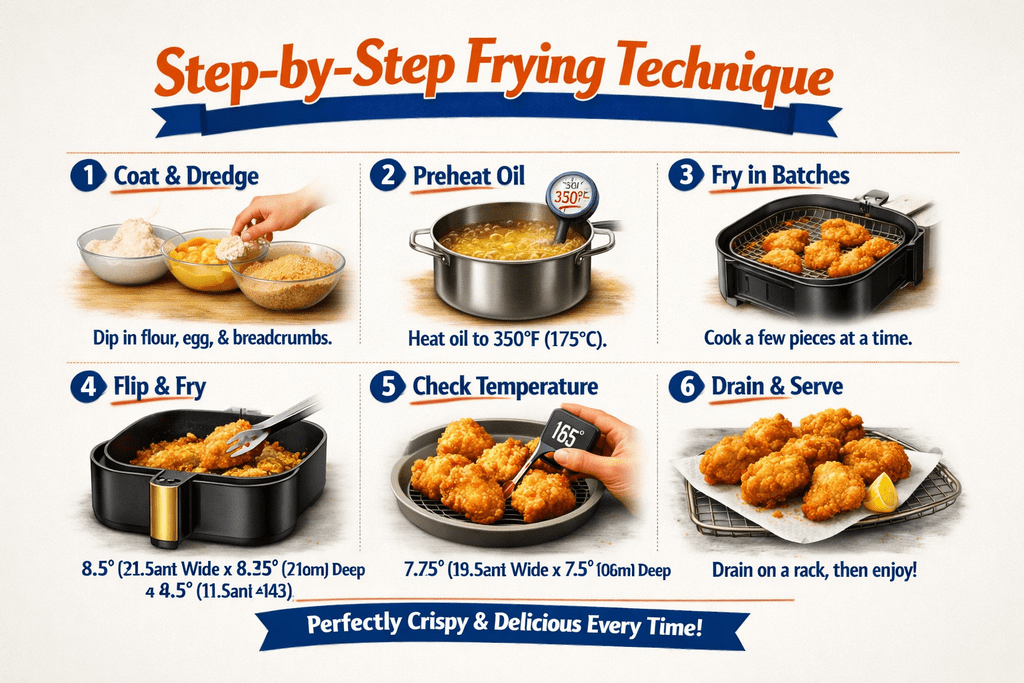
Step-by-Step Technique for Crispy Breaded Foods Without Deep Frying
Getting a golden, crunchy crust on chicken tenders, fish fillets, or zucchini spears requires managing surface moisture and oil carefully:
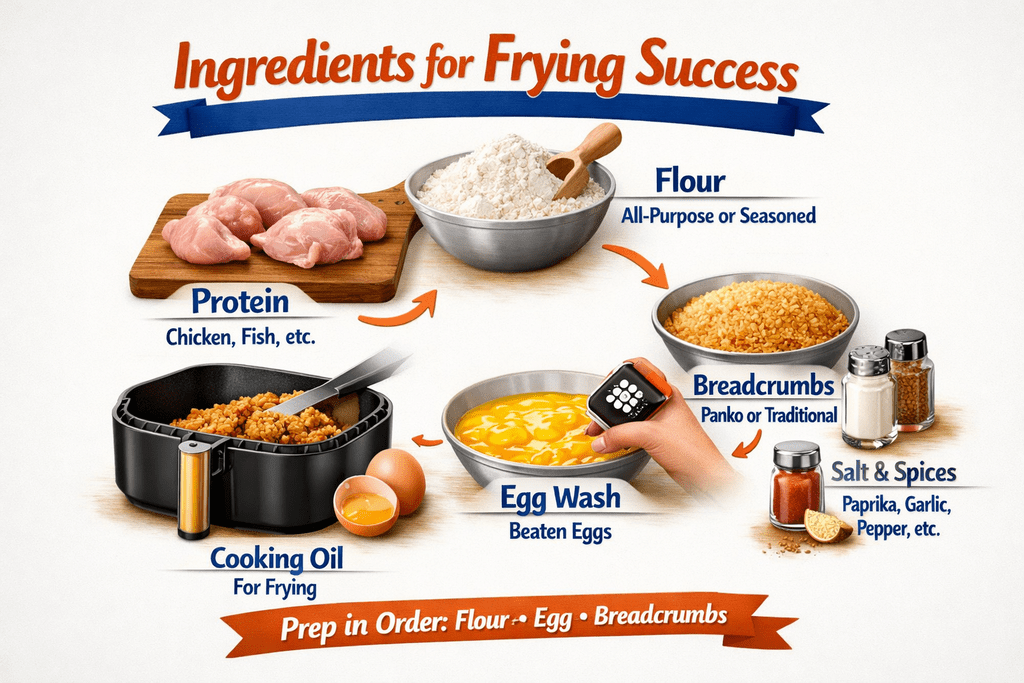
- Pat Ingredients Completely Dry: Surface moisture turns into steam in a hot oven, causing flour and breadcrumbs to slide off. Blot proteins and vegetables dry with paper towels before seasoning.
- Set Up a Three-Dish Breading Station: Arrange seasoned flour in the first shallow dish, beaten eggs in the second, and panko breadcrumbs in the third. Adding a pinch of salt and spice to all three bowls builds flavor all the way through the crust.
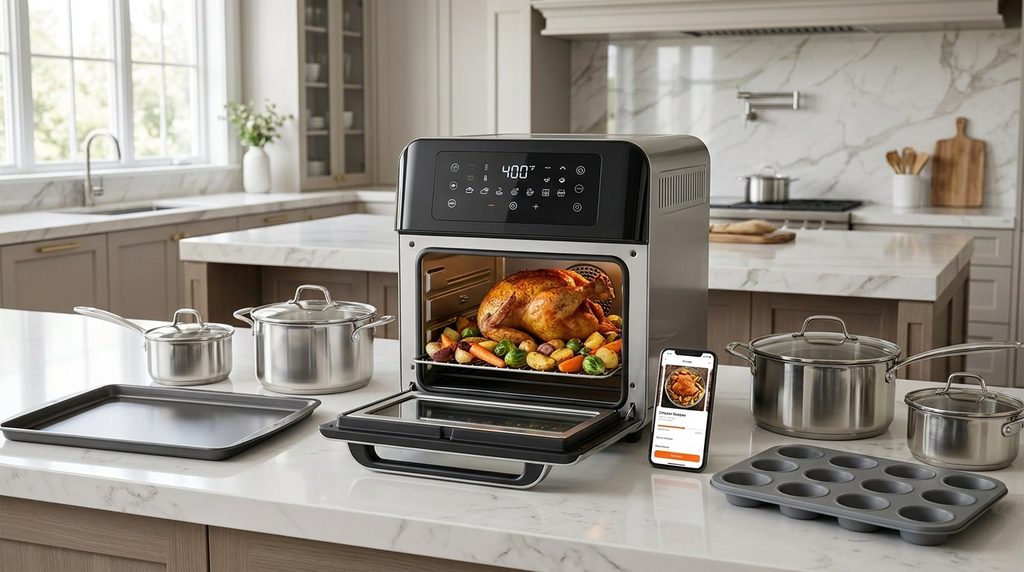
3.Coat and Mist Lightly With High-Smoke-Point Oil: Press panko firmly onto the food so it adheres, transfer pieces to a wire mesh air-fryer basket, and mist lightly with avocado, canola, or light olive oil. Hot air needs a thin film of oil to brown starches evenly.
4.Leave Airflow Space and Flip Halfway: Arrange food in a single layer with small gaps between pieces overcrowding traps steam. Flip each piece halfway through Cooking so both sides brown cleanly.
Preventing Smoke and Overcooking During High-Heat Cycles
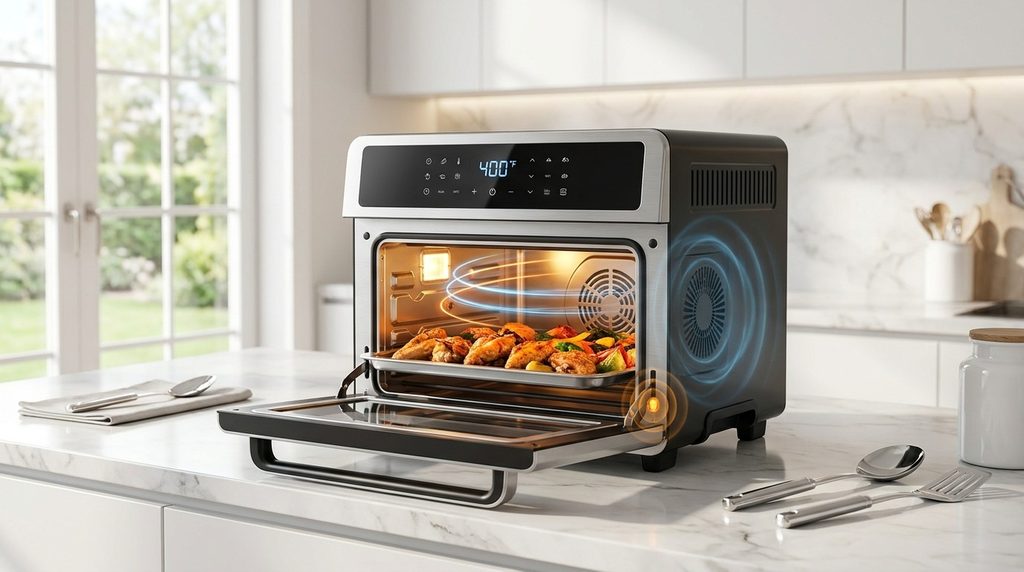
- Add a Tablespoon of Water to the Drip Tray: When air-frying fatty foods like chicken thighs, sausages, or bacon, rendered fat drips onto the bottom catch pan. Adding 1 tablespoon of water (or lining the drip pan with foil and a splash of water) keeps dripping fat cool enough that it never smokes.
- Account for Carryover Heat: Because circulating air transfers heat quickly, dense proteins continue rising by 5°F to 8°F (3°C to 4°C) after leaving the oven. Pull chicken breasts or salmon fillets just as they reach target temperature and let them rest for 5 minutes before slicing.
Operating and Cleaning Habits That Extend Appliance Life
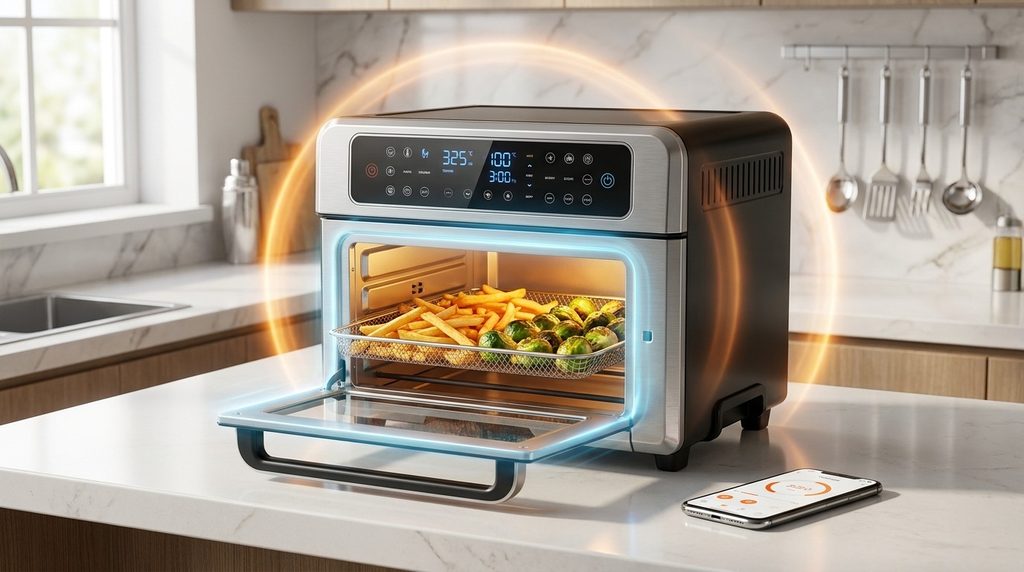
. Leave 5 Inches of Counter Clearance: Keep at least 5 inches (12 cm) of open space behind and above the oven so rear exhaust vents release hot air safely without heating adjacent walls or cabinets.
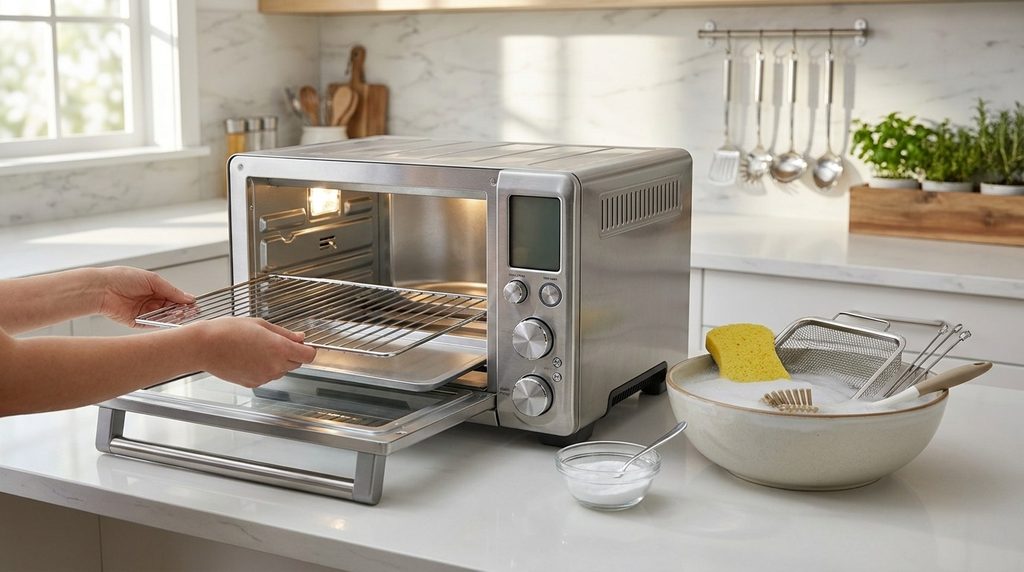
- Empty the Crumb Tray After Every Use: Once the oven cools completely, slide out the bottom crumb tray, brush off crumbs, and wipe away grease splatters before they bake onto the metal during the next preheat.
- Clean Interior Walls With a Baking Soda Paste: For baked-on grease spots on stainless steel walls, mix baking soda with a little water into a thick paste, let it sit for 20 minutes, and wipe clean with a damp microfiber cloth never use harsh chemical oven sprays inside a countertop convection oven.
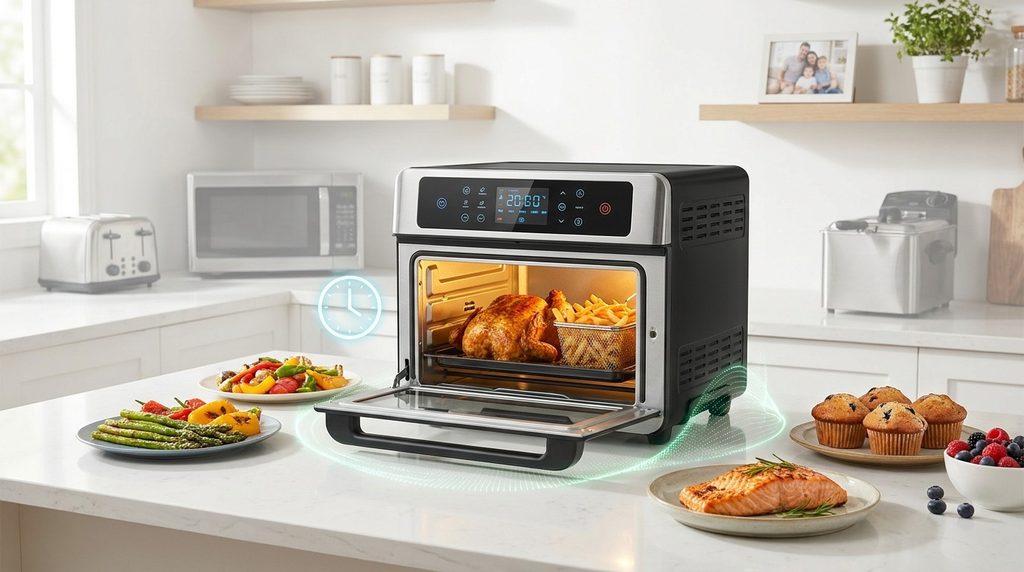
- Keep Everyday Countertops Uncluttered: Give your air fryer oven a permanent spot near a dedicated wall outlet, store baking sheets and mesh racks vertically in an adjacent cabinet, and spend ten minutes resetting the counter after dinner so the oven is always ready for the next meal.
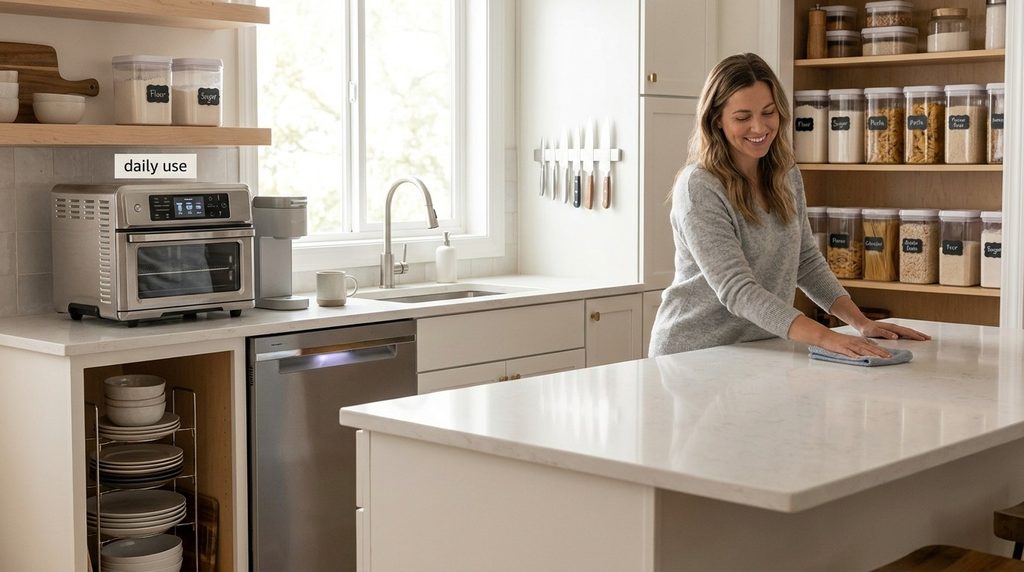
With generous rack capacity, a stainless steel interior, and a few simple habits around airflow and cleanup, a smart air fryer oven handles the bulk of daily roasting, toasting, and crisping faster and with far less heat than firing up a full-size oven.
If you are comparing models with stainless steel interiors and generous rack space, you can browse our tested picks in our Smart Air Fryer Oven Guide.