Cordless Mini Electric Food Choppers: How to Choose, Use, and Clean a Compact Prep Processor
When a compact 450 ml rechargeable food chopper beats hauling out a full-size food processor—and what to check in blade quality, bowl materials, and battery safety before buying.
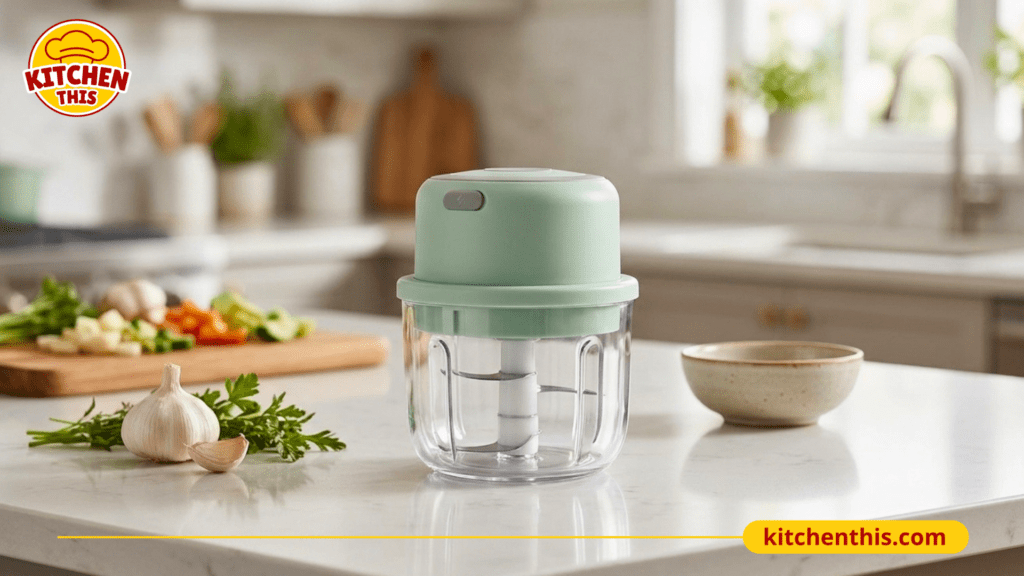
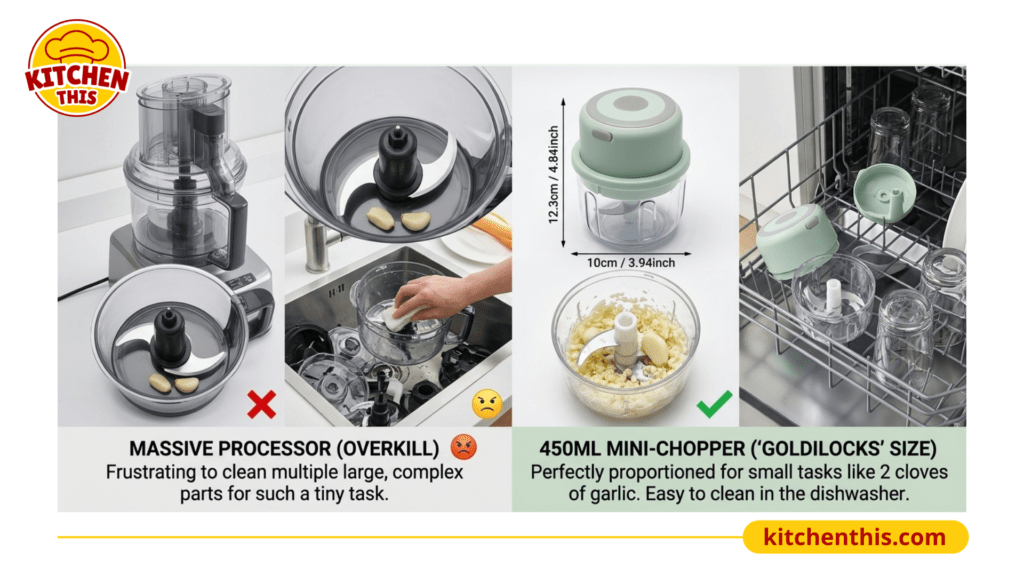
Hauling a heavy 11-cup food processor out of a lower cabinet just to mince four cloves of garlic, a thumb of ginger, and half a red onion rarely feels worth the cleanup. That everyday gap is where a cordless mini electric food chopper earns its drawer space: with a 350 ml to 500 ml (1.5- to 2-cup) bowl, a rechargeable motor head, and multi-tier stainless steel blades, it handles small-batch aromatic prep in seconds and rinses clean under the tap in under a minute.
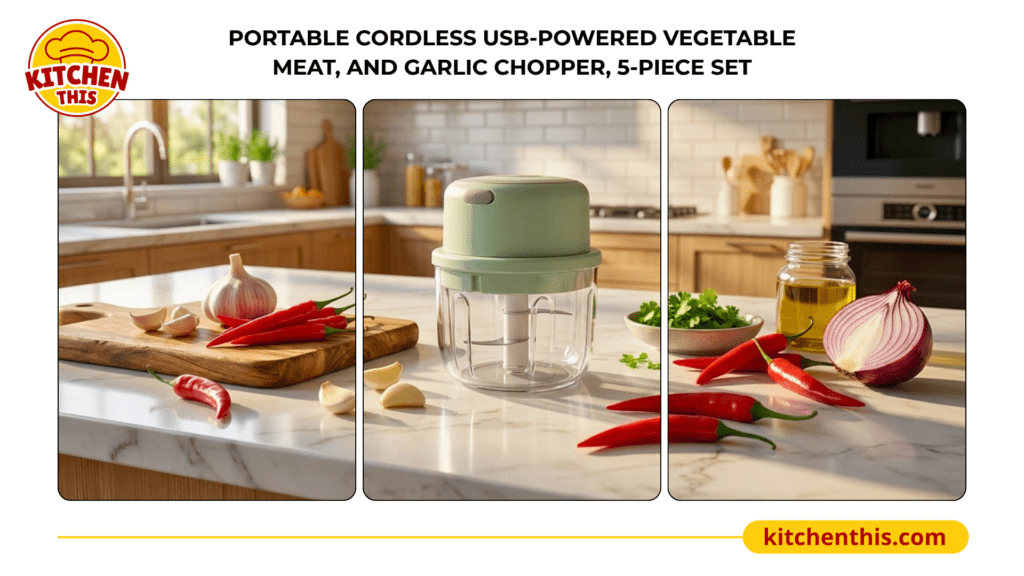
After half a century in the culinary business, I can assure you that the most valuable commodity in any kitchen is time. The main purpose of purchasing this appliance is to drastically save preparation time and simplify repetitive chopping and food-prepUnderstanding what a compact USB-rechargeable chopper does brilliantly.Understanding what a compact USB-rechargeable chopper does brilliantly—and where a manual pull-chopper or full-size processor still makes more sense—helps you choose a reliable model that actually holds up to daily cooking.
How Mini Electric Choppers, Pull-Cord Choppers, and Full Processors Compare
Each style of food chopper solves a different prep problem depending on batch size, texture control, and counter storage:
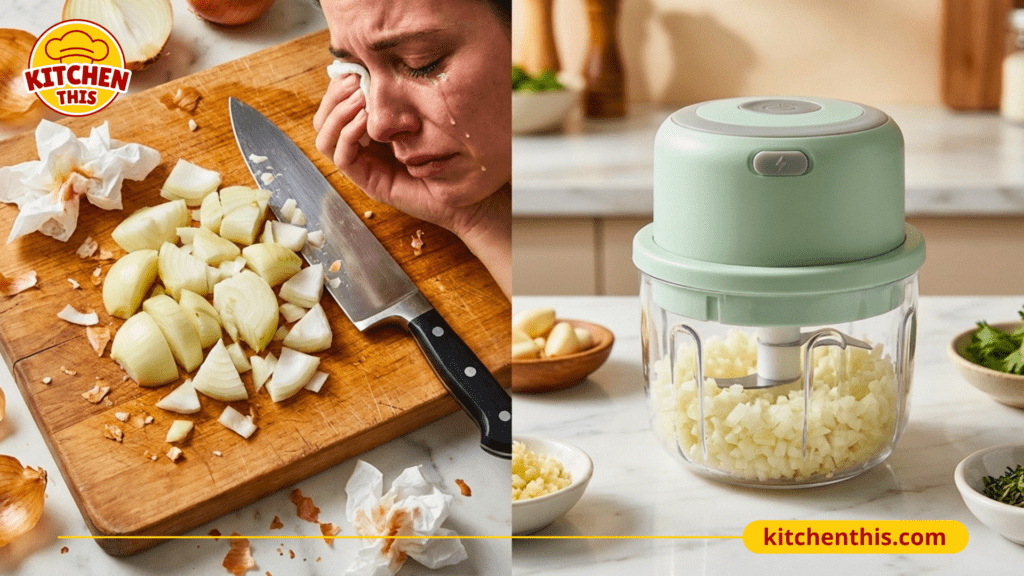
| Appliance Type | Best Batch Size | Texture & Consistency Control | Strengths | Practical Limitations |
| Cordless Mini Electric Chopper (400–500 ml) | Small batches: 2–10 garlic cloves, 1 onion, herbs, chilies, or ½ cup nuts | Fast, uniform mincing or smooth purées via short 2- to 3-second pulses | Zero hand fatigue, no power cord on the counter, fits inside a standard drawer | Not built for ice cubes, hard coffee beans, or heavy bread dough |
| Manual Pull-Cord Chopper | Small batches of soft vegetables, salsa, or boiled eggs | Good for coarse-to-medium dice; takes extra pulls for fine pastes | Needs no battery charging and works well for camping or power outages | Requires noticeable arm effort on dense carrots, ginger, or raw meat |
| Full-Size Stand Food Processor (8–14 Cups) | Large family batches, pie dough, shredded cheese, and sliced vegetables | Precision slicing discs, shredding plates, and heavy-duty dough blades | Handles tough, high-volume tasks effortlessly | Heavy to lift, takes up prime cabinet space, and leaves multiple bulky parts to wash |
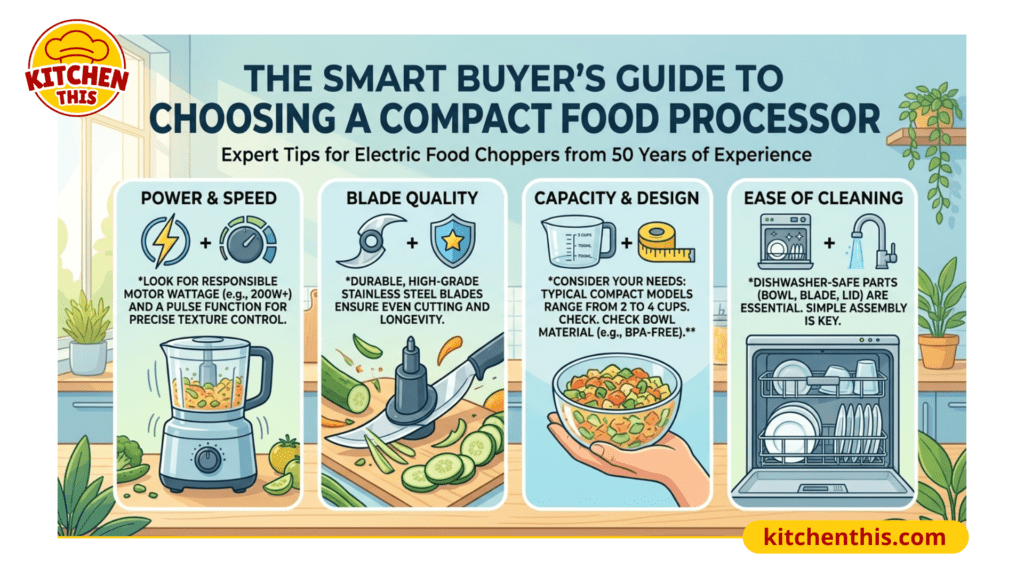
Buyer’s Guide: Four Details That Separate Durable Mini Choppers From Flimsy Gadgets
Because compact wireless choppers are lightweight appliances, build quality varies dramatically across models. Checking four specific features before buying prevents dull blades and dead batteries:
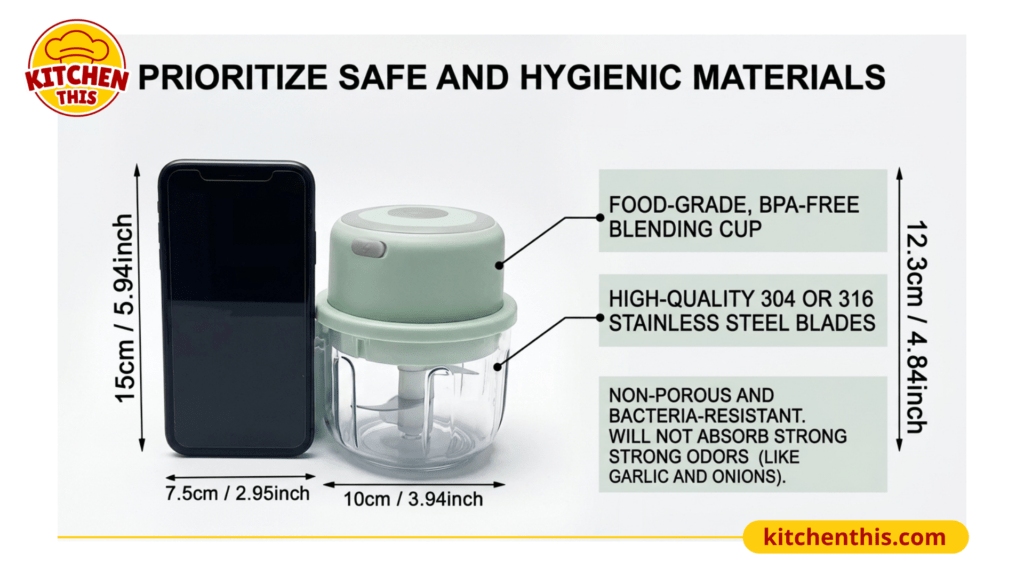
. Food-Grade BPA-Free Bowl or Borosilicate Glass Cup: Look for thick, shatter-resistant BPA-free Tritan plastic or tempered borosilicate glass bowls with non-slip silicone base rings so the cup stays planted on smooth quartz or granite countertops while pulsing.
. 304 or 316 Stainless Steel Multi-Level Blades: A three-blade staggered S-curve shaft reaches ingredients near both the bottom and middle of a 450 ml cup evenly, preventing unchopped chunks from riding above the blade line.
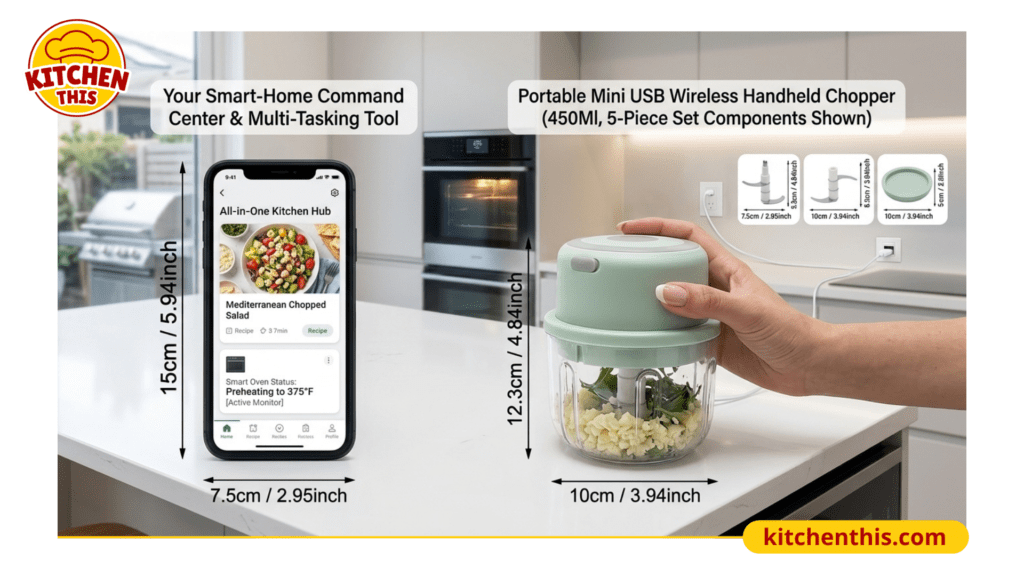
. Splash-Guard Baffle Lid and Magnetic Safety Lock: A dedicated inner splash plate sits between the bowl and the electronic motor head, keeping onion juice and oil out of the drive gear while ensuring the blades will not spin unless the lid is seated securely.
. USB-C Charging With a Sealed Silicone Port Cover: Choose a model with a standard USB-C charging port protected by a snug rubber flap so water splashes near the sink cannot corrode the charging contacts.
Step-by-Step: How to Use a Mini Electric Chopper for Even Texture
Over-pulsing a small bowl turns crisp diced onions into watery mush in five seconds. Following a simple pulsing rhythm gives you complete control:
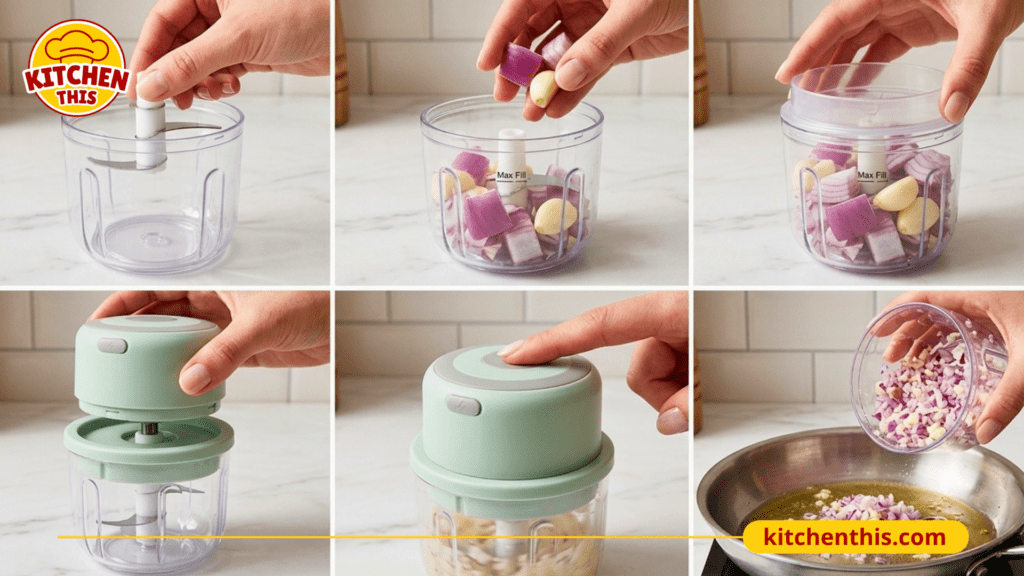
Seat the Blade Shaft First: Place the clean, dry bowl on a flat counter and lower the stainless steel blade assembly onto the center pin—always hold the blades by the top plastic stem rather than the cutting edges.
Cut Dense Ingredients Into 1-Inch (2.5 cm) Pieces: Trim fibrous ends off ginger, scallions, or boneless chicken breast and cut whole onions into quarters before loading the bowl. Never fill past the Max Fill line (roughly two-thirds full) so ingredients have room to tumble.
Lock the Splash Baffle and Motor Head: Set the inner splash guard over the rim of the cup, align the motor head onto the drive shaft, and verify that the magnetic safety sensor engages.
Use Short 2- to 3-Second Pulses: Instead of holding the top power button down continuously, tap in 2- to 3-second bursts, pausing a second between pulses so ingredients fall back down into the blades. Three pulses yield a coarse salsa dice; six to eight pulses produce a fine garlic-ginger paste or herb pesto.
Safe Cleaning and Battery Maintenance
Keeping a cordless mini chopper clean and charged takes less than two minutes when you follow basic moisture rules:
- Never Submerge or Dishwash the Motor Head: The top motor housing contains the lithium-ion battery and circuit board. Wipe the exterior and underside with a damp soapy microfiber cloth, then dry immediately with a towel.
- Three-Second Self-Clean Rinse for the Bowl and Blades: Right after emptying minced garlic or chilies, add warm water and one drop of dish soap to the bowl, attach the baffle and motor head, and pulse for 3 seconds. Rinse the cup, baffle, and blades under warm running water and air-dry completely before reassembling.
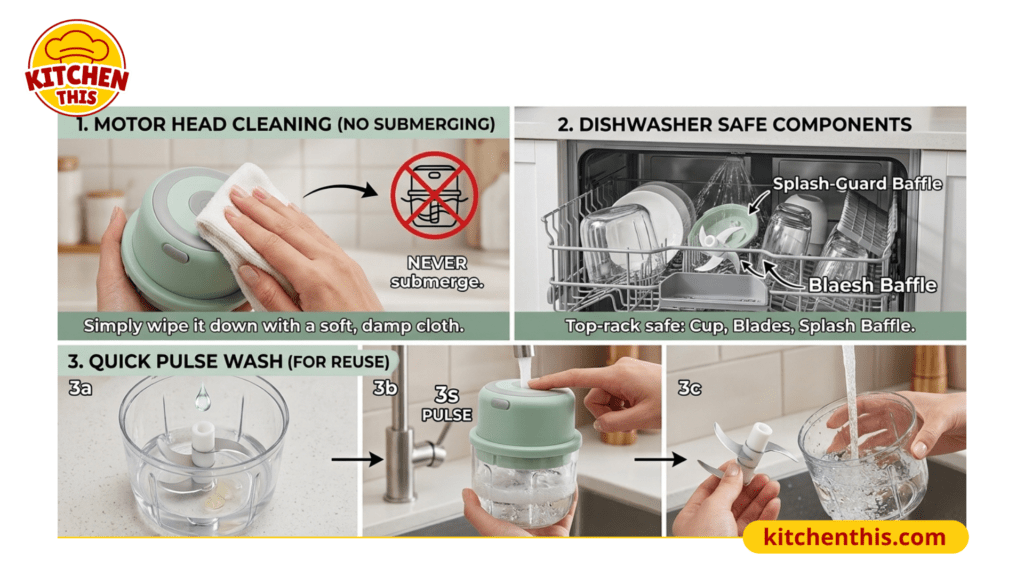
Recharge Before the Battery Drains Completely: Plug the motor head in for a top-up charge once every week or two rather than running the battery completely flat—shallow, regular charging extends lithium-ion battery lifespan significantly.
Looking to streamline everyday prep without hauling out a full-size processor? Explore our Cordless Mini Electric Food Choppers comparison to find compact, BPA-free models with multi-tier stainless steel blades.
Three Simple Ways to Store and Use a Compact Chopper
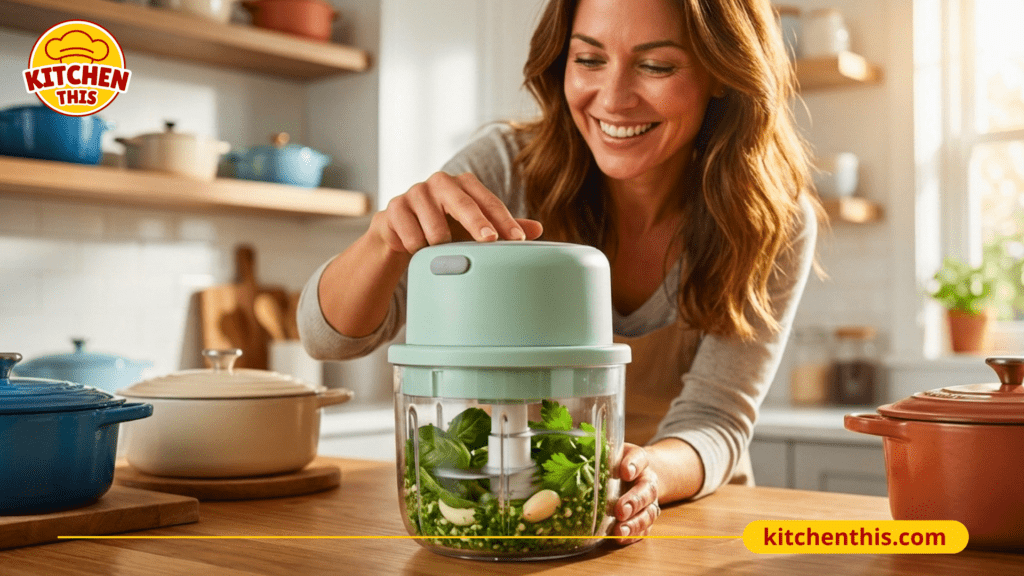
- Keep It in Your Primary Prep Drawer: Store the assembled cup, splash baffle, and motor head right beside your cutting boards and chef’s knives so reaching for it takes less effort than mincing garlic by hand.
- Batch-Prep Aromatics for Busy Weeknights: Pulse a full 450 ml cup of peeled garlic cloves and fresh ginger with 2 tablespoons of neutral olive oil, then store the paste in a small glass jar in the fridge for up to five days of instant stir-fry and sauce prep.
- Make Fresh Small-Batch Sauces and Dressings: Use the chopper to emulsify homemade chimichurri, basil pesto, lemon-tahini dressing, or roasted red pepper dip right before dinner without dirtying a full blender pitcher.

A well-built cordless mini electric chopper will never replace a full-size stand processor for holiday baking or bulk slicing—but for daily garlic, onions, herbs, nuts, and fresh condiments, it eliminates the most repetitive knife work in the kitchen with minimal cleanup.