
How to Layer Flavors in Cooking, Simple Techniques for Deeper, Richer Dishes
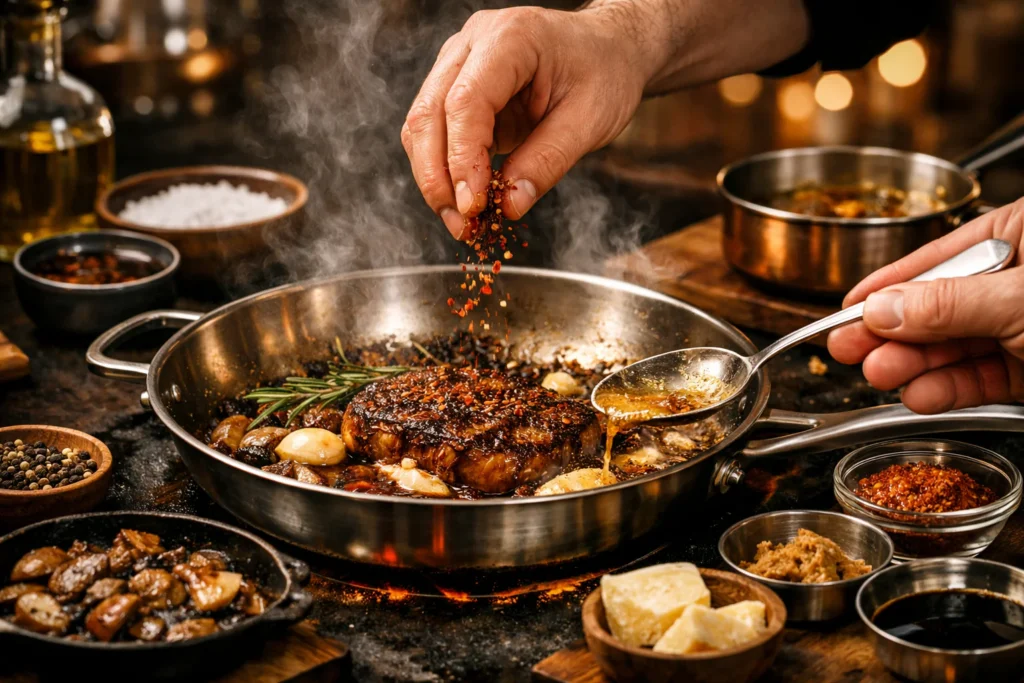
Have you ever wondered why a restaurant sauce tastes deeper and more balanced than a homemade version made with the exact same ingredients? The difference rarely comes down to complicated recipes, it comes down to layering flavors at every stage of cooking.
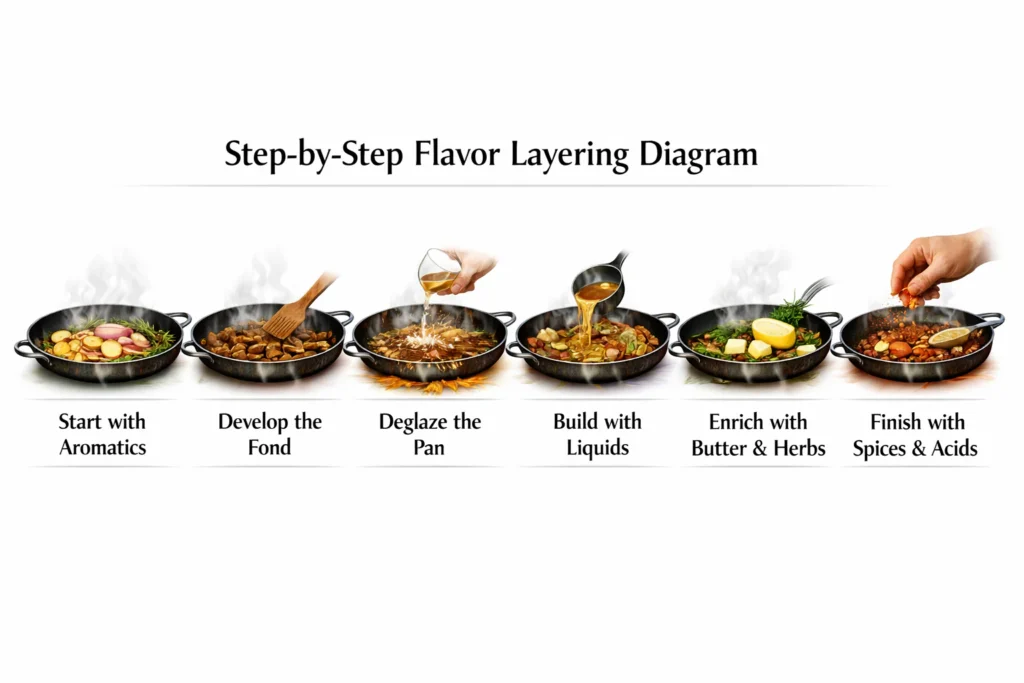
Instead of adding all your seasonings at the very end, great home cooks build taste step by step through aromatics, controlled browning, acidity, and texture. Below are the core techniques professional kitchens use to give everyday meals richer, well-rounded flavor.
Table of Contents
Start With an Aromatic Base
Flavor development begins before your main protein or vegetables ever hit the pan. Professional kitchens rely on foundational aromatic bases, such as French mirepoix (onions, carrots, and celery), the Cajun “holy trinity” (onions, celery, and bell peppers), or Italian soffritto.
Gently sweating finely diced onions, shallots, garlic, celery, or carrots over low to medium-low heat softens their sharp bite and releases natural sweetness without burning them, creating a savory foundation for soups, stews, and sauces.
Bloom and Toast Your Spices
Dried spices lose much of their aroma sitting in a pantry jar, so tossing them straight into a cold sauce rarely brings out their best flavor. Instead, toast whole spices, such as cumin seeds, coriander, or black peppercorns, in a dry skillet for 30 to 60 seconds until fragrant, or bloom ground spices in warm oil or butter for a few seconds before adding liquids. Heat releases their essential oils and gives the whole dish a warmer, rounder spice profile.
Brown Your Ingredients and Deglaze the Pan
When meat, mushrooms, or hearty vegetables sear in a hot pan, they leave behind browned, caramelized bits stuck to the bottom. Cooks call this browned layer fond, and it holds concentrated savory flavor that you never want to wash down the sink.
Pouring a splash of liquid into that hot pan dissolves the browned bits and turns them into the base of a rich pan sauce:
Citrus Juice or Vinegar: For fish, chicken, or quick vegetable sautés, a splash of lemon juice, dry vermouth, or apple cider vinegar loosens the fond and adds immediate brightness.
Dry Wine: A splash of dry white or red wine lifts the browned bits off the pan while adding subtle fruit notes and acidity to cut through rich fats.
Stock or Broth: Chicken, beef, or vegetable stock deglazes the pan cleanly and builds savory body for reductions and gravies.
Season Gradually at Every Stage
Before Cooking: Salt meat or fish ahead of time so it seasons throughout and browns better in the pan.
While Sweating Aromatics: A pinch of salt draws moisture out of onions and vegetables, helping them soften evenly without scorching.
During Simmering and Before Serving: Taste your sauce after it reduces, since liquids concentrate as they evaporate, and make one final adjustment right before plating.
Balance Richness With Acidity
Heavy, slow-cooked stews or butter-rich sauces can start tasting flat after a few bites if nothing cuts through the richness. A squeeze of fresh lemon juice, a splash of sherry or red wine vinegar, or a few pickled capers stirred in right before serving wakes up the entire dish.
The reverse works just as well: if a tomato sauce or vinaigrette tastes overly sharp or acidic, swirling in a cold pat of butter, a drizzle of good olive oil, or a splash of cream rounds out those sharp edges and gives the sauce a smoother finish.
Add Contrasting Textures Before Serving
Even a well-seasoned soup, risotto, or braised dish feels monotonous if every bite has the exact same soft texture. Adding one crisp or fresh element at the very end makes the flavors stand out much more clearly:
Flaky Salt and Fresh Herbs: Finishing a dish with flaky sea salt and freshly chopped herbs adds clean bursts of flavor right before the plate hits the table.
Crispy Toppings: Fried shallots, toasted breadcrumbs, garlic chips, or crisp parmesan frico add a savory crunch to creamy soups and pastas.
Toasted Nuts and Seeds: Toasted pine nuts, sliced almonds, or pumpkin seeds bring warm, nutty crunch to roasted vegetables and grain bowls.
Keep Your Flavor Layers Focused
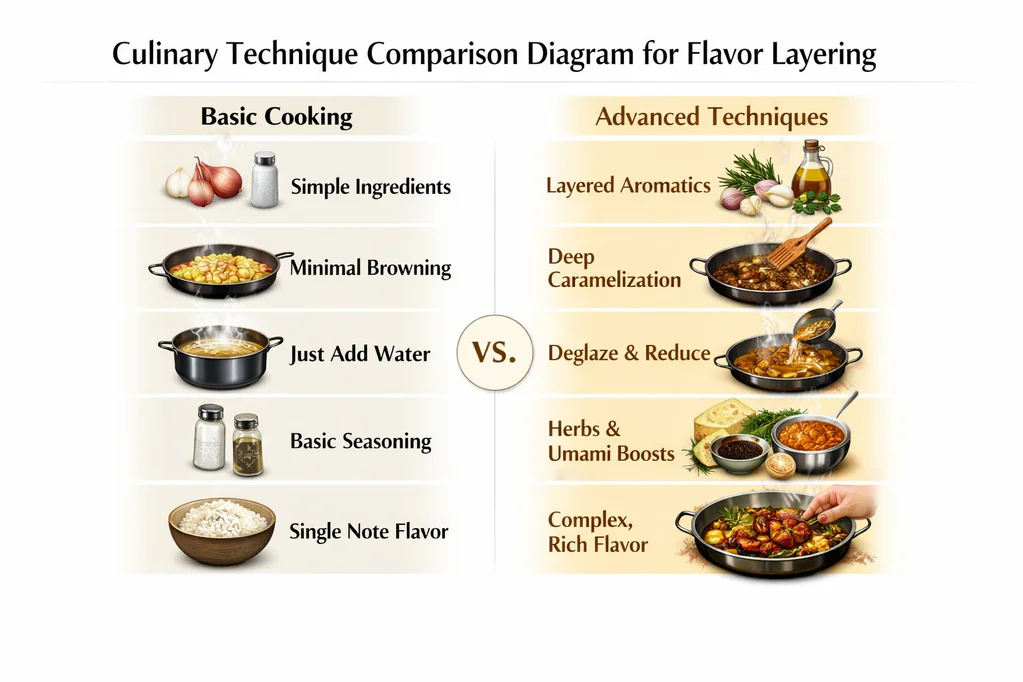
Layering flavors does not mean throwing every spice and sauce in your pantry into the same pot. When too many bold ingredients compete, the dish tastes muddled rather than complex. Pick two or three complementary elements, such as browned mushrooms, thyme, and a splash of white wine, and let each step support the main ingredient instead of covering it up.
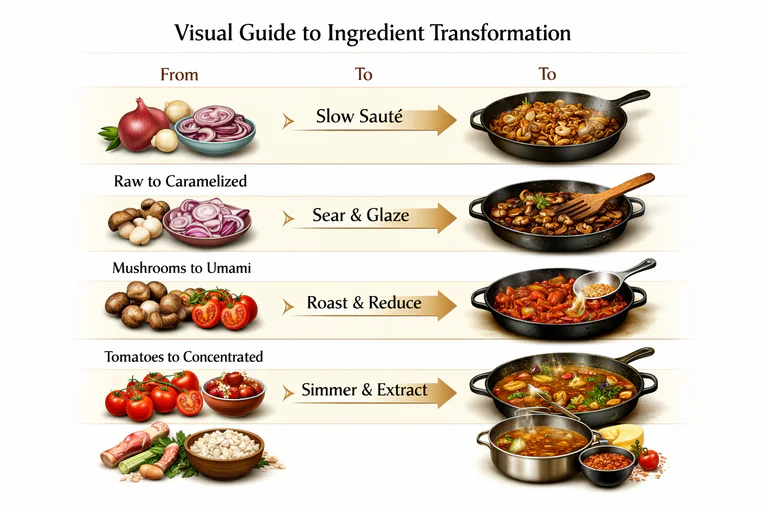
Building deeper flavor at home does not require expensive ingredients or complicated restaurant techniques, it simply comes down to paying attention to each step while you cook.
The next time you make a soup, sauce, or weeknight skillet meal, give your aromatics an extra few minutes to soften, deglaze the browned bits off the pan, taste as you season, and finish with a touch of acid or crunch. Those small habits add up fast and turn everyday home cooking into food with real depth.