Enameled Cast-Iron Dutch Oven Buying & Cooking Guide
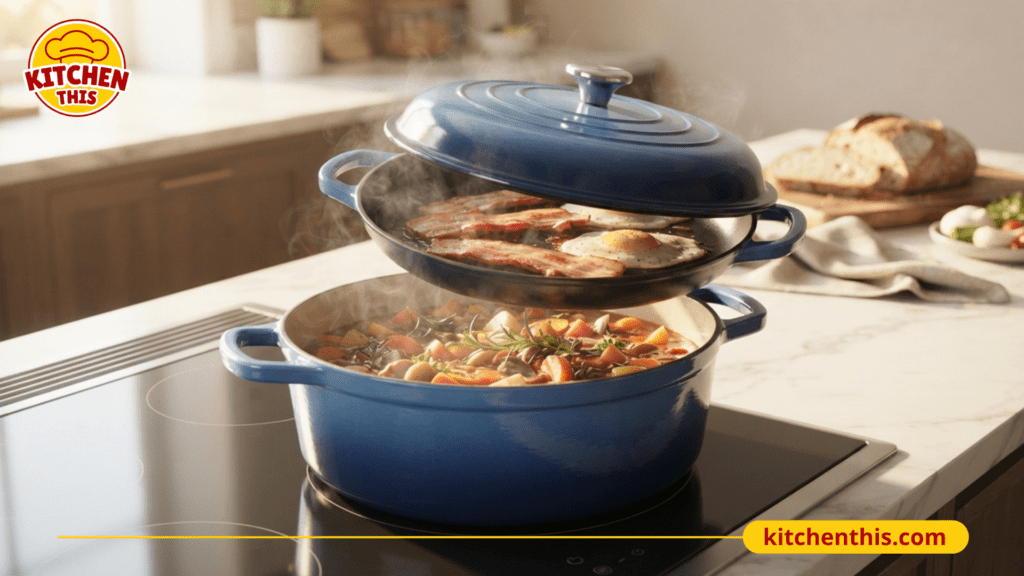
Well-built Enameled Cast-Iron Dutch Oven simplifies daily cooking immediately.
Table of Contents
Why a Heavy-Duty Dutch Oven Replaces Half the Pots in Your Cabinet
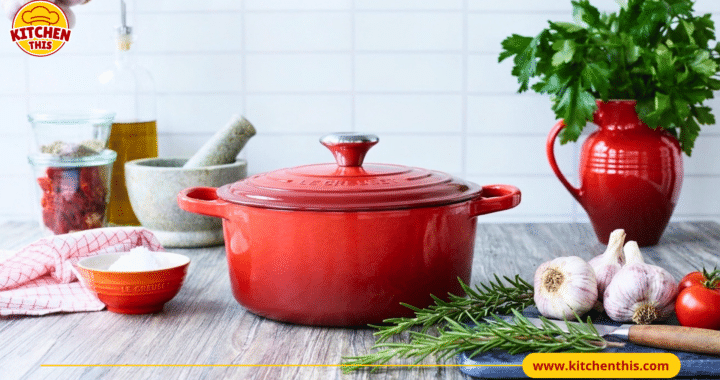
If your Kitchen Cabinets are crowded with thin stockpots, nonstick pans that warp over high heat, and baking dishes you rarely pull out, a well-built Enameled Cast-Iron Dutch Oven simplifies daily cooking immediately. Because thick cast iron absorbs heat slowly and holds it evenly across the base and walls, one pot can sear chuck roast on the stovetop, simmer tomato sauce without scorching, braise stews in the oven, and bake crusty sourdough bread.
Unlike bare cast iron, an enamel coating protects the metal from rust and acidic ingredients like wine, citrus, and tomatoes, meaning you never have to season it with oil and you can clean it with warm soapy water.
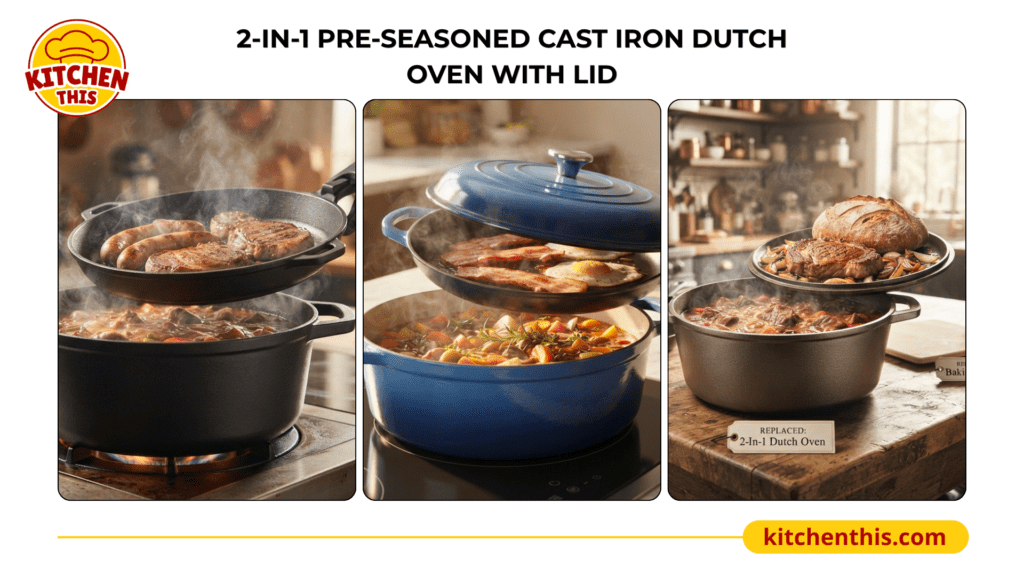
Whether you are looking at a traditional enameled Dutch oven or a 2-in-1 pre-seasoned cast-iron combo cooker (such as a 4.8-quart pot paired with a 10.5-inch / 26.67 cm skillet lid), choosing the right design comes down to how you cook most nights. Below, we break down how enameled and pre-seasoned 2-in-1 Dutch ovens compare, what size and lid features matter most for everyday family meals, and how to clean and maintain cast iron so it lasts for decades.
How a Cast-Iron Dutch Oven Compares to Other Everyday Cookware
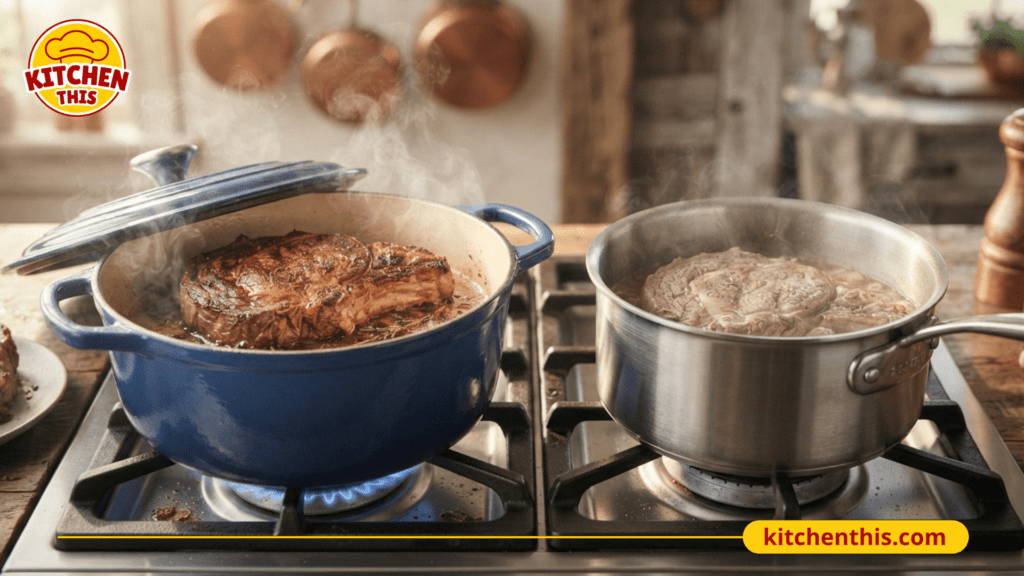
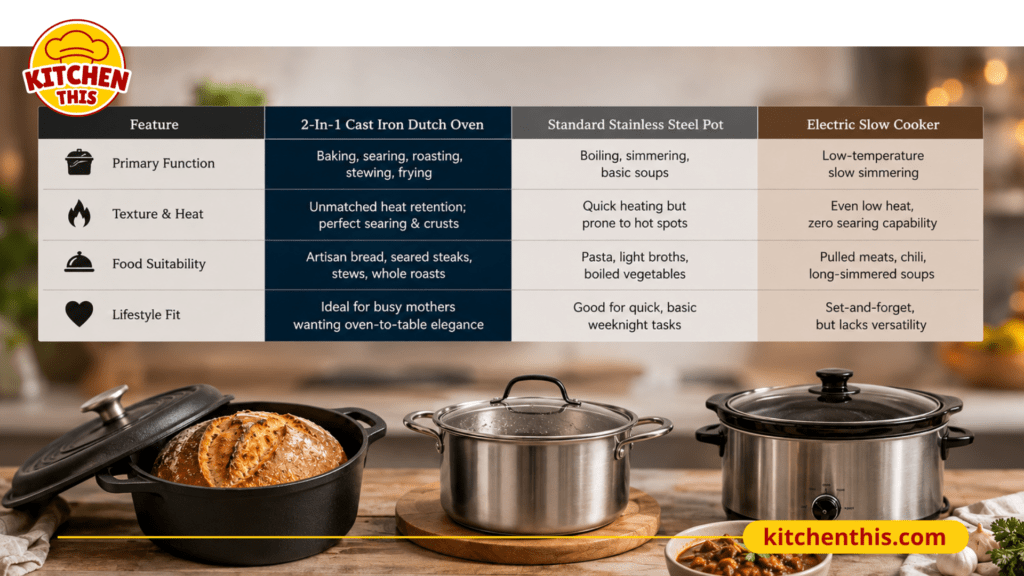
Before adding a heavy piece of cookware to your kitchen, it helps to see where a cast-iron Dutch oven, especially a 2-in-1 model with a skillet lid, outperforms standard stainless steel stockpots and electric slow cookers, and where those alternatives still make sense:
| Feature | 2-in-1 Cast-Iron Dutch Oven | Standard Stainless Steel Pot | Electric Slow Cooker |
| Primary Functions | Searing, braising, roasting, baking bread, deep-frying, plus skillet frying with the lid | Boiling pasta, simmering light broths, blanching vegetables | Hands-off, low-temperature simmering over 4 to 8 hours |
| Heat Retention & Browning | Holds high heat evenly for deep browning and crisp bread crusts; slow to cool | Heats and cools quickly; thinner bases can develop hot spots | Gentle, steady low heat; cannot sear or brown meat |
| Best Dishes | Beef stew, braised short ribs, crusty sourdough, roast chicken, skillet steaks | Spaghetti, chicken noodle soup, steamed seafood, stocks | Pulled pork, chili, bean soups, unattended weekday meals |
| Weight & Cleanup | Heavy (often 10–14 lbs); hand-wash only | Lightweight and easy to lift; usually dishwasher-safe | Heavy ceramic insert; countertop footprint required |
| Stovetop-to-Oven Use | Seamless transition up to 500°F+ (260°C+) | Oven-safe if handles are all-metal (typically up to 400–500°F) | Countertop appliance only; not stovetop- or oven-safe |
Thin stockpots work well for boiling pasta, but their temperature drops the moment cold meat or vegetables hit the bottom. Thick cast iron stores thermal energy and releases it steadily, so steaks and roasts develop a deep, browned crust instead of steaming in their own juices, and artisan loaves get the trapped steam and radiant heat needed for strong oven spring.
What to Look for When Buying a Cast-Iron Dutch Oven
Before buying a Dutch oven or braising pot, look past decorative colors and focus on the design details that affect everyday cooking safety and durability:
Practical Family Capacity (4.5 to 5.5 Quarts): For a household of four to six people, a 4.8-quart pot hits a practical middle ground. It provides enough floor space and depth to roast a whole chicken, simmer a family-sized batch of chili, or bake a standard sourdough boule, while remaining manageable to lift in and out of a hot oven without crowding your cabinets.
Non-Toxic, Chemical-Free Construction: Both porcelain-enameled cast iron and pre-seasoned bare cast iron are naturally free of synthetic nonstick coatings like PTFE and PFOA. If you choose an enameled model, stick to reputable brands that test their glazes for lead and cadmium compliance, and pair your cookware with wooden, silicone, or smooth stainless-steel utensils so you don’t chip the interior enamel.
Smart Thermometer Compatibility: Cast iron pairs especially well with wireless Bluetooth or Wi-Fi leave-in meat probes. Because a heavy Dutch oven lid traps heat and moisture, lifting it repeatedly to check a roast drops the internal temperature; inserting a thin smart probe before sliding the pot into the oven lets you monitor internal temperatures accurately from your phone without letting steam escape.
Unpacking the Features
Operation and Maintenance of Your Versatile Cooking Pot
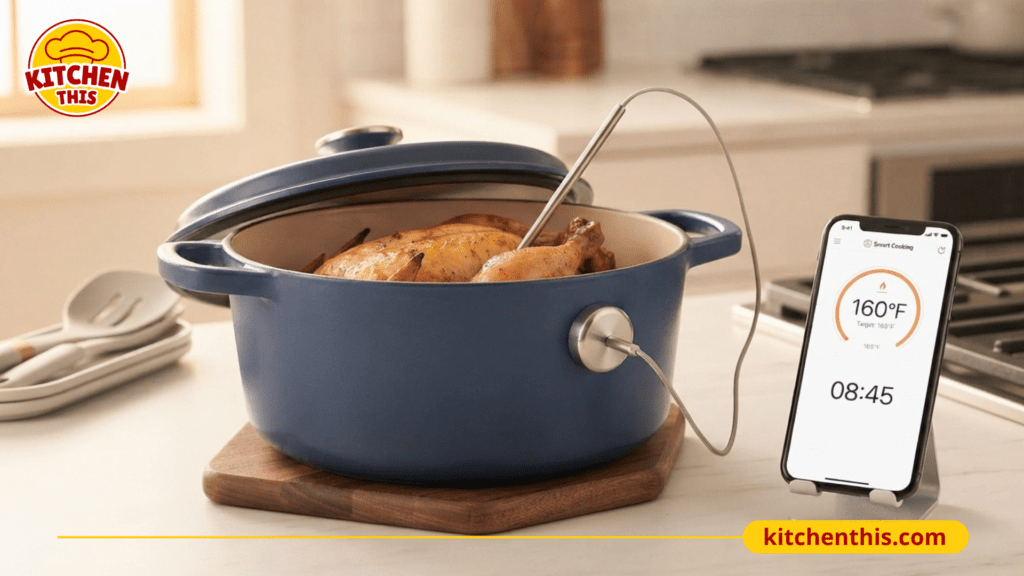
What sets a 2-in-1 cast-iron Dutch oven apart from a traditional enameled casserole is its dual-purpose lid. Instead of storing two separate heavy pieces of cookware, the lid itself doubles as a functional pan, saving both cabinet space and money.
Innovative 2-In-1 Design Features
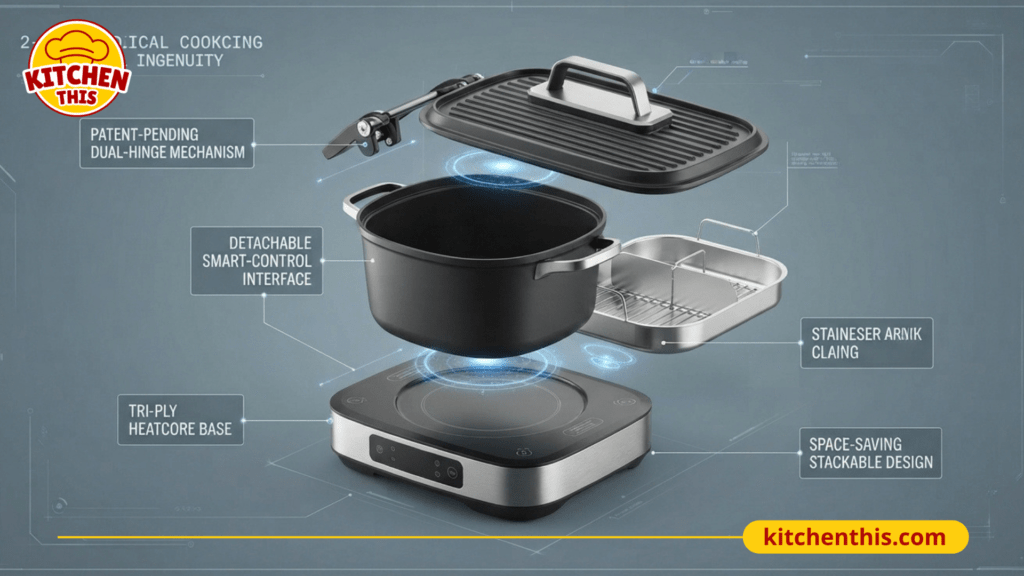
The Deep Pot (4.8 Qt): This deep, thick-walled vessel handles everything from braising short ribs and simmering hearty winter stews to deep-frying chicken or baking crusty sourdough loaves. Its heavy cast-iron walls trap steam and radiate steady heat, creating an oven-like baking environment right on your stovetop or inside your oven.
The Skillet Lid (26.67 cm / 10.5 Inches): Instead of sitting idle in a drawer while you prep ingredients, the flat-bottomed lid flips over to work as a standalone cast-iron frying pan. You can sear steaks, brown sausages, fry eggs, or bake cornbread in the skillet lid while a side dish simmers in the deep pot alongside it.
Ergonomic Handles & Lid Lifter: Cast-in side loop handles provide a sturdy, balanced grip when moving a heavy, full pot from burner to oven (always use thick oven mitts, as cast-iron handles conduct full heat). When an included metal lid lifter is paired with the set, you can hook and lift the hot lid safely without risking steam burns.
How to Operate Your Cast-Iron Dutch Oven
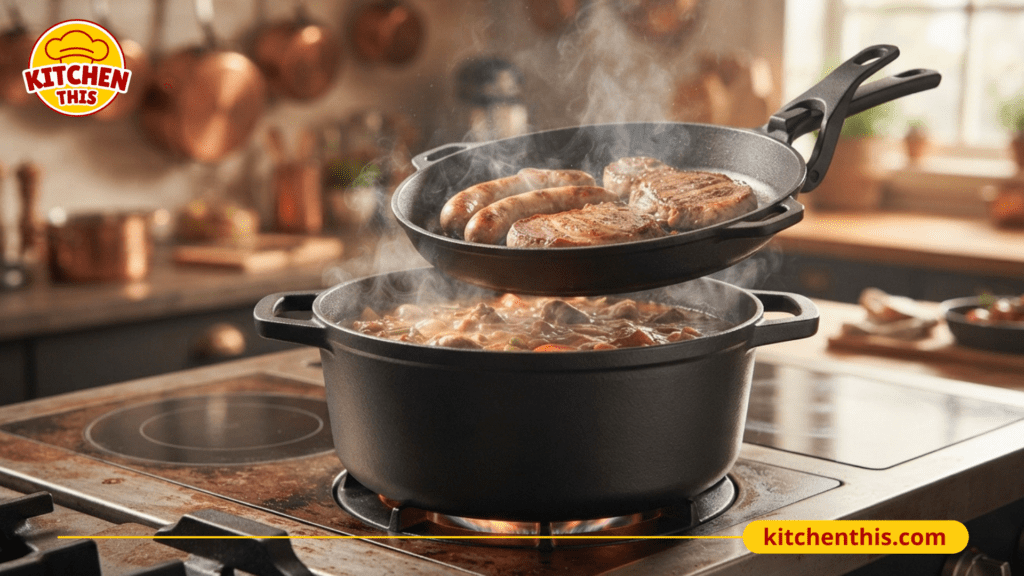
Proper Preheating: Cast iron heats slowly and holds onto thermal energy, so give it a gradual head start. Begin over low heat for 2 to 3 minutes before raising the burner to medium. Stepping up the temperature gradually prevents thermal shock and eliminates hot spots across the base.
Cooking at Lower Heat Settings: Because thick cast iron retains far more heat than thin stainless steel or aluminum pans, you rarely need to crank the burner to maximum once the pot is hot, medium or medium-low is usually plenty for steady simmering and even browning. Stick to wooden or heat-resistant silicone utensils to avoid scratching the interior surface.
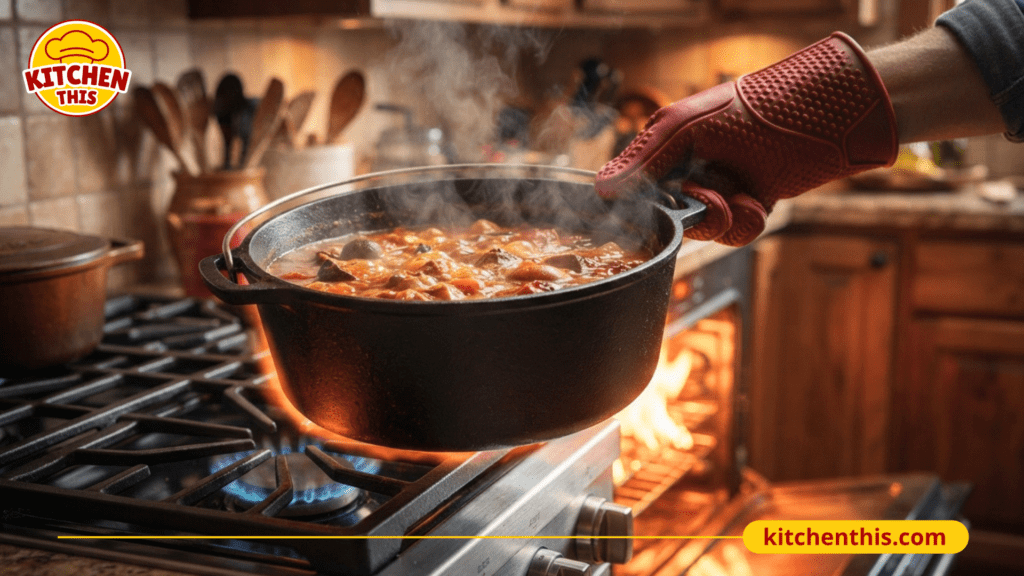
Stovetop-to-Oven Transitioning: Both enameled and bare cast-iron Dutch ovens move straight from gas, electric, or induction cooktops into ovens heated up to 500°F (260°C) (always verify the maximum oven-safe temperature of your lid’s knob if using an enameled model). Always wear thick, dry oven mitts when handling the pot, as the cast-in side handles get just as hot as the base.
Cleaning and Maintenance Guide
Taking care of cast iron is straightforward as long as you protect it from sudden temperature swings and trapped moisture:
Let It Cool Naturally: Never plunge a hot Dutch oven into cold water in the sink. Rapid cooling can warp bare cast iron or cause porcelain enamel to craze and crack. Let the pot cool down to room temperature on the stovetop before washing.
Wash Gently According to Finish: For pre-seasoned bare cast iron, scrub away stuck-on food with hot water and a stiff nylon brush or chainmail scrubber, avoiding harsh detergents or steel wool that strip the seasoning. If you are cleaning an enameled cast-iron interior, warm water, mild dish soap, and a soft sponge (plus a 15-minute soak for stubborn browned bits) are all you need.
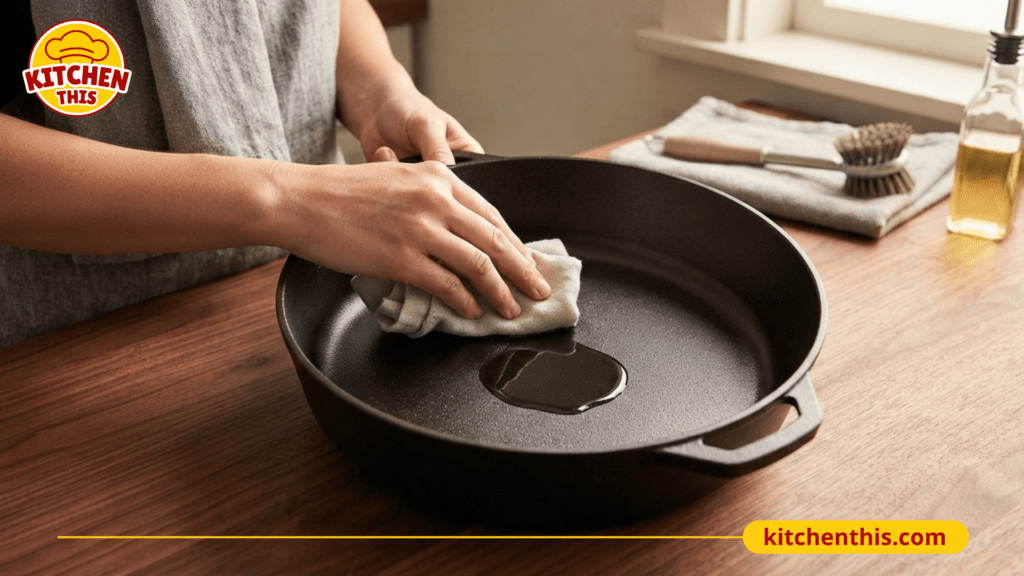
Dry Immediately and Season Bare Iron: Never leave cast iron to air-dry in a dish rack. Towel-dry the pot completely right after washing, or set it over a low burner for 1 to 2 minutes until every trace of moisture evaporates. For pre-seasoned bare cast iron, wipe a paper towel dipped in a few drops of neutral high-smoke-point oil (such as canola, grapeseed, or vegetable oil) across the interior and exterior before storing to prevent rust and keep the surface naturally slick.
Why a Cast-Iron Dutch Oven Earns Its Spot on the Stove
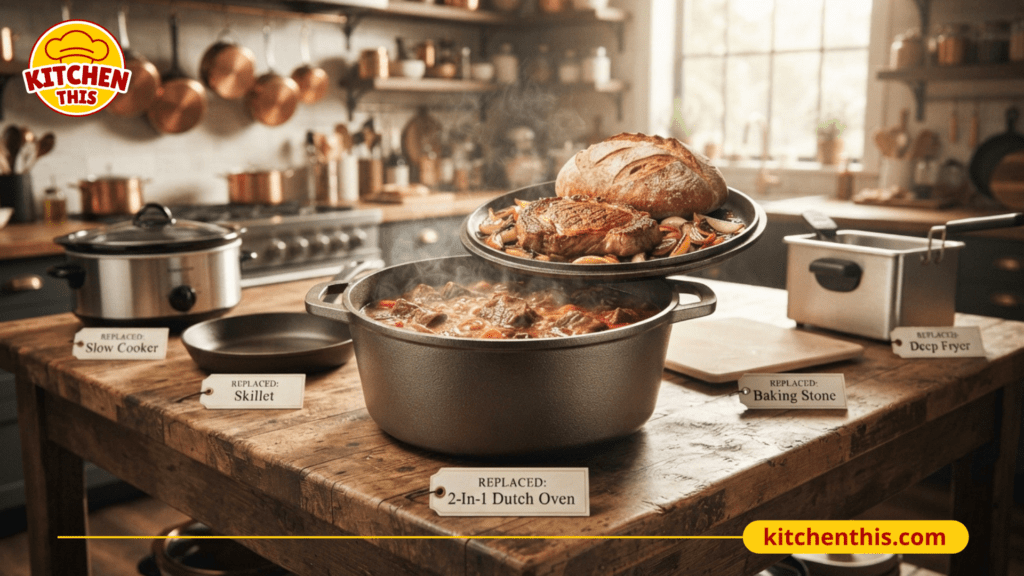
A single heavy Dutch oven takes the place of a separate baking stone for crusty sourdough, a deep fryer, a braising pan, and an everyday searing skillet, cutting down both cabinet clutter and evening dishwashing.
If you are ready to add one to your stove, you can check current pricing and availability for the 2-In-1 Pre-Seasoned Cast Iron Dutch Oven Cookware Set online, or explore our other cookware guides to compare Dutch ovens, skillets, and everyday kitchen essentials.
Simple Ways to Organize Your Kitchen Around Heavy Cookware
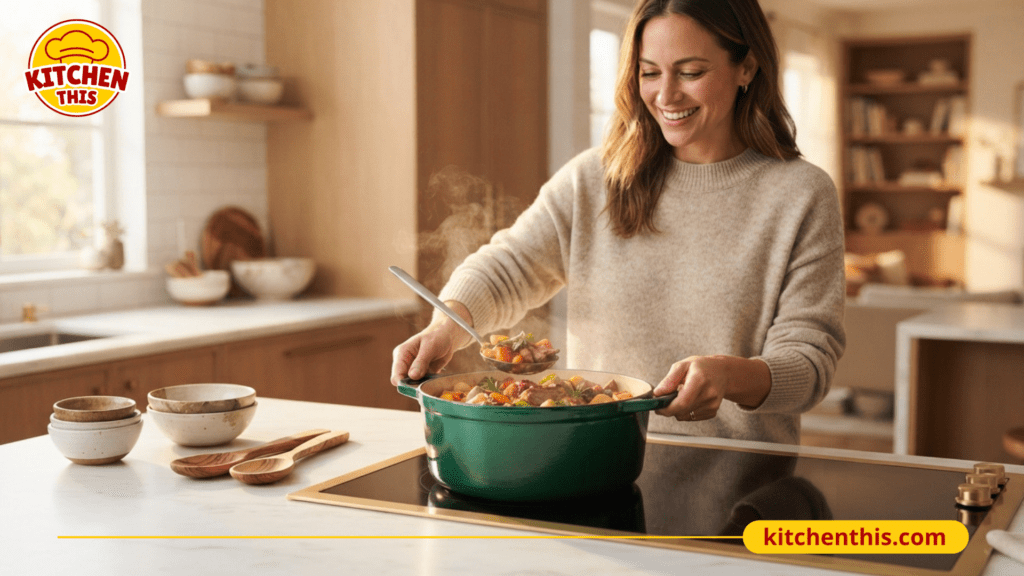
Because cast-iron cookware is heavy, storing it awkwardly in deep lower cabinets often means you reach for it less often. A few practical layout habits keep your Dutch oven accessible and cut down daily clutter:
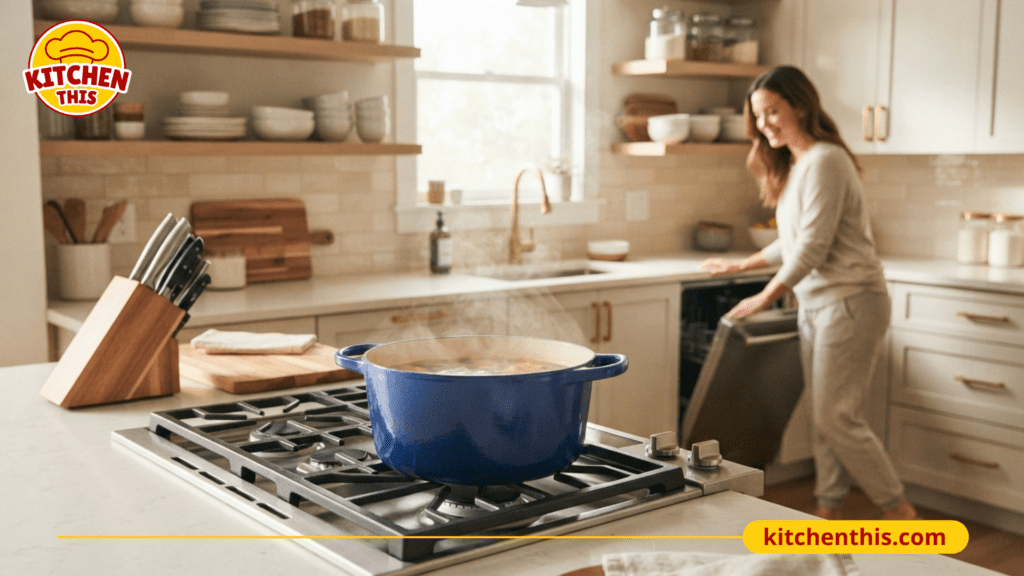
Clean as the Pot Simmers: Once a stew or braise settles into a gentle, covered simmer in the oven or on low heat, use those 30 hands-off minutes to rinse prep bowls, wipe down the counters, and load the dishwasher so cleanup is finished before dinner hits the table.
Leave Your Dutch Oven on the Stovetop: A well-maintained Dutch oven looks clean enough to stay right on a back burner. Keeping it out saves you from lifting a 12-pound pot out of a low cabinet every evening and frees up deep shelf space for lighter mixing bowls and baking pans.
Follow the “One-In, One-Out” Rule: When you bring home a versatile piece of cookware that handles searing, braising, and baking, donate or recycle the warped skillet, thin stockpot, or rarely used baking dish it replaces.
Zone Your Cooking Tools: Store heavy pots, cooking oils, and wooden spoons within arm’s reach of the stove, while keeping knives and cutting boards next to your main prep counter so you aren’t walking back and forth mid-recipe.
Whether you are furnishing your first kitchen or replacing worn-out pots, a heavy cast-iron Dutch oven, especially a 2-in-1 model with a skillet lid, covers more everyday cooking tasks than almost any other piece of cookware. With basic care, it will easily outlast nonstick pans, simplify weeknight cleanup, and keep cooking evenly for decades.
To compare specifications or order one for your kitchen, you can view current pricing and details for the 2-in-1 Pre-Seasoned Cast Iron Dutch Oven Cookware Set online, or explore our other cookware guides to compare Dutch ovens, skillets, and everyday kitchen essentials. online, or browse our other cookware reviews to find the right pots and pans for your daily cooking.