Compact Kitchen Design Guide: Prioritizing Accessibility Over Storage Capacity
The smartest Small Kitchen Solutions aren’t about squeezing more things into the room, they’re about making the space you already have work better. Start by clearing out items you rarely use, then look at your cabinets, drawers, walls, corners, and countertops with fresh eyes. You will often find usable room hiding in spots you have stopped noticing.
Once the excess is gone, organize around how you actually move while cooking: keep everyday essentials within easy reach, move occasional gear out of prime real estate, and measure every shelf before buying a single organizer. A beautiful bin that misses fitting by half an inch is just expensive clutter.
Table of Contents
Start With a Ruthless Kitchen Declutter
Small kitchens have zero margin for tools that aren’t earning their keep. Empty one cabinet or drawer at a time onto the counter where you can see everything clearly, then group similar items together. You will almost certainly uncover duplicate utensils, appliances you haven’t touched in a year, or three separate gadgets doing the exact same job.
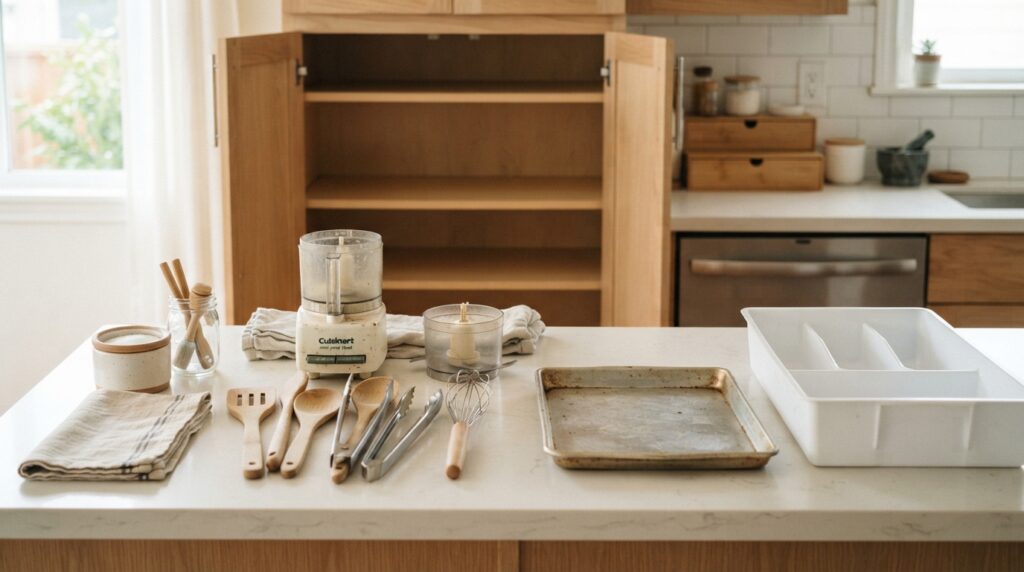
Before putting anything back, ask one simple question: Does this item deserve the prime space it occupies? Tackle one frustrating cabinet at a time rather than emptying the entire kitchen in a single chaotic afternoon.
| What You Find | Smart Next Step |
| Duplicate utensils | Keep only the versions you actually reach for daily |
| Rarely used appliances | Relocate them to high shelves or outside the main work zone |
| Broken or warped items | Repair promptly or discard |
| Unused organizers | Remove bins or racks that waste more space than they save |
Make Vertical Space Work Harder
When floor and counter square footage are tight, look upward, especially inside tall upper cabinets where top air space goes unused. Shelf risers create a second tier for plates, bowls, or mugs, while stackable bins help corral smaller pantry items.
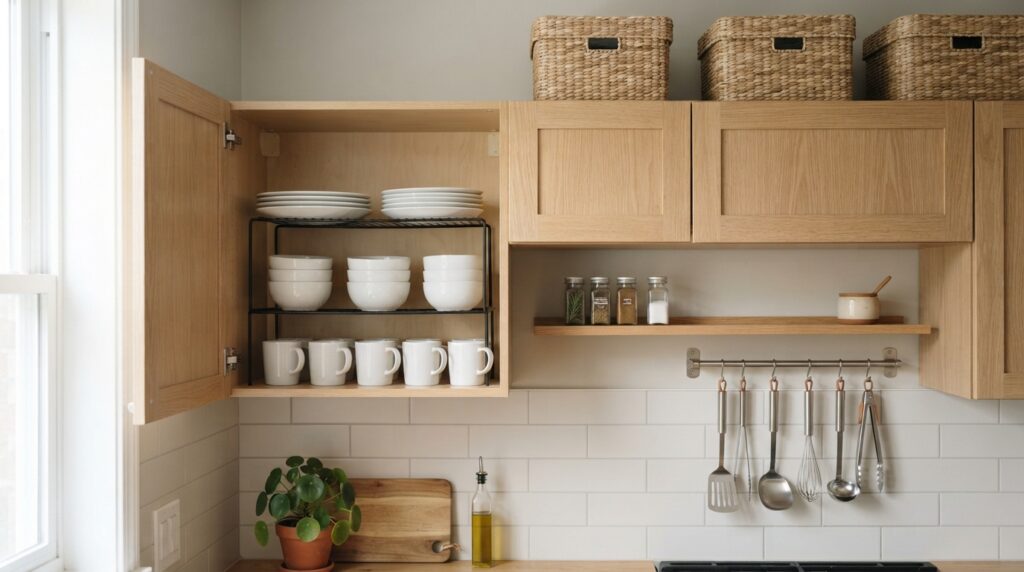
Leave enough clearance above stacked items so retrieving a bowl doesn’t require unstacking three other things first. Before mounting wall shelves or heavy racks, check wall construction and manufacturer load limits so added storage stays safe and easy to reach.
| Available Space | Practical Upgrade | Check Before Buying |
| Tall cabinet interior | Wire or acrylic shelf risers | Exact shelf height and plate diameter |
| Blank wall section | Slim wall shelf or utensil rail | Wall stud or anchor load rating |
| Deep pantry shelf | Stackable clear bins | Weight and vertical clearance |
| Space above cabinets | Lidded baskets for seasonal gear | Safe step-stool accessibility |
Turn Cabinet Doors Into Hidden Storage
The inside of a cabinet door is prime vertical real estate that most kitchens ignore. Slim door-mounted racks can hold cutting boards, baking sheets, foil wraps, lids, or lightweight spices without sacrificing shelf space inside the box.
Measure carefully before ordering: check the door thickness (so mounting screws don’t poke through the front), the width of the cabinet frame opening, and how far interior shelves sit behind the closed door so nothing collides when you swing it shut.
Conquer Awkward Corners With Smarter Access
Blind corner cabinets quickly become dead zones where heavy pots disappear behind rarely used appliances. In a compact kitchen, prioritize reach over raw capacity: a rotating turntable (lazy Susan) or a pull-out swing tray brings back-corner items forward in one motion.
| Corner Problem | Practical Fix | Measurement to Check |
| Items buried in back corners | Rotating turntable organizer | Interior shelf diameter and center post clearance |
| Deep blind-corner base cabinet | Pull-out or swing-out tray system | Cabinet door opening width |
| Unused corner wall space | Narrow corner wall shelves | Available wall width beside upper cabinets |
| Countertop corner pileups | Relocate occasional appliances elsewhere | Available lower-cabinet or closet space |
Sometimes the smartest corner upgrade costs nothing at all, simply moving one bulky, rarely used appliance out of a corner cabinet opens up immediate breathing room for everyday cookware.
Tame the Under-Sink Cabinet Without Fighting Pipes
In most small kitchens, the cabinet beneath the sink wastes half its height because drainpipes, water shutoff valves, and garbage disposals cut right through the middle. Instead of tossing cleaning bottles into a tangled pile on the cabinet floor, build storage around the plumbing:
- Use Expandable Around-the-Pipe Racks: Adjustable under-sink shelves with removable panels slot neatly around U-shaped drainpipes, creating two usable tiers for dish soap, dishwasher pods, and extra sponges.
- Add a Tension Rod for Spray Bottles: A simple spring-loaded tension rod mounted near the top front edge of the cabinet lets you hang spray bottles by their triggers, freeing the entire bottom floor for a pull-out caddy.
- Mount a Door-Mounted Trash or Sponge Caddy: Slim over-the-door baskets hold brushes, rubber gloves, and compost bags within immediate reach while keeping wet items separated from dry supplies.
Put Narrow Gaps and Toe-Kicks to Work
Compact kitchens often leave awkward 4- to 8-inch slivers of unused space beside the refrigerator, next to the range, or along the base of lower cabinets. Those narrow gaps hold far more than most homeowners realize:
- Slim Rolling Carts for Appliance Gaps: A narrow 5- or 6-inch rolling utility cart slides cleanly between a refrigerator and an adjacent wall, creating an instant pull-out pantry for canned goods, oils, and foil boxes.
- Vertical Dividers for Baking Sheets and Cutting Boards: Installing thin tension or wire dividers inside a narrow base cabinet lets you store sheet pans, muffin tins, and cutting boards upright like books, so you can pull out the exact pan you need without lifting a heavy stack.
- Toe-Kick Drawers for Flat Items: During a remodel, converting the hollow 4-inch space beneath base cabinets into shallow toe-kick drawers adds hidden storage for seldom-used platters, baking mats, or extra dish towels without taking an inch from the room.
Protect Your Countertop Like Valuable Real Estate
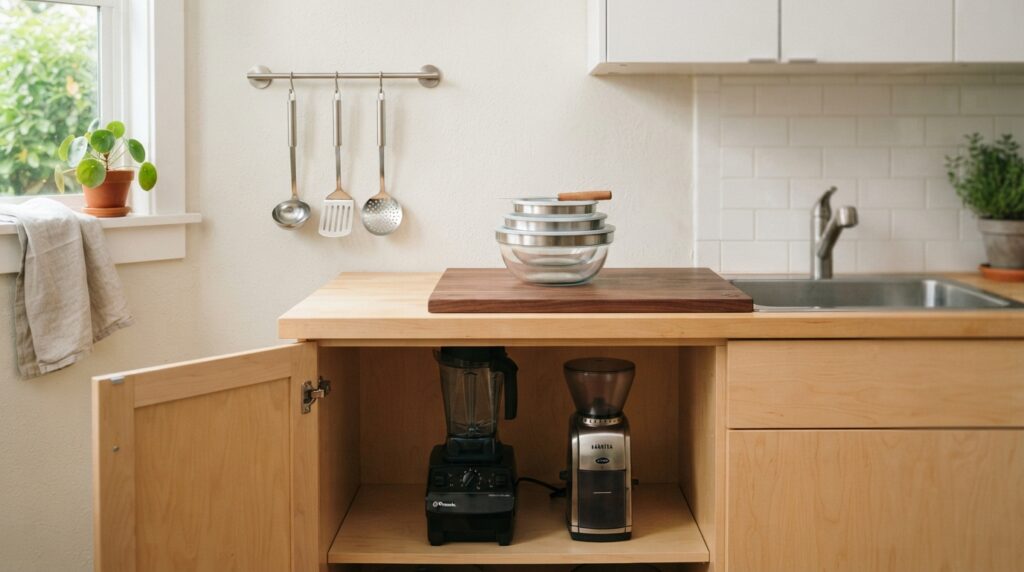
In a compact kitchen, countertop space has one primary job: giving you room to prep food safely. Resist turning every open stretch into permanent appliance parking. Keep only the appliances you use daily (such as a coffee maker or toaster) on the counter, and store stand mixers, blenders, or slow cookers in a cabinet or nearby closet, following manufacturer guidance on ventilation and cord storage.
Transform Drawers From Cluttered to Effortless
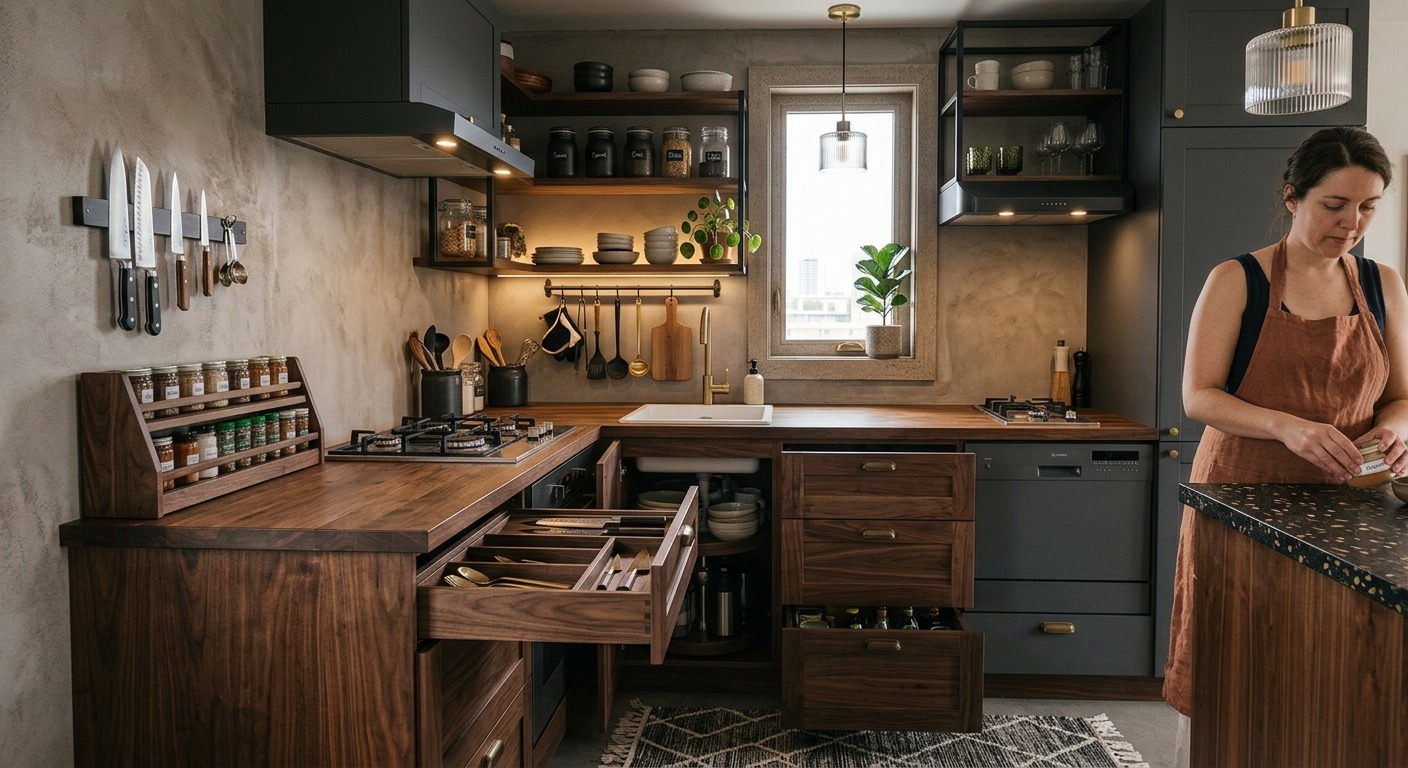
Drawers offer far better top-down visibility than deep lower cabinets, provided they have basic structure. Empty each drawer completely, weed out duplicates, and use expandable dividers to separate everyday cutlery, cooking utensils, gadgets, and foil/bag boxes, keeping your most-used tools toward the front and leaving a little breathing room so nothing jams when the drawer slides shut.
| Drawer Type | Organization Approach |
| Cutlery drawer | Separate forks, knives, and spoons with a fitted tray |
| Cooking utensil drawer | Group spatulas, tongs, ladles, and whisks by task |
| Gadget drawer | Remove duplicate peelers, openers, and measuring spoons first |
| Wraps and bags drawer | Store foil, parchment, and zip bags flat in labeled slots |
Use Walls Without Making the Room Feel Crowded
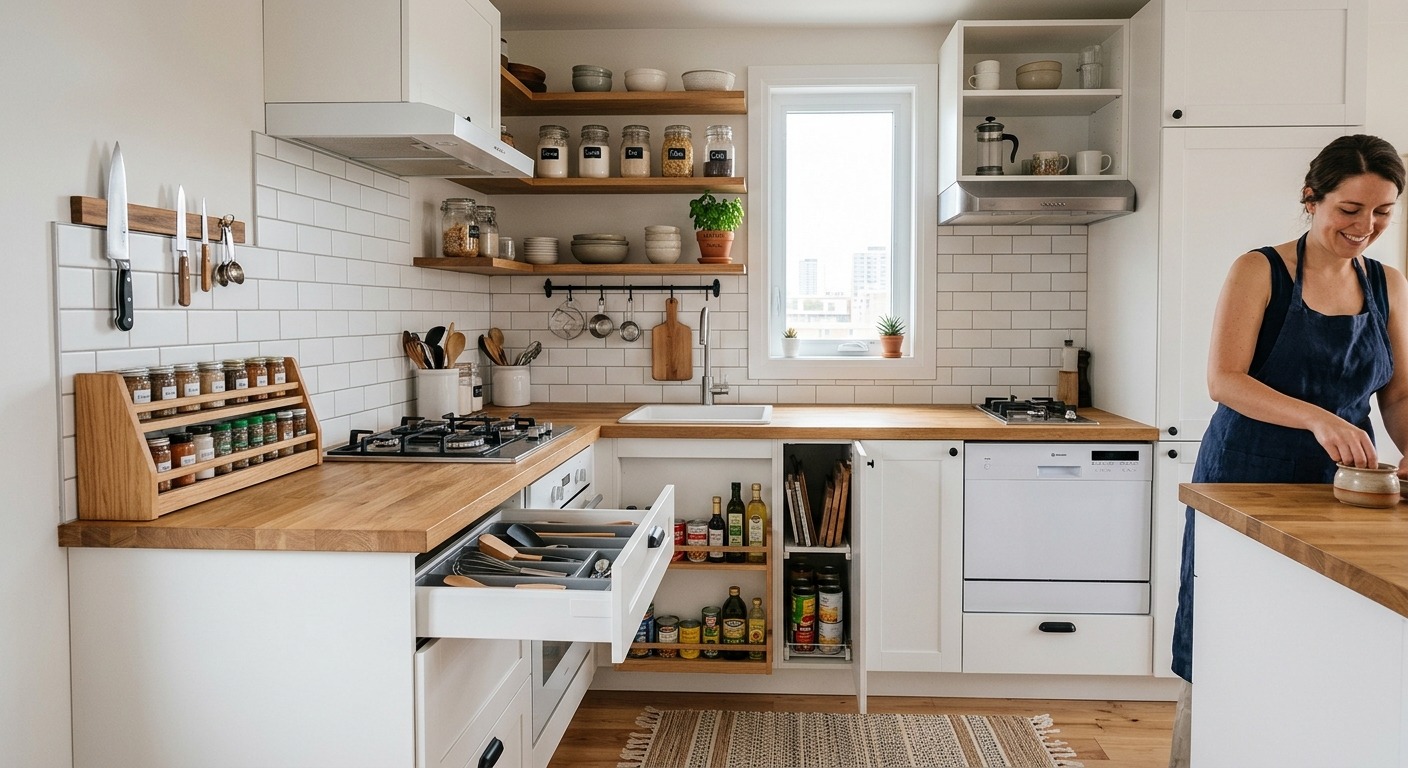
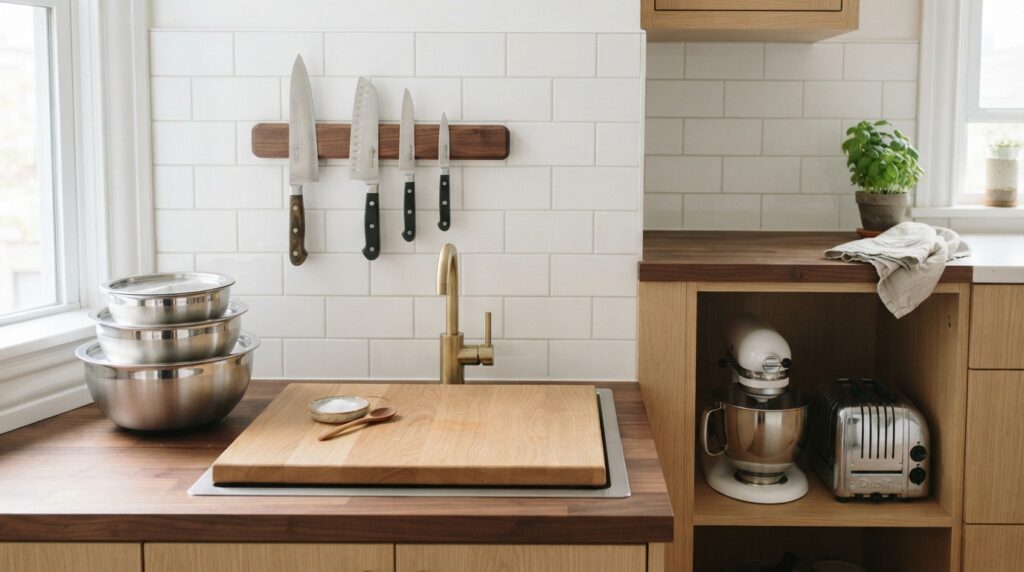
Wall-mounted rails, magnetic knife strips, and narrow spice shelves free up valuable counter and drawer space, but covering every wall makes a small kitchen feel visually busy. Pick one or two deliberate spots near your prep zone, such as a magnetic knife bar or a single utensil rail, and treat wall storage like editing rather than displaying everything you own.
Choose Multi-Function Solutions Carefully
Multi-purpose gadgets sound ideal for small kitchens, yet overly complex tools often create more clutter than they solve. Stick to straightforward dual-purpose upgrades that genuinely earn their footprint, such as a sturdy over-the-sink cutting board that temporarily extends prep counter space, or nested mixing bowls with tight-fitting lids that double as fridge storage.
Create a Smarter Appliance Strategy
Bulky appliances consume more cabinet space than almost anything else in a small kitchen. Organize them strictly by how often you cook with them rather than by size:
| Usage Frequency | Storage Priority |
| Daily | Countertop or waist-level cabinet within arm’s reach |
| Several times a week | Easy-access base cabinet or lower pantry shelf |
| Occasionally | Upper cabinet shelf or deep corner storage |
| Rarely (once or twice a year) | Utility closet, basement shelf, or donate if unused |
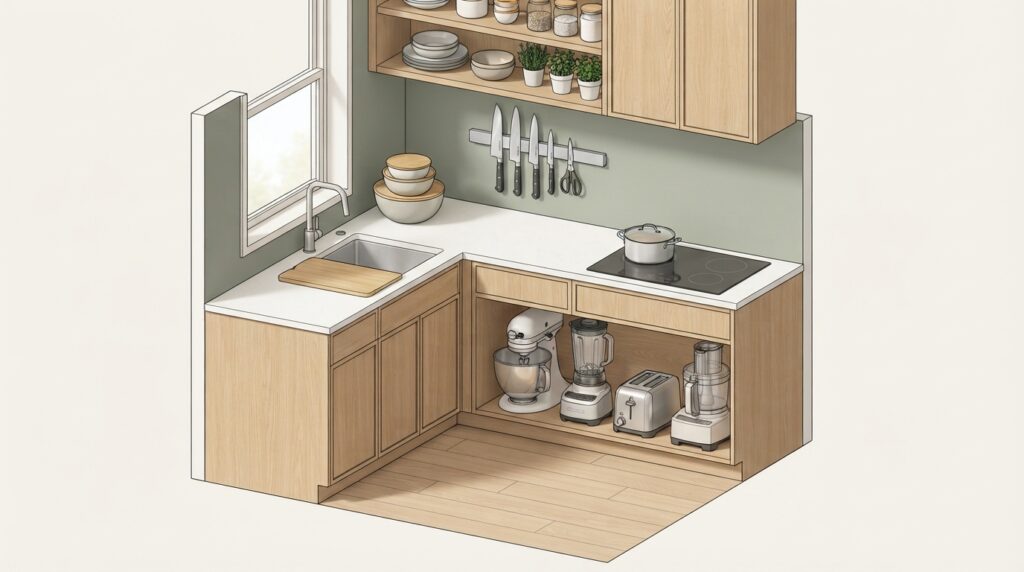
Avoid stacking heavy appliances on top of one another on high shelves where lifting them down becomes awkward or unsafe.
Apply the “Reach First” Rule to Cabinets and Pantry Items
Good Small Kitchen Organization comes down to visibility and reach. Store your everyday plates, favorite skillet, cooking oils, and daily spices right at eye or waist level, and push seasonal platters, specialty bakeware, and bulk backups to higher shelves. According to U.S. Environmental Protection Agency (EPA) food-waste guidance, checking existing food supplies before shopping is one of the easiest ways to prevent duplicate purchases and wasted groceries, and clear, broad category groupings make that habit effortless.
Make a Compact Kitchen Feel Brighter and Less Cramped
Accessibility isn’t only physical, visual clutter also makes a small kitchen feel tighter and more stressful to cook in. A few simple visual adjustments make the room feel calmer and easier to navigate:
- Eliminate Dark Countertop Shadows: Adding inexpensive stick-on or hardwired LED light strips beneath upper cabinets illuminates prep surfaces evenly and visually pushes the walls outward.
- Unify Visible Containers: If you store dry goods on open shelves or in glass-front cabinets, decanting staples into matching clear jars eliminates the visual noise of dozens of mismatched commercial labels.
- Keep the Sightline Clear Above the Sink: Avoid hanging heavy racks or tall stacks of dishes directly across the sink window so natural light flows freely across the main work area.
Keep Maintenance Simple With Four Core Habits
A compact kitchen only stays organized if the system is easy to maintain on a busy weeknight. Whenever one drawer or shelf repeatedly becomes messy, treat it as a sign that the storage spot needs adjusting rather than blaming willpower:
- Measure Before Buying Anything: Record interior width, depth, height, and door clearance before ordering bins or racks.
- Declutter Before Organizing: Never buy containers to store items you don’t actually use.
- Prioritize Reach Over Capacity: Leave comfortable hand clearance around everyday dishes and pans.
- Reset One Bottleneck at a Time: Fix the single cabinet or drawer that slows dinner prep down most before moving on to the rest of the room.
Build a Small Kitchen That Feels Bigger
You don’t need extra square footage to enjoy cooking in a compact kitchen, you need less friction between where tools live and where you use them. Clear out unused duplicates first, put cabinet doors, vertical air, and drawers to work intentionally, and keep your main prep counter open. When every item has an accessible home, even a modest galley or apartment kitchen feels calm, capable, and twice as spacious.