The Complete Air Fryer Buying Guide: How to Choose, Use, and Maintain the Right Model
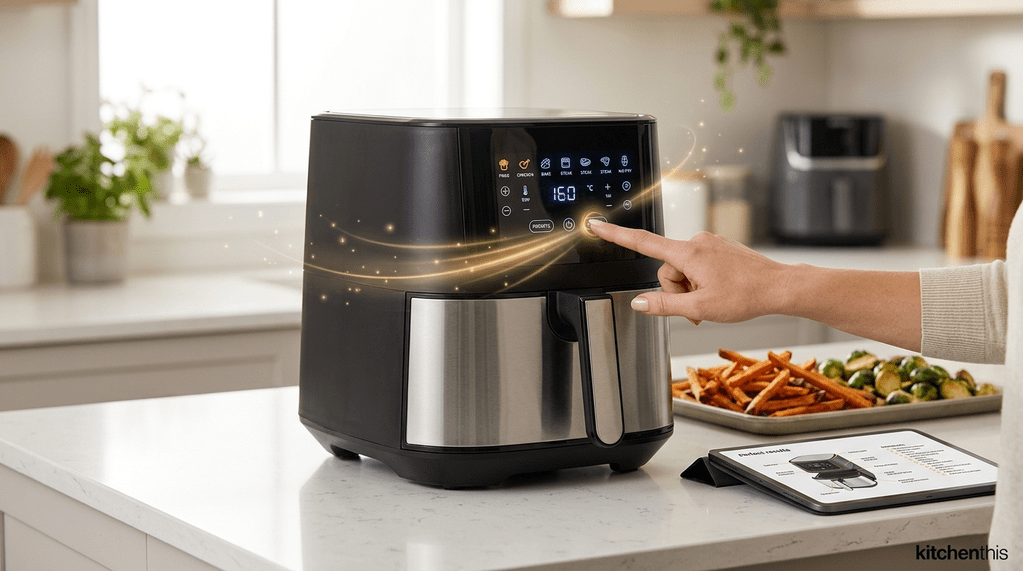
An air fryer is essentially a compact, high-velocity convection oven designed to circulate hot air around food for crisp browning with a fraction of the oil used in deep frying. When matched to your household size and counter space, it quickly becomes one of the most-used appliances in the kitchen, whether you are crisping roasted vegetables on a weeknight, reheating leftovers without sogginess, or cooking two dishes at once in a dual-basket model.
With basket-style units, dual-zone drawers, and countertop toaster-oven hybrids all competing for counter space, choosing the right machine comes down to capacity, heating layout, basket coating, and ease of cleanup rather than flashy digital presets. Below, we break down what actually matters when comparing air fryers, alongside practical cleaning and maintenance habits that keep nonstick baskets performing smoothly for years.
Table of Contents
Why Buying the Right Air Fryer Matters
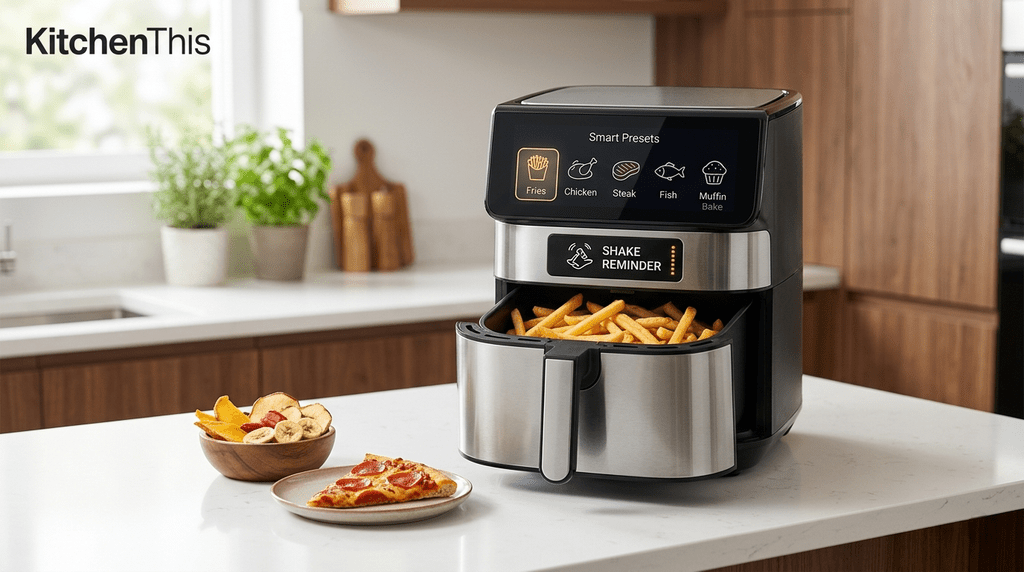
On busy weeknights, heating up a full-size oven just to roast a tray of vegetables, cook salmon fillets, or crisp a batch of potatoes wastes both time and electricity. Because an air fryer heats a small, insulated chamber with a high-speed fan, it preheats in two to three minutes and cooks up to 30% faster than a conventional oven, while delivering crisp, golden browning using just a light mist or teaspoon of oil rather than deep frying.
However, with dozens of budget and premium models crowding kitchen shelves, specs on the box rarely tell the full story. A smaller basket forces you to cook in multiple batches, flimsy nonstick coatings peel after a few months of high heat, and awkward crevices trap grease around the heating element. Evaluating build quality, usable basket footprint, material safety, and cleanup ease upfront ensures you buy an appliance that earns its permanent spot on your counter.
Air Fryer Styles Compared: Basket vs. Dual-Zone vs. Countertop Oven
Before comparing individual brands, choose the physical format that matches your household size, counter space, and the meals you cook most often:
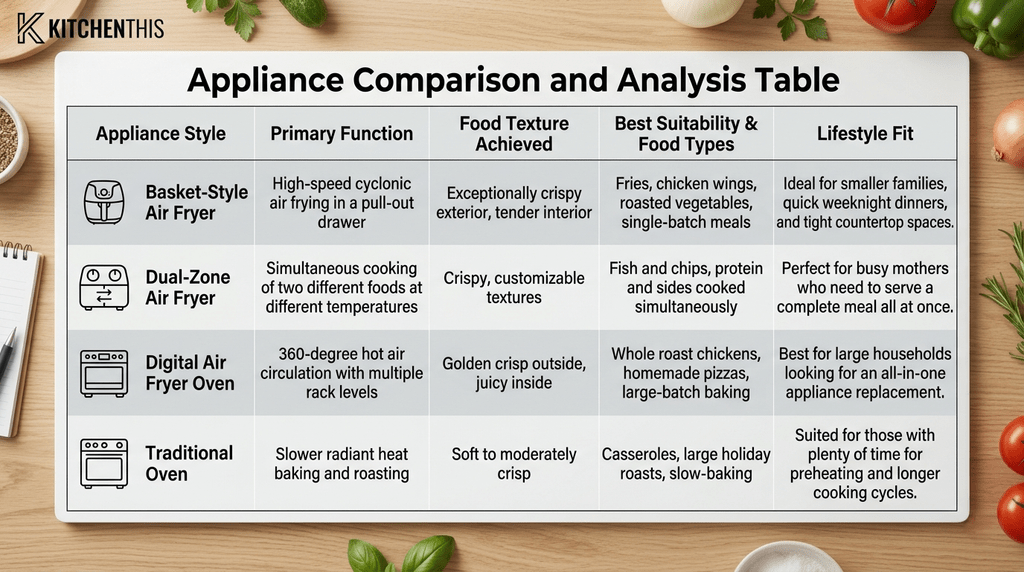
| Appliance Style | Typical Capacity | Primary Strength | Texture & Food Suitability | Best Household Fit |
| Single-Basket Air Fryer | 4 to 6 quarts | Fast preheating and concentrated airflow in a pull-out drawer | Extra-crispy exterior with a tender interior; best for fries, wings, salmon fillets, and single-batch sides | 1 to 3 people, small kitchens, and quick weeknight cooking |
| Dual-Zone Air Fryer | 8 to 10 quarts total (two 4–5 qt drawers) | Cooks two separate foods at different temperatures and finishes them together | Crisp, separated results without flavor transfer; ideal for pairing a protein in one basket and vegetables or potatoes in the other | Families of 3 to 5 who want a full main-and-side meal ready at once |
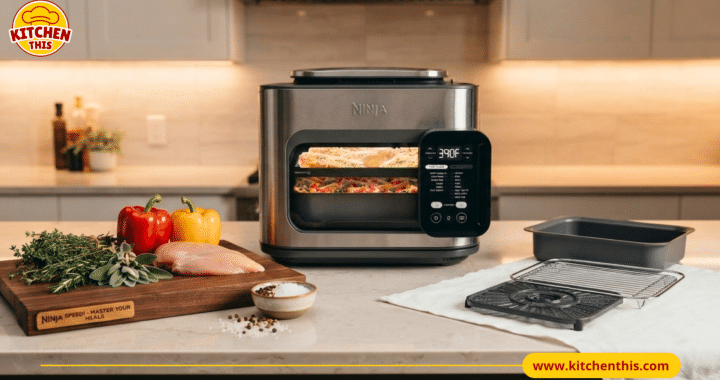
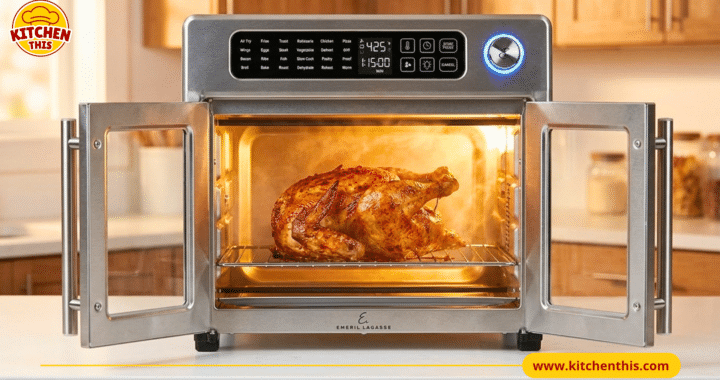
| Air Fryer Toaster Oven | 18 to 26 quarts (multi-rack) | Multi-level convection baking, broiling, and toasting with wide flat racks | Even golden browning across wider trays; great for personal pizzas, sheet-pan meals, baked goods, and whole small chickens | Larger households or cooks who want one versatile countertop oven |
| Standard Full-Size Oven | Full cavity | High-volume radiant and convection baking across full sheet pans | Gentle, even roasting; best for holiday turkeys, deep casseroles, and multi-tray batch baking | Large gatherings and recipes that exceed countertop capacity |
Key Buying Criteria: What Actually Matters
Choosing the right air fryer comes down to matching the machine’s usable footprint, interior materials, and controls to how you actually cook:
1. Choose the Right Usable Capacity (and Shape)
Buying a basket that is too small is the most common regret among first-time buyers. Air fryers need open space around food so hot air can circulate, overcrowding steams food instead of crisping it. Look at usable floor area (a wide, square basket holds significantly more in a single layer than a deep, narrow round one) alongside quart volume:
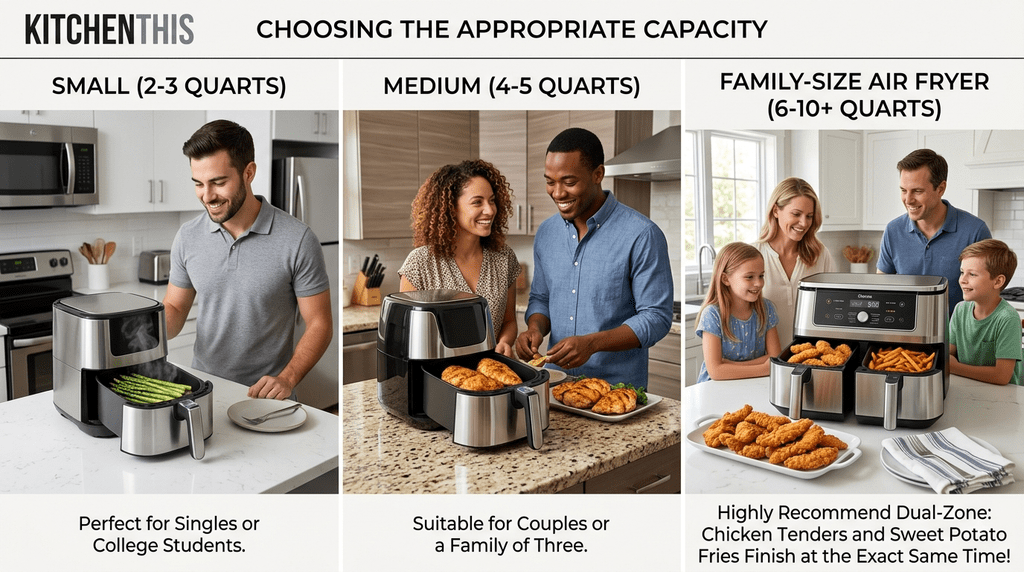
- 2 to 3 Quarts: Best for single-person households, dorm rooms, or reheating single portions.
- 4 to 6 Quarts: The sweet spot for couples or households of three, fitting four chicken breasts or a pound of fries in a manageable countertop footprint.
- 7 to 10+ Quarts (or Dual-Zone): Best for families of four or more. A dual-basket model lets you cook a protein in one drawer and vegetables or potatoes in the other at different temperatures, syncing them to finish at the same time.
2. Prioritize Durable, PFAS-Free Interior Coatings
Because air fryers routinely run at 375°F to 400°F (190°C to 205°C), the durability of the basket and crisper plate directly affects how long the appliance lasts:
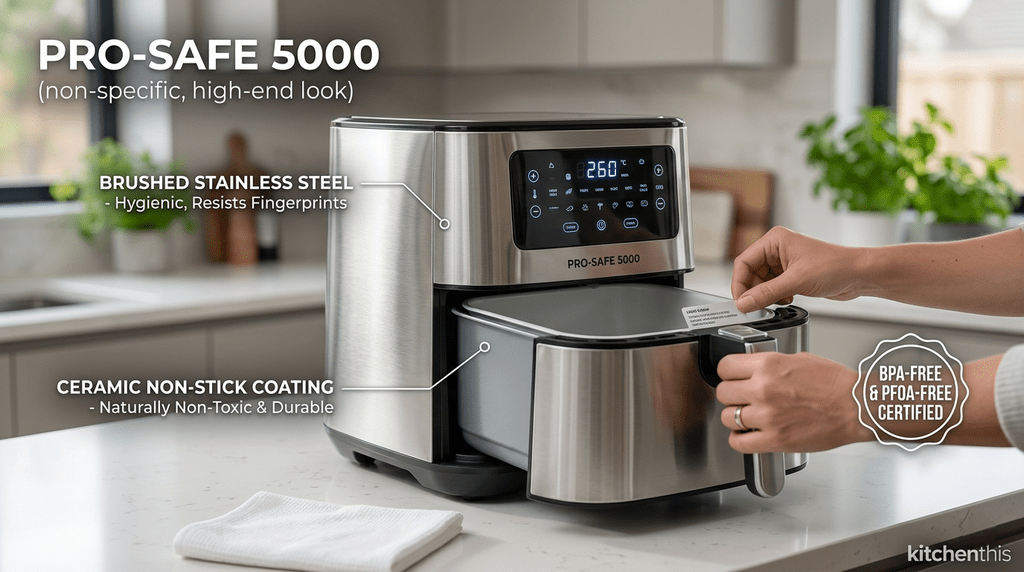
WCeramic Nonstick Coatings: Look for baskets clearly labeled PFAS-free and PTFE-free (ceramic-coated). Quality ceramic coatings release food cleanly, tolerate high heat without off-gassing, and resist flaking when washed gently.
Stainless Steel Interiors: If you prefer zero nonstick coatings, several air fryer toaster ovens and select basket models use food-grade 304 stainless steel racks and trays, which can be scrubbed without worrying about scratching a coating.
Exterior Build & Ventilation: A brushed stainless-steel or matte-metal housing resists heat warping and wipes clean easily, while rear exhaust vents should sit at least 5 inches clear of walls and under-cabinet edges.
3. Evaluate Controls and Smart Features Practicality
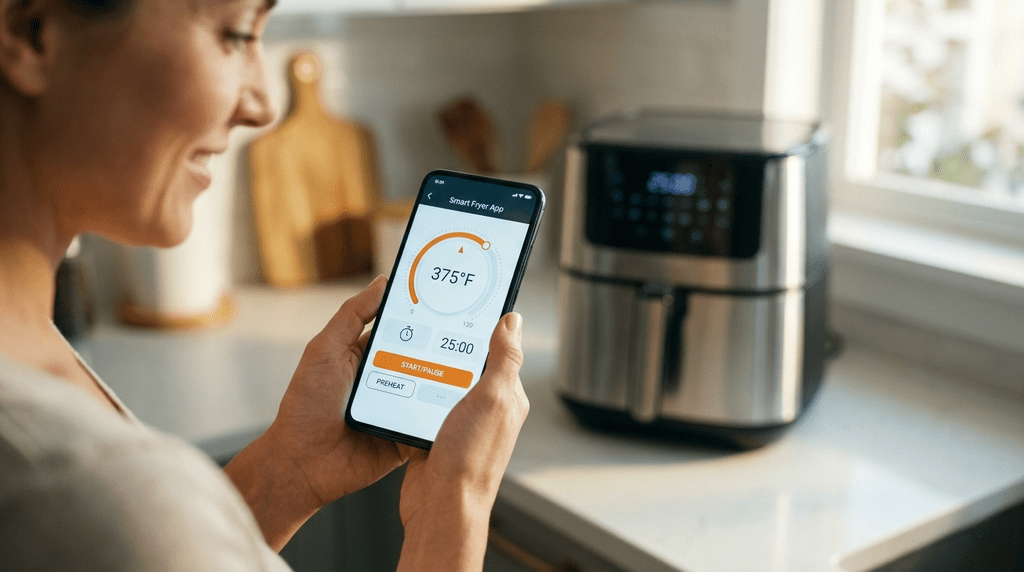
App-connected air fryers can send shake reminders and end-of-cycle alerts to your phone, helpful if you are in another room, and select models include barcode scanning for frozen packaged foods or built-in meat thermometers that shut the heater off automatically at your target internal temperature.
That said, Wi-Fi connectivity is a convenience bonus rather than a necessity. Prioritize responsive physical buttons or dials, clear temperature increments (5°F steps rather than vague presets), and a max temperature of at least 400°F (205°C) (or 450°F for roasting meats) over app features you may rarely open.
How to Get the Best Cooking Results From Your Air Fryer
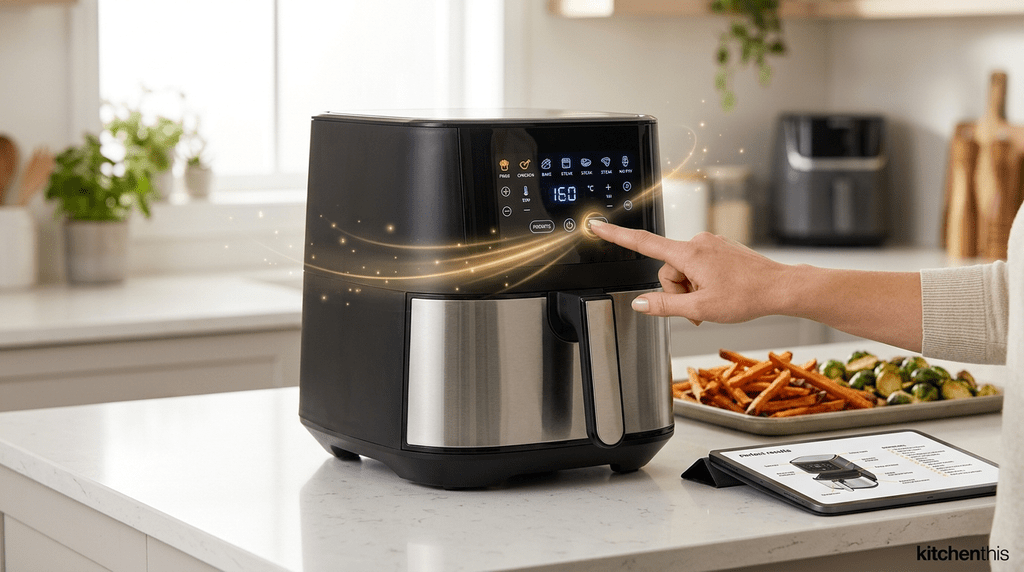
Once your air fryer is on the counter, a few simple operating habits make the difference between evenly browned, crisp food and steamed, uneven batches:
Useful Modes Worth Using
- Manual Time and Temperature Controls: While one-touch presets (for fries, chicken, or fish) are convenient starting points, setting temperature and minutes manually gives you far better control when adjusting for thicker cuts of meat or smaller portions.
- Mid-Cycle Shake Reminders: Many models beep halfway through a cycle to remind you to toss or flip food, Essential for fries, roasted vegetables, and breaded items so every side meets the hot airflow.
- Reheat and Dehydrate Modes: Low-fan Reheat settings (around 300°F–320°F / 150°C–160°C) revive leftover pizza, fried chicken, and roasted potatoes in three to five minutes without turning them rubbery like a microwave. Dehydrate settings (120°F–140°F / 50°C–60°C) work well for apple slices, citrus garnishes, or homemade jerky.
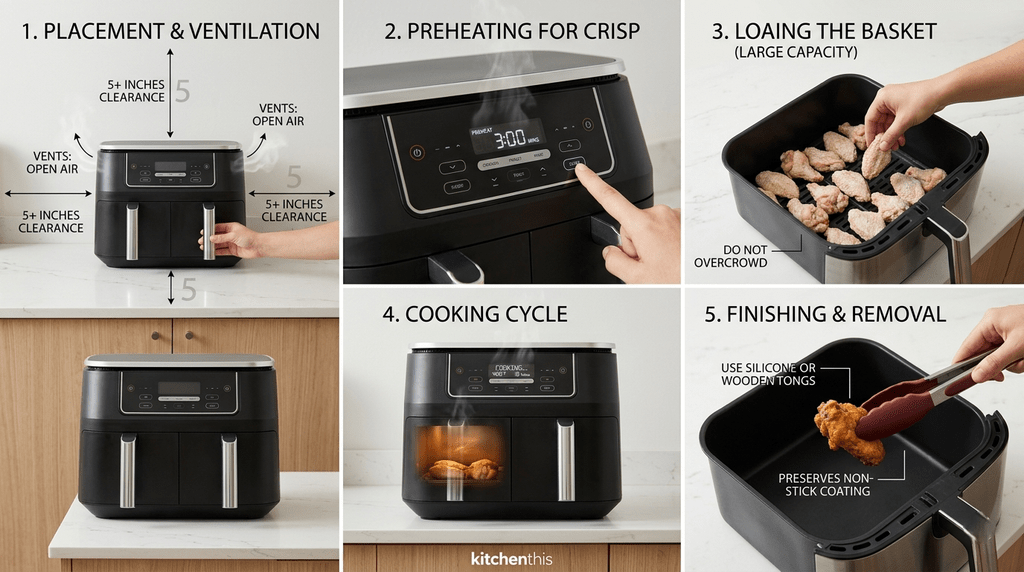
Five-Step Operating Routine
- Give the Vents Room to Breathe: Place the unit on a flat, heat-resistant countertop with at least 5 inches of open clearance behind and above the exhaust vents, never push it tight against a backsplash or directly beneath low wooden cabinets while running.
- Preheat for 3 Minutes When Crisping: Although small chambers heat quickly, preheating for 3 minutes before adding raw proteins, potatoes, or breaded foods starts browning immediately instead of letting food sit in lukewarm air.
- Leave Space Between Pieces: Arrange food in a single layer with small gaps for air circulation, and toss the basket lightly with 1 to 2 teaspoons of high-smoke-point oil (such as avocado, canola, or refined olive oil) rather than aerosol cooking sprays, whose propellants and lecithin binders can leave a gummy residue on nonstick baskets.
- Shake or Flip Halfway Through: Pull the basket out mid-cook, give it a firm shake (or turn larger fillets with tongs), and slide it back in.
- Use Silicone or Wooden Utensils Only: Always lift cooked food out with silicone-tipped tongs or a wooden spatula, metal forks and knives will scratch nonstick and ceramic coatings within weeks.
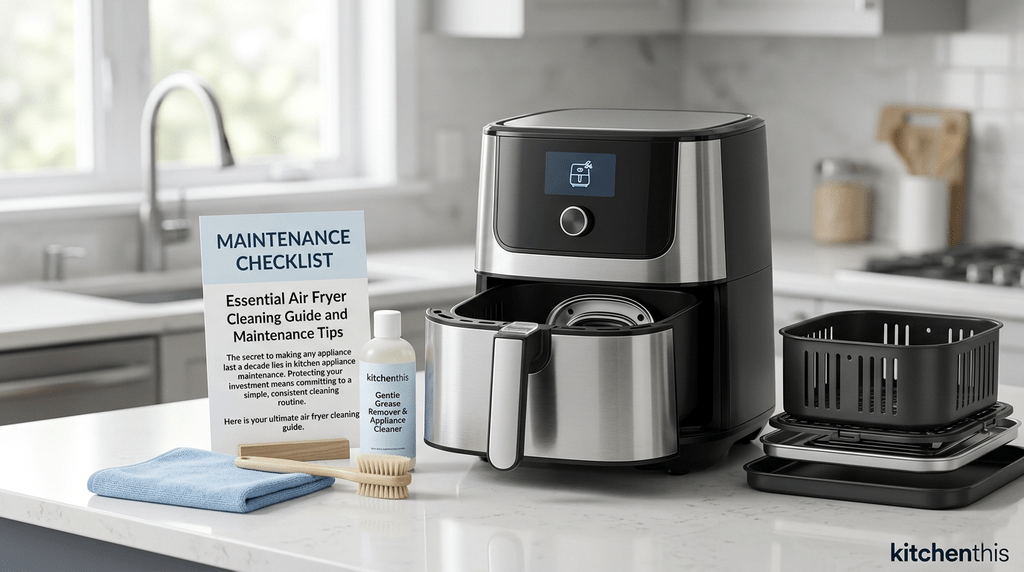
Cleaning and Maintenance Routine to Extend Lifespan
Baked-on grease is the main culprit behind smoking, lingering food odors, and peeling basket coatings. Following a quick after-use wash and a monthly deep clean keeps the machine running cleanly for years:
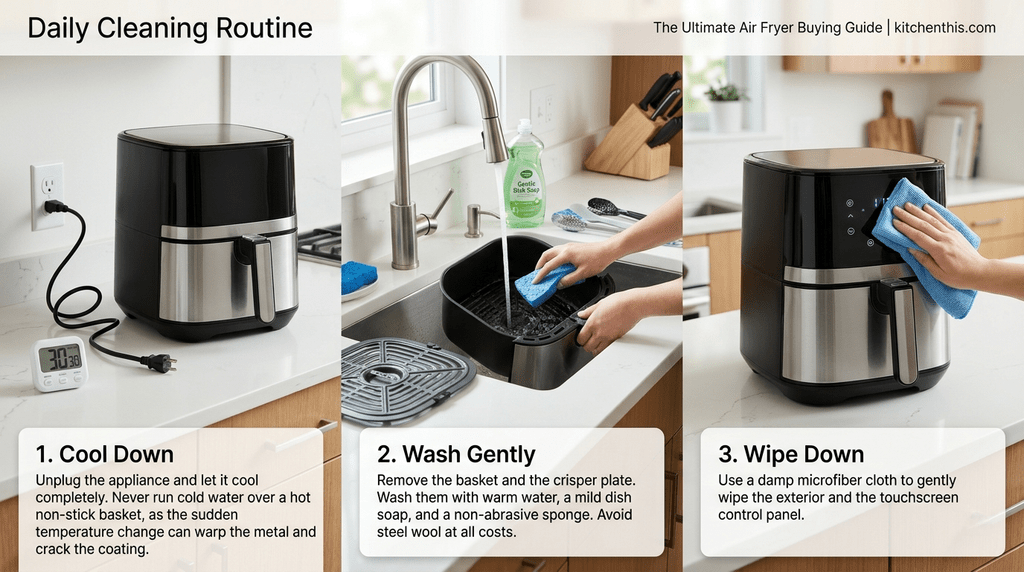
After Every Use
- Unplug and Cool Completely: Let the basket and crisper plate cool to room temperature before washing. Submerging a hot nonstick basket in cold water causes thermal shock that warps thin metal and weakens coatings.
- Wash With Warm Soapy Water and a Soft Sponge: Even if a basket is labeled dishwasher-safe, hand-washing with warm water, mild dish soap, and a non-abrasive sponge dramatically extends the life of ceramic and nonstick finishes. Never use steel wool or harsh scouring pads.
- Wipe the Exterior and Control Panel: Clean fingerprints and light oil mist from the housing and digital display with a slightly damp microfiber cloth, then dry thoroughly.
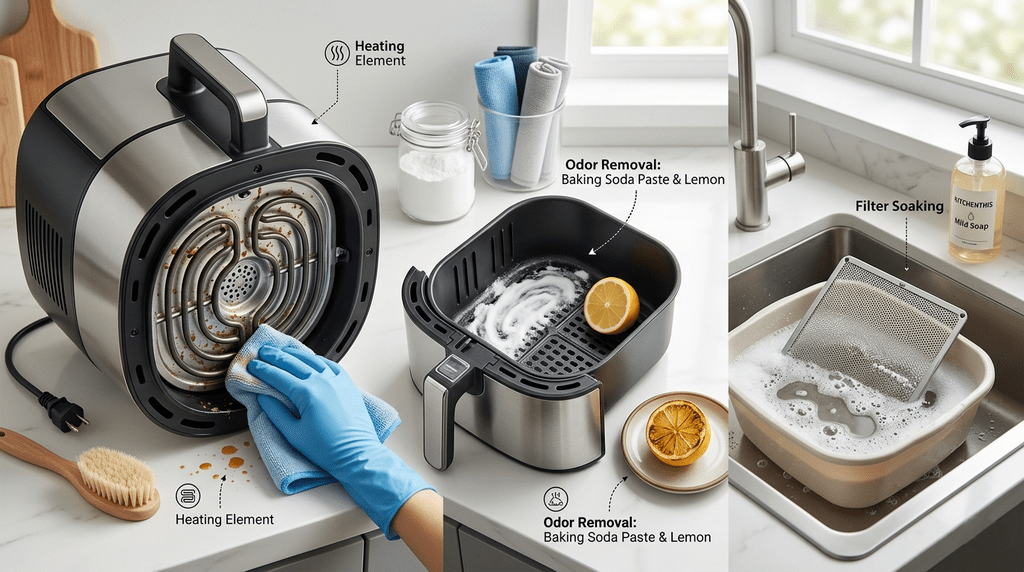
Monthly Deep Cleaning & Odor Removal
- Clean the Heating Element and Interior Ceiling: With the appliance unplugged and completely cool, gently tilt or turn it over on a towel and wipe away baked-on grease splatters around the heating coil and interior walls using a warm, damp cloth or soft-bristled brush.
- Remove Stubborn Grease or Fish Odors With Baking Soda: Mix 3 tablespoons of baking soda with 1 tablespoon of warm water into a smooth paste, spread it over greasy spots inside the basket, let it sit for 15 to 20 minutes, and rinse clean with a soft sponge.
- Inspect Silicone Bumpers and Removable Filters: Check that the small silicone feet on the crisper plate are intact so the plate doesn’t scratch the basket walls, and wash any removable grease shield or odor filter according to your owner’s manual.
Final Takeaway: Choosing an Air Fryer That Earns Its Counter Space
The best air fryer for your kitchen is the one that matches your household portion sizes, has a coating and basket layout that fit your cooking habits, and takes only a few minutes to wipe clean after dinner. Focusing on usable basket area, steady heat control, and gentle routine care will give you crisp, reliable results and a longer-lasting appliance than chasing every extra digital feature.
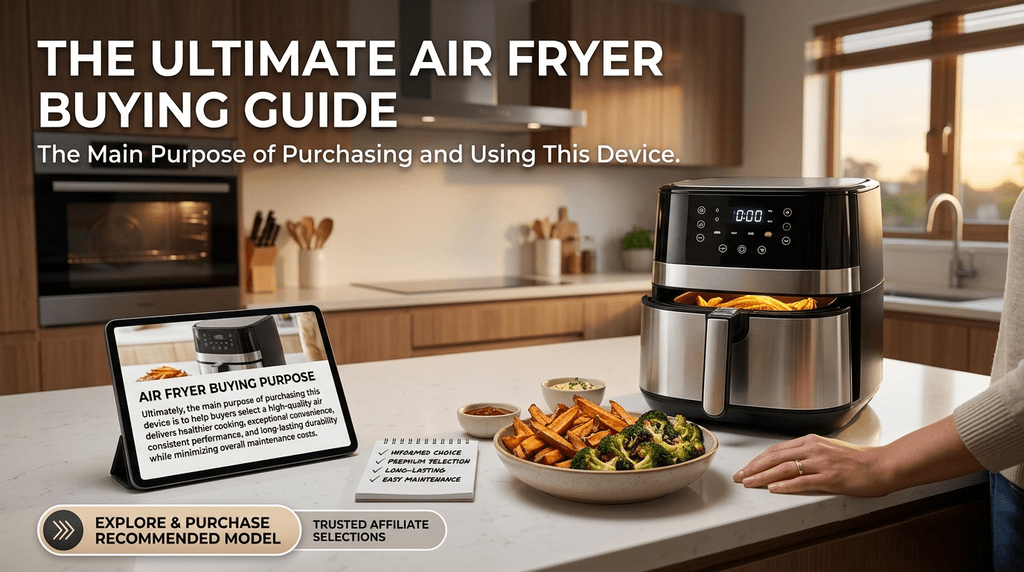
You can explore and purchase my highly recommended air fryer right here to upgrade your kitchen instantly. This model embodies all the smart features, safe materials, and ease of use we have discussed today.
Disclosure: As an Amazon Associate, we may earn a small commission from qualifying purchases at no extra cost to you.
Setting Up Your Air Fryer on the Counter for Easy Cleanup
Use Perforated Liners Safely (Never During Preheating): Disposable perforated parchment liners or reusable silicone mats can catch grease drips and speed up cleanup, provided they have airflow holes and are never placed inside an empty basket during preheating (where lightweight paper can lift into the heating coil and scorch).
Give It a Dedicated Prep Zone: Because air fryers vent hot air from the back and top, store yours in an open spot near an outlet where you do not have to drag it out from under low upper cabinets every evening, making it far more likely you will use it regularly.
Keep Oils and Tongs Within Arm’s Reach: Storing high-smoke-point cooking oil, silicone-tipped tongs, and a heat-resistant trivet right next to the appliance speeds up weeknight prep and gives you a safe spot to set the hot basket when shaking food.
Final Takeaway: Choosing an Air Fryer That Earns Its Counter Space
The best air fryer for your kitchen is the one that matches your household portion sizes, has a coating and basket layout that fit your cooking habits, and takes only a few minutes to wipe clean after dinner. Focusing on usable basket area, steady heat control, and gentle routine care will give you crisp, reliable results and a longer-lasting appliance than chasing every extra digital feature.