How to Choose a Reliable Nonstick Frying Pan for Everyday Cooking
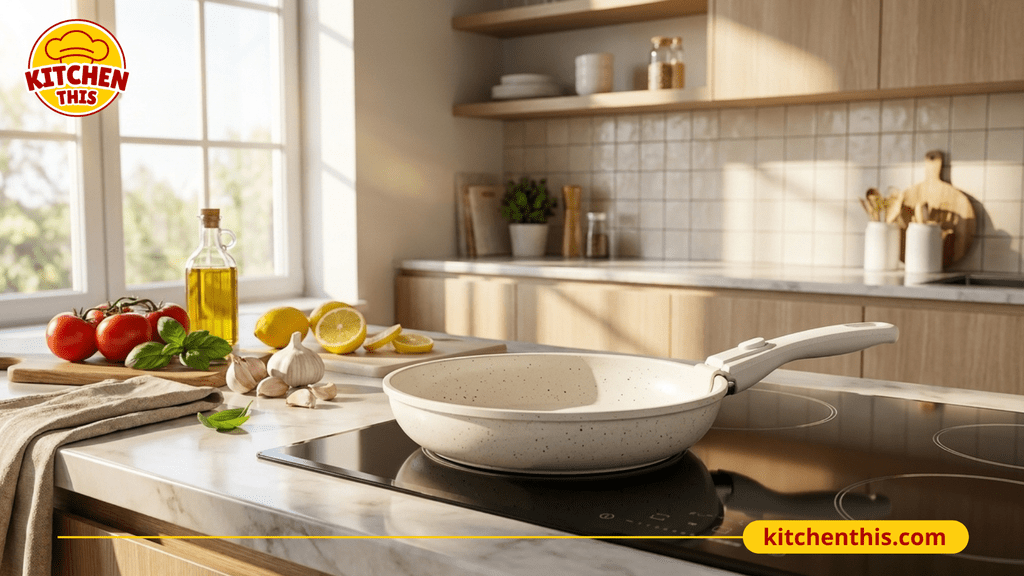
Premium Nonstick Frying Pan
Few kitchen frustrations slow down a busy evening faster than eggs welded to the bottom of a pan or sauces that leave scorched residue behind. While stainless steel and cast iron have their place, a Premium Nonstick Frying Pan remains the easiest everyday workhorse for fast weekday breakfasts, delicate fish fillets, and low-oil sautéing with minimal cleanup afterward. Not all nonstick pans hold up the same way, though.
Thin coatings can scratch or lose their release within months, while warped bases heat unevenly on modern stovetops. Here is what actually separates a durable nonstick skillet from a disposable one, how different coatings compare, and how to care for your pan so it lasts for years.
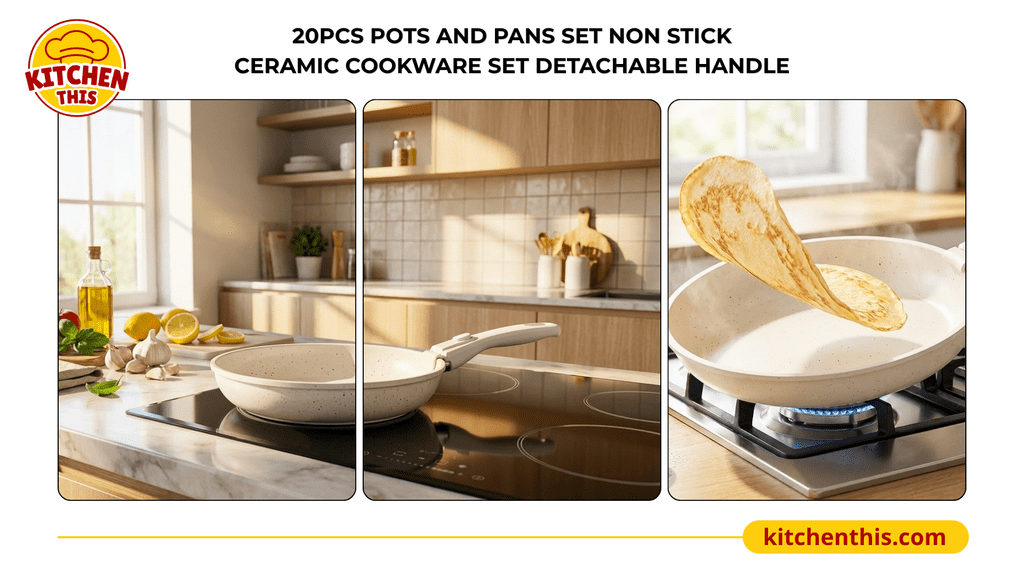
Table of Contents
How a Nonstick Frying Pan Compares to Traditional Cookware
Choosing the right skillet comes down to what you cook most often and how much maintenance you want after dinner. While heavy cast iron and stainless steel excel at high-heat searing, a modern nonstick frying pan handles delicate foods and quick weekday meals with far less oil and scrubbing.
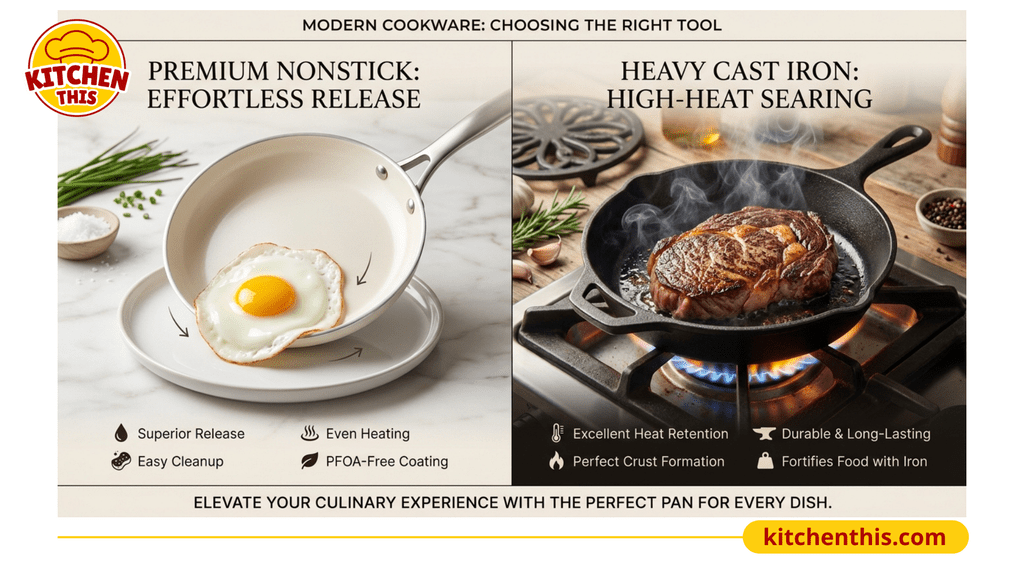
Here is how a quality nonstick skillet compares to other everyday pan materials:
| Cookware Material | Primary Function & Best Foods | Surface Texture & Heat Distribution | Everyday Kitchen Fit |
| Ceramic Nonstick Frying Pan | Eggs, pancakes, delicate fish fillets, crêpes, and quick weeknight sautés | Smooth, low-friction ceramic coating over a multi-layer aluminum core for fast, even heating | Best for busy weeknights and quick breakfasts, releases food with minimal oil and washes clean with a soft sponge |
| Tri-Ply Stainless Steel | High-heat searing, browning meats, deglazing, and building pan sauces | Smooth uncoated metal; heats evenly when properly preheated, though food sticks if oil or pan temperature is off | Durable and oven-safe for high-heat cooking, but requires more attention and soaking/scrubbing afterward |
| Traditional Cast Iron | Searing thick steaks, pan-roasting, cornbread, and slow simmering | Slightly textured, seasoned iron surface; retains heat exceptionally well but takes longer to preheat and cool | Ideal for high-heat searing and weekend cooking, though heavy to lift and requires prompt hand-drying and periodic re-seasoning |
While stainless steel and cast iron shine for high-heat searing and slow weekend cooking, a well-built nonstick skillet handles most everyday breakfasts and quick weeknight meals with far less effort.
What to Look for Before Buying Nonstick Cookware
Buying one well-built skillet or modular set lasts far longer, and cooks more evenly, than replacing thin, warped pans every year. Whether you are shopping for a single everyday skillet or a multi-piece set, focus on four practical features:
- PFAS-Free Ceramic Nonstick Coating: Modern ceramic nonstick coatings use a silica-based (sand-derived) sol-gel finish that releases food smoothly without PFAS, PFOA, PTFE, lead, or cadmium. Look for reinforced ceramic layers designed to resist peeling and premature wear under medium daily heat.
- Heavy-Gauge Base for Even Heating: Thin aluminum pans warp quickly on gas or induction burners, creating hot spots that scorch sauces in the center while leaving the edges undercooked. A thick, flat, induction-compatible base distributes heat evenly and stays flat on the burner.
- Practical Pan Sizes for Everyday Meals: Having two complementary sizes covers most daily cooking, an 8-inch or 9.5-inch skillet for omelets, grilled cheese, and single-serving sautés, paired with an 11-inch or 12-inch deep sauté pan for family stir-fries, pasta sauces, and one-pan dinners.
- Stackable Design and Detachable Handles: If cabinet or drawer space is tight, or if you cook in an apartment, small kitchen, or RV, modular cookware with removable handles lets pans nest neatly inside one another while transitioning straight from the stovetop to the oven, dining table, or refrigerator.
- Food-Safe Lids and Utensils: If a set includes fridge storage lids, glass cooking lids, or turners, verify that all plastic and silicone components are BPA-free and rated for kitchen heat.
Pairing Nonstick Cookware With Smart Kitchen Tools
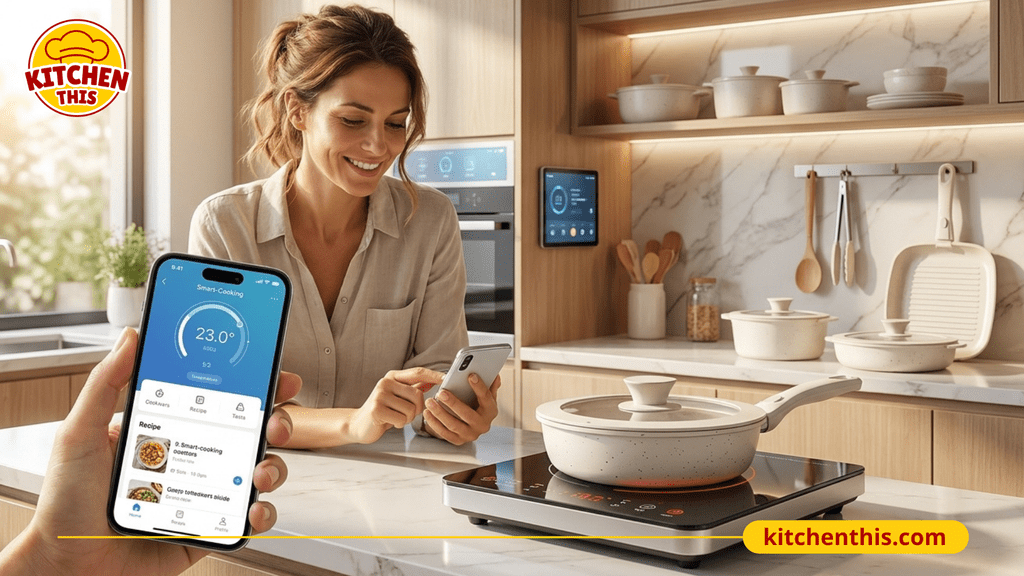
Even when cooking in a nonstick skillet, pairing your pan with a wireless Bluetooth meat thermometer takes the guesswork out of proteins like chicken breasts, pork tenderloin, or thick salmon fillets. Resting a thin wireless probe in the center of the meat lets you track internal temperature from your phone while stepping away to help with homework or prep sides, alerting you the moment your food reaches target doneness so it never dries out.
A Closer Look at the 20-Piece Ceramic Cookware Set With Detachable Handles
If you want a modular setup that saves cabinet space without sacrificing versatility, a 20-piece ceramic cookware set with detachable handles solves several everyday kitchen headaches at once:
- Click-On Detachable Handle System: A locking, push-button handle attaches securely while you sauté on the stove, then detaches in one second so the same pan can go straight into the oven for finishing or onto the dining table as a serving dish. Removing handles while cooking on crowded burners also keeps long handles out of reach of small children.
- Nested, Drawer-Friendly Storage: Because the pots and skillets have no fixed handles sticking out, the entire set nests cleanly inside a single deep drawer or narrow cabinet, freeing up substantial space in smaller kitchens, apartments, or RVs.
- Induction-Ready Multi-Layer Base: A bonded magnetic stainless steel base conducts heat evenly across gas, electric, ceramic, and induction cooktops without warping or creating hot spots.
- Fridge-to-Stove Convenience: With detachable handles and fitted storage lids, leftover sauces or sautéed vegetables can cool, stay covered in the refrigerator, and reheat in the exact same pan the next day with fewer dishes to wash.
How to Use and Care for Ceramic Nonstick Cookware
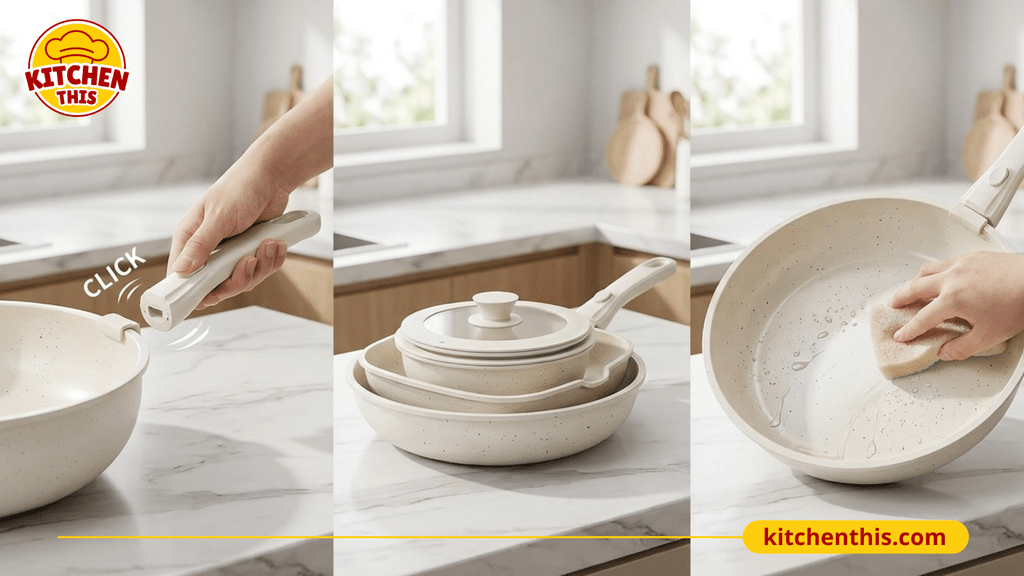
Ceramic nonstick pans perform best, and keep their smooth release far longer, when treated gently during heating, cooking, and cleanup:
- Stick to Low and Medium Heat: Because multi-layer aluminum cores conduct heat quickly, high burner settings are rarely necessary. Cooking on low to medium heat browns food evenly while protecting the ceramic coating from overheating and premature wear.
- Choose High-Smoke-Point Oils Over Cooking Sprays: Use a small amount of butter, avocado oil, or olive oil rather than aerosol nonstick sprays, which contain propellants and lecithin that leave a sticky, hard-to-remove residue on ceramic surfaces.
- Use Silicone, Wood, or Nylon Utensils: To keep the smooth, light-colored interior finish free of scratches, stick to silicone spatulas, wooden spoons, or nylon turners. Avoid metal forks, whisks, or knives inside the pan.
- Let Pans Cool Before Washing: Always let hot cookware cool to room temperature before running it under water, sudden temperature changes (thermal shock) can warp the base over time.
- Wash Gently by Hand: Even if a set is labeled dishwasher-safe, hand-washing with warm water, a drop of mild dish soap, and a soft non-abrasive sponge keeps the coating slick for years. Dry the pan with a soft towel and place a felt pan protector or dish cloth between stacked pieces if you store them nested without lids.
Why Investing in One Cohesive Set Pays Off
Replacing thin, mismatched nonstick pans every year costs more over time and leads to uneven cooking. Choosing one well-constructed, modular nonstick cookware set simplifies daily meal prep, frees up crowded cabinet space, and cuts after-dinner cleanup down to a quick rinse, making weekday breakfasts, delicate fish fillets, and one-pan family dinners far easier to pull off consistently.
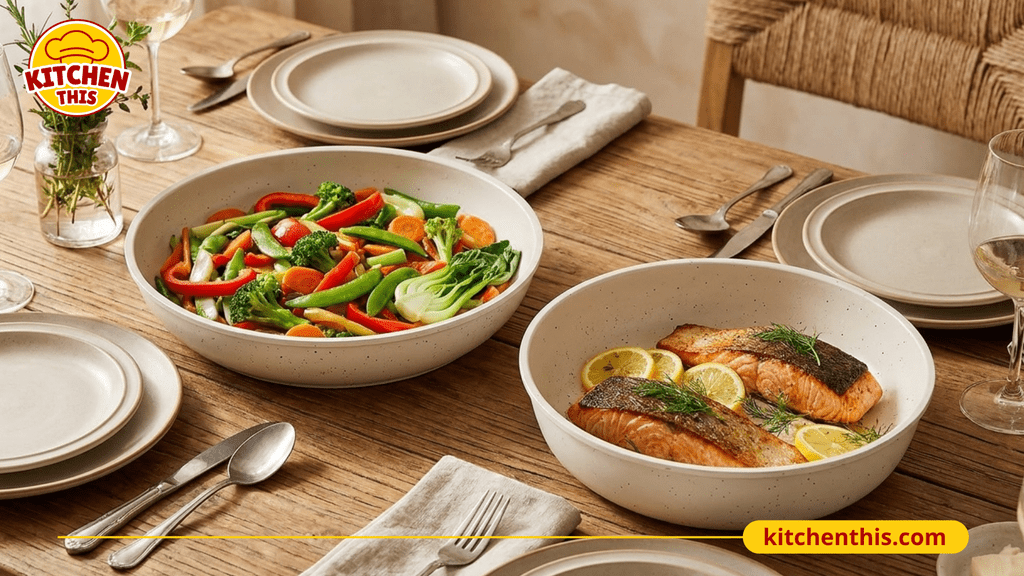
Everyday Benefits of Upgrading to a Modular Ceramic Set
Switching from worn-out, mismatched skillets to a cohesive nonstick set pays off immediately during weeknight dinner prep:
- Faster Post-Dinner Cleanup: Because eggs, cheese, and sauces release cleanly without soaking or heavy scrubbing, you cut ten to twenty minutes of sink cleanup out of your evening routine.
- Lighter Cooking With Less Oil: A smooth ceramic surface lets you sauté vegetables, sear fish fillets, and flip pancakes using just a light brush of oil or butter.
- Fewer Dishes to Wash: With detachable handles and fitted storage lids, one pan handles stovetop sautéing, oven finishing, table serving, and refrigerator storage without transferring food between multiple bowls.
If you want to compare piece counts, dimensions, and current availability, you can check out the 20pcs Detachable Handle Ceramic Cookware Set listing directly here, or browse our broader guide to exclusive family cooking essentials collection for more space-saving kitchen upgrades. Upgrade your kitchen instantly:
Simple Cabinet and Stovetop Organization Tips
Upgrading your cookware works best when your storage habits support a fast daily workflow. A few small adjustments keep cabinets neat and weekday prep moving smoothly:
Clean as You Cook: Take advantage of predictable, low-stick cooking to load prep bowls into the dishwasher or wipe down the counter while food simmers, so when dinner hits the table, the kitchen is already mostly clean.
Nest Pans and Store Handles Separately: Take advantage of removable handles by nesting your skillets and saucepans inside a single deep drawer, placing a soft pan protector or folded dish towel between layers, while keeping the detachable handles together in a small nearby bin.
Follow the “One-In, One-Out” Rule: When bringing a new cookware set into your kitchen, donate or recycle old, scratched, or warped pans right away so they don’t take back the cabinet space you just freed up.
Keep Everyday Tools Within Arm’s Reach of the Stove: Store your most-used frying pan, silicone spatulas, and cooking oils right beside your cooktop rather than across the kitchen, keeping specialty baking pans in a separate cabinet.
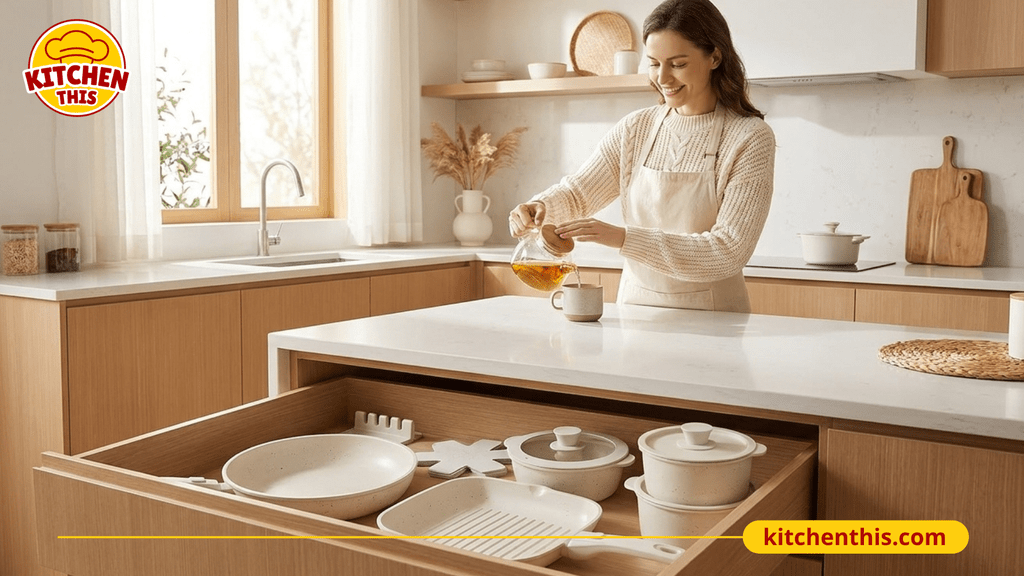
Choosing well-built, easy-to-store cookware takes the friction out of daily meals and leaves your kitchen organized, functional, and ready for whatever is on the menu tonight.