The 4-Stage Pantry Reset: Organize, Rotate, and Maintain
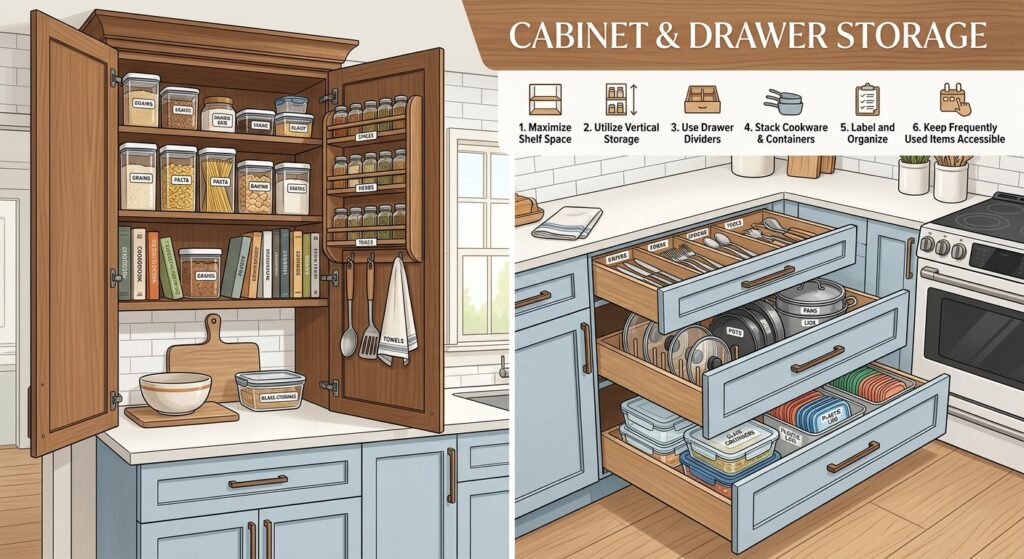
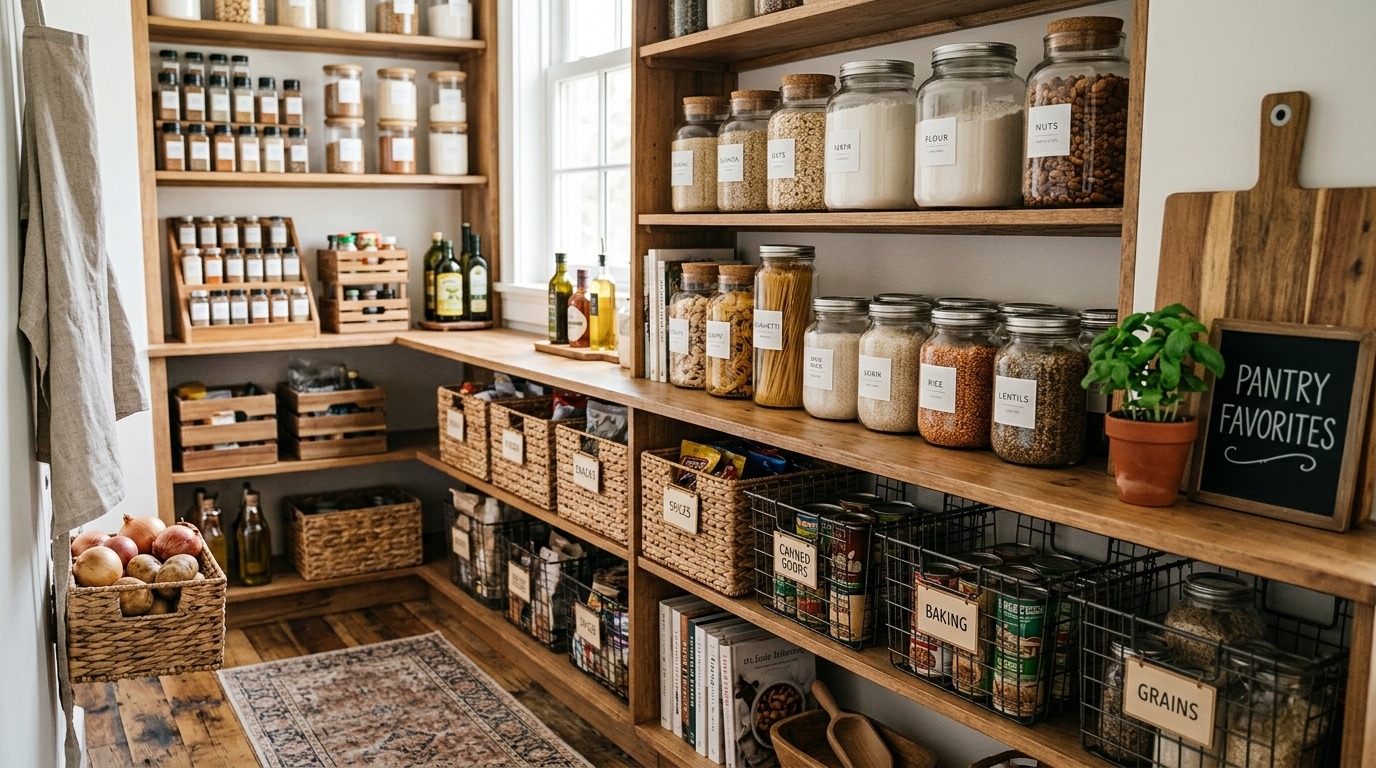
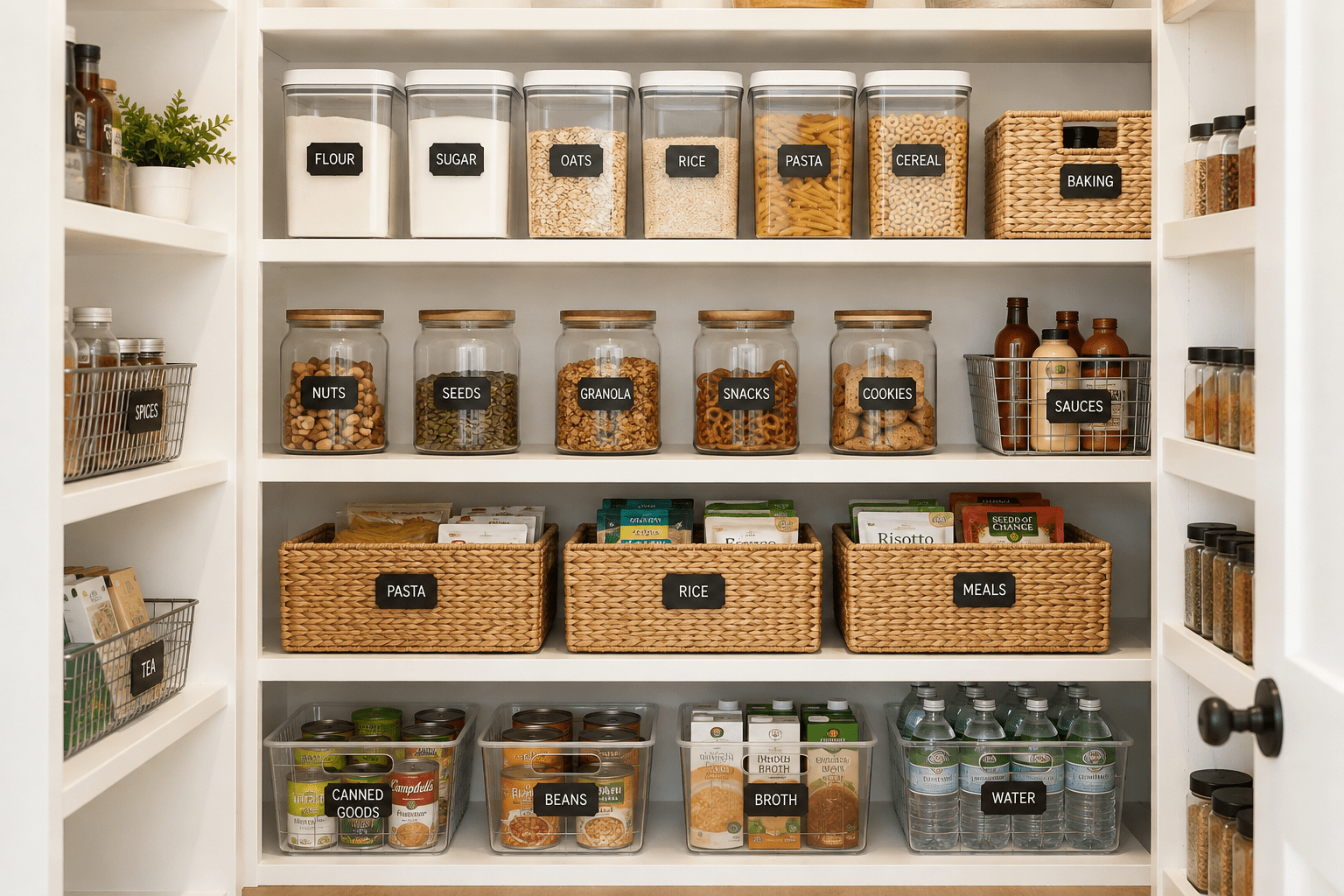
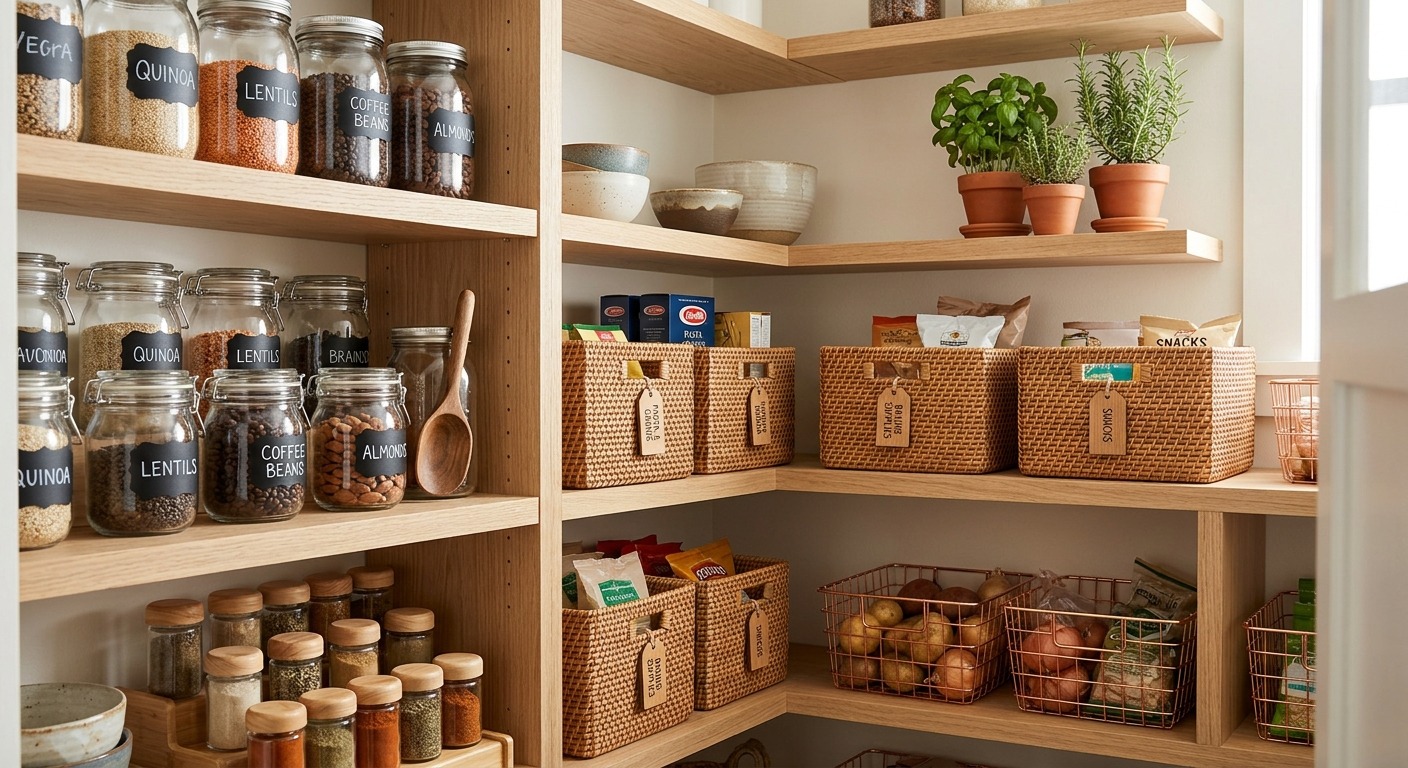
The best pantry organization system makes food visible, accessible, and easy to put away. Start with clear zones, smart placement, and a simple reset routine.
You do not need a picture-perfect pantry.
Instead, you need a system that still works after grocery day, busy evenings, and the occasional rushed cleanup.
That is the difference between decorating a pantry and actually organizing one.
When I approach pantry organization, I start with the workflow rather than the containers.
That choice usually reveals the real problem much faster.
Create a Powerful Pantry Foundation
A well-organized pantry starts with categories that make sense immediately.
Then, each category needs a predictable location.
You should not have to remember where something belongs every time you put groceries away.
Instead, the shelf should answer that question for you.
My clients keep asking about this principle because it sounds simple.
However, simple systems usually survive longer than complicated ones.
Start With a Ruthless Pantry Reset
First, choose one shelf or cabinet section.
Then remove everything from that space.
Group similar products together before deciding where anything should return.
At this stage, resist the temptation to buy storage products.
You need to understand the inventory first.
Also, inspect packages while sorting.
The FDA recommends checking canned goods for swelling, leakage, punctures, holes, extensive rust, and severe damage. FDA food-storage guidance provides the relevant safety advice.
Next, separate foods that require refrigeration from genuinely shelf-stable products.
The USDA defines shelf-stable foods as products that can safely remain at room temperature. USDA shelf-stable guidance explains the category.
However, some canned foods still require refrigeration.
Therefore, always follow the storage directions printed on the package.
Build Clear, Flexible Categories
Keep your categories broad enough to maintain without constant thought.
The goal is recognition.
You should glance at a shelf and understand what belongs there.
| Pantry zone | Typical contents | Organization priority |
|---|---|---|
| Grains | Rice, pasta, oats | Easy visibility |
| Baking | Flour, sugar, baking ingredients | Clear grouping |
| Canned goods | Beans, vegetables, soups | Stable placement |
| Snacks | Crackers, nuts, packaged snacks | Fast access |
| Sauces | Bottles, spreads, oils | Upright storage |
| Backstock | Unopened duplicates | Inventory control |
These categories do not need to match someone else’s pantry.
Instead, build them around the products you actually keep.
Otherwise, an elaborate labeling system can become another chore.
Transform Shelf Space With Strategic Placement
Once your categories are clear, decide where each one should live.
Start with weight.
Heavier products generally make more sense on lower shelves.
Then consider frequency.
Items you reach for often should remain easy to see and access.
Meanwhile, less frequently accessed products can move higher.
However, avoid turning the highest shelf into a forgotten storage zone.
If something lives there, you should still know it exists.
Control Deep Shelves Before They Control You
Deep shelves can quietly destroy visibility.
Products disappear behind other products, and suddenly you are buying something you already own.
Therefore, organize deep shelves in shallow, visible rows whenever possible.
Bins and risers can help when they genuinely improve access.
Still, measure first.
The first time I approached a pantry project, I learned quickly that a container that fits the shelf width can still fail because of height.
That is why measurements should come before shopping.
| Shelf problem | Better response | Avoid |
|---|---|---|
| Excessive depth | Shallow rows or suitable risers | Hidden back rows |
| Heavy products | Lower shelf placement | High, unstable storage |
| Small packets | Open grouping bin | Loose piles |
| Tall bottles | Upright grouping | Unstable stacking |
Good organization should make shelves easier to read.
If a storage product makes the shelf harder to understand, remove it.
Choose Containers With Purpose
Containers are useful when they solve a specific storage problem.
They are not automatically an improvement.
Open bags, loose packets, and awkward shapes may benefit from appropriate containers.
However, transferring every product can create extra work without improving the system.
Original packaging also carries useful information.
Ingredients, allergens, preparation directions, storage instructions, and other product details may remain on the package.
So, if you transfer food, keep the relevant product information accessible.
The goal is better organization, not simply matching containers.
Make Visibility Your Non-Negotiable Rule
If you cannot see something, you may eventually forget it.
That does not mean every product needs to sit at the front.
Instead, make each category easy to scan.
Keep similar products together.
Then, avoid putting small products behind tall ones.
For cans, stable rows can make inventory easier to inspect.
For packets, a suitable open bin can prevent loose products from spreading across shelves.
The right choice depends on shelf depth, package size, and access.
Create a Smarter Stock-Rotation Habit
Once the pantry looks organized, the next challenge is keeping it that way.
That is where stock rotation earns its place.
When new products arrive, move older products forward.
Then place newer products behind them.
This creates a simple first-in, first-out approach.
However, food dates need more careful interpretation.
The FDA estimates that confusion about date labels accounts for approximately 20% of consumer food waste. FDA food-waste and date-label guidance explains the statistic and the issue behind it.
Many packaged-food dates relate to quality rather than automatically determining safety.
Still, that does not mean every dated product should simply be ignored.
Instead, follow the product’s storage instructions and assess food for signs of spoilage.
For specific storage guidance, the USDA provides the FoodKeeper resource.
This gives you a better reference than guessing.
Make Restocking Fast, Clean, and Predictable
A pantry becomes much easier to maintain when putting groceries away follows the same pattern.
First, check what you already own.
Then, group new products by category.
Next, move older inventory forward.
Finally, place unopened duplicates into your backstock area.
I focus on this sequence because it removes unnecessary decisions.
You are not reorganizing the entire pantry every time you buy groceries.
You are simply returning products to known locations.
Keep the Reset Routine Short
A useful reset should feel almost boring.
That is actually a strength.
- Scan each pantry zone.
- Move older products forward.
- Consolidate duplicates.
- Return misplaced products.
- Clean spills immediately.
The FDA recommends keeping storage areas clean and addressing spills as part of safe food handling. FDA storage guidance supports that approach.
A short reset is easier to repeat than a dramatic pantry cleanup.
Protect Food With Smarter Storage Placement
Pantry organization should always work alongside food-safety guidance.
Shelf-stable products should be kept in suitable conditions.
The USDA recommends storing canned and shelf-stable foods in a cool, dry place. USDA storage guidance also advises against locations exposed to extreme temperatures.
That means the area above a stove may be a poor choice.
Likewise, under-sink storage can be unsuitable for food.
Instead, prioritize a clean, dry location that follows the product’s storage instructions.
Keep Food Away From Household Chemicals
Your pantry should not become a general-purpose utility cupboard.
Keep food separate from cleaning products and household chemicals.
The FDA specifically advises keeping non-perishable foods away from poisons and household chemicals. FDA food-storage guidance provides that recommendation.
This boundary improves both safety and organization.
It also makes inventory easier to understand.
Build a Lean Pantry Workflow
The strongest pantry systems require very little explanation.
You know where categories belong.
You know where duplicates go.
You know which products should move forward.
You also know what to do when something is out of place.
That is the real advantage of a system.
When I evaluate an organization setup, I look for unnecessary decisions first.
If the pantry constantly asks you where something belongs, the system needs simplifying.
Use a Four-Stage Reset
| Stage | Action | Desired result |
|---|---|---|
| Scan | Check each zone | Clear inventory |
| Sort | Return products by category | Consistent order |
| Rotate | Move older stock forward | Better access |
| Refill | Consolidate duplicates | Controlled backstock |
The sequence is deliberately simple.
You should be able to repeat it without turning pantry maintenance into a project.
If the reset becomes complicated, simplify the system before adding another organizer.
Avoid These Costly Pantry Organization Mistakes
Some pantry decisions look impressive but create more friction.
First, avoid buying containers before measuring the shelves.
Second, avoid creating categories that require constant judgment.
Third, avoid deep storage that hides small products.
Finally, avoid measuring success by appearance alone.
A pantry can look beautiful and still work badly.
Likewise, a practical pantry does not need every container to match.
The real test is much simpler.
Can you find what you need?
Can you put it back quickly?
Can you tell when something needs attention?
If yes, the system is doing its job.
Turn Pantry Organization Into Better Kitchen Operations
A pantry is part of the kitchen’s operating system.
When the storage system works, everyday decisions become easier.
You can see what you own.
You can identify duplicates.
You can reach products without moving half the shelf.
You can also spot clutter before it becomes overwhelming.
That is why pantry organization deserves more thought than simply buying attractive bins.
The layout influences how easily inventory moves through the kitchen.
Build Around Six Strong Principles
| Principle | Practical rule |
|---|---|
| Visibility | Keep categories easy to scan |
| Access | Place frequently accessed products conveniently |
| Rotation | Move older products forward |
| Backstock | Keep duplicates together |
| Safety | Follow product and food-safety guidance |
| Maintenance | Reset before clutter compounds |
The FDA estimates that between 30% and 40% of food in the United States goes uneaten. FDA food-loss and waste information provides the underlying estimate.
That statistic does not prove pantry organization alone prevents food waste.
However, it reinforces why knowing what you already own matters.
The FDA also connects date-label confusion with an estimated 20% of consumer food waste. FDA date-label guidance explains the finding.
So, clear inventory and sensible stock rotation are practical habits.
They simply should not be presented as a guaranteed solution to food waste.
Finish With a Pantry System That Stays Sharp
Pantry organization works when the system matches real behavior.
Start with categories.
Then assign each category a predictable location.
Next, separate active inventory from unopened backstock.
Afterward, rotate older products when new purchases arrive.
Finally, reset the space before clutter becomes difficult to control.
When I think about good organization, I always come back to one question:
Does the system make the next decision easier?
If the answer is yes, you are probably organizing in the right direction.
You do not need more products.
You need clearer zones, better visibility, and fewer unnecessary decisions.
Your best pantry is not necessarily the one that photographs beautifully.
It is the one that tells you what you own, where it belongs, and what needs attention.
That is the real payoff: a cleaner kitchen workflow that stays practical long after the organizing is finished.